
- HOME
- ECONOMY
-

Kimchi made with YouTube show 'Pajimchi Gang' to go on sale Friday
Product developed with YouTube show 'Pajimchi Gang' Series draws 2 million views; live sale set for Friday CJ OnStyle, the shopping platform operated by CJ ENM's commerce division, announced Friday it will launch a kimchi product developed together with the YouTube entertainment show "Pajimchi Gang." "Pajimchi Gang" is a YouTube variety show produced by CJ ENM's entertainment division, featuring members Kim Pung, Chimchakman, Ppanibottle, Gwak Tube and Kid Milli. The show has racked up 2 million cumulative views across its first three episodes, which follow the members developing kimchi recipes alongside Park Mi-hee, a certified kimchi master and head of Domisol Food. Viewership doubled from the second episode onward, when the product development process was shown in full. The kimchi generated buzz well before its official release, with the first round of pre-orders — which opened Sept. 8 — selling out, followed by a second and third allocation that were also quickly depleted. CJ OnStyle will hold a live sale at 6:30 p.m. Friday simultaneously on its TV channel and the "Pajimchi Gang" YouTube channel, with all members of the show appearing on air. The product on offer is a "Family Package" consisting of 2 kilograms of green onion kimchi and 4 kilograms of whole-cabbage kimchi. Items are made to order and produced at a HACCP-certified facility. "By combining the entertainment division's content IP production capabilities with the commerce division's product planning, quality control, broadcasting and sales expertise, we were able to turn an idea from the show into a real product and business," a CJ OnStyle official said.
Sept. 18, 2026
-
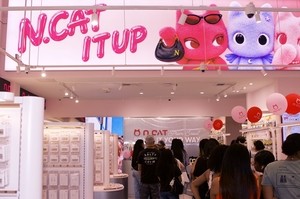
K-accessories brand N.Cat opens first US stores in California
Two company-owned stores open at Southern California shopping malls Ncat, the company behind K-accessories brand N.Cat, announced Friday that it has opened its first and second US stores. Ncat established a local subsidiary, NCAT AMERICA, last year in preparation for a direct entry into the US market. The first store opened Aug. 22 at Del Amo Fashion Center in Torrance, California, while the second is set to open at Brea Mall on Saturday. Both are major shopping destinations in Southern California, and the company said the openings mark a significant step toward breaking into large-scale US retail distribution networks. The first store is an experiential outlet designed to reflect Seoul's shopping culture, offering trendy items — including jewelry, hair accessories and bags — at accessible prices. Customers were already lining up before the doors opened on launch day. Starting next year, Ncat plans to launch a franchise program across the US, aiming to broaden the K-fashion experience among Generation Z and younger consumers. Ncat launched the N.Cat brand in 2008 and began expanding its franchise business in earnest in 2011. It now operates more than 140 stores at home and abroad across 10 countries, including the Philippines, Taiwan, Thailand and Japan. "It is significant that we have established a foothold to bring Seoul's trendy sensibility and K-fashion accessories directly to American consumers," said Yang Jin-ho, chief executive of Ncat. "We will use the two California stores as a bridgehead for expanding into the North American market and prove the competitiveness of our K-fashion accessories brand in the United States."
Sept. 18, 2026
-
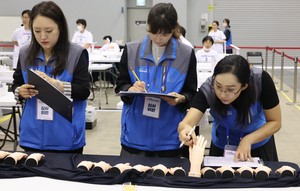
477 skilled workers with disabilities compete at national vocational contest
38 gold medals awarded across 41 categories; national team picks to compete in Helsinki next year The 43rd National Skills Competition for People with Disabilities, which drew 477 competitors from across the country, concluded Friday after a four-day run. According to the Ministry of Employment and Labor, the event was held at Bexco in Busan starting Tuesday, with representatives from all 17 cities and provinces competing across 41 categories including electronics, computer programming and furniture making. Heo Su-ho took gold in the electronics category, joining 37 other competitors who claimed gold medals. A total of 113 athletes placed overall — 38 gold, 39 silver and 36 bronze. Prize money for winners in regular categories is 12 million won ($8,770) for gold, 8 million won for silver and 4 million won for bronze. In demonstration categories, gold carries 6 million won, silver 4 million won and bronze 2 million won. Winners in the leisure and lifestyle skills categories receive 2 million won, 1 million won and 600,000 won, respectively. Medalists also receive certificates and are exempt from the written and practical examinations for the national technical qualification in their respective categories. The competition also served as the national team selection trials for the 11th International Abilympics, set for Helsinki, Finland, in May next year. Athletes selected for the national team will compete against participants from around the world at the international event. "This competition proved, through the outstanding skills and abilities of its athletes, that disability cannot define the limits of what one can do at work," Employment and Labor Minister Kim Young-hoon said. "We will actively support people with disabilities so that their skills lead to good jobs and the futures they hope for."
Sept. 18, 2026
-

Chungcheong regional leaders unite behind inland railway project
Regional heads urge inclusion in 5th National Railway Network Plan, citing goal of '1-hour lifestyle zone' to complete Chungcheong megacity Regional government heads in the Chungcheong region have called on the central government to include the Chungcheong Inland Railway — a project they describe as essential to completing the Chungcheong megacity and supporting the government's "5 Poles, 3 Specials" regional development strategy — in the 5th National Railway Network Construction Plan. South Chungcheong Province said Friday that Vice Governor Hong Jong-wan met with the railway bureau chief at the Ministry of Land, Infrastructure and Transport to deliver a joint petition signed by regional and local government leaders across the Chungcheong region urging inclusion of the project in the plan. The petition was signed by the heads of the metropolitan governments of South Chungcheong Province, Daejeon and Sejong, as well as the heads of six municipal governments within South Chungcheong Province — Seosan, Gongju, Cheongyang, Hongseong, Yesan and Taean. Hong and deputy heads and senior civil servants from the six municipalities delivered the petition in person to the railway bureau chief. The petition outlined three grounds for inclusion in the 5th National Railway Network Construction Plan: completing the east-west transport corridor in the Chungcheong region to drive future national growth, realizing a "1-hour lifestyle zone" to complete the Chungcheong megacity, and advancing a core national project underpinning the government's "5 Poles, 3 Specials" strategy. The Chungcheong Inland Railway is a single-track electrified line stretching 146.7 kilometers from Taean through Seosan Airport, Naepо New Town and Gongju to Sejong and on to Sintanjin and Daejeon. The total project cost is estimated at 4.47 trillion won ($3.27 billion). The line would connect the Chungcheong region's industrial and administrative hubs, cut travel times between areas and integrate the region into a single lifestyle and economic zone. If included in the national plan, the project is expected to improve access to major urban centers from the relatively rail-poor western coastal and inland areas of South Chungcheong Province, contributing to the formation of a broader Chungcheong super-regional living zone. Officials also expect the project to strengthen connectivity among key hubs across the Chungcheong region, improve access to the South Chungcheong Innovation City, and boost the efficiency of tourism and industrial logistics. South Chungcheong Province said it will continue coordinating with Daejeon, Sejong and the municipalities within the province to secure the railway's inclusion in the 5th National Railway Network Construction Plan, which the Ministry of Land, Infrastructure and Transport is expected to announce by the end of the year. South Chungcheong Province Governor Park Soo-hyun said in the petition that the Chungcheong Inland Railway "will build a super-regional industrial belt connecting industrial and administrative functions into one, raising national competitiveness — going beyond simply cutting travel times to strengthen solidarity among Chungcheong local governments and lay the cornerstone for a Chungcheong megacity." He added that the project "must be included in the 5th National Railway Network Construction Plan so that the government's regional balanced development policy can translate into tangible results."
Sept. 18, 2026
-
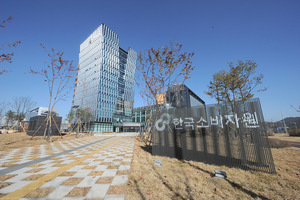
Men's fashion mall Flyday draws consumer warning over delayed deliveries, refunds
Korea Consumer Agency says operator is unreachable, making resolution difficult The Korea Consumer Agency on Friday warned consumers to be cautious when using Flyday, a men's fashion online shopping mall, citing an ongoing pattern of delayed deliveries and refunds. According to the agency, consumer inquiries related to Flyday began arriving at the 1372 Consumer Counseling Center in December last year and climbed to 102 cases in the January–August period this year. Of those cases, 83.3 percent, or 85 cases, involved consumers who requested refunds due to delivery delays but were denied cancellations. Contract non-fulfillment accounted for 47 percent of complaints, or 48 cases, while subscription withdrawal issues made up 36.3 percent, or 37 cases. Resolving the complaints has proven difficult because the operator has become unreachable. The unresolved rate for cases filed between January and August stood at 73.5 percent. The agency advised consumers to "exercise caution before making purchases on Flyday and to keep documentation that can prove contract non-fulfillment in preparation for any disputes." It also stressed that consumers should "use credit cards whenever possible when shopping at online malls, and be wary of any mall that accepts only cash payments or offers additional discounts for cash transactions."
Sept. 18, 2026
-
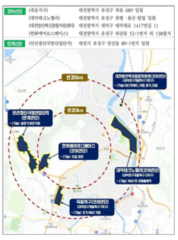
Daejeon wins designation as South Korea's first defense materials specialized complex
8.05-million-square-meter complex spanning Jukdong, Daedeok and Ansan to build end-to-end ecosystem from R&D and parts localization to testing, certification and mass production Daejeon has reached a pivotal turning point in its bid to transform decades of accumulated defense research and development capabilities into industrial output, positioning the city as a hub for South Korea's defense components supply chain. Daejeon Mayor Heo Tae-jeong announced Friday that the city had been selected as a defense-sector specialized complex under the Ministry of Trade, Industry and Energy's third round of materials, parts and equipment specialized complex designations. The complex is set to receive more than 40 billion won ($29 million) in government funding over the next five years. It spans a total of 8.05 million square meters, encompassing the Jukdong Industrial Complex, Daedeok Techno Valley, Ansan Defense Industry Complex, the Daejeon Defense Industry Innovation Support Center in Munpyeong-dong, Daedeok-gu, and the Hanwha Aerospace campus. The primary focus will be localizing key components for advanced guided weapons systems, which currently rely on imports for more than 90 percent of their supply. The plan calls for connecting research and development technology from the Daedeok Special Research and Development Zone to product commercialization by local small and medium-sized enterprises, and linking those efforts to the production systems of anchor companies such as Hanwha Aerospace and LIG D&A to build a stable defense supply chain. To that end, the complex will prioritize support across five areas: technology development and localization of core defense materials and components; testing, evaluation and certification support; cooperation between demand-side and supply-side companies; technology commercialization and mass production; and entry into domestic and international defense supply chains. The designation is the result of years of sustained effort that began when the city launched a drone-focused defense innovation cluster project during the seventh elected administration. The city has built close cooperative networks with regional innovation institutions and defense companies, including Daejeon Technopark and the Daejeon Defense Industry Cooperative Association, and has worked to consolidate the defense R&D capabilities of the Daedeok zone with the city's corporate and industrial infrastructure to secure the complex designation. Since the launch of the ninth elected administration, attracting a defense materials and components specialized complex has been pursued as a priority initiative, with the city conducting wide-ranging outreach in close coordination with the central government, the National Assembly, and regional industry, academic, research and military partners. Following his inauguration in July, Mayor Heo made his first visit to the National Assembly, where he explained the need for the designation to local lawmakers and sought their support. He then formally proposed the designation to the prime minister and relevant ministries at a Chungcheong region semiconductor inter-regional cooperation forum, continuing to press for government-level backing. In August, all seven of the region's National Assembly lawmakers joined as co-hosts of a parliamentary forum on the issue, with more than 100 participants — including city officials, related institutions and defense industry representatives — gathering to mount a unified push for the designation. The city plans to treat the designation as the starting point for a new phase of development. Building on a cooperative framework that brings together anchor companies and local small and medium-sized enterprises, Daejeon aims to establish a defense supply chain spanning from parts localization through to mass production, and intends to accelerate work on the "Defense AX Cluster" — a campaign pledge of the ninth elected administration. In addition, the city plans to use the designation to attract leading defense companies and stimulate investment by local firms, while supporting supply chain entry and technology commercialization to create a virtuous cycle of quality job creation and regional economic revitalization. "This outcome is thanks to Daejeon's research institutions, universities, military and companies all running hard together with one mind," Mayor Heo said. "We will work hand in hand with the central government to ensure this project is completed successfully and to firmly secure Daejeon's future economic engine."
Sept. 18, 2026
-

Baengsu-eup in Yeonggwang-gun declared special disaster zone after heavy rains
Designation unlocks additional state funding, utility fee reductions and other recovery support for affected residents The government declared Baengsu-eup in Yeonggwang-gun, South Jeolla-Gwangju Integrated Special City, a special disaster zone Friday, citing damage caused by torrential rains that struck the area from Aug. 28 to Sept. 1. The downpours dumped up to 107.5 millimeters of rain per hour and a cumulative 579.5 millimeters on Yeonggwang-gun, flooding homes and farmland and causing significant damage to roads and waterways. The Ministry of Interior and Safety conducted a joint central investigation from Sunday through Wednesday, confirming that Baengsu-eup met the criteria for a special disaster zone designation. Areas designated as special disaster zones receive additional central government funding to cover a portion of recovery costs that would otherwise fall on local governments. Affected residents will also receive disaster relief payments along with indirect support measures, including deferred national and local tax payments and reductions in public utility fees. "We pursued the special disaster zone declaration to provide comprehensive support to the residents and communities affected by this heavy rain," Interior and Safety Minister Yun Ho-jung said. "We will draw up a swift recovery plan and execute the recovery budget so that affected residents can return to their daily lives as soon as possible."
Sept. 18, 2026
-
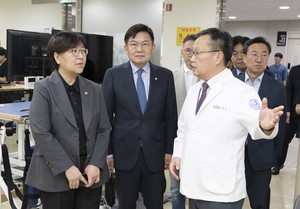
Jeong Eun-kyeong vows to ease family caregiving burden through system reform
Welfare minister inspects integrated nursing and care service ward at Korea University Guro Hospital Minister of Health and Welfare Jeong Eun-kyeong said Friday she would develop effective policy reforms to ensure patients receive safer, higher-quality inpatient care and families face a lighter caregiving burden, pledging to closely review field feedback and actual operational outcomes from the integrated nursing and care service system. Jeong made the remarks after visiting Korea University Guro Hospital in Guro-gu, Seoul, where she inspected the operations of an integrated nursing and care service ward and heard concerns and reform suggestions from hospital officials and frontline workers. She said the focus had so far been on expanding the number of beds under the integrated nursing and care service system, but the time had come to draw up a long-term roadmap — one that ensures patients receive adequate care and creates a sustainable operating environment for providers. The integrated nursing and care service is an inpatient program in which teams of nurses, nursing assistants and support staff provide both nursing and personal care to hospitalized patients, eliminating the need for family members or guardians to remain at the bedside. Since the system's introduction in 2015, the government has gradually expanded the number of participating medical institutions and beds, while working to establish staffing standards that reflect patient acuity and nursing needs and to improve overall service quality. At Friday's site visit, participants said demand from patients and their families for the integrated nursing and care service was strong, and called for an active expansion of participating beds. Attendees also proposed establishing staffing standards that more fully reflect patient acuity and nursing needs, expanding ward support personnel, and building a reasonable compensation framework suited to the conditions of individual medical institutions. They further called for service models that can address the diverse care needs of different patient groups by more precisely categorizing nursing and caregiving requirements.
Sept. 18, 2026
-
Fines up to 5 times fraudulent amount for social service voucher abuse
Ministry of Health and Welfare announces proposed amendments to enforcement decree and rules on social service use and voucher management; lookback period for repeat violations extended from two years to five, with registration cancellation on second offense within five years Providers that fraudulently claim social service vouchers to pocket illicit gains will face fines of up to five times the improperly claimed amount under proposed regulatory changes. Providers caught committing the same violation within five years will also have their registration canceled starting from the second offense. The Ministry of Health and Welfare said Friday it will accept public comment on proposed amendments to the enforcement decree and enforcement rules of the Act on the Use of and Support for Social Services through Oct. 21. Under the revised enforcement decree, fines will be calculated by applying a tiered multiplier to the total amount improperly claimed or passed on to users, with the multiplier varying according to the length of the business suspension imposed. A suspension of up to 10 days will carry a fine of twice the total fraudulent amount. Suspensions of more than 10 days and up to 30 days will draw a fine of three times the amount; more than 30 days and up to 50 days, four times; and suspensions exceeding 50 days — reserved for the most serious violations — five times the total fraudulent amount. However, the fine is capped at 30 million won ($21,700) to ensure it does not exceed the statutory ceiling. The enforcement rules governing administrative sanctions have also been tightened. To curb habitual fraud, the lookback period for counting repeat violations has been significantly extended — from two years to five. Providers caught committing the same violation within that five-year window will face aggravated penalties. Under the current rules, a first offense of fraudulent billing in violation of compliance requirements results in only a warning if the fraudulent billing rate is below 2 percent. The revised rules will trigger an immediate business suspension from the first offense, with the penalty determined by both the amount and the rate of fraudulent billing. The number of suspension days — ranging from 10 to a maximum of 90 — will be determined by cross-referencing the monthly average fraudulent amount during the investigation period against the ratio of fraudulent claims to total revenue. When the fraudulent billing rate reaches 5 percent or more, three additional suspension days will be added for each percentage point above that threshold, though the overall suspension ceiling remains six months. Rules on deregistration for repeat offenders have been strengthened as well. Previously, a provider had to be caught three times for the same violation before losing its registration. Under the revised rules, a second offense of fraudulent billing within five years of the first sanction will result in immediate registration cancellation. The amended enforcement decree and rules are set to take effect one month after promulgation.
Sept. 18, 2026
-
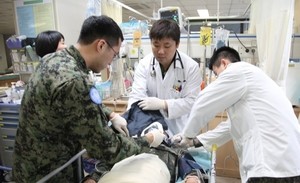
Over 6,000 soldiers with medical aid eligibility to receive benefits directly at military hospitals
Ministry of Health and Welfare revises Medical Aid Act enforcement rules, waiving requirement to visit primary care clinics first Soldiers eligible for medical aid benefits will soon be able to receive treatment directly at military hospitals without first visiting a civilian clinic. According to the National Assembly Legislative Participation Center, the Ministry of Health and Welfare has put a revised enforcement rule of the Medical Aid Act out for public comment through Oct. 27. Medical aid is a government benefit program that covers medical services — including examinations, diagnostic tests, medications, procedures, surgeries and other treatments — for people in financial hardship facing illness, injury or childbirth. About 6,000 active-duty soldiers are currently enrolled in the program. The revised rule adds soldiers to the list of groups exempt from standard medical aid procedures, with the aim of ensuring timely treatment and eliminating unnecessary visits to primary care clinics. Under current rules, medical aid recipients are generally required to visit a primary care clinic — designated as a first-tier medical aid institution — before accessing higher-level care. The revision takes into account the unique nature of military service, allowing soldiers to receive benefits directly at military hospitals, which are classified as second-tier institutions, without first obtaining a referral. "To visit a second- or third-tier medical aid institution, you need a referral from a first-tier clinic," a Ministry of Health and Welfare official said. "Soldiers enrolled in medical aid who were injured had to leave their base to get a referral before they could receive treatment at a military hospital. This revision addresses that problem and improves access to care." The ministry plans to apply the revised rule as early as the end of this year.
Sept. 18, 2026
-
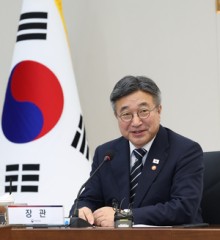
Government launches price-stability task force through Sept. 27 ahead of Chuseok
7th Central-Local Policy Council of 2026 convenes; local gift voucher discounts and purchase limits to be raised The Ministry of Interior and Safety held the "7th Central-Local Policy Council of 2026" at Government Complex Seoul on Friday, discussing key issues to be pursued jointly by the central and local governments since the launch of the ninth elected local government term. The council brought together the Ministry of Interior and Safety, the Ministry of Health and Welfare, the Ministry of Agriculture, Food and Rural Affairs and other relevant ministries, along with deputy heads of metropolitan and provincial governments. The agenda covered three areas requiring central-local cooperation: measures to stabilize livelihoods during the Chuseok holiday, follow-up actions on the enactment of the Social Solidarity Economy Framework Act, and the expansion of standalone smoke detector distribution. With the Chuseok holiday approaching next week, the government designated a special price-stability period through Sept. 27, activating a price-stability task force and launching joint central-local on-site inspections. A concentrated volunteer service period will also run through Wednesday to promote a culture of sharing. To ease the burden on households and boost domestic demand, the government will support an increase in the discount rate and purchase limit for local gift vouchers. Given the surge in traffic and large crowds expected at traditional markets and public facilities during the holiday, the government pledged tight safety management. A 24-hour situation management system linking the Ministry of Interior and Safety, relevant agencies and local governments will be maintained through the Central Disaster and Safety Situation Room, with a pan-government response system ready to activate immediately in the event of a disaster. The meeting also addressed follow-up measures stemming from the enactment of the Social Solidarity Economy Framework Act on Tuesday. In preparation for the law taking effect next March, the Ministry of Interior and Safety will draft subordinate legislation and continue monitoring the progress of the "Comprehensive Plan for Social Solidarity Economy Development" announced last June. Local governments agreed to work alongside the central government to help social solidarity economy policies take root in their regions — through expanding dedicated departments and staffing, establishing regional committees, revising related ordinances, and participating in and identifying social solidarity economy activation projects. The Ministry of Interior and Safety also asked local governments to expand distribution of standalone smoke detectors to strengthen fire safety management in aging housing. The Ministry of Health and Welfare urged local governments to prepare local budget allocations for the expanded child-welcoming support payments and basic child allowances set to be rolled out in July next year. The Ministry of Agriculture, Food and Rural Affairs called on local governments to rationalize related ordinances ahead of the implementation of improved laying-hen stocking density measures. Minister Yun Ho-jung stressed "all-round cooperation between the central and local governments in the ninth elected term under the shared goal of making the Republic of Korea irreplaceable," and extended Chuseok greetings, saying: "I hope you can set aside, even briefly, the big and small worries of work, studies, family and livelihood, and enjoy a peaceful Chuseok with your loved ones."
Sept. 18, 2026
-
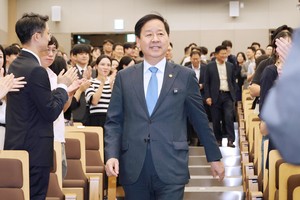
Outgoing Deputy PM Koo urges Korea to cultivate 'next memory chip' industry
AI, innovation, field visits emphasized as Koo Yun-cheol steps down; vows to scout cutting-edge technologies in private sector Deputy Prime Minister and Minister of Economy and Finance Koo Yun-cheol stepped down Friday after roughly 14 months as the country's top economic policymaker, marking the end of his tenure with a farewell ceremony at Government Complex Sejong. The first economy minister under the Lee Jae Myung administration, Koo oversaw major external challenges including US tariff negotiations, investment issues and the Middle East war. To the last, he pressed the message that South Korea must produce world-class products and services to survive in the global economy. "I remain convinced that for our economy to survive in the global arena, we have no choice but to produce world-class products and services," Koo said at the farewell ceremony at Government Complex Sejong. "We need to push at least one item hard enough that it can become the next memory chip." He also expressed regret that his signature "ultra-innovation economy" initiative had not advanced as far as he had originally envisioned. Koo recalled that when he was first nominated as deputy prime minister, he had settled on nurturing ultra-innovation economy items as the one legacy he wanted to leave behind. "If even one thing doesn't work properly, doing 20 or 30 things means nothing," he said. "My biggest regret is leaving without having pushed even one of them far enough." He added that the economy would benefit more if each person identified one area in their own position, stayed focused on it and kept pushing. Koo also cited his inability to visit enough field sites as another source of regret, given the relentless stream of external issues — from US investment talks to the Middle East war. "Under normal circumstances, I would have gone to the field once or twice a week, identified items, fixed what was lacking and allocated R&D budgets where needed," he said. "Not being able to do that is what I regret most." About 200 Ministry of Economy and Finance staff gathered in the auditorium of the central building at Government Complex Sejong, greeting Koo with applause. Staff members selected three words he had frequently emphasized during his tenure — AI, innovation and field visits — and asked him to deliver a final message around them. Koo described the three words as a "gift" to his staff. He opened by recounting how he had encountered bitcoin in the United States in 2011 but dismissed its potential, and how he had missed the rise of Chinese e-commerce the following year. His point: when a new wave of change arrives, one must not look away but get on board first. "When a civilizational shift comes, you have to boldly seize it," he said. "When new change and innovation emerge, you must decide to be the protagonist." He also urged staff to resist simply following established ways of doing things, and instead to seek out what is inconvenient and work to change it. He doubled down on the importance of field visits. "What is said at the center and what happens in the field are completely different," Koo said. "You have to know the field — anything disconnected from it is meaningless no matter how much effort you put in." After leaving public office, Koo said he plans to continue scouting innovative technologies and visiting companies in the private sector. "I want to go to companies and stay not just for a day but overnight — to discuss, share ideas and identify problems on the ground," he said. Earlier that day, when he stopped by the press room ahead of the ceremony, Koo said he intended to keep studying future technologies — including AI, biotech and power generation — and to identify "ultra-innovation economy technology items" in the private sector. He highlighted the importance of key components such as sensors and actuators, and named urban hydropower, solar glass, power semiconductors and graphene as areas of personal interest. "Out of 30 cutting-edge technology items, even 10 percent — two or three — would be enough," Koo said, stressing that rather than trying to be competitive across all fields, the goal should be to develop at least one core technology to world-leading standards. Using the robot industry as an example, he said, "If you make the world's best olfactory sensor, you can sell it to everyone who makes robots" — illustrating how a single key component can open up the global market. He also called on staff to take pride in the ministry. "You must hold the belief that if the Ministry of Economy and Finance collapses, South Korea collapses," Koo said. "You can't do everything, but please approach your work with the mindset of 'I will take on this one area myself.'" On his successor, Deputy Prime Minister-designate Lee Hyung-il, Koo said the role is not an easy one. "The deputy prime minister can only do well if you support him," he told staff. "Without your support, nothing can be accomplished." He closed with a personal note. "I was so happy and received so much support while I was here," he said. "I leave in good spirits — let's meet again."
Sept. 18, 2026
-
Daily 4.8g of perilla oil for 8 weeks raises blood omega-3 levels, human trial finds
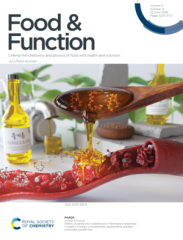
Human trial conducted on healthy smokers Blood coagulation, inflammation markers also show changes Study selected as cover paper in international journal Food & Function A human clinical trial has found that consistently consuming domestically produced perilla oil for eight weeks significantly increases plant-based omega-3 fatty acid levels in the blood. Changes were also observed in certain markers related to blood coagulation and inflammation. The findings are expected to accelerate the development of functional ingredients, as evidence supporting the use of perilla oil as a functional food material — including in health functional foods — has now been established. The Korea Food Industry Cluster Promotion Agency announced Friday that results of a human application trial on perilla oil, conducted through its Domestic Ingredient Functionality Identification Project, had been published in the international food science journal Food & Function. The study found that participants in the perilla oil group showed a significant increase in the proportion of alpha-linolenic acid (ALA) — a plant-based omega-3 fatty acid — in both plasma and red blood cells after eight weeks. The proportion of eicosapentaenoic acid (EPA), another omega-3 fatty acid, also rose in plasma. ALA is an essential fatty acid the body cannot produce on its own and must be obtained through diet; perilla oil is a rich source of it. Changes were also observed in markers related to blood coagulation and inflammation. After perilla oil consumption, the collagen-induced ADP closure time — an indicator of platelet function — increased significantly. Messenger RNA expression of tumor necrosis factor-alpha (TNF-α) and T-box transcription factor 21 (TBX21) decreased significantly. The researchers said the findings confirmed that perilla oil consumption may influence platelet activity and inflammatory responses alongside the increase in blood omega-3 levels. The findings were published in Food & Function, a journal issued by the Royal Society of Chemistry. The paper was made available online on May 13 and formally published June 22. According to the agency, the journal ranks in the top 17 percent of food science publications by Journal Citation Reports standards, and the paper was selected as the cover article for its issue. Building on the results, the agency plans to pursue registration of domestic perilla oil as an individually recognized ingredient — a category of health functional food ingredient reviewed and approved by the Ministry of Food and Drug Safety for safety and efficacy. Once verified and recognized as a functional ingredient by the ministry, perilla oil is expected to find broader application in health functional foods and other functional-label food products that meet the relevant requirements. Since 2020, the agency has been working with the Ministry of Agriculture, Food and Rural Affairs through the Domestic Ingredient Functionality Identification Project to establish the functional properties of Korean agricultural products — including black raspberries, garlic and dangjo peppers — in support of their use as food ingredients.
Sept. 18, 2026
-
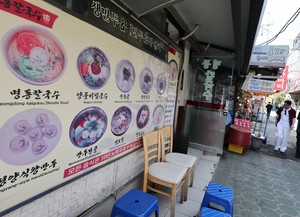
Kimchi stew tops 9,000 won, bibimbap crosses 10,000 won — but restaurants are disappearing
National average for kimchi stew set meal hits 9,080 won, up 5.1% in a year Hansik restaurant operators down 1.46% as ingredient costs weigh on owners "There's no meat in the kimchi stew. It really is just kimchi. And the stir-fried squid is mostly onions." A worker in his 30s employed in Seoul has started turning to convenience stores to eat, saying the value no longer matches what he pays. His frustration is backed by data. The price of a kimchi stew set meal — one of the most affordable staples of Korean dining out — has crossed 9,000 won. Naengmyeon and bibimbap now cost more than 10,000 won ($7). Even a single roll of kimbap is closing in on 4,000 won. According to the Korea Consumer Agency's price information portal, the national average price of a kimchi stew set meal stood at 9,080 won last month, up 5.1% from 8,639 won in the same month last year. Daejeon was the most expensive city, with an average of 10,600 won. In Seoul, the price reached 8,769 won, up 2.2% from 8,577 won a year earlier — continuing a steady climb that began after prices surpassed the 8,500-won mark in February last year. Some dishes have already broken the 10,000-won barrier. Naengmyeon averaged 10,845 won last month, up 3.4%, while bibimbap came in at 10,314 won, up 2.3%. Kimbap is also approaching the 4,000-won range. In Seoul, a roll averaged 3,869 won, followed by Gwangju at 3,760 won and Gyeonggi Province at 3,759 won. The national average was 3,581 won, up 5.8% from 3,382 won in the same month last year. Meat dishes have also risen. Samgyetang averaged 16,868 won, up 2.4%, while 200 grams of samgyeopsal cost 17,877 won, up 2.5%. While consumers feel the pinch of rising dining costs, the business environment for hansik restaurants is moving in the opposite direction. According to the National Tax Service's national tax statistics portal, the number of hansik restaurant operators nationwide stood at 403,299 in July, down 1.46% from 409,300 in July last year. The figure covers a broad range of establishments — from general Korean restaurants and noodle shops to grills and seafood eateries, as well as neighborhood diners specializing in set meals, stews and soups. Ingredient costs are the single biggest burden on hansik restaurant operators. According to the Korea Rural Economic Institute's 2025 survey report on the management conditions of food service businesses, the average ingredient cost for hansik establishments was 11,990 won per meal, higher than the overall restaurant average of 10,377 won. Among 18 food service categories, hansik ranked fifth highest — behind institutional cafeterias, catering and mobile food services, Japanese restaurants, and pizza, burger and sandwich shops. Hansik menus are particularly vulnerable to ingredient price swings because dishes such as kimchi stew, set meals, and soup-and-stew combinations require a wide variety of ingredients. Yet owners cannot easily pass those costs on to customers — raising prices risks driving diners away. The aging of restaurant owners has also been a factor. The average age of hansik restaurant operators is 56.7, higher than the overall food service average of 53.7. "Rising raw material prices are feeding through to consumer prices," said Lee Hong-ju, a professor of consumer economics at Sookmyung Women's University. "For restaurant owners, the burden will only grow heavier going forward."
Sept. 18, 2026
-
Korea Minting Corp completes blockchain public payment infrastructure proof of concept
Optimism-based system covers full cycle of charging, payment and settlement for digital currency The Korea Minting and Security Printing Corp has successfully implemented a blockchain-based system covering the full cycle of charging, payment, settlement and transaction data protection as part of its preparations for a future digital payment environment. The corporation said Friday it completed a proof of concept for a "blockchain-based public payment infrastructure" project, carried out jointly with Viva Republica — operator of the fintech platform Toss — to verify the technical feasibility of linking existing public payment infrastructure with blockchain-based CBDC. The two organizations built a test environment for local gift vouchers, separate from any live commercial service, and used blockchain-based CBDC to top up local gift voucher tokens, then implemented the entire payment process through to merchant settlement. The blockchain infrastructure was built on Optimism, an Ethereum layer-2 ecosystem. The test examined a structure linking CBDC transfer records on the blockchain with transaction processing in existing payment systems. Given that transaction data on public blockchains can be exposed externally, the proof of concept also verified the feasibility of a protection structure designed to prevent sensitive payment information from being exposed on the network. Through the proof of concept, the corporation confirmed the technical feasibility of integrating blockchain-based CBDC with public payment infrastructure such as local gift vouchers. It particularly noted that by verifying not only the link with existing payment processes — from charging through payment to settlement — but also transaction data protection, the project laid the technical groundwork for applying digital payment instruments to public services. The proof of concept focused less on the issuance of CBDC itself and more on verifying the full charging-payment-settlement process and transaction data protection when connected to actual public payment infrastructure. "Drawing on our operational experience running public digital services such as local gift vouchers, digital Onuri gift vouchers and mobile identification, we will continue to review the relevant technologies and service models to ensure that new digital payment instruments can be safely integrated with existing infrastructure," said Seong Chang-hun, president of the Korea Minting and Security Printing Corp.
Sept. 18, 2026
-
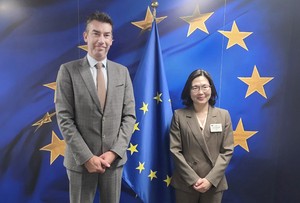
Seoul urges EU to protect Korean firms in new trade regulation process
Korean delegation highlights investment, supply chain contributions in EU; cooperation on digital and critical minerals also on agenda South Korea has asked the European Union to actively reflect the interests of Korean companies as it drafts new trade regulations and detailed implementation standards. According to the Ministry of Trade, Industry and Energy on Friday, a South Korean delegation led by Kim Jang-hee, director general for new trade strategy support, held a series of meetings with senior EU officials in Brussels, Belgium, from Wednesday through Friday (local time). The visit was a follow-up to a high-level meeting held Sept. 9 between Industry Minister Kim Jung-kwan and EU Executive Vice President for Prosperity and Industrial Strategy Stéphane Séjourné, and was arranged to preemptively shield Korean companies from unreasonable regulatory burdens. The delegation met with Dragoș Tudorache, policy adviser to Executive Vice President Séjourné, and Valère Moutarlier, deputy director general of the Directorate-General for Internal Market, Industry, Entrepreneurship and SMEs, to explain Korean companies' long-standing local investment and contributions to employment and supply chains in connection with the Industrial Acceleration Act (IAA). The delegation said the IAA should be designed to account for cooperation with reliable partners such as South Korea. The IAA aims to expand domestic production in strategic industries by applying European-origin and low-carbon criteria to public procurement, subsidies and other public support regimes. A draft released in March stipulated that companies seeking public procurement contracts or subsidies in strategic industries — including automobiles, steel, cement and aluminum — as well as green industries such as wind turbines, must meet requirements including EU origin and low-carbon standards. In a separate meeting with Andreas Stein, director of judicial policy at the Directorate-General for Justice and Consumers, the delegation asked that Korean industry's positions be reflected in future guidelines on the Corporate Sustainability Due Diligence Directive (CSDDD) and proposed establishing a standing consultation channel. On the Carbon Border Adjustment Mechanism (CBAM), the delegation met with Gerasimos Thomas, director general of the Directorate-General for Taxation and Customs Union, and asked that administrative and financial burdens on Korean companies be minimized during implementation — including on third-party verification and the expansion to downstream products. The delegation particularly said the timing of implementation for downstream products with complex supply chains should take into account the realistic conditions facing businesses. The EU has been applying the CBAM "carbon levy" to basic materials such as steel and aluminum since January and is considering expanding its scope to downstream products including auto parts and home appliances. During the visit, the ministry also discussed ways to expand cooperation in future trade areas such as digital and critical minerals, beyond regulatory response. "Changes in EU regulations related to industry, supply chains and the environment are a critical trade environment that directly affects the economic activities of our companies," Kim said. "We will continue consultations to ensure that Korean companies' positions are sufficiently reflected in the implementation process."
Sept. 18, 2026
-
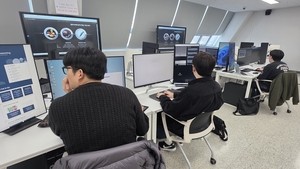
Korea University of Technology and Education expands AI-powered classrooms to sharpen teaching and learning
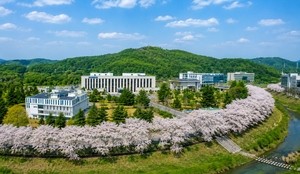
AI learning analysis rooms to grow from 3 to 10 by year-end System auto-generates quizzes targeting weak concepts Model validated in undergraduate courses before rollout to worker training Korea University of Technology and Education is expanding its network of "AI learning analysis rooms," which use artificial intelligence to analyze instructors' speech and student engagement in real time. The university plans to grow the number of such rooms from three to 10 by year-end, and will apply the education model — once validated at the undergraduate level — to lifelong vocational training programs for working professionals. The AI learning analysis rooms, housed in the Dadam Future Learning Center on campus, collect and analyze data on instructor behavior and student participation during class using computer vision, speech-to-text recognition and generative AI technology. Six cameras mounted on classroom ceilings capture behavioral and audio data from both instructors and students. Instructors can monitor their own speech content, volume, pace and key learning keywords in real time on a large display at the back of the classroom. The system also provides engagement data derived from analysis of student movement and gaze patterns. Real-time analysis of speech and focus lets instructors adjust difficulty on the fly Instructors can use the analysis results to immediately adjust their teaching approach and the difficulty level of the material. When AI generates quiz questions based on lesson content, instructors can gauge student comprehension through the responses. If the error rate on a particular question is high, the instructor can revisit the concept students are struggling with. After each class, the AI extracts key learning keywords and provides related questions and explanations. The system also generates three types of analysis reports — one for administrators, one for instructors to reflect on their teaching, and one for students reviewing material. Students can work with an AI tutor to tackle problems suited to their level of understanding or revisit content they have not fully grasped. The university piloted the AI learning analysis rooms in the second semester of 2024 across four courses, including Introduction to Big Data and Data Visualization. The program has since expanded to more than 10 courses spanning engineering, humanities and general education. The university is also accumulating learning-pattern data across different class formats, including lectures, lab sessions and interdisciplinary discussions. Byun Hae-won, a professor in the Future Convergence School who has taught in the AI learning analysis rooms since 2025, said the system has made individualized instruction possible through real-time data analysis and AI-driven two-way interaction. "Student satisfaction has risen by about 20 percent compared with conventional classes, and achievement and activity data can now be fed directly into the design of the next lesson," Byun said. Data generated in the classrooms is linked to K-LXP, an AI-based student learning and growth support platform the university launched in March. Through the platform, students receive personalized learning and career guidance tailored to their goals and skill levels. A university-wide integrated AI chatbot gives students access to generative AI tools including ChatGPT, Gemini and Claude. AI learning analysis rooms to reach 10 by year-end, with expansion into worker vocational training The university plans to add seven more AI learning analysis rooms this year, bringing the total to 10. After using undergraduate education as a testbed to verify effectiveness, it will extend the model to online education, on-the-job training for working professionals, and instructor training for vocational programs under the broader lifelong vocational development umbrella. The investment in education is also translating into employment outcomes. In graduate employment statistics released by the Ministry of Education late last year, the university posted an employment rate of 82.8 percent — the highest among four-year universities nationwide with 500 or more graduates. That figure is 20.0 percentage points above the national average of 62.8 percent. The share of graduates who remained employed for 11 months after joining a company stood at 89.6 percent, also 10.0 percentage points above the national university average. Annual education spending per student is 46.08 million won ($33,400), about 2.5 times the national university average of 18.33 million won. University President Yoo Gil-sang said the AI learning analysis rooms serve as "a data compass for instructors to improve class quality and an educational infrastructure that supports personalized growth for students." He added that the university would take a leading role in developing AI talent for the nation, encompassing both undergraduates and working professionals.
Sept. 18, 2026
-
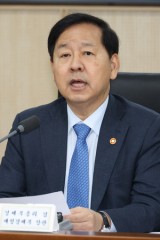
Gov't cuts highway fuel prices by 100 won per liter for Chuseok, extends fuel tax break to November
226 highway gas stations managed by Korea Expressway Corporation to offer discount Fuel tax cut saves drivers 122 won per liter on gasoline, 145 won on diesel 10th round of petroleum price cap to be announced Friday, freeze expected The government will cut fuel prices at highway gas stations nationwide by 100 won per liter during the Chuseok holiday and extend a fuel tax reduction — set to expire at the end of this month — by two months through late November. The 10th round of the petroleum price cap, which takes effect at midnight Saturday, is also widely expected to be frozen at current levels. The measures aim to ease the burden of high fuel costs on Chuseok household spending, while the government plans to monitor energy supply conditions daily amid ongoing instability in the Middle East. Deputy Prime Minister and Minister of Economy and Finance Koo Yun-cheol announced the measures Friday at an emergency economic headquarters meeting and economic ministers' meeting held at Government Complex Sejong. "During the Chuseok holiday period from Monday through Thursday, we will cut fuel prices at highway gas stations nationwide by 100 won per liter compared with Thursday's prices, so that the public shares the burden of high fuel costs together," Koo said. The discount applies to 226 fiscally managed highway gas stations operated by Korea Expressway Corporation. Those stations will sell fuel at 100 won per liter below regular prices throughout the four-day Chuseok holiday. Koo also said the government would extend the fuel tax cut, originally set to end this month, by an additional two months through late November to ease the financial burden on consumers. The current fuel tax reduction rate stands at 15 percent for gasoline and 25 percent for diesel and liquefied petroleum gas (LPG) butane. Compared with pre-cut levels, that translates to savings of 122 won per liter on gasoline, 145 won on diesel and 51 won on LPG butane. The 10th round of the petroleum price cap is set to be announced Friday afternoon. The new ceiling, effective at midnight Saturday, is expected to be frozen at the level set in the seventh round, which has been in place since June 27. Under the current ninth-round cap — which maintained the seventh-round prices — the ceiling stands at 1,784 won per liter for gasoline, 1,773 won for diesel and 1,380 won for kerosene. However, concerns are growing over a widening gap between international crude prices and domestic petroleum product prices. As conditions in the Middle East have deteriorated, Dubai crude surged to $128 per barrel as of Wednesday. International gasoline prices hit a record $145.22 per barrel, while diesel reached $200.72 per barrel. The petroleum price cap system sets a ceiling on the prices refiners charge for petroleum products and requires the government to compensate refiners for losses incurred when prices exceed that ceiling. The cap applies to the supply price charged by refiners, not the retail price consumers pay at the pump. The government introduced the petroleum price cap on March 13 after the US-Iran war deepened international oil market instability. Originally intended as a temporary six-month measure, the program drew on a supplementary budget of 4.2 trillion won ($3.04 billion), but the fiscal burden has grown as the system has lasted longer than initially expected. The government has also set aside about 1.5 trillion won in next year's budget draft to cover refiner losses. Side effects from market distortions are also emerging, as consumption has not been adequately curbed. Domestic gasoline consumption reached 8.86 million barrels in July, the highest for that month on record. "Uncertainty surrounding the Middle East situation is expanding again, with international oil prices rising sharply in recent weeks," Koo said. "The government will not let its guard down, will maintain its emergency response framework and will devote all efforts to the stable management of energy supply and prices." He added that active diplomatic efforts, diversification of import sources and strategic petroleum reserve swaps meant energy supply disruptions were not expected for now. "We will operate a situation task force together with the refining industry to monitor crude oil supply conditions on a daily basis and take necessary measures swiftly," he said. Koo said the South Korean economy was showing solid fundamentals despite difficult external conditions, including the war in the Middle East. "Exports have grown sharply, and domestic demand including consumption is showing signs of improvement. Global credit rating agencies Moody's and Fitch have also given positive assessments of our economy's robust growth," he said.
Sept. 18, 2026
-
Fair Trade Commission to brief 102 large business groups on subcontracting disclosure rules
Price-indexing regime expanded to cover major energy sources; guidance on evasion to be provided The Korea Fair Trade Commission will brief executives and employees of major business groups on cases of false and delayed disclosures flagged in its subcontracting payment inspections, as well as on amendments to the subcontracting payment indexing regime and related compliance procedures. The Fair Trade Commission said Friday it will hold the briefing Monday at the Korea Chamber of Commerce and Industry in Jung-gu, Seoul, targeting employees at 3,538 affiliates belonging to 102 business groups designated as disclosure-subject conglomerates this year. The briefing will cover the Subcontracting Act in general, the subcontracting payment terms disclosure regime and the subcontracting payment indexing system. Under the current Subcontracting Act, prime contractors belonging to disclosure-subject business groups must disclose on DART — the electronic disclosure system — their subcontracting payment amounts broken down by payment method and payment period, as well as information on dispute mediation bodies related to subcontracting payments, on a semiannual basis. The subcontracting payment terms disclosure regime, which took effect in January 2023, makes payment practices publicly available to encourage prime contractors to voluntarily improve how they pay and to help subcontractors use the disclosed information to negotiate payment terms more smoothly. With the second-half disclosure for this year due to be filed between January and February next year, the commission will explain the scope of disclosure obligations, procedures and key precautions. It will also conduct training focused on preventing a recurrence of false and delayed disclosures, as well as simple omissions and clerical errors repeatedly flagged in past inspections. The commission will also distribute guidelines covering the requirements for subcontracting transactions subject to disclosure, filing methods and procedures, and points to note when preparing submissions, along with a frequently asked questions document. The FAQ addresses specific scenarios companies commonly raise during the disclosure process. A company belonging to a disclosure-subject business group is not required to file if it has no subcontracting transactions and therefore does not qualify as a prime contractor; transactions with mid-sized enterprises also do not need to be included. On the other hand, self-employed individuals and freelancers registered as businesses qualify as small and medium-sized enterprises and must file disclosures if their transactions meet the subcontracting requirements. Including non-subcontracting transactions in a disclosure constitutes a false filing in principle, and companies that do so intentionally may be subject to fines. The briefing will also address amendments to the subcontracting payment indexing regime. Following revisions to the Subcontracting Act in February, the scope of the indexing system was expanded to cover major energy sources, with the change taking effect Aug. 11. The commission plans to explain the amended provisions and compliance procedures, and will also provide guidance on prohibited conduct, including attempts by prime contractors to circumvent or evade the regime.
Sept. 18, 2026
-
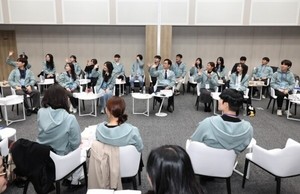
Pan-government junior civil servant innovation group launches third cohort
97 junior civil servants gather in Suncheon for inaugural ceremony and workcation Participants discuss on-the-ground improvements including handover procedures and reporting practices The Ministry of Interior and Safety held the inaugural ceremony and a workcation for the third cohort of "Organizational Culture Refresh (F5)," a pan-government innovation group for junior civil servants, at the Suncheonman National Garden Workcation Center in South Jeolla Province from Thursday to Friday. The Organizational Culture Refresh initiative was launched to identify and discuss fresh ideas for reforming civil service culture and to spread those ideas across public institutions. The third cohort comprises 97 junior civil servants from central and local government agencies with a strong interest in organizational culture reform. On the first day, Thursday, participants watched a video recap of the second cohort's achievements and shared their impressions before the inaugural ceremony. F5 members had previously judged a competition recognizing outstanding organizational culture improvement cases and contributed to a "Communication Guidebook" documenting real-world successes and failures in workplace communication. Particularly notable was the group's direct identification of on-the-ground reform tasks, including banning the practice of offloading undesirable or miscellaneous duties onto new employees and establishing systematic job handover procedures. The ministry incorporated these findings into its plan for reforming work practices and organizational culture, which it distributed to all agencies last May. At the inaugural ceremony, participants shared the operational plan for the third cohort. The plan calls for F5 members to drive a range of activities as agents of organizational culture reform and outlines a strengthened cooperation framework among the ministry, F5, and organizational culture officers at individual agencies to ensure members' ideas are meaningfully adopted and disseminated. The workcation that followed featured a discussion on the key requirements for an effective job handover manual. At the second cohort's general assembly in July, F5 members identified "systematic job handover" as the most urgently needed reform among organizational culture improvement tasks. Drawing on handover manuals submitted in advance by their respective agencies, participants discussed ways to make job transitions more efficient. They also shared reporting practices across ministries and attended an expert lecture on establishing a more effective reporting culture. The second day was devoted to preparing activities that would sustain momentum for organizational culture change. During a "relay interview with hidden contributors to organizational culture" session, F5 members reflected on colleagues within their ministries who had helped improve workplace culture and planned the content and format of upcoming interviews with those individuals. In a follow-up activity, participants wrote notes to colleagues who had helped them settle in after joining the civil service, reflecting on the value of positive communication within an organization. An expert lecture on "people who drive organizational change" was also held. Park Hee-geon, director of the Administrative Systems Division at the Ministry of Interior and Safety, said the event demonstrated the passion and diverse ideas that junior civil servants — who will form the backbone of the public sector — bring to organizational culture reform. "We will continue to actively incorporate fresh, practical ideas from the field so that the civil service can become an even healthier and more vibrant workplace," he said.
Sept. 18, 2026
MOST READ
- 1KAIST develops high-performance bio-based adhesive using E. coli instead of petroleum
- 2Pope Leo XIV declines French honors and banquet, accepts only private meeting with Macron
- 3Daimler Truck unveils next-generation transport solutions at IAA 2026
- 4What was Rachmaninoff's performance fee? A 1928 price list tells all
- 5Samsung Biologics union's show of force backfires at the bargaining table
- 6APR says hair-loss treatment research published in international journal
-
WORLD

US warns of punishment for anyone enabling Iran's Strait of Hormuz toll scheme
-
INDUSTRY
Toyota union puts productivity first; Hyundai Motor union demands bigger share of profits
-
FINANCE
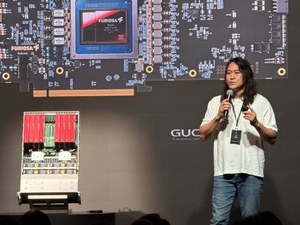
National Growth Fund to invest $531M in FuriosaAI, which rebuffed Meta's $800M takeover bid
-
INDUSTRY
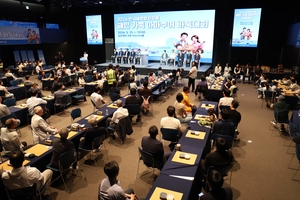
Korea Shipowners' Association holds amateur baduk tournament for Maritime Day