
- HOME
- ECONOMY
-
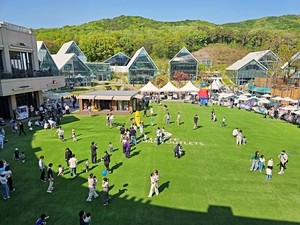
Lotte Outlets, Malls to hold 'Grand Shopping Festa' from Sept. 24 with up to 80% off
Lotte Department Store said it will hold a "Grand Shopping Festa" at Lotte Outlets and Lotte Malls from Sept. 24 through Oct. 11. The event will run across all Lotte Outlet branches and six Lotte Mall locations — Gwangmyeong, Gwangyo, Gunsan, Jinju, Suji and Eunpyeong. From Sept. 24 through Sept. 30, coinciding with the chuseok holiday, popular fashion brands will be offered at up to 80% off. Calvin Klein will provide 20% off all products, with select items discounted by up to 78%. From Oct. 1 through Oct. 11, a fall outing-themed sale will feature carry-over merchandise from brands including The North Face, Titleist, Mark & Lona and ABC Mart. Under Armour stores will offer an additional discount of up to 40%, and select locations will mark down items by as much as 80%. From Sept. 1 through Sept. 8, shoppers can receive additional discounts and free gifts on children's items from New Balance Kids and Nike Kids. An offline pop-up store will be held in collaboration with Mellow TV, a kids' YouTube channel with 940,000 followers. Experiential pop-up stores featuring global educational content properties Numberblocks and Alphablocks are also planned. Lotte Premium Outlets' Giheung branch will feature food trucks from popular food and beverage brands including Gordon Ramsay Burger, Myeongnang Hot Dog and Knotted. The Gimhae branch will host a "Moving Brewery" pop-up store offering craft beers and wines from across the country.
Sept. 17, 2026
-
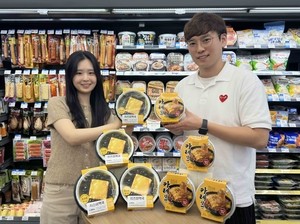
GS25 taps AI trend analysis to launch cheese seaweed soup, curry glass noodles
GS25 will launch two new convenience store products Friday — cheese seaweed soup and curry glass noodles — developed using the chain's in-house AI trend analysis system to turn popular social media recipes into ready-to-eat items. The cheese seaweed soup combines traditional miyeokguk with cheddar cheese and black pepper, drawing attention for its rich, bone-broth-like umami rounded out by a sharp peppery kick. The curry glass noodles swap out rice for dangmyeon, targeting consumers in their teens through 30s. GS25's AI trend analysis system played a central role in developing both products, scanning data from portal sites, social media platforms and online communities to detect early-stage trend signals. From trend detection to launch, the entire development cycle took less than six weeks — roughly half the approximately three months the company typically requires. "We will continue to get ahead of consumption trends and combine that with our product developers' planning capabilities to bring out differentiated products that reflect what consumers want," said Lee Do-hyeon, a manager on GS25's refrigerated and frozen foods team.
Sept. 17, 2026
-
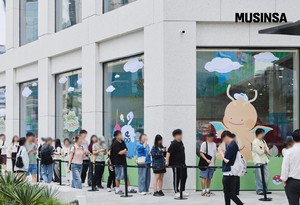
Musinsa's 'Pokémon Pocopea' pop-up draws crowds, boosts foot traffic 15%
Shoppers have been flocking to Seoul's Seongsu neighborhood to catch a glimpse of Pokémon, as Musinsa's "Pokémon Pocopea" concept store draws visitors ranging from teenagers to "kidult" fans in their 20s and 30s. According to Musinsa, foot traffic at its Mega Store Seongsu location over the weekend of Sept. 12 and 13 rose more than 15 percent compared to the same period the previous week. The event marks the first offline space in South Korea themed around the Pokémon Pocopea concept, launched to celebrate the franchise's 30th anniversary. The store features in-game-inspired sculptures and dedicated photo zones. Clothing, accessories and lifestyle items drawing on the Pokémon and Pocopea intellectual property are among the highlights. Standout products include a "Pale Pikachu" flat doll keyring with intricate embroidery detail, an offline-exclusive Pokémon Center tissue case, a reel holder, a die-cut sticker set and a keycap keyring. Customers also receive complimentary gifts with purchase. All buyers get two sticker designs, while additional rewards — including two varieties of sticky-note pads, a glow-in-the-dark Pale Pikachu keyring, and one of three Baku bag designs — are unlocked in tiers based on spending amount. "We expect strong marketing synergy between online and offline channels, as an online promotional event is running simultaneously on Musinsa and 29CM through Sept. 29," a Musinsa official said.
Sept. 17, 2026
-

Shinsegae Group opens recruitment drive for 2027 new hires
Applications open Friday Shinsegae Group announced Thursday that it will hold an open recruitment drive for new employees set to join in 2027. Ten affiliates will take part: E-mart, Shinsegae department store, Shinsegae Property, SCK Company (Starbucks), Shinsegae International, Shinsegae DFS (duty-free), Shinsegae Information & Communication, Shinsegae Food, Shinsegae Central and Shinsegae Live Shopping. Applications will be accepted from Friday through Oct. 12, with results announced in late October. Individual affiliate interviews are scheduled for November, followed by final interviews in December. Successful candidates will officially join the company in January next year. Shinsegae Group has scrapped the one-month internship that previously followed the final interview. "Eliminating the internship process allowed us to secure top talent earlier," a Shinsegae Group official said. "We look forward to receiving applications this year from young people who want to build the future alongside us."
Sept. 17, 2026
-
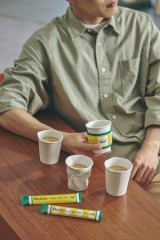
Maxim Mocha Gold sells about 5.3 billion sticks in a year as brand marks 37th anniversary
No. 1 in Korea's coffee-mix market since its 1989 launch 'Golden ratio' blend tailored to Korean tastes drives enduring appeal Brand experience events continue to reach consumers across generations Dongsuh Foods announced Thursday that Maxim Mocha Gold sold about 5.3 billion sticks over the past year, as the product marks its 37th anniversary this year. Launched in 1989, Maxim Mocha Gold has held the top position in South Korea's coffee-mix market ever since. Dongsuh Foods introduced the world's first coffee mix in 1976 and has continued developing new products since. The brand's core competitive edge lies in what it calls a "golden ratio" — a blend of coffee beans calibrated to suit Korean palates. The brand's current advertising campaign, featuring actor Park Bo-young, carries the message "Be happy now, have a cup of happiness now." At the end of the commercial, Park savors a cup of Mocha Gold in a yellow mug as the tagline appears: "This happiness, the soul knows — Korea's soul coffee." Experiential marketing has also been a consistent part of the brand's strategy. Since 2015, Dongsuh Foods has run a series of pop-up projects in major cities across the country, including Busan, Jeonju, Gunsan and Gyeongju. Each edition of the "Mocha Gold Pop-up Cafe" adopts a different theme — past iterations have taken the form of a tearoom, bookshop, photo studio, post office, broadcasting station, alleyway and traditional house. Last year's "Maxim House" in Gyeongju, which ran for about a month, drew attention as an experiential space blending traditional and contemporary sensibilities. "Maxim Mocha Gold has earned consumers' love for more than 30 years thanks to our coffee expertise and the sincerity with which we have tried to share the happiness that a single cup of coffee can bring," a Dongsuh Foods official said. "We plan to continue developing products focused on taste and aroma, while rolling out a variety of marketing activities that allow us to connect with consumers."
Sept. 17, 2026
-
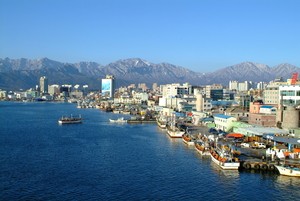
Gangwon Province cuts coastal fishing fleet again to improve industry management
'Fleet reduction is core policy for sustainable fisheries' Province previously retired 1,096 vessels; about 20 more targeted this round Gangwon Province has made another policy decision to reduce its fishing fleet as declining marine resources continue to strain the industry's finances. The provincial government announced Thursday it is investing a total of 10 billion won ($7.39 million) this year — 7 billion won from the national government and 3 billion won from provincial funds — to carry out a vessel and fixed-net reduction program for coastal and offshore fishing boats, aiming to adapt to changing fishing conditions and build a sustainable industry base. The current round targets 14 coastal fishing vessels and one fixed-net operation. Two offshore vessels are also under consideration, with additional project funding expected to be allocated by the Ministry of Oceans and Fisheries after final selection. Fleet reduction is a leading structural reform measure that lowers fishing pressure to help marine resources recover, while also supporting the financial stability of fishing operators and promoting ecosystem restoration. Since 1997, Gangwon Province has invested a cumulative 137.6 billion won to retire 1,096 vessels — 189 offshore and 907 coastal fishing boats — as part of an ongoing effort to restructure the industry. The Ministry of Oceans and Fisheries has revised and republished its implementation plan to select an additional 55 offshore vessels for retirement nationwide. Cities and counties across Gangwon Province are accepting applications for offshore vessel retirement through Oct. 6. "The fleet reduction program is a core policy for sustainable fisheries," said Nam Jin-woo, director of the Gangwon Province Marine and Fisheries Bureau. "We will spare no effort to ensure it delivers both financial stability for fishing operators and a recovery of marine resources."
Sept. 17, 2026
-
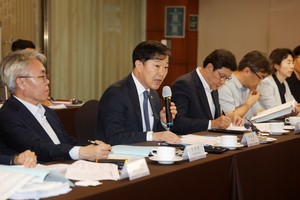
South Korea moves to tighten oversight of pharmaceutical sales contractors
Ministry of Health and Welfare holds second pharma industry innovation forum Small operators, commission structures and subcontracting arrangements flagged for reform The Ministry of Health and Welfare held the second meeting of the Pharmaceutical Industry Innovation Public-Private Consultative Body on Thursday at the Korea Press Center in Jung-gu, Seoul. The session focused on ways to strengthen oversight of contract sales organizations, or CSOs — firms that handle drug marketing and promotion on behalf of pharmaceutical companies. Government officials, public institutions, industry associations, business representatives and experts attended to review the current regulatory framework and discuss key problems and potential remedies. CSOs take on outsourced sales and promotional work from pharmaceutical companies and other clients. As drug makers have increasingly sought specialized external sales support, the sector has expanded rapidly, reaching roughly 15,000 registered operators as of 2024. Solo operators account for about 70 percent of all CSOs, leaving the market fragmented with many small players. High commission rates tied directly to sales performance, combined with multi-tier subcontracting arrangements, have made it difficult to ensure accountability and transparency in drug sales practices — and to maintain an effective regulatory system. The discussions and recommendations from Thursday's meeting are expected to inform future efforts to redefine the role of CSOs and chart a path for the broader development of the pharmaceutical industry. Jung Kyung-sil, director general for health and medical policy at the Ministry of Health and Welfare, said the rapid growth and diversifying business models of the CSO market made it essential to build a solid institutional foundation ensuring both transparency and accountability in drug sales. "Based on the diverse field opinions and expert recommendations gathered at this consultative body, we will work through the body to develop stronger measures for CSO oversight and supervision," she said.
Sept. 17, 2026
-
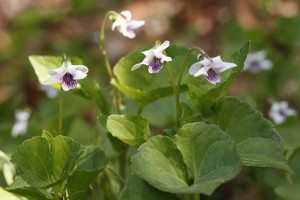
Natural compound in freshwater plant found to combat hair loss
National Nakdong River Biological Resources Center confirms dermal papilla cell growth promotion, secures patent A natural compound found in a native Korean freshwater plant has been confirmed to help improve hair loss. The National Nakdong River Biological Resources Center, under the Ministry of Climate, Environment and Energy, announced Thursday that vicenin-2, a flavonoid-class natural compound, has been newly found to promote the proliferation of dermal papilla cells, which play a key role in hair growth. Flavonoids are natural antioxidants widely present in plants that suppress free radicals and protect cells from damage. Dermal papilla cells, located at the base of hair follicles, regulate hair growth and its cycle, and are commonly used in research to evaluate the efficacy of hair-growth-related materials. Researchers at the center began analyzing the chemical composition of Viola verecunda, a freshwater plant, in 2021. In the course of that work, they identified vicenin-2 and investigated its activity in relation to hair growth. When the researchers treated dermal papilla cells with vicenin-2 at varying concentrations and measured cell proliferation, they found that cell growth increased significantly compared with the control group — by 7.4 percent at 1 μg/mL, 9.1 percent at 10 μg/mL and 14.3 percent at 40 μg/mL. Further analysis of vicenin-2's mechanism of action revealed increased activity of protein kinase B, a protein involved in the signaling pathways that regulate cell proliferation and survival. The finding indicates changes in signaling associated with the promotion of dermal papilla cell growth. Based on these results, the research team registered a patent in August for the use of vicenin-2 in hair loss improvement. "This research is significant in that it identified new hair-growth-related activity in a previously known natural compound and demonstrated its potential as a material for improving hair loss," said Jeong Yu-jin, head of the center's Applied Technology Development Division. "We will continue to discover useful compounds and new functions from freshwater biological resources, and channel those findings into the development of functional materials for use in the bioindustry."
Sept. 17, 2026
-
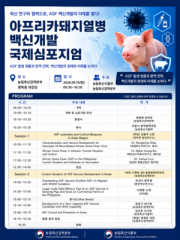
How close is an ASF vaccine? Experts from Korea, China, Vietnam and Philippines compare notes
Animal and Plant Quarantine Agency hosts international symposium with 120-plus attendees China shares data on highly pathogenic recombinant strain; Vietnam and Philippines report on vaccine rollouts South Korea unveils progress on DIVA-based live attenuated vaccine As African swine fever continues to emerge in new forms, experts from South Korea, China, Vietnam and the Philippines gathered to discuss vaccine development and field application strategies. South Korea also unveiled progress on a live attenuated vaccine incorporating DIVA technology, which allows veterinarians to distinguish vaccinated animals from those actually infected with the virus. The Animal and Plant Quarantine Agency held an international symposium Tuesday at its headquarters in Gimcheon, North Gyeongsang Province, under the theme "From Research to Field Application: Developing Safe and Effective African Swine Fever Vaccines." The agency announced the event Wednesday. ASF is a livestock disease with a fatality rate approaching 100 percent and strong transmission potential, causing severe damage to the swine industry. Earlier this year, 24 outbreaks were confirmed across seven cities and provinces nationwide. According to the agency, a new transmission route has been identified on top of the existing spread through wild boars: virus contamination in feed ingredients derived from porcine plasma protein. The agency established the link between the contaminated feed ingredients and ASF through epidemiological investigation and detailed analysis. The symposium drew more than 120 participants, including academics, officials from related agencies and representatives of animal pharmaceutical companies. The first session covered ASF outbreak trends and vaccine research across Asia. Experts from Vietnam and the Philippines — countries that have either introduced vaccines or are preparing to do so — shared updates on their domestic outbreak situations and key considerations in vaccine application. Chinese researchers presented findings on rASFV I/II, a highly pathogenic recombinant strain that emerged from a combination of ASF virus genotypes I and II. The variant has been spreading beyond China and Vietnam into Russia's Far East. A Chinese expert outlined how the disease landscape has shifted since the variant's emergence and described ongoing vaccine research aimed at countering it. The second session reviewed the state of domestic vaccine development in South Korea. Researchers presented progress on both a vaccine being commercialized by a private laboratory and the DIVA-based live attenuated vaccine under development by the quarantine agency. DIVA is a diagnostic technology that differentiates vaccinated pigs from those infected with the actual ASF virus. "We hope this symposium will serve as a milestone — not merely for academic exchange, but for building a powerful partnership that ensures the sustainability of our society and a disease-free future," said Choe Jeong-rok, head of the Animal and Plant Quarantine Agency.
Sept. 17, 2026
-

A festival where doing nothing is the whole point
A festival built around slowing down and zoning out comes to the shores of Uiam Lake in Chuncheon this weekend, running Saturday and Sunday. The scene will be an unusual one: visitors simply gazing at the lake, lost in a water-watching trance, or sitting with ears open to the sounds of early autumn. Chuncheon city has described it as "a festival where you do nothing" — yet a closer look reveals it is far more varied than the "spacing-out" competitions held at the Han River in Seoul a few years ago. Over the two days, the area around the Seomyeon Animation Museum and Chuncheon Literature Park will host a gathering where the sight of citizens and travelers simply letting everything go is itself the draw. The event is called the 2026 Seomyeon Lake Starlight Festa, and its theme is "the slowest festival to give yourself rest — two days of experiencing stillness." The idea is to pause amid the natural surroundings of Uiam Lake and let body and mind recover. As nature moves at its own unhurried pace, so do the participants. The festival centers on staying quietly, without noise. There is an "energy zone" for those who want a bit of vitality, but the heart of the festival is the "slow zone." The energy zone offers lakeside yoga, wellness activities and a lake market. The slow zone features breathing meditation, singing bowl sessions and ritual classes using tea and fragrance. The lakeside yoga program has participants moving slowly while facing Uiam Lake, focusing on their core. The singing bowl session guides attendees to concentrate on deep vibrations and resonance as a way to relax body and mind. A tea therapy class lets visitors brew local teas and focus on their aroma and flavor, while a fragrance therapy session uses locally sourced Chuncheon materials to help participants discover their own preferences. "Do-nothing time" is one of the main programs. A rest area called the "water-gazing shelter" — where visitors simply sit and look out at Uiam Lake — will be furnished with parasols and beanbag chairs, while a nearby "book lounge" will stock around 50 titles on the themes of nature and rest. A "nature sounds headset" station will also be available, where visitors put on headphones and focus on natural sounds and healing audio, letting each person enjoy quiet rest in their own way. A gentle walking program called "Slow Stroll Walk" traces a path from the Animation Museum to Chuncheon Literature Park, with a nature guide leading the way at a leisurely pace. It is the most active thing on offer for slow-zone participants. Organizers are also exploring ways to tie it in with a picnic. A lake market will showcase local products. A farmers market run in partnership with the Seomyeon residents' council will feature 12 vendors, including local farms and food culture brands. Producers and brands from the area — among them Jisiuul Brewery and Bora Sigol — will offer a range of food and drink. Ten wellness lifestyle brands will also take part. Alongside this, the festival will run 10 wellness experience programs, including a starlight diary workshop, starlight tarot readings, flower body painting, beeswax candle making, sound massage, sleep sachet making, a Seomyeon coloring postcard activity and stone drawing. Children's programs are also planned. As the sun sets on the first day, Saturday, the festival shifts into its "starlight" chapter. An acoustic starlight performance set against the scenery of Uiam Lake begins at 5 p.m., followed by an outdoor screening of "Little Forest" at 6 p.m. A drone light show painting the night sky above Uiam Lake closes out the evening at 8 p.m. For a festival that bills itself as doing nothing, Chuncheon city appears to have prepared quite a lot. Participants, it seems, will leave with plenty of gifts — despite having done hardly a thing.
Sept. 16, 2026
-

From critical minerals to high-speed rail: Seoul expands economic ties with Uzbekistan, Kazakhstan
Feasibility study launched for 56 additional high-speed rail cars Semiconductor R&D, smart grid policy advisory work planned Export-Import Bank to extend $70 million credit line to Kazakh bank South Korea is broadening its economic cooperation with key Central Asian nations, extending collaboration from critical mineral supply chains to advanced industries and financial development assistance. The government plans to use memorandums of understanding signed on the sidelines of a summit to support Korean companies seeking to enter local markets and win contracts. The Ministry of Economy and Finance announced Wednesday that it had signed multiple MOUs with Uzbekistan and Kazakhstan covering three areas: critical mineral supply chains, advanced industries, and industrial cooperation infrastructure. With Uzbekistan, South Korea will pursue cooperation on the processing, manufacturing and supply chain development of critical minerals. Rather than limiting engagement to raw material imports, the two sides will jointly identify processing and manufacturing projects that can add greater value — creating opportunities for Korean companies to participate in resource development and securing a stable supply of critical minerals. In the transportation and biotech sectors, the government will advance projects financed through the Economic Development Cooperation Fund (EDCF). A feasibility study under the EDCF will be launched for a project to supply an additional eight train sets — 56 cars in total — of high-speed rail rolling stock to Uzbekistan. Also included in the feasibility study is a plan to establish a national research facility called the Biome Center at the Tashkent Pharmaceutical Cluster, equipped with genomic analysis and cell storage capabilities. The government will also expand its Knowledge Sharing Program and Economic Innovation Partnership Program, which share South Korea's policy experience with partner countries. Starting later this year, South Korea will provide policy advisory services to help Uzbekistan establish a national research and development center for its semiconductor and electronics industries. For Kazakhstan, the government plans to support the development of a roadmap for low-carbon energy transition and the construction of an intelligent smart grid. Financial support will also be expanded. The Export-Import Bank of Korea will extend a $70 million on-lending credit line to a Kazakh commercial bank, helping local companies finance imports of South Korean products. South Korea and Uzbekistan will also set up a cooperation framework to continuously identify promising projects. The two sides plan to develop jointly pursuable initiatives centered on Uzbekistan's six national strategic industries, which include critical minerals, AI and smart cities. The Ministry of Economy and Finance said it will move forward in earnest with the cooperation projects arranged on the sidelines of this week's inaugural Korea-Central Asia Summit. The government plans to translate follow-up measures into tangible results, including helping Korean companies win local contracts and expanding investment and trade.
Sept. 16, 2026
-
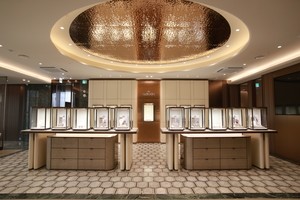
Acredo reopens Cheongdam flagship store with six-floor customization experience
Floors dedicated to consultation, customization and pickup Floors 3–5 for wedding band consultations; floor 6 reserved for product pickup German customizable wedding band brand Acredo has unveiled a renovated flagship store in Cheongdam-dong, Gangnam-gu, Seoul. The redesigned space goes beyond a conventional retail setting, bringing together the entire customer journey — from initial consultation and customization options to final product pickup — under one roof. The new Acredo Cheongdam flagship spans six floors. The ground floor houses a lobby for visitors, while the second floor showcases a selection of jewelry brands including Hoorsenbuhs and Spinelli Kilcollin. The heart of the store occupies floors three through five, dedicated to wedding band consultations. Customers can compare a wide range of options — including material, color, band width and height, surface finish and diamond setting — side by side. The layout reflects Acredo's customization philosophy, which centers on building a ring to personal taste rather than choosing from a fixed selection. Across the luxury and jewelry industry, flagship stores have been shifting from pure sales venues to brand experience spaces. As consumers increasingly research products online before visiting, physical stores have grown more important as touchpoints where shoppers can experience a brand's atmosphere and service firsthand. For high-end products in particular, a spatial strategy that turns the consultation and purchase process into a differentiated experience carries significant weight in shaping brand image. Wedding bands are products where the same design can feel and look markedly different depending on material, thickness and finish. The store's redesign places emphasis on guiding customers through a process of comparison and consultation to arrive at a ring that is truly their own, rather than simply displaying finished pieces. The vertical segmentation of the store — separating arrival, consultation, selection and pickup into distinct floors — underscores that strategy. The sixth and top floor is reserved exclusively for customers collecting their completed wedding bands. Acredo said the space was designed to make the moment of receiving a finished ring — after the wait following the order — part of the overall customer experience. The store as a whole reflects Acredo's brand identity and customization philosophy. Visitors can explore the full range of bespoke options available for Acredo wedding bands, which are crafted in Pforzheim, Germany, and move through the entire process from consultation to pickup in a single location. "We believe that every step of choosing and completing a wedding band is itself a special journey for our customers," an Acredo official said. "Through the newly renovated Cheongdam flagship store, we want to deliver the Acredo brand experience — not just through our products, but through the space, the consultation and the moment of pickup."
Sept. 16, 2026
-
Rice used in traditional liquor production rises 22-fold in 4 years as minister pushes K-food
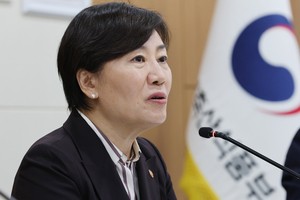
Minister Song visits rural startup in Jeongeup; local crop use jumps from 4.5 tons to projected 100 tons this year Sales climb from 500 million won to target of 2.2 billion won; local hires grow from 2 to 17 Government to boost traditional liquor consumption ahead of chuseok, with support for startups, investment and distribution A traditional liquor producer in Jeongeup, North Jeolla Province, is on track to use more than 22 times as much locally grown rice this year as it did in 2022 — rising from 4.5 metric tons to a projected 100 metric tons. Over the same period, sales are expected to climb from 500 million won ($372,000) to 2.2 billion won, and the number of local residents employed is set to grow from two to 17. The government plans to develop traditional liquor made with local agricultural produce into an industry bridging rural entrepreneurship and K-food. The Ministry of Agriculture, Food and Rural Affairs said Minister Song Mi-ryeong visited the fermentation research center of Hanyeongseok, an agricultural corporation in Jeongeup, North Jeolla Province, on Wednesday to inspect rural startup and agri-convergence industry operations. Hanyeongseok produces traditional liquor using rice grown in North Jeolla Province. Its use of locally sourced agricultural produce rose from 4.5 metric tons in 2022 to 33 metric tons last year, and the company plans to use 100 metric tons this year. Sales also increased, from 500 million won in 2022 to 1.75 billion won last year, with a target of 2.2 billion won this year. Local employment grew from two people to 8.5 over the same period and is set to reach 17 this year. The visit was arranged to promote consumption of traditional liquor and gift sets made with domestic agricultural produce ahead of chuseok. Song listened to the company's experience in rural entrepreneurship and agri-convergence operations and toured the fermentation research center. "We will actively support incubation, investment and market access so that young people and businesses can find new startup opportunities in rural areas," Song said. "We particularly plan to develop traditional liquor into a flagship K-food industry where regional agriculture and culture come alive."
Sept. 16, 2026
-
Safety by design: Labor Ministry pushes color-coded workplace hazard system
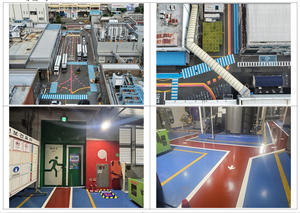
Minister Kim Young-hoon visits CJ CheilJedang's Busan factory Pedestrian and forklift routes separated; emergency exit visibility improved Manufacturers with fewer than 50 workers eligible for up to 100 million won in subsidies The Ministry of Employment and Labor is rolling out a workplace safety design initiative across industrial sites nationwide, using color coding, signage and clearly marked pathways to help workers identify hazards at a glance. Employment and Labor Minister Kim Young-hoon visited CJ CheilJedang's factory in Saha-gu, Busan on Wednesday to review how the safety design approach has been applied and to hear directly from workers on the floor. Workplace safety design is a visual improvement technique that uses color, signage and traffic routing to help older workers, foreign nationals and others quickly and accurately recognize on-site hazards. It is used to separate forklift and other cargo-handling equipment zones from pedestrian walkways, and to make evacuation routes easier to follow in emergencies such as fires. The CJ CheilJedang Busan factory, which employs about 900 full-time workers, has clearly separated pedestrian and forklift routes at intersections and crosswalks. Safety design has also been applied to the factory floor and emergency exits to improve the visibility of evacuation routes. CJ CheilJedang said it redesigned the workplace to move away from relying on individual workers' caution and self-control, creating an environment where anyone can intuitively recognize danger and act safely. "Telling workers to be careful is not enough to ensure safety," Kim said. "We need to move toward a system where the work environment itself does the work — where dangerous areas are instinctively avoided and safe routes are found by instinct." He added that intuitive safety design elements such as floor colors and lines are "an effective tool for breaking down communication barriers faced by foreign, daily-hire and older workers," and pledged to provide full technical and financial support to help successful cases spread across industrial sites. The ministry and the Korea Occupational Safety and Health Agency are covering 50 to 70 percent of workplace safety design improvement costs — up to 100 million won ($74,300) — for manufacturers with fewer than 50 workers through the Clean Workplace Support Program. Prime contractors that help cover part of the safety design costs for outside subcontractors are also eligible for government support.
Sept. 16, 2026
-

Shelter dogs get their close-up — and a shot at adoption
About 50 volunteers gather at Yeoju shelter on 2nd Animal Protection Day Photos of shelter dogs to be displayed at Seongsu-dong pop-up store, used for on-site adoption consultations Blue Angel volunteer group honored for more than a decade of stray animal service Photographs of shelter dogs at an animal protection center will be put to work finding them new homes. Rather than limiting their efforts to cleaning facilities and walking dogs, the government and a private volunteer group are photographing the animals, displaying the images publicly and connecting potential adopters with on-site consultations. The Ministry of Agriculture, Food and Rural Affairs said it held a joint volunteer event Wednesday with the Blue Angel volunteer group at Banryeo Maru, an animal protection center in Yeoju, Gyeonggi Province, to mark the second Animal Protection Day. Blue Angel is a stray animal volunteer group operated by Natural Balance Korea. Celebrities, veterinarians and animal behavior trainers take part in its activities, which focus on caring for shelter animals and promoting a culture of adoption. About 50 people participated in the event, including Director General Kim Jeong-uk of the ministry's Agricultural Industry Innovation Policy Bureau, along with other ministry staff and volunteers. They cleaned the shelter facilities, walked the dogs and tended to the animals living at the center. The volunteer work is also designed to lead to adoptions. Photos of shelter dogs taken at the event will be displayed at the second Animal Protection Day pop-up store in Seongsu-dong, Seoul, from Oct. 2 to Oct. 5. The ministry plans to let visitors get acquainted with the dogs through the photos and use them to facilitate on-site adoption consultations. The ministry also presented a certificate of appreciation to Blue Angel, which has carried out stray animal volunteer work since 2013. The group operates on the philosophy that "benefits gained through animals must be returned to animals." "We hope this volunteer activity will raise public awareness of shelter animals and serve as an opportunity to practice the values of welcoming new family members through adoption and respecting life," Kim said.
Sept. 16, 2026
-
From ugly duckling to K-beauty powerhouse: how derma cosmetics escaped the pharmacy
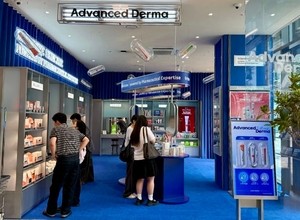
Pharmacies first appeared in CJ Olive Young's inaugural store in 1999, only to face fierce backlash from the pharmaceutical industry — and a later copycat's retreat. Twenty-seven years on, Musinsa Beauty has welcomed a pharmacy inside its store, and the derma cosmetics category is now a full-blown battleground. K-beauty has ignited a race in high-performance derma cosmetics. CJ Olive Young, one of K-beauty's dominant players, has launched a dedicated shelf section developed in partnership with pharmaceutical companies, while Musinsa Beauty has opened a store that houses an actual pharmacy. The age of derma beauty as a competitive differentiator has arrived. According to industry sources on the 16th, derma beauty refers to high-performance cosmetics grounded in scientific and medical approaches to skin care — a concept rooted in dermatology. The category was once distributed almost exclusively through dermatology clinics and pharmacies, primarily for treating skin conditions or managing post-procedure recovery. Pharmacy-style cosmetics first appeared on a domestic beauty platform in late 1999, when CJ Olive Young opened its first store in Gangnam-gu, Seoul. Of the store's roughly 330 square meters of floor space, about 82 square meters were devoted to a pharmacy, with beauty-related products — cosmetics, shampoos and the like — accounting for more than half of all merchandise. Billed as "Korea's first drugstore," the concept drew wide market attention but also triggered fierce resistance from the pharmaceutical industry. The Korean Pharmaceutical Association protested loudly at the time, calling it a large conglomerate's encroachment on the pharmacy business. CJ CheilJedang, which operated CJ Olive Young, was even sued on charges of violating the Pharmaceutical Affairs Act. Ultimately, CJ Olive Young pivoted around 2008, shifting its focus to health and beauty — the H&B format — targeting women in their 20s and 30s, which is the model it follows today. "Back then, the pharmaceutical association was showing signs of a boycott — it was closer to being an ugly duckling that couldn't coexist with the industry," one industry official said. Kolon WellCare, now known as Tissuegene, also launched a franchise pharmacy chain called W Store in 2004, but the venture never turned a profit and was eventually wound down. Paradoxically, CJ Olive Young's push into H&B ended up nurturing the derma beauty category. As the company sought out emerging small and midsize brands to compete against the large conglomerate-backed beauty road shops of the time, domestic derma labels began landing on its shelves — starting with Dr. G in 2011, followed by CNP and Dr. Jart+. Word of mouth around these high-performance cosmetics spread quickly, and the category carved out a firm place in the domestic beauty market. Derma beauty's growth phase began in earnest as K-beauty expanded onto the global stage. According to CJ Olive Young, sales of derma cosmetics to foreign customers at its offline stores grew roughly 90 percent between 2023 and 2025, and the category doubled year on year on its global online mall. Warehouse-style pharmacy chains — with names such as Doremi Pharmacy and Ready Young Pharmacy — have sprung up in prime commercial districts like Myeong-dong and Seongsu in Seoul. Foreign tourists visiting Korea have been adding these warehouse pharmacies to their itineraries alongside the so-called "Oldamu" trio of CJ Olive Young, Daiso and Musinsa. Major players have now moved into full competitive mode, each building out their derma offerings. CJ Olive Young partnered with pharmaceutical companies and has been running a dedicated "Advanced Derma" section in 650 stores nationwide since late March; sales for that section in August were up 83 percent from April, when it launched. Musinsa Beauty installed Beauty Onnuri Pharmacy on the basement level of its Hongdae store — the first beauty franchise of the nationwide Onnuri Pharmacy chain, with about 90 percent of its roughly 2,000 products being beauty-related. Hyundai Department Store is set to open the first location of its derma concept store "Coord" on Friday, occupying about 165 square meters on the basement level of its Pangyo branch. The pharmaceutical industry's attitude has also shifted. The Musinsa Beauty and Onnuri Pharmacy collaboration drew no backlash — if anything, observers say both sides have gained a powerful ally. Traditional pharmaceutical companies are also strengthening their derma beauty lineups: Dongkook Pharmaceutical's Centellian24 and Daewoong Pharma's Easydew are among the brands expanding their offerings. According to global market research firm Fortune Business Insights, the worldwide derma beauty market is projected to grow from $52.59 billion this year to $117 billion by 2034. "Consumers who once bought beauty products by brand are gradually shifting toward seeking out specific products and specific ingredients from each brand — looking for high-performance solutions tailored to their individual skin concerns," one industry official said. "As each platform competes in the derma space, the market will expand rapidly."
Sept. 16, 2026
-
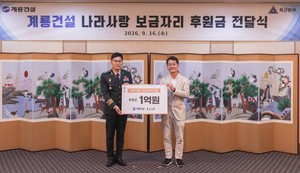
Gyeryong Construction donates W100m to improve housing for war veterans
First private company to join program in 2011, donating 100 million won annually — cumulative total reaches 1.6 billion won Gyeryong Construction has donated 100 million won ($73,900) this year to a program aimed at improving the living conditions of Korean War and Vietnam War veterans in substandard housing. Chairman Lee Seung-chan presented the donation to Army Personnel Command Commander Maj. Gen. Lee Woo-heon at a ceremony held Wednesday at Mugunghwa Hall in Gyeryong, South Chungcheong Province. The "Narasarang Bogeumjari" program — a housing support initiative for veterans — is run jointly by the Army, welfare organizations and private companies. Gyeryong Construction became the first private company to join the program in 2011 and has donated 100 million won every year since, consistently supporting efforts to improve veterans' housing and living conditions. Including this year's contribution, the company's cumulative donations have reached 1.6 billion won. This year, the program will fund the construction or renovation of homes for four veteran households in South Korea and support housing improvements for two Ethiopian veterans who fought in the Korean War. In addition, 114 low-income veteran households in rental housing are set to receive monthly rent assistance. "It is a great honor to be able to offer even a small measure of support to those who devoted themselves to our country," Lee said at the ceremony. "I want to once again express my gratitude — it is thanks to their sacrifice that we are able to enjoy a prosperous Chuseok holiday." He added that he hoped public attention and support for veterans would continue to grow, so that respect and recognition for their service could spread further throughout society.
Sept. 16, 2026
-
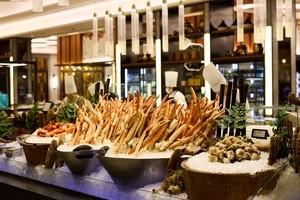
Jeju Dream Tower's Grand Kitchen buffet relaunches with premium K-food menu
Lotte Tour Development announced Wednesday that Grand Kitchen, the buffet restaurant at Grand Hyatt Jeju inside the Jeju Dream Tower integrated resort, has been relaunched with a menu centered on K-food. New signature dishes include Jeju black pork samgyeopsal grilled over straw, premium Korean beef sirloin (grade 1 or higher), fried back ribs, LA galbi in a special sauce and dombe-gogi. The menu also features seafood — grilled Jeju hairtail, snow crab, soy-marinated and spicy marinated crab, abalone sashimi and raw fish rice bowls — alongside assorted Korean pancakes, sundae and fried chicken. Desserts include traditional yakgwa, Jeju Karrot cake and hallabong scones. "Guests can enjoy the most popular hansik dishes and Jeju culinary specialties all in one place," a Lotte Tour Development official said. "Grilled freshwater eel, which is rarely found at buffets, is prepared fresh tableside by a chef at the live kitchen station." Grand Kitchen is led by Executive Chef Kim Young-min, who has more than 20 years of experience, including a stint as head chef at Fontana, the buffet restaurant at Wynn Palace integrated resort in Macau. The restaurant's seven stations — including a Korean hot food station, a grill and a seafood counter — are staffed by about 30 chefs, including Kim. Located on the fourth floor, Grand Kitchen charges 60,000 won ($44) per adult for breakfast, 75,000 won for lunch and 119,000 won for dinner. Children aged 5 and under are admitted free.
Sept. 16, 2026
-

Korea Customs Service releases HS code cross-reference table for new US tariffs
Polysilicon derivatives, unmanned aircraft systems among items listed on agency website; 10-digit code linkage allows easy lookup The Korea Customs Service on Wednesday published a Korea-US Harmonized System code cross-reference table on its website, covering items the United States announced as subject to new product-specific tariffs in August. According to the agency, polysilicon derivatives produced in South Korea — including ingots, wafers, solar cells and modules — will face a 15 percent tariff beginning Dec. 4. If the US import declaration price for polysilicon or its derivatives falls below the minimum import price set by the United States, or if price documentation is not submitted, a specific duty may be imposed on top of that rate. Unmanned aerial vehicles, drone docking stations, and components of drones with a maximum takeoff weight exceeding 25 kilograms will be subject to a 15 percent tariff starting Sept. 3, while other drone parts will face the same rate from Feb. 9 next year. The Korea Customs Service also released a separate Korea-US HS code cross-reference table on Aug. 24 covering items excluded from US import restrictions related to forced labor; that material is likewise available on the agency's website. The agency said it will continue to update product-specific cross-reference tables in line with changes in US tariff policy to support South Korean exporters, and will help companies adapt to shifting tariff conditions through a fast-track advance ruling service operated by its US Tariff Classification Consultation Center.
Sept. 16, 2026
-
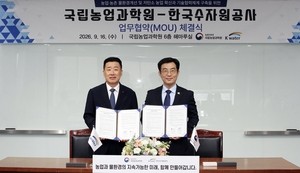
Korea Water Resources Corporation signs MOU with National Institute of Agricultural Sciences to improve water quality upstream of dams
Low-carbon, eco-friendly agricultural technologies to be developed and deployed to reduce non-point source pollution near dams Biochar to be distributed upstream of Soyang River Dam to demonstrate water quality improvement and greenhouse gas reduction Korea Water Resources Corporation (K-water) signed a memorandum of understanding with the National Institute of Agricultural Sciences on Wednesday at the institute's campus in Wanju-gun, North Jeolla Province, to cooperate on improving water quality in agricultural and rural areas and expanding low-carbon farming practices. The agreement aims to reduce non-point source pollutants from farmland upstream of dams, improve the surrounding water environment and foster a more sustainable agricultural ecosystem. Under the MOU, K-water will combine its dam watershed management expertise with the institute's agricultural and environmental research capabilities. The two organizations plan to identify low-carbon, eco-friendly farming technologies that can improve both soil and water conditions, and jointly verify their effectiveness at dam upstream sites. As a first step, the two sides will distribute biochar — a carbon-rich material produced by pyrolyzing biomass such as wood at temperatures above 350 degrees Celsius in a near-oxygen-free environment, which strongly adsorbs pollutants such as nitrogen and phosphorus in farmland — in areas upstream of the Soyang River multipurpose dam. The pilot will verify the extent to which biochar reduces nutrient runoff under actual upstream conditions, confirm its effects on water quality and greenhouse gas reduction, and establish site-specific guidelines for appropriate application rates. The two organizations also plan to form a working-level consultative body by October and hold regular meetings once every six months to share field application results. "This agreement will serve as an opportunity to enhance water environment outcomes in dam upstream watersheds by combining K-water's field execution capabilities with the National Institute of Agricultural Sciences' research expertise," said Jang Byeong-hun, head of K-water's water resources and environment division. "We will continue to expand the on-site application of low-carbon, eco-friendly agricultural technologies to protect clean water and build a sustainable agricultural foundation."
Sept. 16, 2026
MOST READ
- 1KAIST develops high-performance bio-based adhesive using E. coli instead of petroleum
- 2Pope Leo XIV declines French honors and banquet, accepts only private meeting with Macron
- 3Daimler Truck unveils next-generation transport solutions at IAA 2026
- 4What was Rachmaninoff's performance fee? A 1928 price list tells all
- 5Samsung Biologics union's show of force backfires at the bargaining table
- 6APR says hair-loss treatment research published in international journal
-
WORLD

US warns of punishment for anyone enabling Iran's Strait of Hormuz toll scheme
-
INDUSTRY
Toyota union puts productivity first; Hyundai Motor union demands bigger share of profits
-
FINANCE
National Growth Fund to invest $531M in FuriosaAI, which rebuffed Meta's $800M takeover bid
-
INDUSTRY
Korea Shipowners' Association holds amateur baduk tournament for Maritime Day