Korea Rural Community Corporation hosts 10 Kenyan officials
Participants visit reservoir, pumping station to study water supply
Field training covers groundwater dam, digital monitoring technology
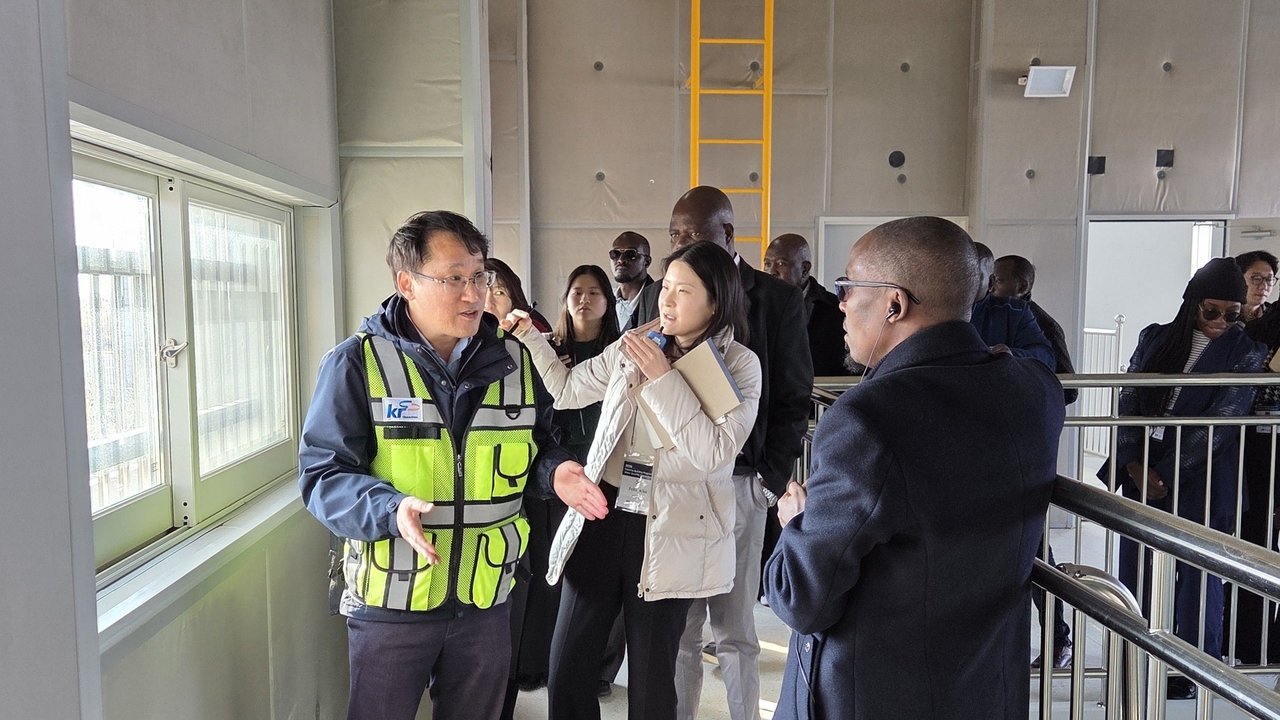
Kenyan water management officials struggling with water scarcity caused by climate change visited South Korea to learn about agricultural water supply and groundwater management technology. They toured agricultural water supply facilities including reservoirs and pumping stations, and received training on using groundwater monitoring data to respond to drought.
The Korea Rural Community Corporation said Tuesday it participated in the "Kenya Water Security Capacity-Building Invitation Training" organized by the UNESCO International Centre for Water Security and Sustainable Management, conducting education on agricultural water and groundwater management.
The corporation ran the training program Wednesday and Thursday for 10 officials from Kenya's Ministry of Water, Sanitation and Irrigation and the Regional Centre for Groundwater Resources Education and Training.
Kenya has been focusing on improving agricultural water use efficiency and sustainable groundwater management as climate change makes water resource security increasingly difficult. The training was organized to share South Korea's water resource management experience and technology.
On the first day, participants visited Wangsong Reservoir, the Hwawong district pumping station and water quality improvement facilities. They examined methods for securing and storing agricultural water, operating irrigation infrastructure and carrying out large-scale agricultural development projects.
The second day focused on groundwater development and digital management technology. The corporation introduced its groundwater network expansion and groundwater dam projects, and demonstrated its public well management system and disaster prevention monitoring system.
Officials also shared methods for assessing regional drought vulnerability using groundwater monitoring data.
An official from Kenya's Ministry of Water, Sanitation and Irrigation who attended the training said participants were able to see firsthand South Korea's systematic agricultural water and groundwater management systems and advanced technology, adding they would work to apply the lessons learned to strengthen Kenya's capacity for stable water resource management.
Lee Young-hoon, president of the Korea Rural Community Corporation's Human Resources Development Institute, said the training was an opportunity to share the corporation's accumulated experience in agricultural water and groundwater management with Kenyan water officials. "We will continue to strengthen climate change response capacity and expand international cooperation in water management through education and technology exchange tailored to the needs of partner countries," Lee said.
adastra@heraldcorp.com