
- HOME
- ECONOMY
-
Alaska LNG left out of $200B US investment pledge — but Middle East war puts it back on the table
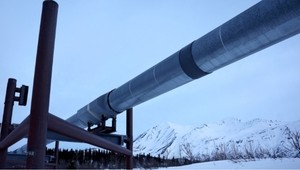
MOU with US expected around Friday; Foreign Minister Cho heads to Washington Alaska LNG project under review for energy security despite commercial doubts Westinghouse stake emerges as key sticking point; voting rights seen as dealbreaker Concerns are mounting over the scale, project selection and profit-recovery terms of a planned memorandum of understanding on South Korean investment in the United States, as the two sides prepare to sign the deal. The Donald Trump administration is pressing Seoul for additional commitments and unfavorable conditions beyond what was originally agreed, with midterm elections approaching in November. Analysts say Washington is exploiting South Korea's vulnerability — the fact that the negotiations are intertwined with trade and security issues, making it impossible to evaluate the deals on commercial merit alone. The government is set to brief the National Assembly on the outcome of the US investment negotiations on Thursday, then sign the MOU with Washington as early as Friday, according to sources familiar with the matter. Foreign Minister Cho Hyun has traveled to the United States ahead of the signing for last-minute consultations. However, the signing could be delayed depending on how the negotiations proceed. The US investment projects currently under discussion include a gas combined-cycle power plant in Encinal, Texas, and a large-scale nuclear power plant construction project on American soil. The Alaska liquefied natural gas project has since emerged as an additional investment candidate, and a potential equity stake in US nuclear company Westinghouse has surfaced as a central variable in the talks. According to political and government sources Wednesday, Seoul has settled on an approach that keeps the Alaska LNG project on the table without committing to it immediately, opting instead to conduct further reviews of its commercial viability and participation terms. The project has long been viewed as a question mark for profitability, given high construction and transportation costs, US labor costs and inflation, and environmental regulations. But with the ongoing conflict in the Middle East deepening fears of a global oil and gas supply disruption, the project is now being reconsidered as part of a broader push to diversify energy procurement away from the Middle East. Shipping LNG from Houston — close to shale gas fields in Texas — to South Korea or Japan takes at least three weeks, and up to a month if the Panama Canal is blocked. From Alaska, the journey takes about a week. Large LNG carriers in particular struggle to transit the Panama Canal, meaning they must take the route around Africa's Cape of Good Hope, which can add 45 to 50 days to the voyage. The project is, however, a mega-investment expected to cost $44 billion, and expenses could balloon as a 1,300-kilometer pipeline is laid across frozen permafrost. Political risk is another concern: the project's fate has already swung dramatically with changes in administration. Originally pursued during Trump's first term, it was halted under the Joe Biden administration over climate change concerns, threats to wildlife refuges, and opposition from Alaska's Indigenous communities and environmental groups. Finding a suitable Korean company to lead the project is also a challenge. Korea Gas Corporation, a state-owned enterprise, is in serious financial distress — its debt swelled to 47 trillion won ($34.7 billion) after it was hit hard by surging international energy prices during the Russia-Ukraine war, leaving it in no position to raise additional funds. A potential equity stake in Westinghouse has also emerged as a central issue in the negotiations. The US government is said to have proposed that South Korea acquire a stake in the nuclear company, with the apparent aim of combining South Korea's nuclear construction capabilities with Westinghouse's core technology to support the expansion of nuclear power in the United States. Washington is receptive to Korean investment and project participation, but cautious about allowing management involvement such as board representation. South Korea is simultaneously a business partner of Westinghouse and a competitor in the global nuclear market, analysts say. The US side is said to have proposed that South Korea take only a minority stake of 5 to 10 percent. Westinghouse is currently owned by Canadian private equity fund manager Brookfield, which holds 51 percent, and Canadian uranium miner Cameco, which holds 49 percent. "The Westinghouse stake percentage is still being negotiated, but the figure of 15 percent will not be on the table," a political source said. "The prevailing view on the US side is that they will not give Korea a stake that carries voting rights." South Korea's investment in Westinghouse is expected to run into the trillions of won. Applying the market-cited valuation range of $15 billion to $20 billion, a 15 percent stake would be worth $2.25 billion to $3 billion. Westinghouse currently has six board members, with Brookfield and Cameco each nominating three. If South Korea secures the right to nominate a board member, it would alter the governance structure the two companies have divided between themselves. South Korea and the United States originally agreed last year during trade negotiations on a total of $350 billion in Korean investment in the US. Of that, $150 billion was earmarked for shipbuilding cooperation and $200 billion for strategic investment. The problem is that the projects currently under discussion could consume a substantial portion of the strategic investment budget on their own. The cost of the Encinal gas combined-cycle power plant has reportedly risen from an initial $16.8 billion to $20 billion, and then again to around $22.3 billion. Adding the plan to build eight nuclear reactors in the United States, total investment could exceed $140 billion. The government maintains that investment will not exceed the agreed cap or annual remittance limits. Even so, if individual projects are structured with unfavorable profitability terms or risk-sharing arrangements, South Korea's financial burden could grow significantly. "Commercial rationality" is not a condition South Korea unilaterally imposed — it is a principle embedded in the domestic special legislation governing US investment and in the bilateral investment framework itself. "South Korea and the US agreed last year to select US investment projects based on commercial rationality, but now, just before the final announcement, that is being overridden by security and other considerations," said a source with direct knowledge of the negotiations. "With the US sending Korea bill after bill ahead of its midterm elections, I wonder whether the officials actually at the negotiating table are failing to hold their ground."
Sept. 16, 2026
-
Gov't to maintain 24-hour emergency operations over Chuseok holiday
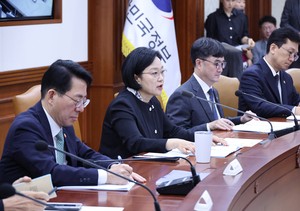
Ministry of Interior and Safety leads pan-government Chuseok safety plan AI-powered big data to flag 50 high-risk road sections for drivers 24-hour emergency care maintained; nationwide livestock farm disinfection set before and after holiday The government will maintain a 24-hour emergency management system throughout the Chuseok holiday from Sept. 24 to 27, conducting advance inspections of local festivals and traditional markets. Authorities will also step up efforts to prevent fires and crimes, maintain emergency medical services, and contain the spread of infectious and livestock diseases. The Ministry of Interior and Safety announced Wednesday that a pan-government "Chuseok Holiday Safety Management Plan" was finalized at the 14th National Policy Coordination Meeting, chaired by Prime Minister Han Seong-sook. The ministry's Central Disaster and Safety Countermeasures Headquarters will lead a round-the-clock situation management system in coordination with relevant agencies and local governments, with the capacity to shift immediately to a full pan-government emergency response if a disaster occurs. Before the holiday, authorities will inspect major venues expected to draw large crowds — including local festivals and traditional markets — and address any safety hazards. Displaced residents who have been unable to return home for an extended period due to flooding or property damage caused by heavy rains in July and August will receive rental assistance for temporary housing. Traffic safety measures will also be reinforced ahead of the surge in holiday travelers. The Ministry of Land, Infrastructure and Transport will operate a joint government special traffic management task force for five days starting Tuesday. Special safety inspections will cover expressways, national highways and privately operated toll roads, and AI-powered big data analysis will identify 50 high-risk road sections. Drivers will be alerted to those sections through navigation apps and electronic road signs. The Ministry of Oceans and Fisheries will operate a special passenger ferry traffic management task force and deploy additional vessels to boost transport capacity. Joint inspections of ferries and excursion boats will check life jackets and other rescue equipment, as well as insurance coverage. Fire and wildfire response will remain on heightened alert. The National Fire Agency will place fire station chiefs on special standby duty, while the Ministry of SMEs and Startups will conduct safety inspections of traditional markets together with regional small and medium enterprise offices and the Korea Federation of Small and Medium Business. The Korea Forest Service will keep firefighting helicopters, vehicles and personnel on emergency standby, dispatching the nearest available helicopter first in the event of a wildfire. To prevent everyday crimes and strengthen maritime security, the Korean National Police Agency will elevate its holiday situation manager from superintendent to assistant commissioner general and intensify crackdowns on street crimes such as robbery and theft. With the short Chuseok break expected to leave more single-person households behind this year, the agency also plans to expand patrols in areas with high concentrations of single-occupant residences. To sustain emergency medical services and prevent the spread of infectious diseases during the holiday, the Ministry of Health and Welfare will keep 416 emergency medical institutions and 113 emergency medical facilities operating around the clock. The KDCA will run a 24-hour reporting system for suspected cases of Class 1 infectious diseases and plans to offer respiratory infection testing as well as rapid diagnostic kit screening for dengue fever and malaria to international arrivals. The Ministry of Agriculture, Food and Rural Affairs has designated Sept. 23 and Sept. 28 — the days immediately before and after the holiday — as nationwide simultaneous disinfection days to prevent the spread of foot-and-mouth disease, with livestock farms and related facilities to be disinfected all at once. "We will work closely with relevant agencies throughout the Chuseok holiday to maintain a thorough emergency management system for public safety," Interior and Safety Minister Yun Ho-jung said. "We also ask the public to check safety information in advance, including emergency contact numbers for reporting incidents or seeking assistance."
Sept. 16, 2026
-
Seoul loses nearly 1,700 franchise eateries in a year
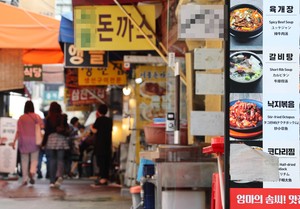
Seoul franchise restaurant count drops 1,680 in second quarter Korean-food franchises shrink 7.6%; coffee and snack chains also contract Rising costs and falling margins push brands to exit the market A, who retired two years ago, opened a chicken franchise store in Eunpyeong-gu that same year, drawn by promises of earning several million won a month. But expenses outpaced income, and by late last year he had let go of his part-time staff. "I thought the barriers to entry were low and saw it as a second chapter in life," he said. "But I've come to realize the reality is far from easy." Nearly 1,700 franchise restaurant locations have vanished from Seoul in a year — a signal that even the franchise model, long regarded as a stable business option, is beginning to crack. According to the Seoul Metropolitan Government's commercial district analysis service, the total number of restaurant establishments in Seoul stood at 153,205 this year, down 3,903, or 2.5 percent, from the same period a year earlier. Among them, non-franchise locations numbered 123,728, a decline of 2,223, or 1.8 percent. Franchise locations fell far faster, dropping 1,680, or 5.4 percent, to 29,477 — a rate roughly 3.1 times that of non-franchise outlets. Franchises account for about 20 percent of all restaurant establishments in Seoul, yet they made up 43 percent of the total decline. By category, hansik franchise locations — covering noodle shops, gomtang restaurants and dak-galbi joints — recorded the steepest drop, falling 550, or 7.6 percent. Hansik franchises represent about 23 percent of all franchise restaurant locations in Seoul. Coffee and beverage franchises, including budget coffee chains, shrank by 318, or 4.4 percent, while snack-food franchises serving kimbap and tteokbokki fell by 206, or 7.1 percent. Chicken franchises declined by 137, or 3.6 percent, and beer-and-snack bars by 121, or 6.6 percent. Profitability data reinforce the trend. A 2025 survey of restaurant business conditions conducted by the Ministry of Agriculture, Food and Rural Affairs and the Korea Rural Economic Institute found that the operating profit margin for the restaurant industry fell from 12.1 percent in 2020 to 8.7 percent in 2024. Franchise restaurants fared worse than their non-franchise counterparts, posting an operating profit margin of 8.5 percent against 8.9 percent. Some 94.3 percent of franchise restaurant operators cited rising ingredient costs as their top business challenge, followed by intensifying competition at 89.1 percent and higher rents at 87.4 percent. A key factor behind the steeper decline among franchises is the cost burden unique to franchisees, particularly differential franchise fees. According to the Korea Fair Trade Commission's 2025 franchise industry report, the average differential franchise fee paid by food-service franchisees in 2024 was 26 million won ($19,200), up 13.0 percent from the previous year. Over the same period, average sales growth for food-service franchisees was limited to 6.1 percent. Rent has added to the strain. Monthly rent per 3.3 square meters in Seoul rose 3.8 percent year on year to 147,067 won, according to the Seoul Metropolitan Government's commercial district analysis service. In Gangnam-gu the figure jumped 12.0 percent to 202,611 won, while in Mapo-gu it rose 16.0 percent to 204,082 won. A growing number of franchise brands are also winding down their operations entirely. A review of the Korea Fair Trade Commission's franchise information disclosure system shows that 1,345 brands had their disclosure registrations canceled between January and August this year, up 3.2 percent from the same period a year earlier. Cancellation of a disclosure registration in effect means the brand has ceased its franchise business. Recent examples include Lotte Wellfood's ice cream brand Natuur and Eland Eats' bakery brand Frangerie, both of which have had their disclosure registrations canceled. Two other Eland Eats brands — Asia Moon and Rimini — have also halted their franchise operations. Notted, a donut brand that once drew lines of customers waiting for stores to open, and Tiger Sugar, a Taiwanese brown-sugar milk tea brand, have likewise exited the franchise business. "Food-service franchises are struggling because high inflation and high interest rates persist, and ordinary people have less money to spend," said Kim Dae-jong, a professor at Sejong University's School of Business Administration. "Competition has also intensified simply because the number of franchise operators — from chicken shops to cafes — has grown far too large."
Sept. 16, 2026
-
Agencies under welfare ministry fail to meet mandatory disability hiring quota
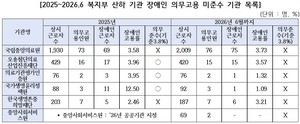
Number of non-compliant agencies rises from 2 in 2025 to 6 in 2026 Baek Jong-heon calls for job development tailored to disability types More agencies under the Ministry of Health and Welfare — the government body responsible for disability policy — failed to meet the legally mandated disability employment quota this year than the year before, new data shows. According to materials submitted to People Power Party lawmaker Baek Jong-heon of the National Assembly's Health and Welfare Committee, six of the ministry's 29 affiliated agencies fell short of the mandatory disability hiring rate in 2026, up from two in 2025. Under the Act on the Employment Promotion and Vocational Rehabilitation of Persons with Disabilities, public institutions are required to fill a set proportion of their regular workforce with people with disabilities. The mandatory rate for public institutions has stood at 3.8 percent since 2024. The six non-compliant agencies are the National Medical Center, the Osong Medical Innovation Foundation, the Korea Institute for Healthcare Accreditation, the National Bioethics Policy Institute, the Korea Foundation for Suicide Prevention and the Central Social Service Agency. The National Medical Center has failed to meet the quota for four consecutive years, while the Korea Foundation for Suicide Prevention has missed it for two consecutive years. Agencies that fall short of the mandatory disability employment rate must pay a levy based on the number of positions left unfilled. "The Ministry of Health and Welfare is the lead agency responsible for disability policy in Korea and for expanding the independence and social participation of people with disabilities," Baek said. "The fact that its affiliated agencies cannot even meet the minimum legally required disability employment rate — and that the number of non-compliant agencies has actually grown — undermines the credibility of the very institutions entrusted with disability policy." Baek said the agencies should not treat the levy as a substitute for accountability. "They need to examine why each agency is falling short and actively correct the problem, while also developing jobs suited to different types of disabilities and expanding hiring to create real employment opportunities for people with disabilities," he said.
Sept. 16, 2026
-
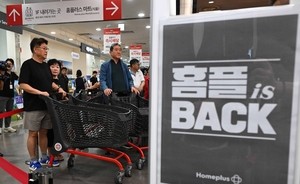
Homeplus to kick off major Chuseok sale Thursday, with samgyeopsal at 990 won per 100g
Homeplus will launch a large-scale discount event Thursday, one week before Chuseok. The retailer announced Wednesday it will hold its second "Homeplus is BACK" campaign, offering discounts on about 3,600 products including samgyeopsal, pork neck, Korean beef, eggs, fish and fruit. The event follows a Chuseok price-stabilization campaign that began Sept. 10. The sale is open to MyHomeplus membership holders. At physical stores, the popular "Bomeokdwae" pork — raised on barley — will be sold at half price from Thursday through Sunday, with samgyeopsal and pork neck priced at 990 won per 100 grams. The 50 percent discount applies to all Bomeokdwae cuts. Korean beef will also be available at up to 50 percent off across all cuts, with grade-1 and grade-1-plus beef brisket for soup priced at 3,300 won and 3,400 won per 100 grams, respectively. A 30-pack of domestically produced fresh eggs will be discounted by 2,000 won when paid with a promotional card. Fhira Norwegian fresh salmon — both grilling and sashimi cuts — will receive a 50 percent members-only discount. A 4-kilogram box of Shine Muscat grapes and a 3-kilogram bunch of Campbell grapes will each be discounted by 5,000 won with a promotional card payment. Nine varieties of tofu, more than 30 types of oyster sauce and soy-based condiments, more than 10 types of yogurt and flavored milk, and more than 20 types of pasta sauce and noodles will be offered on a buy-one-get-one basis, as will 10 Coca-Cola beverage products. From Thursday through Sunday, more than 20 types of ketchup and mayonnaise, all pizza products, and all hot dog and pork cutlet products will also be sold on a buy-one-get-one basis. Foods needed for ancestral rite preparations and a variety of Chuseok gift sets will also be available. "This goes beyond simply discounting popular products — we have completed restocking more than 3,600 essential items," a Homeplus official said. "We have prepared a wide range of products, including key food items and Chuseok ritual goods, at strikingly low prices."
Sept. 16, 2026
-
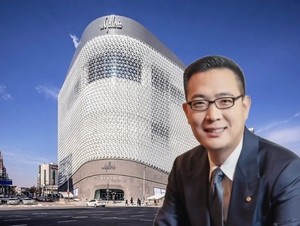
Kim Dong-sun bets on real estate as Hanwha Galleria eyes Daejeon exit, Apgujeong overhaul
Hanwha M&S pushes into property development Galleria Daejeon stake to be sold in full Apgujeong luxury mall, Plaza Hotel set for redevelopment High-end housing project launched in Sinsa-dong Kim Dong-sun, the third son of Hanwha Group Chairman Kim Seung-youn and president of Hanwha Machinery & Services Holdings (Hanwha M&S), is accelerating a sweeping restructuring of the conglomerate's lifestyle businesses — spanning department stores and hotels — with a growing emphasis on real estate development. Industry sources said Wednesday that Hanwha Galleria, the retail arm of Hanwha M&S, is moving to sell its Daejeon Timeworld store by divesting its entire 100 percent stake in Hanwha Galleria Timeworld. The company is in detailed talks with Lotte Shopping, operator of Lotte Department Store, over the terms of a share purchase agreement. Lotte Department Store currently operates its Daejeon location in a leased building about 1.6 kilometers from Galleria Timeworld. Hanwha Galleria recently informed employees of the planned transfer through internal briefings and the labor union. As concerns over job security mounted, the company arranged separate talks with the union to address the issue and is taking steps to ensure a smooth sale process. About 190 employees currently work at the Timeworld store. A union official said the collective bargaining agreement requires management to consult the union at least 60 days before any merger or sale, adding that a share transfer agreement could be signed in November. Hanwha Galleria, however, said "nothing has been decided." Galleria Timeworld posted sales of 603.2 billion won ($446 million) last year, a 3.6 percent decline from the previous year — a contrast to nearby Shinsegae and Lotte department stores, which continued to grow. Across Hanwha Galleria's network, every location outside the flagship Apgujeong luxury mall — which exceeded 1 trillion won in sales last year — posted a decline: Gwanggyo was down 0.1 percent, Cheonan Center City fell 7.0 percent, and Jinju dropped 5.7 percent. The decision to sell Timeworld reflects a "focus and select" strategy of shedding underperforming stores to channel resources into stronger locations and property development. Hanwha Galleria Timeworld's total assets stood at 284.1 billion won at the end of last year, and a full stake sale is expected to bring in hundreds of billions of won. The proceeds would also ease the financial burden of a seven-year renovation of the Apgujeong luxury mall set to begin next year, a project estimated to cost around 900 billion won. Hanwha Galleria established a real estate development subsidiary last month and is pursuing a high-end residential project on a site in Sinsa-dong, Gangnam-gu, Seoul, acquired through a public auction for 236.7 billion won. The company is also reviewing how to use a building and land in Sunhwa-dong, Jung-gu, Seoul, acquired in June for 213.5 billion won. Hanwha Hotels & Resorts, another pillar of Hanwha M&S, will suspend operations at The Plaza hotel on Sept. 30 and begin a three-year renovation. The hotel plans to reopen as a seven-star high-end property, upgrading its rooms and common areas to target global VIP guests and bringing in world-class fine-dining offerings. The renovation is part of a broader integrated redevelopment of Sogong Districts 1, 2 and 3 slated for completion by 2029. The plan calls for a simultaneous overhaul of The Plaza in District 1, Hanwha Building in District 2, and Hanwha Finance Plaza in District 3, transforming the cluster into a mixed-use hub combining hotel, office, cultural and commercial functions. The food and beverage business is also being reshaped. OurHome, acquired last year, expanded its scale by taking over Shinsegae Food's institutional catering operations and is strengthening its restaurant business around the buffet brand Take. Hanwha Galleria's premium ice cream brand Benson, launched last year, is targeting 30 locations this year. Hanwha Galleria is also pursuing the sale of Five Guys — a chain Kim led the acquisition of — aiming to exit at roughly three times the original purchase price. Industry watchers are taking note of Kim's pace of restructuring, coming barely a month after Hanwha M&S was launched as a new holding company combining the tech and lifestyle divisions. The strategy is seen as one of building scale through real estate development while consolidating Hanwha's position in retail and hospitality through a high-end positioning. "Kim has been aggressively pursuing real estate development around the launch of Hanwha M&S, expanding the company's footprint — it looks like he is laying the groundwork for independent management," an industry official said. "But there are still things he needs to prove: how he will generate synergies between real estate development and the existing businesses, and whether he can secure a stable cash-generating base."
Sept. 16, 2026
-
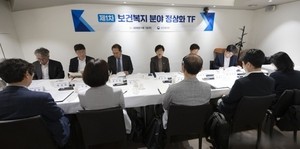
South Korea to apply reciprocity to foreigners' pension catch-up payments
Ministry of Health and Welfare launches task force to review fairness of social security system The Ministry of Health and Welfare held the second meeting of its Health and Welfare Normalization Task Force — also serving as the inaugural meeting of a newly launched Social Security Fairness Review and Improvement Committee — on Wednesday at Conference House Dalgaebi in Jung-gu, Seoul. The meeting reviewed the progress of first-round normalization tasks selected through the task force's initial session and consultations with the Office for Government Policy Coordination, and discussed a set of newly identified second-round candidate tasks gathered through working-level official discussions and public suggestion channels. One key item on the agenda was reforming how the national pension's catch-up payment system applies to foreign nationals. While foreigners are currently eligible to make catch-up contributions to the national pension, many of their home countries do not operate equivalent systems. The meeting discussed applying the reciprocity principle — already in place for mandatory enrollment and lump-sum refund provisions — to the catch-up payment system as well. The meeting also took up the question of equity for people with dual nationality or those who have lived abroad for extended periods and then entered South Korea to claim basic pension benefits. Participants discussed imposing a minimum domestic residency requirement for basic pension eligibility, citing fairness concerns relative to citizens who have lived in South Korea and consistently met their tax obligations. The ministry said it will incorporate feedback from internal and external experts presented at the meeting, refine the candidate tasks, and then consult with the Office for Government Policy Coordination and related ministries before finalizing the second-round normalization tasks. Once finalized, tasks that can be addressed through internal guidelines will be implemented immediately, while those requiring amendments to enforcement decrees or other legislation will be pursued with a target of completion by year's end. The normalization initiative is part of a broader government normalization project aimed at identifying and correcting irregular practices, entrenched illegal or improper conduct, and flawed systems in the health and welfare sector. The Health and Welfare Normalization Task Force, the body overseeing these reform discussions, is chaired by the welfare minister and composed of private-sector experts and government representatives. The Social Security Fairness Review and Improvement Committee, launched at Wednesday's meeting, will be chaired by the welfare minister and operate as a consultative body comprising six working groups and staff from operational and public-inquiry divisions of key affiliated public institutions. The committee will review social insurance, social security benefits and other programs where current rules are seen as out of step with public expectations. Drawing on reform proposals identified through the government normalization project and field suggestions from major affiliated public institutions, it will focus on loopholes and evasion, improper conduct and unjust gains, and repeat complaint cases. "Together with the Health and Welfare Normalization Task Force, we will again carefully examine whether there are any systemic loopholes that run counter to common sense and the principle of fairness," Health and Welfare Minister Jeong Eun-kyeong said. "Going forward, the ministry will continue working to improve the social security system in a precise and fair manner that meets the public's expectations."
Sept. 16, 2026
-
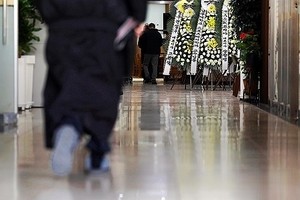
Red Cross hospital staff took kickbacks to steer grieving families to funeral vendors
Seoul Red Cross Hospital employees pocketed about 166.76 million won in illicit referral fees from a funeral services company; Geochang Red Cross Hospital staff collected kickbacks on memorial photos, meal deliveries and falsified embalming records Employees at funeral halls run by hospitals under the Korean Red Cross have been caught steering bereaved families toward specific funeral service and supply vendors in exchange for secret payments totaling hundreds of millions of won. The findings emerged Wednesday when Rep. Heo Jong-sik of the Democratic Party of Korea, a member of the National Assembly's Health and Welfare Committee, released documents obtained from the Korean Red Cross. The materials showed that funeral halls at Seoul Red Cross Hospital and Geochang Red Cross Hospital had engaged in systematic illegal kickback schemes targeting grieving families. At Seoul Red Cross Hospital — the largest of the facilities involved — five employees, including an administrative assistant identified as A and four funeral directors, began in August 2022 referring families who had not pre-enrolled in a funeral services plan to a specific company in exchange for cash. The group operated a structured kickback-sharing arrangement: for each referral, the funeral services company paid 800,000 won, of which A kept 350,000 won while three funeral directors split the remaining 450,000 won equally at 150,000 won each. When individual referral fees, unauthorized external embalming charges and amounts wired directly to vendors were all tallied, the total reached 166.76 million won ($123,000). When an internal audit began, the employees attempted to conceal the payments by disguising them as "external embalming labor costs," according to the Korean Red Cross. The Korean Red Cross dismissed all five employees in June, and police are currently investigating the case. Similar misconduct was also uncovered at Geochang Red Cross Hospital, a regional public hospital. Two funeral directors at Geochang Red Cross Hospital, identified as B and C, were found to have continuously accepted kickbacks from a memorial photo printing company and a dosirak delivery company since 2022, splitting the proceeds evenly between them. For each memorial photo printed, the pair collected 40,000 won — half of the 80,000 won fee charged to families — pocketing a total of 280,000 won across seven transactions. They also referred families to a dosirak company in Daegu, receiving 20 percent of each delivery order as a referral fee, and collected 1 million won ($739) in cash along with 200,000 won in holiday fuel vouchers across 10 transactions. The two also falsified records on weekends and holidays to make it appear that outside funeral directors had performed embalming services, fraudulently collecting 2.3 million won in fabricated embalming fees across 23 instances. B separately received 500,000 won for providing labor directly to an outside vendor. The Korean Red Cross dismissed B and fired C in April last year. The Korean Red Cross has drawn criticism for failing to inspect other hospital funeral halls after uncovering the misconduct at Geochang, allowing the problem to fester. "This is a shameless crime — exploiting families at their most vulnerable moment, when they have just lost a loved one, to funnel them toward a specific funeral company and pocket the proceeds," Heo said. "The police investigation must bring the illegal conduct at Seoul Red Cross Hospital fully to light, and those responsible must be severely punished." Heo added that the Korean Red Cross should immediately conduct a comprehensive audit of all funeral halls under its umbrella — not just those already caught — and draw up a reform plan to ensure transparent operations.
Sept. 16, 2026
-

CJ Group launches second-half recruitment drive, expanding hiring by over 40%
CJ Group said Wednesday it has launched its second-half open recruitment drive across 13 affiliates and business units, including CJ CheilJedang, CJ Logistics, CJ Olive Young and CJ ENM. The hiring volume is up more than 40 percent from the same period last year, marking the largest recruitment drive the group has conducted in the past four years. CJ Group has maintained its open recruitment system for 70 consecutive years, rooted in a "people-first" management philosophy passed down from its founding chairman. Young applicants between the ages of 19 and 34 have accounted for more than 70 percent of all hires for four consecutive years since 2022. Applications will be accepted until 5 p.m. on Sept. 30, after which candidates will proceed through document screening, a written test and affiliate-specific evaluations. Final hires will take part in a group orientation program in January. CJ Group will offer immersive content allowing job seekers to get a feel for the company, its roles and work environment. An interactive short drama series co-produced by CJ's in-house venture Studio Shortnaps and CJ ENM will be released on Tving. The group will also hold a two-way recruitment information session using CJ OnStyle's mobile live commerce platform. The group's official YouTube channel, CJ Careers, will feature content including growth stories from high-achieving employees, benefits tips, and successful cover letters and interview experiences shared by new hires. Kim Dong-won, CJ Group's head of human resources, said the company will "drive long-term competitiveness and future innovation centered on self-motivated talent who seek out new opportunities and prove themselves through results."
Sept. 16, 2026
-

'Handon Run' returns with 3,000 runners, dosirak finish-line reward
Event set for Sunday at Hanam's Misa Gyeongjeong Park; 10km and 6km courses offered New 'samgyeopsal finisher' event awards prizes to runners placing 33rd and 333rd All finishers receive a dosirak featuring tteokgalbi burger, lard rice ball and Handon gangjeong Runners who cross the finish line will be rewarded with a dosirak packed with a Handon tteokgalbi burger, lard rice balls and Handon gangjeong. The Handon Run, which drew about 3,000 participants last year, returns Sunday with a new event that weaves the number associated with samgyeopsal into the race rankings. The Handon Self-Sufficiency Fund Management Committee announced Wednesday that the 2026 Handon Run will be held Sunday at Misa Gyeongjeong Park in Hanam, Gyeonggi Province. The race will offer a 10-kilometer classic course and a 6-kilometer "Handon Meat Signature Course." Every finisher on both courses will receive a dosirak consisting of a Handon tteokgalbi burger, a Handon lard rice ball and Handon gangjeong. This year also features a new event called "Find the Samgyeopsal Finisher." Playing on the number three — a nod to samgyeopsal — four participants who cross the finish line in 33rd and 333rd place across the 10-kilometer and 6-kilometer courses will each receive a prize. On-site programming has also been expanded. Ten brands are participating as sponsors, including Binggrae, Nongshim, Seoul Milk, Tizen, Harutin, iPork, Bluemetz, CY Pro Lard Oil, Thermos and EX Healthcare. Sponsor tasting and experience booths, a roulette event, temporary tattoo sticker stations and a photo booth will all be on offer. A best-dressed contest and a special bib-number draw are also planned. Top finishers in each category will receive prizes including Handon Mall gift certificates worth up to 300,000 won ($222) and home appliances, depending on their placement. The Handon Run is organized ahead of Handon Day on Oct. 1. The committee plans to follow the race with a series of online and offline campaigns and promotions. "The Handon Run is more than a simple running race — it is a festival where participants can experience both the joy of running and the wholesome value of Korean pork," said Lee Ki-hong, chairman of the Handon Self-Sufficiency Fund Management Committee. "I hope every participant enjoys the unique excitement that only the Handon Run can offer, and that the energy carries naturally through to Handon Day."
Sept. 16, 2026
-

Lebeige unveils 2026 fall/winter campaign centered on natural beauty
Samsung C&T's women's fashion brand Lebeige unveiled its 2026 fall/winter season campaign on Wednesday. The brand named the campaign "Bonyeon," a Korean word meaning "natural state" or "intrinsic nature," signaling a focus on essential beauty freed from artificial ornamentation. The collection strips decoration to a minimum, placing the emphasis on fabric and cut. It draws on materials including cashmere and silk, with details such as embroidery, stitching and Jinju pearl accents. Key products include a cashmere-silk handmade coat, a signature cocoon-shaped cashmere coat, and a floral flocking blouse-and-pants set. Choi Hye-jin, head of the Lebeige team at Samsung C&T's fashion division, said the brand plans to "solidify its unrivaled standing as a women's fashion brand that, grounded in a firm brand heritage, brings dignity to customers' lives across generations."
Sept. 16, 2026
-

AI-powered ship design system wins top prize at ocean startup contest
Record 463 teams compete; 17 selected across commercialization and idea categories SLZ wins top commercialization prize for AI-based automated design system Main prize winners eligible for startup support points and guarantees of up to 300 million won A technology that uses AI to automatically design shipbuilding, marine and offshore plant facilities has won the top prize in the commercialization category of this year's ocean and fisheries startup contest. A record 463 teams competed this year, pitching startup ideas in the ocean and fisheries sector. The Ministry of Oceans and Fisheries announced Wednesday that it had selected 17 winning teams at the 2026 Ocean and Fisheries Startup Contest, with SLZ taking the top commercialization prize for its AI-based automated design system for shipbuilding and offshore plants. The ministry has held the contest since 2015 to discover startup ideas and technologies in the ocean and fisheries sector and to support the commercialization efforts of prospective and early-stage entrepreneurs. This year's contest accepted applications from June 10 to July 17, drawing a record 463 teams. After preliminary rounds and audition presentations, 17 teams were selected — seven in the commercialization category, four in the general idea category and six in the student idea category. Of those, 11 received main prizes and six received special awards. Main prize winners will receive bonus points when applying for next year's ocean and fisheries startup investment support program. They will also be connected to preferential guarantee products offered by the Agricultural, Forestry and Fisheries Credit Guarantee Fund, with a guarantee ratio of 90 to 95 percent and a support limit of 300 million won ($223,000). The ministry will also support the production of feature articles to publicize the winning ideas. The ministry plans to hold a "Networking Day" on Oct. 7, bringing together winning teams and startup and investment experts to share entrepreneurial experience and know-how. Yang Young-jin, the ministry's fisheries policy director, said the government would spare no policy support to help innovative ideas translate into actual startups and businesses, creating new markets and jobs.
Sept. 16, 2026
-
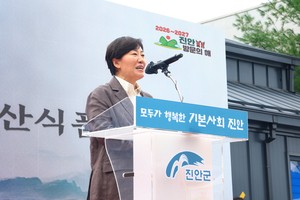
Gov't to build rural service networks so basic income stays local
Ministry seeks pilot regions to identify unmet lifestyle service needs Cooperatives, social enterprises to be cultivated as local service providers Selected organizations to receive 50 million won each through next June The government plans to expand the supply of lifestyle services in rural areas so that the increased purchasing power generated by the rural basic income program translates into local consumption and jobs. The aim is to connect residents with cooperatives, social enterprises and other community organizations that can provide the services they need — keeping basic income circulating within the local economy. The Ministry of Agriculture, Food and Rural Affairs said Wednesday it will accept applications from cities and counties in rural basic income areas, as well as intermediary support organizations, to participate in a pilot project to activate rural economic and social services. The application period runs through Oct. 2. The project was designed to expand the supply of lifestyle services in step with the rise in residents' purchasing power brought about by basic income payments. Rather than simply distributing the income, the initiative focuses on building a structure in which residents' spending generates local services and employment. Selected support organizations will first survey what services residents need but cannot adequately access locally. They will then help residents — through women's associations, volunteer groups and similar bodies — form cooperatives to provide those services directly. Training and consulting will also be offered to existing social enterprises and village enterprises looking to enter new lifestyle service sectors. The program also aims to develop models in which revenue earned through service provision is reinvested locally. Under this approach, social solidarity economy organizations would channel profits from service delivery back into community needs such as village facility operations and healthy meal programs. Pilot models suited to each area's conditions will be identified and tested. Selected organizations will receive 50 million won ($37,200) per site from October through next June. The funds may be used for staffing, service demand surveys, cultivating service providers and developing service models. "It is important to nurture organizations capable of supplying the services communities need," said Jeon Han-young, director general of the Rural Policy Bureau at the Ministry of Agriculture, Food and Rural Affairs. "We will provide support so that basic income can lead to a virtuous cycle that creates new services and jobs within local communities."
Sept. 16, 2026
-
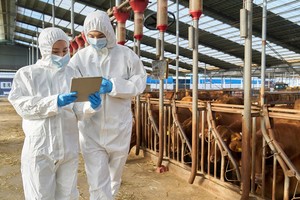
S. Korea tightens winter livestock disease controls as overseas AI cases double, new FMD strain emerges in China
Pre-registration system introduced for visitors to large laying-hen farms; 100 unmanned checkpoints planned New SAT1-type foot-and-mouth disease detected in China, Mongolia; vaccines for about 32 million animals to be stockpiled by next year Wild boar ASF detections quadruple; blood plasma feed flagged as new transmission risk South Korea is stepping up its winter livestock disease defenses after highly pathogenic avian influenza cases in wild birds overseas more than doubled in a year and a new strain of foot-and-mouth disease not previously seen in the country emerged in China and Mongolia. The government will introduce a pre-registration system for visitors to large laying-hen farms and stockpile vaccines for about 32 million animals by next year to guard against the new FMD strain. The Ministry of Agriculture, Food and Rural Affairs said Wednesday it discussed the "2026–2027 Winter Livestock Disease Special Prevention Measures" at the 14th National Policy Coordination Committee meeting, chaired by the prime minister. The period from October through February next year has been designated a special prevention period, with AI, FMD and African swine fever to be managed intensively. Warning signs from abroad have grown sharper this year. Overseas wild-bird AI detections rose from 1,432 cases in January through August last year to 2,957 cases over the same period this year — more than double. Two cases of the new SAT1-type FMD were confirmed in China in March, and three more were detected in Mongolia between May and August. AI controls will focus on laying-hen farms, which bore the brunt of last winter's outbreaks. Of the 62 AI cases recorded during the 2025–2026 winter season, 31 — exactly half — occurred at laying-hen farms, including 17 at large farms housing more than 100,000 birds. The government will introduce a new pre-registration requirement under which livestock loading and unloading crews, vaccination teams and others who frequently enter large laying-hen farms must register seven days in advance, allowing authorities to track their movements and access records. About 100 unmanned checkpoints equipped with closed-circuit television cameras will also be installed at large laying-hen farms and densely concentrated complexes to monitor vehicles around the clock. The 95 cities, counties and districts with a history of AI outbreaks will implement tailored prevention plans factoring in the distribution of livestock farms, vehicle traffic patterns and proximity to migratory bird habitats. Twelve densely concentrated laying-hen complexes, as well as Pyeongtaek, Hwaseong and the northwestern part of Cheonan — areas hit hard last winter — will receive intensive management. In Gimje, where outbreaks have occurred for three consecutive years, stocking density will be reduced and separate vehicle routes designated. If AI is confirmed on a farm or in wild birds, the crisis alert will be raised immediately to the highest "Serious" level, triggering a pan-government response including a nationwide temporary livestock movement ban. Transmission risk will be assessed every two weeks to determine the scope of culling, with the aim of minimizing unnecessary disposal. For FMD, the focus is on preventing the SAT1 strain from entering the country. The government completed pre-emptive vaccinations in July at farms and breeding stock operations in border areas of Incheon, Gyeonggi Province and Gangwon Province. The 28 cities and counties designated as near-risk zones will also be vaccinated by early next year. To prepare for a potential domestic SAT1 outbreak, the government plans to secure vaccines for about 10 million animals by the end of this year and expand that stockpile to about 32 million doses by next year — enough to vaccinate all cloven-hoofed animals, including cattle, twice. For ASF, the government will focus on three risk factors: wild boars, blood plasma feed and illegally imported livestock products. Wild boar ASF detections surged from 50 cases in January through August last year to 197 cases over the same period this year, roughly a fourfold increase. Of those, 147 cases — 74.6 percent — were found in Hwacheon, Chuncheon, Chungju, Pocheon and Gapyeong. The government will deploy thermal-imaging drones, vehicles, detection dogs and search teams to those areas. Sample testing at 64 slaughterhouses and 36 blood storage facilities nationwide will be conducted to prevent ASF-contaminated pig blood from entering the feed supply chain. On international flight routes from ASF-affected countries, X-ray screening and detection dogs will be deployed in force, and inspections of foreign grocery stores will be increased from twice to four times a year. "This year, the risk level has risen, with highly pathogenic influenza increasing in wild birds overseas and a new type of foot-and-mouth disease emerging in Asia," said Lee Dong-sik, director general of the Ministry of Agriculture, Food and Rural Affairs' animal disease prevention policy bureau. "We will focus our management on high-risk farms and regions such as laying-hen farms, and respond swiftly when outbreaks occur to prevent the spread."
Sept. 16, 2026
-
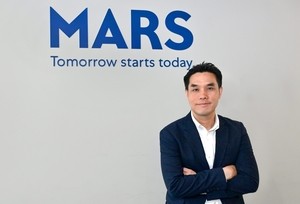
Mars Korea to integrate Nongshim Kellogg operations, adding Pringles and Kellogg's to portfolio
Mars Korea announced Wednesday that it will formally begin integrating the operations of Nongshim Kellogg following global food company Mars' acquisition of Kellanova. The company held its first all-staff town hall meeting Tuesday at its headquarters in Cheongdam-dong, Gangnam-gu, Seoul, sharing details of the integration and its business direction. It was the first official company-wide event since the Korean operations and organization began running under a unified structure. Mars Korea CEO Lee Doo-ho told employees that "this change is an important milestone as Mars moves into a new chapter in Korea." Lee will oversee the company's expanded Korean operations, which now include the Kellogg's and Pringles brands. Mars Korea is the Korean subsidiary of Mars, which entered the South Korean market in 1992. The company sells chocolate brands including Snickers and Twix, gum and mint brands including Eclipse, and pet care brands including Cesar, Whiskas and Greenies. Mars acquired Kellanova, the parent company of Nongshim Kellogg, in December last year. Nongshim Kellogg was established in 1981 as a joint venture between US-based Kellogg and Nongshim. It currently handles domestic production and sales of Kellogg's cereals, as well as imports and sales of Pringles snacks in South Korea. "With Kellogg's and Pringles now added to our brand lineup, our portfolio has expanded significantly," a Mars Korea official said. "We now have a broad business foundation spanning diverse categories — chocolate, gum and mints, cereal, snacks and pet care."
Sept. 16, 2026
-
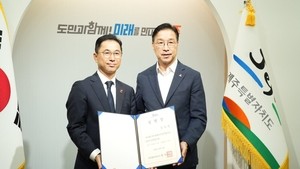
Kim Do-young takes helm of Jeju Development Corp., vows to strengthen Samdasoo brand
New chief pledges structural reform and sustainable growth, combining private-sector speed with public accountability Jeju Special Self-Governing Province Development Corp. said Wednesday that Kim Do-young officially began his duties as the new president after receiving his letter of appointment from Jeju Governor Wi Seong-gon. In his inaugural remarks, Kim said he would "combine the speed and innovation of the private sector with the responsibility and public mission of a state-owned enterprise, and ensure that the results of strengthening Jeju Samdasoo's competitiveness flow back to Jeju and its residents." He added that he would "find answers on the ground and show results." Kim identified strengthening Jeju Samdasoo's competitiveness as his top priority. With competition in the bottled water market intensifying and conditions shifting rapidly, he said the corporation would focus on consolidating Samdasoo's position as South Korea's No. 1 water brand. Kim also pledged management reforms to put the corporation on a path of sustainable growth. Drawing on his private-sector experience within the framework of a public enterprise's role and responsibilities, he said he would focus on balancing public service and profitability, field-centered management, and an open and transparent organizational culture. Kim hit the ground running on his first day. After receiving his appointment letter Wednesday morning, he paid his respects at Changnyeolsa Shrine at the Jeju Anti-Japanese Independence Memorial Hall, the Jeju National Cemetery and Jeju April 3 Peace Park. He then held his inauguration ceremony at the Samdasoo production site that afternoon. Following the ceremony, he planned to tour key facilities — including the union office, the Samdasoo research and administrative buildings, the Samdasoo factory and the citrus processing plant — and listen to employees. Kim, the 13th president of Jeju Development Corp., is a Jeju native who graduated from Ohyeon High School and the College of Business Administration at Seoul National University. He spent about 27 years at private-sector companies including LG Uplus and GS Engineering & Construction, gaining broad management experience across sales, retail, new business development and corporate management.
Sept. 16, 2026
-
Ice cream chains compete for scoops with size-up deals and brand tie-ups
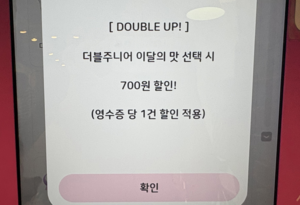
Size upgrades on new flavors draw customers as challengers take on Baskin-Robbins Character collabs, whisky pairings mark brand-by-brand push for differentiation At a Baskin-Robbins store in Seoul on Tuesday, tapping the kiosk screen to place an order brought up a promotion notice: "DOUBLE UP!" The size-upgrade benefit — once reserved as a gift on the 31st of each month — has now been extended to customers buying the flavor of the month. At a Benson store, a promotional poster on the wall caught the eye: order the new lemon cream cheese cake flavor and get an extra scoop. The mint chocolate and cookie flavor was tempting, but the lemon cream cheese cake won out. Competition for customers in the ice cream market has intensified, industry sources said Wednesday, as challengers Benson and Van Leeuwen move in on the long-dominant Baskin-Robbins. Brands are rolling out free extra scoops with new flavors and launching collaboration products to win over customers. Baskin-Robbins is running a promotion this month that lets customers upgrade from a single regular to a double junior for an additional 500 won when they buy the flavor of the month. The offer is separate from the size-upgrade benefit previously available only on the 31st of each month. Benson has also leaned into size upgrades. It launched a size-upgrade promotion alongside its lemon cream cheese cake last month, and this month is offering a free upgrade from single to double size with any single order of its new tiramisu ice cream. Van Leeuwen, which made its Korean debut in July, has been running scoop promotions since opening. Starting Monday, it has been offering a buy-two-get-one deal on pint-size and larger products. Beyond the scoop wars, brands are competing on promotions to draw foot traffic. Collaborations have been a key tool. Baskin-Robbins has continued its run of character tie-ups, partnering this month with Japanese character Monchhichi to offer exclusive cups with ice cream or Americano purchases. Some stores have sold out their allocated stock quickly. Benson has set itself apart through alcohol pairings. Its recently opened Itaewon location offers pairing menus combining ice cream with Won Soju and premium whiskies including Balvenie and Dalmore. The brand has also collaborated with outdoor gear label Helinox to release merchandise. In terms of store count, however, the gap remains wide. Baskin-Robbins, which has operated in Korea since 1985, ran 1,747 locations nationwide as of late 2024. Benson currently operates 23 stores, while Van Leeuwen has three — at Gangnam Station, Shinsegae Gangnam and Sinnonhyeon Station. The challengers are moving quickly to close the gap. Benson grew from eight stores last year to 23 this year and plans to surpass 30 by year's end, with a target of opening its 100th location next year. In terms of revenue, BRL Korea — which operates both Baskin-Robbins and Dunkin' — posted sales of 707.5 billion won ($523 million) last year. Its operating loss narrowed to 5.6 billion won from 9.8 billion won the previous year. Better Scoop Creamery, which operates Benson, recorded sales of 4.3 billion won and an operating loss of 9.5 billion won last year. Despite losses from aggressive expansion, the company expects to reach breakeven at around 100 stores. "As new brands continue to enter the ice cream market, competition to secure consumer touchpoints is likely to intensify further," an industry official said. "We expect brands to keep trying to attract customers through a range of approaches — not just price and portion size, but also collaborations and new products."
Sept. 16, 2026
-
Hite Jinro spreads chuseok cheer to youth, low-income residents
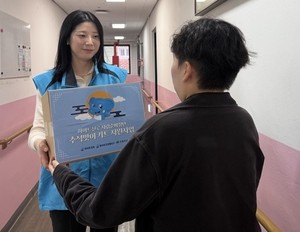
Hite Jinro and Hitejinro announced Wednesday that they carried out community outreach activities for youth aging out of foster care across the country and for residents of low-income neighborhoods in Seoul. The initiative began Saturday at the Hite Jinro office in Seocho-gu, Seoul, with a ceremony to distribute chuseok care packages to youth transitioning out of state care. Each package contained practical everyday items including shampoo, toner and lotion, as well as rice containers and Bluetooth earphones. The total value of the packages came to 30 million won ($22,200), with deliveries planned for 300 recipients in stages. The companies also extended their outreach to residents of low-income neighborhoods in Seoul. On Tuesday, Hite Jinro distributed care packages of premium apples and pears to 500 residents through five community distribution centers in the Seoul Station, Yeongdeungpo, Changsin-dong, Namdaemun and Donuimun areas. Hite Jinro has carried out such community outreach activities for 15 consecutive years since 2012. "We will consistently continue our social contribution activities to provide real, practical support in the daily lives of neighbors in need," a company official said.
Sept. 16, 2026
-
IP agency holds National Assembly forum on counterfeit goods
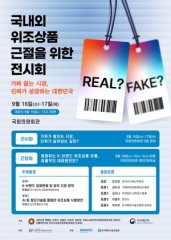
Forum with lawmaker Oh Se-hee explores joint response under theme 'A market free of fakes, a Korea where the real thrives' South Korea's government, legislature and industry are joining forces to address the growing spread of counterfeit K-brand products abroad and the circulation of fake goods at home. The Korea Intellectual Property Agency is co-hosting a forum Wednesday at the National Assembly Members' Office Building in Yeongdeungpo-gu, Seoul, with Democratic Party of Korea lawmaker Oh Se-hee to develop strategies against counterfeit goods at home and abroad. The damage caused by counterfeit goods has spread beyond businesses to consumers. The volume of counterfeit K-brand products circulating overseas is estimated at around 11 trillion won ($8.13 billion), with resulting losses to domestic companies estimated at 7 trillion won in annual sales and roughly 14,000 manufacturing jobs. Consumer safety concerns are also mounting. A Korea Consumer Agency probe of 34 counterfeit foreign-brand cosmetics distributed domestically found that one in three — 32.4 percent — contained hazardous substances such as methanol and lead exceeding safety thresholds. National Assembly, government and industry put their heads together on counterfeits The forum will bring together lawmaker Oh, Korea Intellectual Property Agency Deputy Director General Jeong Yeon-woo, representatives from industry and online platforms, relevant government agencies and academic experts. The agency will present an overview of counterfeit K-brand distribution at home and abroad along with proposed countermeasures, while the Korea Minting and Security Printing Corp. will introduce technologies to block fake goods. Trademark holders, online platform operators and government agencies will then discuss cooperative measures to cut off counterfeit distribution channels. Over 200 genuine and counterfeit products on display side by side An accompanying National Assembly exhibition will display more than 200 authentic K-brand products alongside their counterfeits, illustrating the increasingly sophisticated nature of fake goods and showcasing anti-counterfeiting technologies including holograms, authenticity labels and watermarks. The agency will also operate an experience booth for its "K-Brand Government Certification System," set to launch in full in October, which aims to block the overseas distribution of counterfeit K-brand goods. Key agency policies — including a "Fake K-Brand Reporting Center" and "K-Brand Dispute Response Support" — will also be introduced. "Counterfeit goods go beyond harming individual companies — they undermine the trust and value that Korean businesses have built up over years in the global market," Oh said. "I will carefully examine the systems and policies needed to block counterfeit goods so that our companies can expand overseas with confidence." "The more popular K-brands become, the more fakes appear to exploit that popularity," Deputy Director General Jeong said. "We will work closely with the National Assembly and industry to block counterfeits at every stage of distribution and pursue them to the end, so that the value of brands built by Korean companies is not eroded by fake goods."
Sept. 16, 2026
-

Household debt ratio hits decade low at 81.3% — semiconductors drive the drop
Household debt-to-GDP ratio estimated at 81.3% at end of Q2 Nominal GDP growth in Q2 highest in 47 years South Korea's household debt-to-GDP ratio fell to around 81.3% at the end of the second quarter, the lowest level in more than a decade, driven by a surge in nominal GDP fueled largely by the semiconductor sector. The result raises the prospect that the government could hit its 80% target years ahead of its 2030 deadline. According to Bank of Korea and Bank for International Settlements (BIS) data, the ratio stood at around 81.3% as of the end of the second quarter. If confirmed, that would be the lowest reading since the second quarter of 2016, when it stood at 80.2%. The government has set a target of reducing the household debt-to-GDP ratio to around 80% by 2030. The latest estimate puts the ratio just about 1.3 percentage points above that threshold — a significant narrowing of the gap with more than four years still to go before the deadline. The estimate was derived by applying the Bank of Korea's second-quarter household credit growth rate to the BIS's first-quarter household and nonprofit institution debt balance, then dividing the result by the sum of nominal GDP over the four most recent quarters. The calculation assumes that as-yet-unpublished second-quarter household debt grew at the same rate as household credit in that period. BIS data show South Korea's household and nonprofit institution debt balance stood at 2,374.1 trillion won ($1.75 trillion) at the end of the first quarter. Applying the 1.3 percent quarter-on-quarter growth rate from the Bank of Korea's second-quarter household credit balance of 2,019.8 trillion won yields an estimated second-quarter debt figure of about 2,404.9 trillion won. Dividing that by the combined nominal GDP for the four quarters from the third quarter of last year through the second quarter of this year — 2,958.6 trillion won — produces the 81.3 percent ratio. The combined nominal GDP for those four quarters rose about 6.2 percent compared with the figure used in the first-quarter calculation, far outpacing the 1.3 percent debt growth rate and driving the ratio lower. Bank of Korea preliminary national income statistics show that nominal GDP in the second quarter grew 26.4 percent from a year earlier — the highest growth rate in 47 years, since the third quarter of 1979, when it reached 27.7 percent. Bank of Korea Governor Shin Hyun-song signaled the trend at a monetary policy press briefing last month, saying nominal GDP would come in "quite high" and that "since nominal GDP is the denominator when calculating all debt ratios, debt ratios and soundness indicators will improve considerably." Official BIS data also show a decline in South Korea's household debt ratio. The BIS put the country's household debt-to-GDP ratio at 85.1 percent at the end of the first quarter, down 3 percentage points from 88.1 percent at the end of last year and the lowest since the first quarter of 2018, when it also stood at 85.1 percent. The ratio peaked at 99.1 percent at the end of the third quarter of 2021 and has been falling since. The Bank of Korea's second-quarter flow-of-funds statistics are due Oct. 7, while the BIS's second-quarter debt data are scheduled for release Dec. 7. However, a lower debt-to-GDP ratio does not mean households are finding it easier to service their loans. In its monetary and credit policy report released Thursday, the Bank of Korea said the household debt-to-GDP ratio "will decline, but remains high compared with major advanced economies," adding that "given the possibility of increased housing purchase demand as income conditions improve, the need to manage household debt remains significant."
Sept. 16, 2026
MOST READ
- 1KAIST develops high-performance bio-based adhesive using E. coli instead of petroleum
- 2Pope Leo XIV declines French honors and banquet, accepts only private meeting with Macron
- 3Daimler Truck unveils next-generation transport solutions at IAA 2026
- 4What was Rachmaninoff's performance fee? A 1928 price list tells all
- 5Samsung Biologics union's show of force backfires at the bargaining table
- 6APR says hair-loss treatment research published in international journal
-
WORLD

US warns of punishment for anyone enabling Iran's Strait of Hormuz toll scheme
-
INDUSTRY
Toyota union puts productivity first; Hyundai Motor union demands bigger share of profits
-
FINANCE
National Growth Fund to invest $531M in FuriosaAI, which rebuffed Meta's $800M takeover bid
-
INDUSTRY
Korea Shipowners' Association holds amateur baduk tournament for Maritime Day