Only dancer to lead three national and public dance companies
Choreographer behind more than 300 original works
National Dance Company's 'Double Bill: Sinawi' stands as her final work
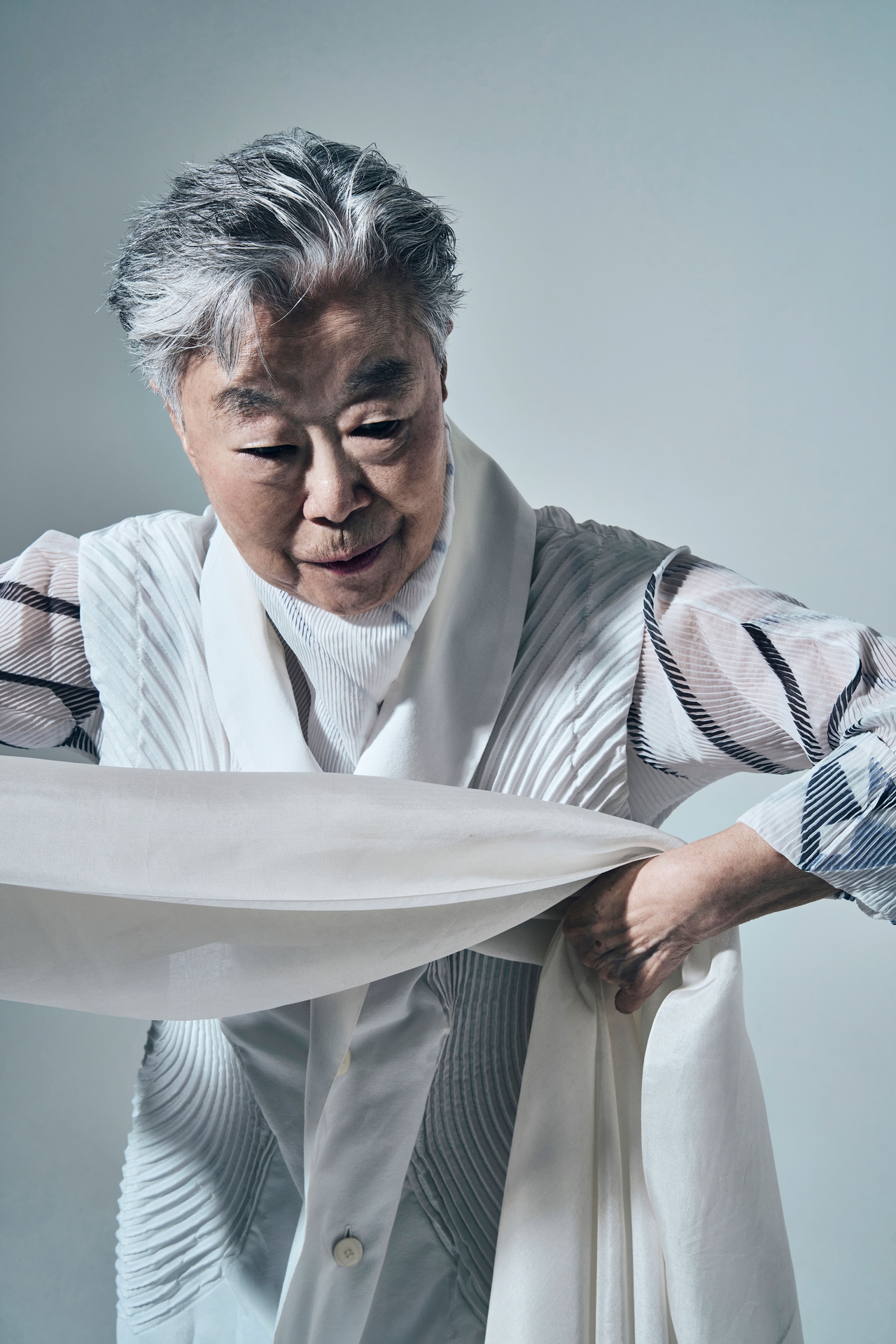
Bae Jeong-hye (born Bae Suk-ja), the former artistic director of the National Dance Company of Korea and widely revered as the "godmother of Korean creative dance," died early Tuesday. She was 82.
According to the dance community, Bae had been battling stage-four lung cancer and her condition deteriorated after she developed pneumonia.
Over a career spanning more than 300 original works, Bae pushed the boundaries of Korean dance, blending the breath and spirit of traditional forms with techniques drawn from ballet and contemporary dance — a synthesis that kept her at the center of artistic debate throughout her life. She was the only dancer ever to lead all three of Korea's major national and public dance companies: the National Gugak Center Dance Company, the Seoul Metropolitan Dance Theatre and the National Dance Company of Korea. Her final work, "Salpuri Saeng," premiered last month through the National Dance Company's "Double Bill: Sinawi."
A 'prodigy dancer' at 12, a Korean literature student who became a choreographer
Born in Wonju, Gangwon Province, in 1944, Bae was introduced to dance by her uncle Bae Myeong-gyun, a dancer himself, who brought her to the studio of Jang Chu-hwa, a student of the legendary Choi Seung-hee. She made her stage debut in 1952 at a military theater in Wonju, then toured Chungju and Cheongju. In 1955, at age 12, her first solo recital at Sijong Hall in Myeong-dong, Seoul — now the Myeongdong Arts Theatre — earned her the nickname "prodigy dancer."
Rather than pursuing a dance degree, Bae enrolled in the Korean literature department at Sookmyung Women's University, writing her own choreographic scripts and earning the label "literary dancer." During her tenure as head of the dance department at Seonhwa Arts High School (1974–1987), she introduced the ballet barre into Korean dance training and developed a foundational exercise system built around 12 upper- and lower-body breathing techniques. The male dancers she trained through this method performed "Tago Namun Jae" ("Ashes Left After Burning") in 1977, which was named the year's best work and earned Bae the nickname "architect of dance." Her uncle, who had choreographed in the sinmuyong tradition, dismissed the piece — "This is not dance," he said — but she did not stop experimenting.
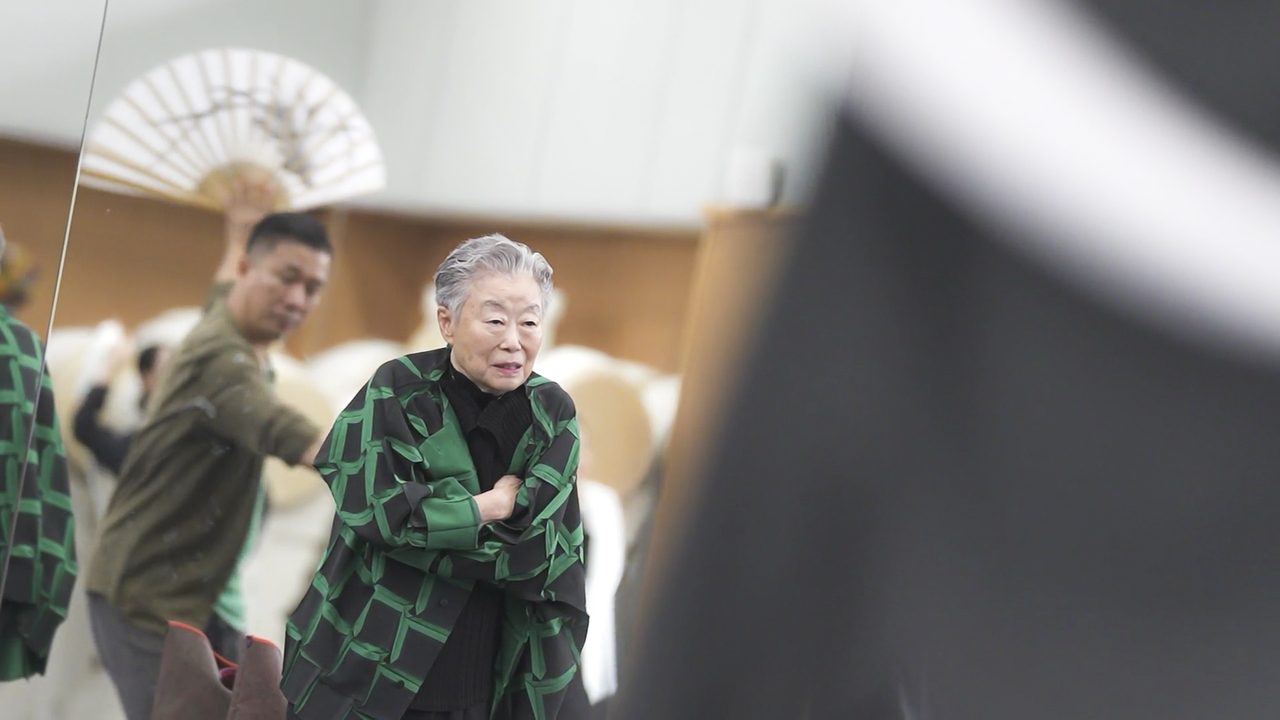
In 1984, Bae led the founding of the Rieul Dance Company, built around her former Seonhwa students. Her 1987 work "Glass City" sparked debate over whether it belonged to Korean dance or contemporary dance, and in 1991, after watching "Wandering Soul" performed by the Seoul Metropolitan Dance Theatre, poet Kim Ji-ha composed an impromptu tribute poem for her.
The only dancer to lead three national companies — and still in the rehearsal room until the end
Bae began her institutional career as resident choreographer of the National Gugak Center Dance Company in 1986, then served as artistic director of the Seoul Metropolitan Dance Theatre (1989–1998) and the National Dance Company of Korea (2000–2002 and 2006–2011). Over 25 years at the helm of national and public companies, she brought the National Dance Company to Lincoln Center in New York for the first time, with the production "Dance, Chunhyang." Another work, "Soul, Sunflower," became the first original piece in the National Dance Company's repertoire to tour abroad, selling out all eight performances in Ludwigsburg, Germany.
After stepping down as artistic director, she never left the stage. She continued her "new tradition" series, refining classical forms for contemporary sensibilities, and in 2014 — marking 70 years in dance — she presented "Dance, 70 Years Bae Jeong-hye," a program of 22 signature solo works, at the M Theater of the Sejong Center for the Performing Arts. In 2017, she collaborated with director Jeong Gu-ho to reimagine "The Story of Chunhyang" as a love story for today's youth, staging "Chunsang" with the National Dance Company. From 2018, she served as artistic director of the Little Angels Arts Corps, overhauling its repertoire.
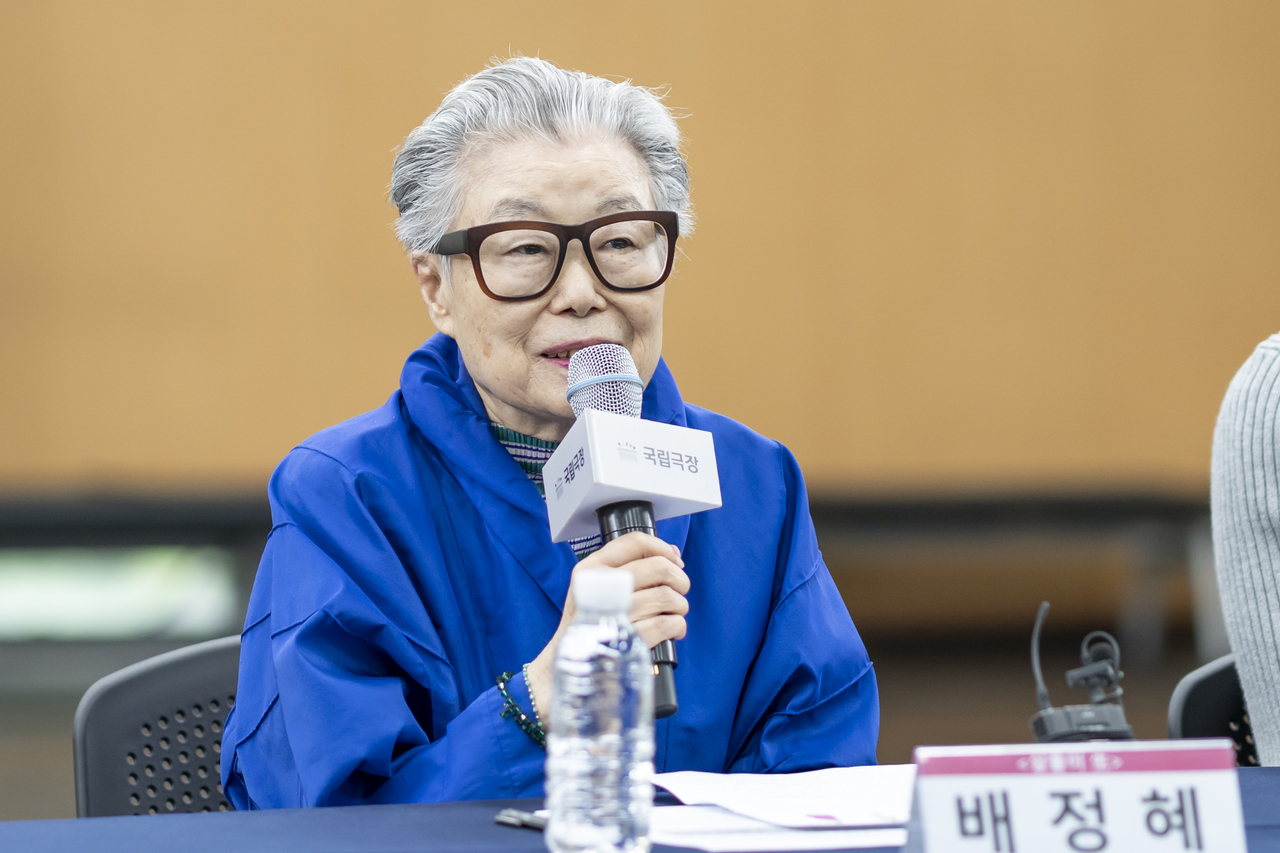
Her final stage, "Double Bill: Sinawi" (Oct. 8–11, Haeoreum Grand Theater at the National Theater of Korea), marked a reunion with the National Dance Company after nine years. For the production, which she shared with choreographer Bae Jin-ho — more than 50 years her junior — the National Dance Company divided its members by generation for the first time in its history; 28 members born in 1985 or earlier worked alongside her. Reunited with former company members, she said it felt "like meeting siblings I had been separated from." She had also been selected in August as artistic director for the Yongsan Culture Foundation's preliminary hub support project for a youth dance company, and had been preparing for that new chapter when she died.
'I never reuse a movement' — what she left behind in her final interview
Even at 82, Bae reported to the National Theater's rehearsal room every day, guiding dancers through the finest details of their fingertips and footwork. In an interview ahead of the premiere of "Salpuri Saeng," she said dance was "my fate and my destiny," adding: "I thought I couldn't do it anymore, but the dance keeps coming out."
In what turned out to be her final interview, Bae also shared a creative principle she had upheld for more than 70 years: she had never reused a single movement across the dozens — even hundreds — of works she had made. "Choreography is the transformation of movement and composition," she said. "Simply borrowing a movement as it is — that is not creation." Another principle she kept for life was that every movement must originate from the choreographer's own body. "When preparing a work, I would hold onto it alone for six months, a year," she said. "That time is like setting sail on a boat with no oars."
For Bae, dance was "proof that I am alive." She believed that even grief requires energy — that you must have it in you to weep — and she located the essence of Korean dance in the layered coexistence of han, a deep sorrow, and heung, a surging joy. Returning to sinawi past the age of 80, what she drew from it was "the joy of living." She included a scene of carefree play beneath a waterfall in "Salpuri Saeng" because, she said, she "wanted to show that traditional dance does not have to be dull."
Throughout the interview, her gaze was fixed on the next stage. She said she still had things she wanted to say — "clearly, because I am still alive" — and spoke of wanting to collaborate with Bae Jin-ho, the choreographer five decades her junior: "His ideas are wonderful. I would love to work with him someday."
She is survived by her husband Kim Gwang-seop and siblings Bae Jong-ok, Bae Jong-gwan and Bae Jong-il. The encoffining ceremony is scheduled for Wednesday at 2 p.m., with the funeral procession departing Thursday at 7 a.m. She will be interred at Gapsan Park.
shee@heraldcorp.com