Around 80,000 visitors from 15 countries; more than 1,900 jobs created
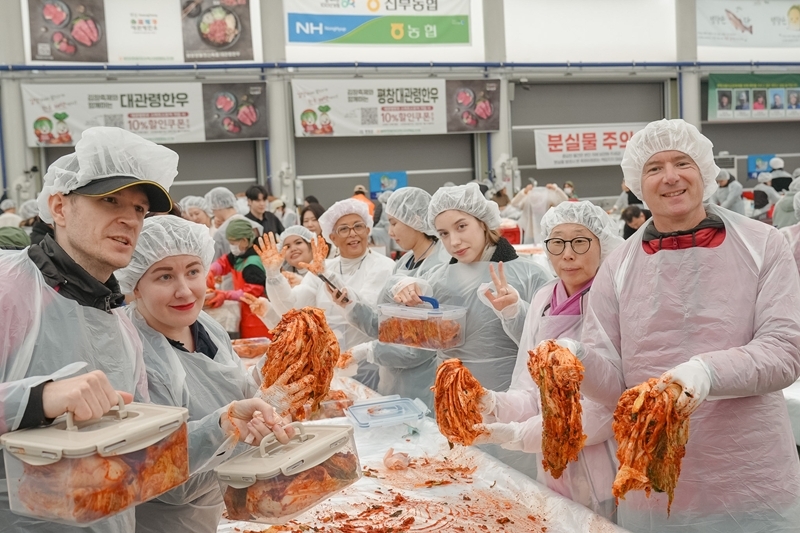
The Pyeongchang Highland Kimjang Festival wrapped up another record-setting year, making a significant contribution to the global spread of kimjang culture — a UNESCO Intangible Cultural Heritage of Humanity.
Standout services included a transportation program run by the heads of 38 villages in Jinbu-myeon and a kimchi-making assistance program staffed by local volunteers, both of which drew praise for their warmth and hospitality.
A visitor survey conducted during the festival found that about 90 percent of respondents said they would return, reflecting high overall satisfaction.
According to the festival committee Tuesday, the ninth Pyeongchang Highland Kimjang Festival ran for 13 days from Nov. 4 to Monday at Jinbu-myeon Community Sports Park in Pyeongchang-gun, Gangwon Province, drawing around 80,000 domestic and international visitors from 15 countries and driving the consumption of more than 400 tons of locally grown produce.
Running under the slogan "Kimjang culture as a tourism resource, the kimchi industry as a regional growth engine," this year's festival grew roughly 20 percent compared with the previous year. It expanded local agricultural consumption, created jobs for residents and attracted foreign tourists.
Key produce consumed during the festival totaled more than 400 tons — including 281 tons of salted napa cabbage, 62 tons of radish, 46 tons of salted young radish and 17.5 tons of chili pepper — with consumption by category rising roughly 17 to 22 percent from last year.
The committee secures kimchi ingredients through contract farming with local agricultural households every year starting in July, providing stable sales channels for farmers even when produce prices fall and helping to stabilize farm incomes.
The festival also generated significant off-season employment for local residents. More than 140 operations staff and volunteers from civic organizations in Jinbu-myeon took part, and the cumulative number of jobs created — including the preparation period — was estimated at more than 1,900. Residents' involvement in processing kimchi ingredients and running hands-on activity areas also helped boost winter incomes.
The committee expanded facilities and improved services to accommodate the growing number of visitors. In September, it built a new 495-square-meter kimchi seasoning preparation space capable of producing about 14 tons per day. It also separated the hands-on activity area from the dining area, created a dedicated space for selling local specialty products and improved the overall layout of the festival grounds for greater convenience.
New efforts to expand sales channels for local agricultural products also paid off. The "Pyeongchang Highland Apple Special Promotion," organized by the Pyeongchang Apple Research Association and held for the first time this year, raised awareness of the quality of highland apples and confirmed the potential for expanding sales of a new income crop. A local produce market featuring 14 farming households saw increased sales after access was improved, and sales of handmade mandu soup — a traditional Jinbu-area dish — more than doubled compared with last year.
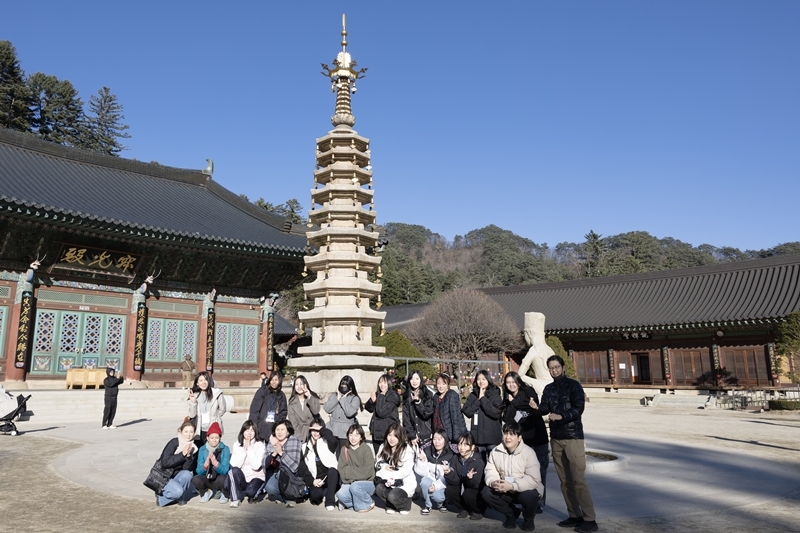
The festival also demonstrated the potential of kimjang culture as a tourism draw. Through a Gangwon Province Tourism Association support program, more than 90 foreign visitors from 15 countries took part in kimchi-making activities. Participants experienced Korean food and traditional culture through the hands-on kimjang session, tastings of local dishes including mandu soup and mountain vegetable bibimbap, and a tea ceremony program at Woljeongsa Temple.
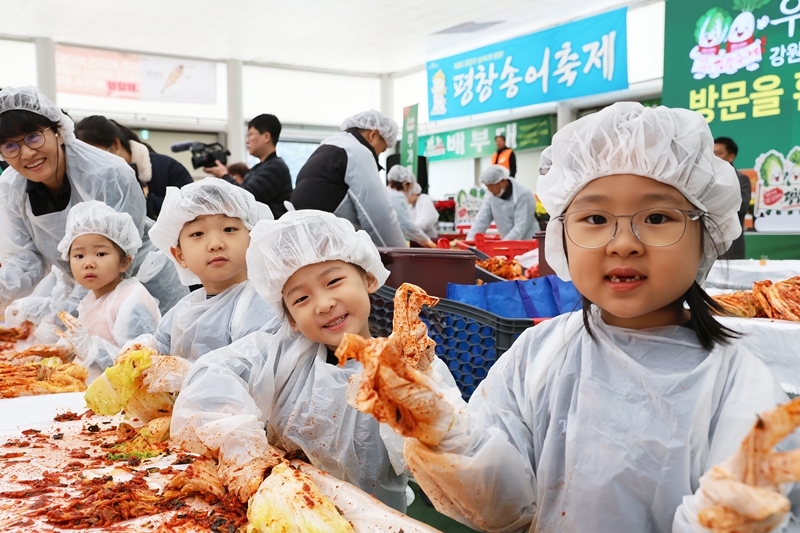
The festival's newly introduced mascots, "Chuchu" and "Mumu," also drew attention from visitors. The committee plans to refine the characters through next year and develop a range of cultural merchandise featuring them.
Festival Chairman Jang Dong-sik credited the event's continued growth to the dedication of farmers, operations staff and civic volunteers from Jinbu-myeon. "The festival has grown 20 to 30 percent every year, and this year was no different thanks to the commitment of everyone involved," he said. "The greatest competitive strength of this festival is what we call 'Jinbu-ness' — the spirit of residents coming together with one heart to welcome visitors warmly and raise the quality of everything we do."
Jang added that the foreign kimchi-making experience exceeded its targets and drew an enthusiastic response. "Going forward, we will further expand local produce consumption and farm incomes, and develop this into a tourism festival where people from around the world can experience Korea's kimjang culture firsthand," he said.
abc@heraldcorp.com