
- HOME
- STOCK
-
HVM to invest W41.6b in new facility
HVM said Tuesday it will invest 41.57 billion won ($30.9 million) in a new facility to introduce advanced forging equipment for aerospace applications. The investment represents 38.35 percent of the company's equity capital, with the investment period running through Dec. 31, 2028.
Sept. 15, 2026
-

Global fintech investment rebounds on major M&A deals, hitting $103.1b in H1
Samjong KPMG report on global fintech investment trends and H2 2026 outlook Fewer deals but larger bets signal deepening 'selective concentration' in H1 AI advancement, agentic commerce and tech sovereignty among key H2 themes The global fintech investment market is recovering rapidly, driven by large-scale mergers and acquisitions. While deal count has fallen, total investment volume has surged, and a pattern of "selective concentration" — capital flowing to proven market leaders with demonstrated growth and profitability — is becoming increasingly pronounced. According to a report released Tuesday by Samjong KPMG on global fintech investment trends and the H2 2026 outlook, global fintech investment in the first half of this year reached $103.1 billion, a 42.8 percent jump from $72.2 billion in the second half of last year. The number of transactions, however, fell to 2,100 — down 400 from the prior half. The divergence between investment volume and deal count reflects investors pouring large sums into established market leaders with proven track records. The largest fintech deal of the half was Global Payments' acquisition of electronic payments and banking platform Worldpay, valued at $24.3 billion. In second place, US-based FIS acquired Total System Services — Global Payments' card-issuing solutions unit — for $13.5 billion. By investment type, M&A led the market recovery, accounting for 65.9 percent of total investment at $67.9 billion across 394 deals. Venture capital investment came in at $31.5 billion, a slight decline from $32.3 billion in the second half of 2025, though it maintained a solid pace. Private equity investment hit $2.6 billion in the second quarter of this year, its highest level in 11 quarters. By region, the Americas dominated the global market with $86.9 billion across 1,120 deals. The United States alone accounted for $80.8 billion and 933 transactions, driving the bulk of activity. Europe, the Middle East and Africa ($11.3 billion, 626 deals) and Asia-Pacific ($4.6 billion, 350 deals) lagged behind. By sector, payments attracted the most capital at $44.2 billion. Despite the payments market entering a mature phase, large deals continued to concentrate around fintech companies with validated business models. The digital assets sector drew $11.1 billion in investment. The pace of deployment has slowed somewhat due to regulatory uncertainty, including doubts over whether the US Digital Asset Market Clarity Act will be enacted this year. Investor interest in market institutionalization centered on stablecoins and the diversification of business models, however, has remained steady. Investment in AI and machine learning also emerged as a core area, reaching $21.4 billion across 800 deals. The trend is expected to continue as financial institutions move beyond simply integrating AI into services and toward redesigning their operational processes and customer touchpoints. The report identified five key fintech trends to watch in the second half of this year: expanded investment in financial infrastructure, more advanced AI investment, the spread of agentic commerce, accelerated consolidation in the payments sector, and the development of sovereign capabilities to support fintech ecosystems. Financial infrastructure is emerging as a prime investment destination on the back of stablecoin and digital asset market growth, while AI investment is entering a phase of real-world profitability validation, the report said. The rise of agentic commerce — where AI agents handle shopping and transactions on behalf of users — is drawing heightened attention to related fields such as cybersecurity and digital identity management. Meanwhile, consolidation in the payments industry and intensifying competition among nations to secure technological sovereignty are expected to accelerate. "AI will become the top priority for fintech investors going forward," said Kim Se-ho, Samjong KPMG's digital finance and fintech industry leader. "The domestic market should also pay close attention to the growth potential of the digital asset market, including stablecoins, as legislation on a basic digital assets law is expected to be enacted in the second half of this year." Meanwhile, Samjong KPMG, which closes its books in March, posted operating revenue of 905.6 billion won ($673 million) for the fiscal year running April 2025 through March 2026 — a roughly 3.4 percent increase from the prior year — crossing the 900 billion won threshold for the first time.
Sept. 15, 2026
-
Lee & Ko wins most awards among Korean law firms at Asia Legal Awards 2026
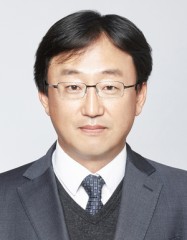
Firm wins ESG Deal of the Year for Taepyeong salt flat solar project advisory Kim Kwang-yeol named Projects Lawyer of the Year Lee & Ko has taken home the most awards of any Korean law firm at the Asia Legal Awards 2026, winning two categories at the global legal industry ceremony. The firm announced Tuesday that it received the ESG Deal of the Year award and that Kim Kwang-yeol, a partner in its projects and energy team, was named Projects Lawyer of the Year. The Asia Legal Awards 2026 is an annual ceremony organized by Law.com International, part of global legal and business media group ALM Media. It recognizes law firms, lawyers, legal deals and in-house legal teams that have delivered outstanding results across Asia. The ESG Deal of the Year award recognized the firm's advisory work on the Taepyeong salt flat solar power project. The project developed large-scale solar generation on salt-damaged farmland and disused salt flat sites across the country, with Lee & Ko's projects and energy team and environmental team providing integrated, one-stop advisory services throughout. Lee & Ko's ESG group operates across specialized practices covering environmental law, industrial safety, renewable energy, compliance, corporate advisory and labor. Recently, the group has stepped up its support for corporate ESG readiness — advising the Ministry of Climate, Environment and Energy on the design of Korea's green chemistry regime and consulting on the development of a methodology for greenhouse gas reduction projects using methane-reducing microbial technology. Kim, who graduated from the 30th class of the Judicial Research and Training Institute, has built more than 20 years of experience in power generation, renewable energy, project financing, construction, and domestic and overseas corporate and fund investment. He currently leads Lee & Ko's projects and energy team. Meanwhile, Lee & Ko continues to rank among the top firms in major global legal directories. The firm has received the top rating from the UK's Legal 500 for 17 consecutive years from 2009 to 2025, and has been named the top M&A firm in the Asia-Pacific region by Chambers Global for 13 consecutive years from 2013 to 2025.
Sept. 15, 2026
-
Samil PwC urges firms to move beyond understanding tax reform and build response strategies
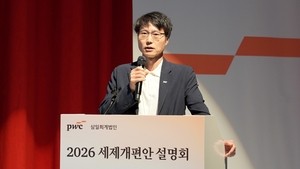
Samil PwC holds 2026 tax reform briefing Over 600 corporate tax and finance officials attend Briefing covers corporate tax, inheritance tax changes and practical strategies With the government unveiling a sweeping tax reform package covering the Restriction of Special Taxation Act, the Corporate Tax Act, and the Inheritance and Gift Tax Act, a forum was held to help companies build practical response strategies. Experts at the event warned that the breadth and complexity of the proposed changes make it essential for businesses to closely analyze both the rationale behind the revisions and their potential impact on corporate management. Samil PwC held the "2026 Tax Reform Briefing" on Monday at Amorehall in the Amorepacific headquarters in Yongsan-gu, Seoul, in a hybrid online and in-person format. More than 600 corporate tax and finance officials attended, with specialists from each field taking the stage to outline the key provisions of the revised tax laws and offer guidance on how companies should respond. Jeong Min-su, head of Samil PwC's tax advisory division, said in his opening remarks that the recently announced reform package centers on three priorities: reversing the decline in potential growth, supporting livelihoods and regional economies, and rationalizing the tax system through fairer assessment. "Since specific details may change during National Assembly deliberations and the drafting of enforcement decrees, companies must keep a close watch on the latest developments before making major decisions," he said. Lee Jeon-o, a Samil PwC adviser, said in his welcoming address that the reform package includes a wide range of measures — among them a new domestic production tax credit, expanded support for small and medium-sized enterprises and venture companies, and revisions to the family business inheritance deduction. "We need to look beyond what has changed to understand why it changed and where tax policy is headed," he said. The briefing was structured into two parts comprising seven sessions in total. Shin Yun-seop, a partner who led the first session, covered changes to the Corporate Tax Act and the Framework Act on National Taxes. He explained revisions to the taxation of deemed dividends and disposal gains and losses linked to the mandatory cancellation of treasury shares under the amended Commercial Act, and examined issues related to overseas restructuring, including tax deferral on foreign subsidiary spin-offs and stock dividends. Partner Kim Un-gyu then analyzed proposed amendments to the Inheritance and Gift Tax Act, noting that eligibility requirements for the family business inheritance deduction and succession special provisions would be significantly tightened. "Leaving the assessment of whether a business owner possesses specialized technical skills and management know-how to a review committee could increase practical uncertainty," Kim said. He added that listed shares suspected of artificial price suppression would be subject to stricter valuation methods, potentially triggering simultaneous gift tax and corporate tax burdens as well as breach-of-fiduciary-duty concerns, and called for regulatory improvements. In the session on the Income Tax Act and the Comprehensive Real Estate Tax Act, partner Park Ju-hee said the real estate tax regime was shifting away from the number of homes owned toward the value of properties and whether the owner actually lives in them. She flagged higher tax burdens ahead for owners of high-value homes and for non-resident single-home or multi-home owners. Opening the second part, partner Park Jong-u covered the Restriction of Special Taxation Act and the Value-Added Tax Act, highlighting the introduction of a new domestic production tax credit targeting strategic items — including semiconductors, secondary batteries, AI and robot components — and the expansion of research and development and investment support outside the greater Seoul metropolitan area. Lee Dong-yeol, the partner responsible for international taxation, noted that the low-tax threshold for controlled foreign corporations had been lowered to the global minimum tax level of 15 percent. "Because multiple exemption methods will coexist from 2027, each company must analyze which approach works in its favor," he advised. Kim Su-jeong, who presented on local tax law, analyzed a broader trend toward reducing long-term tax benefits — including tighter requirements for the separate aggregation of corporate-owned land — while also introducing temporary, region-specific tax relief for redevelopment projects and venture facilities. In the final session, Lee Yeong-mo, a managing partner at PwC Customs & Trade, addressed changes to customs law, citing the expiration of tariff exemptions on goods used for industrial technology research and development and the tightening of penalties for quota tariff violations. He urged companies to overhaul their internal compliance frameworks. Meanwhile, Samil PwC — which closes its books in June — posted sales of 1.11 trillion won ($825 million) and operating profit of 25.4 billion won for fiscal year 2025, covering July 2024 through June 2025.
Sept. 15, 2026
-

Mirae Asset's TIGER US S&P500 ETF tops retail net purchases in H2
Retail investors net-bought 1.4 trillion won since July Mirae Asset Global Investments announced Tuesday that its TIGER US S&P500 ETF has ranked first in retail net purchases among all domestically listed ETFs in the second half of this year. According to Korea Exchange, retail investors net-bought 1.46 trillion won ($1.09 billion) worth of the TIGER US S&P500 from July 1 through Monday, making it the top ETF by retail net purchases among all Korea-listed products. Since April 15, retail net purchases have continued for 103 consecutive trading days, with cumulative net purchases reaching 3.06 trillion won. Over the same period, retail investors poured 682.1 billion won into the TIGER US NASDAQ 100 ETF. Combined, the two products attracted 2.15 trillion won in retail net purchases in the second half. The TIGER US S&P500 and TIGER US NASDAQ 100 ETF hold assets under management of 20.21 trillion won and 11.43 trillion won, respectively. Mirae Asset Global Investments said buying momentum continued even as the won strengthened sharply against the dollar. The won advanced from 1,549.4 per dollar at end-June to 1,347.3 on Monday, a gain of more than 13 percent. The sustained demand suggests investors remain committed to long-term exposure to benchmark US indexes despite currency swings. "Topping retail net purchases in the second half shows that when equity markets turned volatile, investors chose to diversify into time-tested US benchmark indexes rather than individual stocks or specific sectors," said Kim Sang-yul, head of the global ETF management division at Mirae Asset Global Investments. "The S&P 500 index consistently incorporates new growth industries — including AI infrastructure, data and biotech — through its regular rebalancing, and we will do our best to manage the fund so investors can share in the long-term growth of the US economy through a single holding in TIGER US S&P500."
Sept. 15, 2026
-

Meritz Securities lets popular creators Chimchakman, Kim Pung name your investment account
Live stream airs Tuesday at noon on Chimchakman's channel Galaxy Z Fold 8, chicken gift vouchers among prizes Meritz Securities announced Tuesday it will run the "Chimchakman X Kim Pung Nickname MOUM" event on its investment platform MOUM through Sept. 30, giving popular creator Chimchakman and webtoon artist and broadcaster Kim Pung the chance to personally craft nicknames for customers. The two will create nicknames during a live broadcast alongside a well-known naming expert, and winners selected by lottery will receive one of those nicknames to use as their display name on MOUM. The live stream airs Tuesday at noon on Chimchakman's channel and can be watched on YouTube, Chzzk and Soop. The broadcast will showcase the process of crafting distinctive nicknames for MOUM users, blending Chimchakman and Kim Pung's wit with the naming expert's interpretations. After the broadcast ends, customers can vote for their favorite nickname and enter to win by leaving their preferred choice in the comments of the event post on MOUM. The event is open to customers who open a Super365 account on MOUM for the first time between Sept. 1 and Sept. 30. Customers who already held a Meritz Securities account before Sept. 1 are not eligible. Meritz Securities will select 20 winners by lottery to receive a limited-edition nickname created by Chimchakman, Kim Pung and the naming expert. Three winners will receive a Galaxy Z Fold 8 smartphone, and 300 will receive a chicken gift voucher. Customers can win both a nickname and a physical prize. MOUM is Meritz Securities' investment platform, designed to let users search for investment information, check reactions from domestic and overseas investors, and analyze data using AI — all in one place. The platform officially launched Sept. 1. MOUM is the first domestic brokerage platform to exclusively integrate Vega, the finance-specialized AI engine developed by global online brokerage platform Webull. Webull built the Vega AI investment engine on a large language model. "We designed this event so customers can discover MOUM through content they enjoy and experience the fun of using the platform with a nickname that is uniquely their own," a Meritz Securities official said. "We will continue to build MOUM into an investment platform that customers return to often and engage with, through useful investment information and a variety of interactive content."
Sept. 15, 2026
-
After-hours trading era opens, but investors question real benefits as volatility risks grow
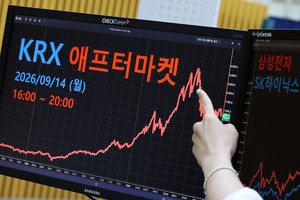
Korea Exchange launches after-market, expanding evening trading to about 2,700 stocks Low-liquidity stocks now included, raising price volatility concerns VI and market-making systems in place but limited in addressing thin order books ETF and ETN exclusions, low institutional participation cap practical gains Korea Exchange launched its after-market Monday, entering the after-hours stock trading arena. The evening market, which alternative exchange Nextrade had effectively run alone for a year and a half, now faces competition — but some in the industry say the practical change for investors is limited, while the expansion of evening trading to low-liquidity stocks has widened volatility risks. According to the financial investment industry, the Korea Exchange after-market runs from 4 p.m. to 8 p.m. The existing 4–6 p.m. off-hours single-price auction has been abolished, replaced by a continuous auction system identical to the regular session, where orders are matched in real time. To account for thin liquidity during evening hours, only limit orders, best limit orders and most favorable limit orders are accepted — market orders are not. The most visible change for investors is the number of tradable stocks. Nextrade's after-market covers only about 600 stocks. Korea Exchange, by contrast, includes nearly all Kospi- and Kosdaq-listed shares, excluding a handful under market surveillance such as investment-warning and delisting-process stocks. With 2,766 stocks currently listed, the number available for evening trading more than quadruples. The problem is that a large portion of the roughly 2,000 newly added stocks are not actively traded even during regular hours. A thin order book means buy and sell orders are not stacked in layers across price levels. In stocks with deep order books, even heavy selling is absorbed as successive buy orders at lower price levels step in to cushion the impact. In stocks with sparse orders, a single order can exhaust one price level and jump straight to the next, and the wider the gap between levels, the more sharply the execution price swings. Even small orders can move prices by several percentage points. Evening hours amplify this vulnerability, as institutional and foreign participation is comparatively low. How prices can be distorted in off-hours markets was already demonstrated this year. SK hynix's opening price hit the daily lower limit on Nextrade's pre-market on two separate occasions roughly a week apart. When trading opened at 1.168 million won ($868) — 29.98 percent below the previous day's closing price — only 11 shares changed hands. Because the opening price under a continuous auction is set by the first trade rather than a single-price auction, that figure became the official opening price as-is. At the time, Nextrade's pre-market had only a dynamic volatility interruption, or VI, which compares prices against the most recent execution. The opening price had no reference point and was confirmed without any brake. Nextrade responded by introducing a static VI based on the previous day's closing price, which took effect Monday. Korea Exchange's after-market launched with that lesson already built in. Both dynamic and static VIs — identical to those in the regular session — apply from the outset. If an expected execution price breaches the threshold, the order is not immediately matched; instead, bids are collected for two minutes and a new price is set through a single-price auction. A dedicated market-making program for the after-market also operates for stocks with insufficient liquidity. The key question is how far these safeguards can cover the vulnerabilities of low-liquidity stocks. A VI controls sharp price movements but does not itself fill the missing buy and sell orders. It also operates stock by stock, which limits its reach. The market-making program similarly applies only to stocks covered by pre-arranged contracts. Having price-control mechanisms in place does not resolve the thin liquidity of the roughly 2,000 newly added stocks. The structural weaknesses of off-hours trading have been flagged repeatedly in overseas markets as well. The Financial Industry Regulatory Authority in the United States notes that while off-hours trading volumes are growing, they still fall far short of regular-session volumes, and cites illiquidity as a leading risk. Lee Chang-wook, head of the securities sector at the National Office and Financial Services Workers' Union, raised concerns at a stakeholder forum on extending Korea Exchange's trading hours. "When the United States extended trading hours, liquidity became fragmented and problems such as wash trading emerged — we could face similar transparency issues," he said. "The information asymmetry between foreign and institutional investors on one side and retail investors on the other is enormous. Extending trading hours unconditionally, with no alternative safeguards, is pushing retail investors into a gambling den." Whether the market will actually grow in scale is also uncertain. The primary users of evening trading are retail investors, not institutions. One official in the investment and asset management sector said institutional use of the after-market is extremely low, adding, "Just because there are now two markets does not mean after-market trading volume will double." The exclusion of ETFs and exchange-traded notes, or ETNs — products with a growing retail investor base — further limits the practical benefit. Investors who manage assets through pension accounts and ETFs will find nothing to trade even with the evening market open. The burden on brokerages is clear. In a Korea Exchange survey, 38 of about 50 member securities firms said they would participate, representing a combined market share of 95.2 percent — effectively the entire industry. One industry official said longer trading hours inevitably increase operational workloads, adding that smaller brokerages gain little from the expansion while bearing the full cost. That said, extended trading hours are not without merit. Earnings releases and overseas developments after the regular session close can be priced in without waiting until the next morning's open, reducing the risk of a sharp gap at the next day's opening price. The ability of foreign investors to trade Korean stocks during their own time zones also improves market accessibility.
Sept. 15, 2026
-
Retail investors dominate Korea's first after-hours trading session, accounting for 93% of volume
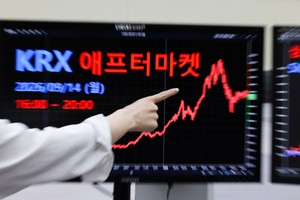
"Honey, what are you looking at?" "Oh, nothing." Mr. Kim, a 38-year-old office manager who used to sneak peeks at his mobile trading app from a bathroom stall during work hours, settled onto his living room sofa Monday evening and pulled out his smartphone. It was past 7 p.m., but he could still buy and sell Samsung Electronics shares — because Korea Exchange had just launched its new after-market, allowing real-time trading until 8 p.m. after the close of the regular session. KRX opened the new session Monday, replacing the previous after-hours single-price auction system with a continuous order-matching after-market running from 4 p.m. to 8 p.m. With 38 brokerages participating on the first day, the KRX after-market recorded 1.8 trillion won ($1.34 billion) in trading value — equivalent to 6.6 percent of KRX's total trading value for the day. Trading volume reached 72.24 million shares. The KRX after-market's first-day volume narrowly surpassed that of NXT, which has operated a similar after-hours session since March last year. NXT runs its after-market from 3:40 p.m. to 8 p.m. — 20 minutes earlier than KRX's 4 p.m. start. NXT's after-market trading value on Monday came to 1.79 trillion won. Retail investors effectively drove the first day of after-hours trading. Having already net-purchased more than 3 trillion won worth of shares during the regular session, they continued buying after the close. Retail investors accounted for 93 percent of total after-market trading value — about 1.67 trillion won. Institutional investors made up just 2.1 percent, or about 38 billion won, while foreign investors accounted for 3.9 percent, or about 70 billion won. In net terms, retail investors posted net purchases of 53.7 billion won, while institutions and foreign investors recorded net selling of 6.3 billion won and 48 billion won, respectively. Trading was heaviest in the final hour before the 8 p.m. close, with the 7–8 p.m. slot accounting for 30.7 percent of total after-market volume — roughly one-third of the day's total. The 4–5 p.m. slot made up 19.6 percent, followed by 5–6 p.m. at 25.5 percent and 6–7 p.m. at 24.2 percent. Mobile devices dominated trading activity. Some 73 percent of after-market transactions were executed via MTS or other wireless terminals, meaning more than seven in 10 trades were placed on a mobile device. The share handled through HTS, the PC-based home trading system, stood at 21 percent. The launch of the KRX after-market significantly expanded the universe of stocks available for evening trading. Under the previous after-hours single-price auction system, trading was limited to roughly 600 listed stocks; the new session covers most Kospi and Kosdaq listings. On Monday, 2,501 stocks were eligible for after-market trading, and actual trades occurred in 96 percent of them — 2,413 stocks. Those stocks represented 99 percent of total market capitalization. Overall price volatility was lower in the after-market than during the regular session. The high-low price range for individual stocks came to 2.9 percent on the Kospi and 4.6 percent on the Kosdaq, both below the regular-session figures of 4.1 percent and 5.8 percent, respectively. Still, volatility-interruption circuit breakers were triggered 1,637 times across individual stocks, indicating some price swings in specific names. Among large-cap stocks, major semiconductor names extended their regular-session losses into the after-market. Samsung Electronics fell an additional 500 won, or 0.20 percent, to 248,500 won, widening its full-day decline from 4.05 percent to 4.24 percent. SK hynix dropped a further 14,000 won, or 0.82 percent, to 1.68 million won, pushing its daily loss from 6.35 percent to 7.12 percent. Separately, a smart order routing error affected Mirae Asset Securities and Samsung Securities during the NXT pre-market session Monday morning. The SOR system compares trading conditions on KRX and NXT and routes orders to whichever market offers better terms for investors. Of the 14 brokerages using NXT's SOR, only those two experienced the glitch. Industry observers suggested the error may have stemmed from system changes made to extend SOR coverage to 8 p.m. in line with the KRX after-market launch. Both brokerages responded by routing their SOR orders through KRX after 4 p.m., and the KRX after-market session proceeded without any major system disruptions.
Sept. 15, 2026
-

Korea Investment & Securities lists 268 new ELW products, tops market in trading value and listings
38 index-type ELWs based on KOSPI 200 230 stock-type ELWs tied to Samsung Electronics, SK hynix, Naver and others Korea Investment & Securities announced Tuesday the listing of 268 new equity-linked warrants (ELW). The newly listed products consist of 38 index-type ELWs based on KOSPI 200 and 230 stock-type ELWs tied to individual stocks including Samsung Electronics, SK hynix, Naver and Hyundai Engineering & Construction. An ELW is a product that grants the holder the right to buy or sell an individual stock or stock index at a predetermined price on the expiration date — essentially a warrant linked to equity. Investors who expect the underlying asset to rise can buy call ELWs, while those anticipating a decline can opt for put ELWs, allowing for a range of strategies depending on market direction. The product can be used to profit in both rising and falling markets, and its leverage effect allows investors to pursue larger returns with a relatively small outlay. However, if the underlying asset moves against expectations, investors can lose up to 100 percent of their principal at expiration, and caution is advised. Trading ELWs requires completing an investment-profile assessment and a mandatory investor education course. New customers must also meet a minimum deposit requirement of 15 million won ($11,100). Korea Investment & Securities ranks first in the Korea Exchange ELW market in both trading value and number of listed products. The firm also operates a dedicated ELW website and a KakaoTalk channel called "TRUE ELW" to provide investors with useful market information.
Sept. 15, 2026
-

Retail investors' net purchases of SOL US Dividend Dow Jones ETF top W500b
Cumulative retail net purchases since listing reach 501.4 billion won; 12.3 billion won added in the past month ETF lineup expands with currency-hedged and bond-mixed options for dividend-growth exposure Shinhan Asset Management said Tuesday that cumulative net purchases by retail investors in its SOL US Dividend Dow Jones ETF have surpassed 500 billion won ($372 million). According to Korea Exchange data as of Wednesday, cumulative retail net purchases of the SOL US Dividend Dow Jones ETF since its listing totaled 501.4 billion won. Net assets stood at 1.01 trillion won. Retail investors net-bought 12.3 billion won worth of the ETF over the past month alone. Although net assets fell by about 44.1 billion won during the same period due to market price adjustments, retail buying continued. Shinhan Asset Management attributed the sustained demand to investors seeking steady cash flow through regular dividends as volatility in domestic and overseas equity markets has increased. The SOL US Dividend Dow Jones ETF tracks the Dow Jones US Dividend 100, a US dividend-growth index, and invests across American companies with a consistent track record of dividend payments. It follows the same underlying index as SCHD, a US dividend-growth ETF, and distributes dividends monthly. Shinhan Asset Management has also segmented its lineup of products investing in US dividend-growth assets by investment objective. The SOL ETF range includes the currency-exposed SOL US Dividend Dow Jones, the currency-hedged SOL US Dividend Dow Jones (H), and SOL US Dividend US Treasury Mixed 50, which is eligible as a safe asset in retirement pension accounts. "The SOL US Dividend Dow Jones ETF has stayed true to its principle of investing in US dividend-growth companies since listing, delivering reasonable monthly distributions funded by dividend income," said Kim Jeong-hyeon, head of the ETF business group at Shinhan Asset Management. "Surpassing 500 billion won in cumulative retail net purchases reflects the trust investors have placed in that management approach." Shinhan Asset Management said inflows into its pension products have also continued. Combined assets under management in its flagship target-date funds — Shinhan Maeum Pyeonhan Qualified TDF and Shinhan Pparun Daeeung Qualified TDF — exceeded 2 trillion won last month. More than 600 billion won has flowed in this year alone. Target-date funds are pension funds that gradually reduce exposure to riskier assets such as shares and increase allocations to safer assets such as bonds as an investor's retirement date approaches.
Sept. 15, 2026
-

NH-Amundi Asset Management lists HANARO US Agentic AI TOP2+ ETF with focus on Microsoft, Alphabet
Top 2 holdings each carry 25% weight; infrastructure firms also included Agentic AI-driven productivity boom makes now the right time to invest, firm says NH-Amundi Asset Management announced Tuesday it will list the HANARO US Agentic AI TOP2+ ETF, a fund investing in US companies tied to agentic AI. The ETF invests in 10 companies listed on US exchanges that are involved in agentic AI and the broader technology ecosystem supporting it. Agentic AI refers to AI systems that set their own goals, devise plans and carry out tasks autonomously without requiring individual instructions from users. The 10 holdings are selected by scoring each company's relevance to agentic AI through large language model-based contextual analysis of business reports and public disclosures, with market capitalization also factored into the selection. A defining feature of the fund is its concentrated allocation to the top two holdings — companies with their own foundation models — each assigned a 25% weighting. As of the end of August, Microsoft and Alphabet hold the top two spots. The fund also includes Meta, Amazon, CrowdStrike, Datadog and Dell Technologies, among others. The portfolio is structured around two pillars that mirror how AI agents operate: AI models for reasoning and planning, and the infrastructure needed to run and manage those models in practice. Accordingly, companies that develop frontier AI models or own the cloud infrastructure to run them are placed at the top of the portfolio, while firms providing the computing, networking, data and security infrastructure required to operate AI agents are distributed across the remaining holdings. Another feature of the index methodology is a special inclusion mechanism that allows highly theme-relevant companies to be added to the portfolio outside of regular rebalancing cycles when they newly list. Should major frontier AI companies currently not publicly traded — including Anthropic and OpenAI — complete a listing, they could be added to the portfolio following a review by the index committee to determine whether they meet eligibility requirements. "Now is the right time to invest preemptively in key sectors, as the productivity revolution driven by agentic AI is gaining full momentum," said Kim Seung-cheol, head of the ETF investment division at NH-Amundi Asset Management. "The HANARO US Agentic AI TOP2+ ETF lets investors concentrate on core foundation model companies while capturing the entire supporting infrastructure ecosystem in a single fund." The HANARO Fn K-Semiconductor ETF, an earlier fund from NH-Amundi Asset Management, has posted the highest return among domestically listed ETFs — excluding leveraged ETFs — from the start of the year through Wednesday. The fund invests in 20 companies representing South Korea's semiconductor industry.
Sept. 15, 2026
-
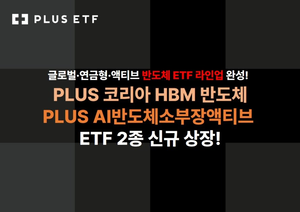
Hanwha Asset Management launches two ETFs targeting HBM and AI semiconductor supply chain
'PLUS Korea HBM Semiconductor' and 'PLUS AI Semiconductor Materials Active' begin trading Tuesday HBM demand growth seen driving gains for memory chipmakers and materials suppliers alike Hanwha Asset Management is launching two ETFs aimed at the AI semiconductor investment cycle. One fund combines exposure to Samsung Electronics and SK hynix — the dominant players in the high-bandwidth memory market — with materials, components and equipment suppliers, while the other applies an active strategy focused exclusively on those suppliers. Hanwha Asset Management said Tuesday it would list the "PLUS Korea HBM Semiconductor" and "PLUS AI Semiconductor Materials Active" ETFs. The PLUS Korea HBM Semiconductor fund allocates roughly 50 percent to Samsung Electronics and SK hynix, with the remaining 50 percent spread across eight semiconductor materials, components and equipment stocks: PSK, VM, TES, Wonik IPS, Simtech, Jusung Engineering, Isupetasys and Daeduck Electronics. HBM is a critical memory chip used in AI training and inference. Demand has been rising alongside growing investment in AI data centers. Hanwha Asset Management expects the surge in HBM demand to translate into capital expenditure for expanding memory production capacity, with benefits spreading to front-end process equipment — including etching, cleaning and deposition tools — as well as packaging, testing, components and substrates. The PLUS AI Semiconductor Materials Active fund targets the period when rising AI semiconductor investment, including in HBM, begins to show up in actual orders and earnings at materials, components and equipment companies. Portfolio managers will adjust individual stock weightings by monitoring customers' capital expenditure plans, equipment orders, mass production schedules and new technology adoption. Key holdings include Isupetasys, Intekplus, Doosan, ISC, SFA Semicon, TES, DI, PSK Holdings, Simtech and Hansol Chemical. Industry analysts say the benefits of expanding semiconductor production are likely to extend to back-end process equipment makers as well. "Given the capacity expansion schedules of domestic and overseas semiconductor companies, the revenue growth visibility for materials, components and equipment firms through 2028 is very high," said Kim Rok-ho, a researcher at Hana Securities, adding that rising packaging demand for HBM and other AI chips means back-end process companies should increasingly be considered investment targets. "The gains from the memory upcycle will be reflected in the leading stocks first, then spread sequentially to materials, components and equipment companies as capital expenditure is deployed," said Keum Jeong-seop, head of Hanwha Asset Management's ETF business division. "We designed the two products so that investors can capture both the core of the cycle and the phase when capital expenditure begins to broaden out."
Sept. 15, 2026
-
Kospi hovers near 6,600 as foreign selling enters fifth day amid US rate, AI concerns
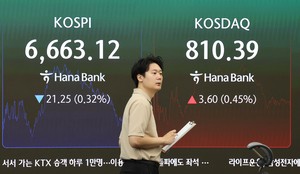
Fourth consecutive session of losses Samsung Electronics falls, SK hynix rises Kosdaq gains on robot stock strength The Kospi weakened in early trading Tuesday, pressured by an overnight surge in US Treasury yields and crude oil prices alongside growing anxiety over the pace of AI industry development. Foreign investors extended their selling streak to a fifth consecutive session, dragging the index lower. According to Korea Exchange, the Kospi stood at 6,633.89 as of 9:18 a.m. Tuesday, down 50.48 points, or 0.76 percent, from the previous session — marking a fourth straight day of losses since Thursday. The index opened down 25.12 points, or 0.38 percent, at 6,659.25 before widening its losses slightly. Foreign investors and institutional investors were net sellers of 212.2 billion won ($158 million) and 183.2 billion won, respectively, while retail investors were net buyers of 345.3 billion won. Foreign investors have been net sellers on the Kospi for five consecutive sessions since Wednesday. They were also net sellers of 234.9 billion won in the KOSPI 200 futures market. Wall Street closed broadly lower overnight, with all three major indexes falling in tandem. The Dow Jones Industrial Average dropped 0.29 percent and the S&P 500 fell 0.48 percent, while the NASDAQ Composite declined 0.56 percent. The moves came after Saudi Arabia shut down its key East-West Pipeline, stoking fears of supply disruptions and sending crude prices sharply higher. Brent crude futures for November delivery settled up 1.02 percent at $105.68 per barrel, while West Texas Intermediate futures for October delivery rose 1.34 percent to $101.39. The oil price surge heightened inflation concerns ahead of the Federal Reserve's Federal Open Market Committee meeting scheduled for this week. In response, the yield on the benchmark 10-year US Treasury note surged past the psychologically significant 5 percent threshold — the first time it has crossed that level since October 2023. Technology stocks also stumbled as calls by industry leaders for a slowdown in AI development came into sharper focus. Nvidia fell 3.36 percent and Micron Technology dropped 5.25 percent, sending the Philadelphia Semiconductor Index tumbling 5.86 percent. SK hynix's American depositary receipts also slid 7.60 percent. Domestic semiconductor stocks faced similar downward pressure. However, the index's losses were partly cushioned by the view that much of the selloff tied to the AI slowdown narrative had already been priced in during Monday's sharp decline. Among large-cap stocks, Samsung Electronics slipped 0.20 percent while SK hynix edged up 0.06 percent, with the two semiconductor heavyweights moving in opposite directions. Samsung Electro-Mechanics fell 1.72 percent, LG Energy Solution lost 1.00 percent, Hyundai Motor declined 0.40 percent, KB Financial Group dropped 1.43 percent, and Doosan Enerbility slid 2.07 percent. On the upside, SK Square gained 0.70 percent, Samsung SDI rose 0.56 percent, and LG Electronics climbed 1.41 percent. Han Ji-young, a researcher at Kiwoom Securities, said the domestic market on Tuesday was likely to recover some of Monday's sharp losses, supported by the view that the impact of the 10-year US Treasury yield breaching 5 percent and the plunge in US semiconductor stocks had already been reflected in Monday's session. The Kosdaq was up 1.22 points, or 0.15 percent, at 808.01 at the same time, after opening down 0.30 points, or 0.04 percent, at 806.49 and fluctuating near the flatline.
Sept. 15, 2026
-

KB Asset Management's gold fund opens door to pension investors
ETF-based structure boosts efficiency as management fee cut by 40% 18-year track record positions fund as steady diversification tool As market volatility has increased, interest in using gold for portfolio diversification has grown — and a product that allows investors to gain gold exposure through retirement pension accounts is drawing attention as a new pension investment option. KB Asset Management said Tuesday that its KB Star Gold Special Asset Fund has been gaining traction among pension investors as a diversification tool, following changes that made the fund accessible through retirement pension accounts by adopting an ETF-centered management structure and lowering its management fee. Established in 2008, the KB Star Gold Special Asset Fund allows investors to gain exposure to gold without directly buying or storing physical gold. The fund has been in operation for 18 years, navigating major market disruptions including the global financial crisis, the European fiscal crisis and the COVID-19 pandemic. In July, KB Asset Management restructured the fund's investment approach, shifting from a derivatives-heavy strategy to one centered on domestic and international gold ETFs. The firm also reduced the fund's derivatives risk exposure to below 40 percent, making it eligible for retirement pension accounts. In addition, the company overhauled its fee structure, cutting the management fee by about 40 percent from the previous level, and improved operational efficiency by incorporating low-cost gold ETFs. Redemption proceeds are paid within four business days. The KB Star Gold Special Asset Fund is currently available for trading through retirement pension accounts at KB Kookmin Bank and Shinhan Securities, with plans to expand the distribution network. For general accounts, the fund is available through 29 domestic distributors, including KB Kookmin Bank, KB Securities, Samsung Securities, Hana Bank, SC Bank and Shinhan Bank. "It is important to diversify retirement pension investments across a range of assets from a long-term perspective," said Beom Gwang-jin, head of KB Asset Management's pension wealth management division. "Gold can add a diversification element beyond the traditional asset allocation of shares and bonds, and we will continue to introduce pension products that reflect diverse investment needs to broaden the choices available to investors." The RISE Network Infrastructure ETF has also drawn attention for its returns. KB Asset Management said the product ranked first among domestic equity ETFs in six-month returns. According to fund evaluator FnGuide, the ETF posted a six-month return of 67.24 percent as of Aug. 26, the highest among 398 domestic equity ETFs. Its one-year and three-year returns also stood at 346.80 percent and 479.30 percent, respectively. The ETF invests in key companies across the network infrastructure value chain, including makers of 5G telecommunications equipment, base station equipment and subscriber network equipment.
Sept. 15, 2026
-

Semiconductor stocks drag Wall Street lower as AI slowdown talk rattles markets
Philadelphia Semiconductor Index plunges 5.86%; Nvidia, Micron lead chip selloff 10-year Treasury yield briefly tops 5% for first time since October 2023 WTI above $101, Brent above $105; September rate hike bets add to pressure All three major US stock indexes fell Monday as a sharp selloff in semiconductor shares — triggered by calls to slow the pace of AI development — combined with rising Treasury yields to weigh on markets. Oil prices above $100 a barrel and a brief breach of the 5 percent threshold on the 10-year Treasury yield added to the pressure. The Dow Jones Industrial Average closed down 152.09 points, or 0.29 percent, at 52,421.20 on the New York Stock Exchange. The S&P 500 fell 37.00 points, or 0.48 percent, to 7,619.98. The tech-heavy Nasdaq Composite dropped 146.63 points, or 0.56 percent, to finish at 26,186.41. Chip stocks bore the brunt of the day's losses after prominent AI industry figures argued that development of cutting-edge AI models should be slowed to allow time for adequate safety measures. Anthropic CEO Dario Amodei was among those calling for a more measured pace. The Philadelphia Semiconductor Index plunged 5.86 percent to 11,131.28. Nvidia fell 3.36 percent, Micron dropped 5.25 percent, Broadcom lost 4.77 percent, AMD shed 4.40 percent, and Intel declined 5.59 percent. Marvell Technology tumbled 7.32 percent, while SK hynix's American depositary receipts fell 7.6 percent. Software and cybersecurity stocks bucked the trend. ServiceNow, Adobe and Workday rose 7.41 percent, 5.30 percent and 4.58 percent, respectively. Palo Alto Networks and CrowdStrike surged 13.09 percent and 13.85 percent. Rising Treasury yields also weighed on equities. The 10-year US Treasury yield climbed as high as 5.014 percent during the session — its highest level since October 2023 — before pulling back to the 4.9 percent range. Oil prices rose on concerns about disruptions to Saudi Arabian crude shipments. Saudi Arabia is expected to suspend operations on its east-west pipeline, which bypasses the Strait of Hormuz, for several weeks following a drone strike. Brent crude for November delivery settled up 1.02 percent at $105.68 a barrel, while West Texas Intermediate for October delivery gained 1.34 percent to close at $101.39 a barrel. Markets are also watching the Federal Reserve's upcoming benchmark interest rate decision. According to CME FedWatch, traders are pricing in roughly a 92 percent probability of a rate hike in September. Jay Woods, chief market strategist at Freedom Capital Markets, said a rate hike would be the appropriate move given current economic data and the market outlook. He added that because markets have already priced in much of the increase, stocks could rebound after an actual hike — but a decision to hold rates steady could paradoxically draw a negative reaction.
Sept. 15, 2026
-

'Truly rare': Retail investors, foreigners and institutions all net sellers of SK hynix
Fear of rising interest rates is rattling the supply-demand dynamics of Samsung Electronics and SK hynix, the two flagship semiconductor stocks on the Korean market. While it is typical for one group of investors to absorb shares when another sells heavily, retail investors and foreign investors have recently been net sellers of both Samsung Electronics and SK hynix at the same time. SK hynix has seen an even more unusual situation: institutions have joined the selling as well, meaning all three major investor groups — retail, foreign and institutional — have been offloading shares simultaneously, a rarely seen phenomenon. According to Korea Exchange data released Monday, retail investors net sold approximately 11.5 trillion won ($8.54 billion) worth of SK hynix shares in the month from Aug. 11 to Friday — the heaviest net selling of any stock among retail investors during that period. Samsung Electronics was second, with retail investors net selling approximately 7.9 trillion won worth of shares. Samsung Electronics preferred shares, however, saw net purchases of around 800 billion won. Foreign investors moved in the same direction. Over the same period, they net sold approximately 4.4 trillion won worth of SK hynix shares, making it the stock they shed most heavily. Samsung Electronics preferred shares ranked second with approximately 1.4 trillion won in net selling, while Samsung Electronics common shares also appeared in the top net-sold list at around 500 billion won. Institutions added to the pressure on SK hynix, net selling approximately 2.5 trillion won worth of shares. That made SK hynix the top net-sold stock for each of the three major investor groups individually. Over the past month, SK hynix was the single stock that all three major investor groups in the domestic market sold most heavily. The primary driver behind this unusual synchronized selling is a resurgence of "high-rate fears." Growing concerns over inflation fueled by elevated oil prices have pushed US market interest rates sharply higher, and wariness that the Federal Reserve could resume benchmark interest rate hikes is weighing on equities broadly. The yield on the 10-year US Treasury note — the global benchmark for bond rates — has crept close to 5 percent, dampening appetite for risk assets. Rising rates hit large-cap technology stocks like Samsung Electronics and SK hynix particularly hard. When interest rates climb, the discount rate applied to a company's future earnings rises as well. In simple terms, the higher a stock's valuation is tied to expectations of future growth — such as gains from AI and the HBM market — the more its present value erodes when rates rise. For investors, the incentive to hold equities also weakens. When the 10-year US Treasury yield approaches 5 percent, investors can expect strong returns simply by holding relatively safe US government bonds instead of price-volatile stocks. As rates rise, the expected return investors demand from equities rises with them, intensifying profit-taking pressure especially on technology stocks that have already rallied sharply. For foreign investors, global capital allocation adds another layer of pressure. Higher US rates increase the appeal of dollar-denominated assets such as US Treasuries, while reducing the incentive to allocate to emerging-market equities including Korean stocks. This means foreign capital can flow out even without any immediate deterioration in the earnings outlook for Samsung Electronics or SK hynix. A slowdown in the domestic market's upward momentum has also dampened investor sentiment. On top of that, financial regulators tightened rules on single-stock leveraged ETFs — instruments that had significantly boosted trading in Samsung Electronics and SK hynix in the first half of this year — reducing short-term, high-risk demand for semiconductor shares. Analysts say the combination of weakening risk appetite from rising rates and a simultaneous pullback in leveraged investment demand amplified the selling by both retail and foreign investors. Despite all three investor groups selling, share prices have not collapsed as sharply as the volume of net selling might suggest. Large-scale share buybacks are seen as a key reason. In the stock market, every seller requires a buyer on the other side. In recent trading flows, that role has been played by "other corporations" — a category tracked separately from retail investors, foreign investors and institutions. Over the same period, other corporations net bought approximately 18.5 trillion won worth of SK hynix shares, in effect absorbing most of the supply offloaded by the other three groups. For Samsung Electronics, other corporations net bought approximately 7.5 trillion won. Large-scale share buybacks are identified as the key structural factor enabling this dynamic. SK hynix's aggressive buyback program has created a situation where the company's own purchasing absorbs shares even as retail investors, foreigners and institutions sell simultaneously. Samsung Electronics' ongoing buyback is playing a similar role in soaking up selling pressure. Normally, simultaneous net selling by retail investors, foreign investors and institutions would raise the likelihood of a sharp drop in share prices. This time, however, the emergence of other corporations and share buybacks as powerful buyers has prevented the synchronized selling from translating directly into a steep decline. Ultimately, the recent supply-demand picture for Samsung Electronics and SK hynix can be read as two forces in opposition. On one side, rising US rates, risk aversion and a pullback in leveraged investment are building selling pressure from retail investors, foreign investors and institutions. On the other, large-scale share buybacks are absorbing that supply and providing a floor under share prices. Market participants are watching the trajectory of US interest rates after the next Federal Open Market Committee meeting as the key variable that will determine the direction of semiconductor stocks. If US rate increases ease, selling pressure from foreign investors could also moderate — but if high rates persist for an extended period, buybacks alone may not be enough to offset the supply overhang, analysts say. "The absolute level of interest rates can be a burden for growth stocks," said Kim Jun-young, a researcher at iM Securities. "Noise over the weekend about the pace of AI investment and development will likely keep markets unsettled." He added that US equities, being less exposed to AI than Korean stocks, appear more likely to extend their record-high rally, and that "it is still a bit early to reduce preference for equities as an asset class."
Sept. 14, 2026
-
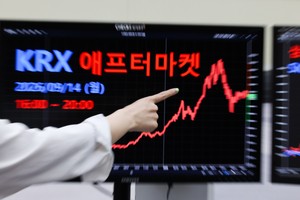
Mirae Asset, Samsung Securities hit by system glitches during pre-market session
Korea Exchange launches after-market trading Monday A series of system failures struck major domestic brokerages Monday morning in connection with the pre-market session — running from 8 a.m. to 8:50 a.m. — operated by alternative trading system Nextrade (NXT). Mirae Asset Securities users experienced delays in checking the execution status of buy and sell orders placed on NXT's pre-market through the brokerage's home trading system (HTS) and mobile trading system (MTS). The user-facing disruptions cleared up when the pre-market session ended, and trading during the regular session proceeded normally. However, the smart order routing (SOR) system — which distributes orders between Korea Exchange and NXT — remained restricted. Mirae Asset Securities said in a notice that due to SOR system maintenance, SOR orders would be routed to Korea Exchange for the regular session, and to NXT from 3:30 p.m. to 4 p.m. or to Korea Exchange from 4 p.m. to 8 p.m. for the after-market. A source familiar with the matter said the root cause appeared to be a problem with the SOR system provided by NXT. Samsung Securities users also encountered trading issues during the pre-market session. In a notice titled "Emergency cancellation notice due to SOR failure," the brokerage said cancellation orders had not been processed normally due to the SOR failure and had been rerouted to Korea Exchange, asking clients to manually cancel any orders that remained open. Samsung Securities later issued a follow-up notice advising clients to select NXT when placing after-market orders between 3:30 p.m. and 4 p.m. due to the SOR failure, and saying that exchange (automatic) orders placed between 4 p.m. and 8 p.m. would be processed as Korea Exchange orders. The SOR system automatically routes a client's stock order to whichever exchange offers the most favorable conditions — comparing price, fees, costs, order size and the likelihood of execution — when the client does not specify a particular exchange. With the system failing to function normally, both Mirae Asset Securities and Samsung Securities appeared to have been left with no choice but to route orders to only one of the two exchanges — Korea Exchange or NXT. An industry official said the launch of Korea Exchange's after-market had extended the SOR application window from 3:30 p.m. to 8 p.m., prompting brokerages to scale up and modify their SOR-related systems. The official said the confusion Monday may have stemmed from those changes being applied for the first time. Meanwhile, Korea Exchange launched its after-market Monday, allowing investors to trade shares in real time from 4 p.m. to 8 p.m. The exchange scrapped the existing after-hours single-price auction system in favor of continuous real-time trading. The move significantly expanded the range of tradable securities and broadened investor choice. However, given that NXT had already been running an after-market until 8 p.m., the practical impact on ordinary investors may have been limited.
Sept. 14, 2026
-

Retail investors dump Samsung Electronics common shares but snap up preferred stock — here's why
Retail investors who collectively sold more than 10 trillion won ($7.43 billion) worth of Samsung Electronics and SK hynix shares turned around and net-bought more than 800 billion won of Samsung Electronics preferred stock over the same period. The divergence in buying behavior between common and preferred shares emerged after Samsung Electronics unveiled its shareholder-return plan. According to Korea Exchange and Koscom data, retail investors net-sold more than 10 trillion won of Samsung Electronics common shares (3.26 trillion won) and SK hynix (7.37 trillion won) combined from Aug. 24 — the first trading day after the shareholder-return announcement — through Friday. Over the same stretch, they net-bought 803.5 billion won of Samsung Electronics preferred stock, making it the top retail net-buy on the Kospi. The surge in retail buying of the preferred shares was most pronounced immediately after Samsung Electronics announced a sweeping shareholder-return plan. The company held a board meeting after the close of trading on Aug. 21 and said it expects remaining shareholder-return resources this year to reach between 90 trillion and 110 trillion won ($81.7 billion). Of that, about 30 trillion won will be paid out as a cash dividend in the third quarter, with the allocation of the remaining 60 trillion to 80 trillion won to be finalized early next year. The tilt toward preferred shares reflects expectations that preferred stock could fare relatively better in any future share buyback and cancellation program. Samsung Life Insurance and Samsung Fire hold Samsung Electronics common shares at levels approaching 10 percent, meaning that canceling common shares would push their ownership stakes higher. Under the Financial Industry Capital Act, if the stakes of affiliated financial subsidiaries exceed 10 percent, those companies would be required to sell some of their holdings. Preferred shares, which carry no voting rights, are largely exempt from such ownership restrictions — leading some observers to suggest they could serve as an alternative vehicle for shareholder returns in place of common shares. Domestic preferred shares have long traded at a discount to common shares, penalized not only for their lack of voting rights but also for being sidelined in buyback, cancellation and tender-offer processes. Industry watchers believe that if Samsung Electronics raises the proportion of preferred shares in its buyback and cancellation program, the discount historically applied to preferred stock would narrow. "Domestic preferred shares have in effect been treated as non-voting common shares," said Kim Gyu-sik, a portfolio manager and attorney at Vista Global Asset Management. "The discount factors that have weighed on preferred shares can be substantially removed only if preferred shares are actively utilized in buyback and cancellation programs." Industry observers expect preferred shares to account for a larger-than-anticipated portion of Samsung Electronics' shareholder-return program next year. With constraints on canceling common shares, buyback and cancellation of preferred shares is emerging as an alternative — and could serve as a catalyst for a revaluation of preferred stock, which has long traded at a discount to common shares. Kim Su-hyeon, head of research at DS Investment Securities, estimated that Samsung Electronics' buyback and cancellation program to be executed early next year would total between 10 trillion and 20 trillion won, with a growing share allocated to preferred stock. "Given the Financial Industry Capital Act complications that arise when canceling common shares, the possibility that preferred shares will account for a larger portion of the buyback and cancellation budget cannot be ruled out," he said. Whether preferred share buybacks and cancellations expand will depend on how Samsung Electronics allocates its remaining shareholder-return resources. Kim said he expects the company to direct some of those resources toward buybacks and cancellations rather than channeling everything into dividends — a move that would help its financial subsidiaries avoid having to sell down their stakes. "If 100 percent of shareholder-return resources were funneled into dividends out of concern that a block deal by financial subsidiaries would weaken control, the market could discount the quality of the shareholder return," he said. Samsung Electronics has precedent for raising the proportion of preferred shares in its buyback programs when the price gap between common and preferred shares widens. Of all shares canceled since the company's founding, about 16.9 percent have been preferred shares, and in its first buyback program in 2015, the company allocated 30 percent of the total purchase amount to preferred stock. With the dividend ex-date approaching at the end of September, preferred shares also look attractive on a yield basis. Samsung Electronics preferred shares closed most recently at 193,300 won, a 25.5 percent discount to the common shares at 259,500 won. Because both share classes receive the same dividend per share, the dividend yield relative to the amount invested is higher for preferred shareholders.
Sept. 14, 2026
-
Samsung Electronics, SK hynix tumble 4-6% as AI slowdown fears rattle Kospi
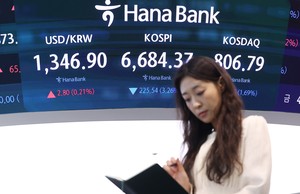
The Kospi tumbled more than 3 percent on Monday, sliding to the 6,680 range, as spreading calls for a slowdown in AI development dragged Samsung Electronics and SK hynix down more than 4 percent and 6 percent, respectively. Concerns over a US interest rate hike and rising oil prices added to the pressure, with foreign investors offloading more than 3 trillion won ($2.23 billion) in the main market. According to Korea Exchange, the Kospi closed down 225.54 points, or 3.26 percent, at 6,684.37. The index opened 217.30 points, or 3.14 percent, lower at 6,692.61, briefly pared its losses to as high as 6,773.97 during trading, then retreated again. Foreign investors and institutions posted net selling of 3.29 trillion won and 1.17 trillion won, respectively, on the main market. Individual investors were net buyers of 2.97 trillion won. The main drag on the market was the growing debate over slowing the pace of AI development. Dario Amodei, CEO of Anthropic, said Saturday (local time) that the company would reduce the speed of AI model improvements and introduce additional safeguards, including third-party evaluations. Tesla CEO Elon Musk and OpenAI CEO Sam Altman subsequently signaled agreement that the pace of AI development needs to be moderated. Fears of a US interest rate hike and rising oil prices also weighed on the market. The US core consumer price index for August, released over the weekend, rose 0.3 percent from the previous month, exceeding the market consensus of 0.2 percent. In response, the probability of a September rate hike as reflected by the CME FedWatch tool climbed to around 86 percent, and the yield on the 10-year US government bond touched 5 percent during trading. Oil price pressures from the Middle East persisted as well. With talks on transit through the Strait of Hormuz postponed and Saudi Arabia's east-west oil pipeline facing a shutdown, Brent crude surpassed $108 per barrel again. Semiconductor stocks bore the brunt of the selloff. Samsung Electronics closed down 10,500 won, or 4.05 percent, at 249,000 won, while SK hynix fell 115,000 won, or 6.35 percent, to close at 1.697 million won. Most large-cap stocks also declined. Samsung Electronics preferred shares fell 5.12 percent, SK Square dropped 8.17 percent, Samsung Electro-Mechanics lost 4.50 percent, LG Energy Solution slid 2.36 percent, Hyundai Motor fell 2.88 percent, and Samsung Life Insurance declined 3.09 percent. Samsung Biologics and KB Financial Group bucked the trend, rising 0.35 percent and 2.08 percent, respectively. The Kosdaq closed down 13.85 points, or 1.69 percent, at 806.79, after opening 14.37 points, or 1.75 percent, lower at 806.27. On the Kosdaq, foreign investors and institutions posted net selling of 93.1 billion won and 29.8 billion won, respectively, while individual investors were net buyers of 109.2 billion won. Among top Kosdaq-listed stocks by market capitalization, Alteogen fell 2.99 percent, Ecopro dropped 3.44 percent, Ecopro BM lost 5.80 percent, Jusung Engineering declined 1.44 percent, Rainbow Robotics fell 3.56 percent, Wonik IPS slipped 0.18 percent, Leeno Industrial fell 1.96 percent, and Simtech lost 4.95 percent. Robotis rose 0.31 percent. Lee Kyung-min, an analyst at Daishin Securities, said the discussion was "not about halting AI development, but about moderating the pace of development and verifying safety," cautioning against reading it as a sign of a broader slowdown in the investment cycle. He added that "HBM is sold out, and SK hynix and Samsung Electronics together hold 83 percent of the market — this decline was driven by sentiment, not fundamentals."
Sept. 14, 2026
-
SK Biopharm signs W71.59b drug supply deal
SK Biopharm disclosed Monday that it signed a pharmaceutical supply contract with its subsidiary SK Life Science. The contract is valued at 71.59 billion won ($53.2 million), equivalent to 10.1 percent of the company's 2025 sales. The contract runs through Friday.
Sept. 14, 2026
MOST READ
- 1Hyundai Motor unveils all-new Tucson with bigger body, smarter tech after 6-year wait
- 2Flat sneakers are back: Why Nike is reviving a 55-year-old running shoe
- 3Pope Leo XIV declines French honors and banquet, accepts only private meeting with Macron
- 428 illegal sports streaming sites found operating freely despite repeated blocks
- 5What was Rachmaninoff's performance fee? A 1928 price list tells all
- 6Samsung Biologics union's show of force backfires at the bargaining table
-
WORLD

US warns of punishment for anyone enabling Iran's Strait of Hormuz toll scheme
-
INDUSTRY
Toyota union puts productivity first; Hyundai Motor union demands bigger share of profits
-
FINANCE
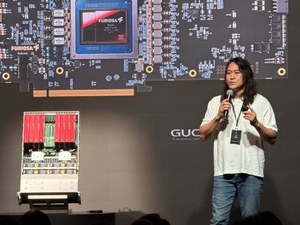
National Growth Fund to invest $531M in FuriosaAI, which rebuffed Meta's $800M takeover bid
-
INDUSTRY

Korea Shipowners' Association holds amateur baduk tournament for Maritime Day