Refused breath test to the end, arrested on the spot
Officer challenged dismissal as 'excessively harsh'
Court rules dismissal was justified
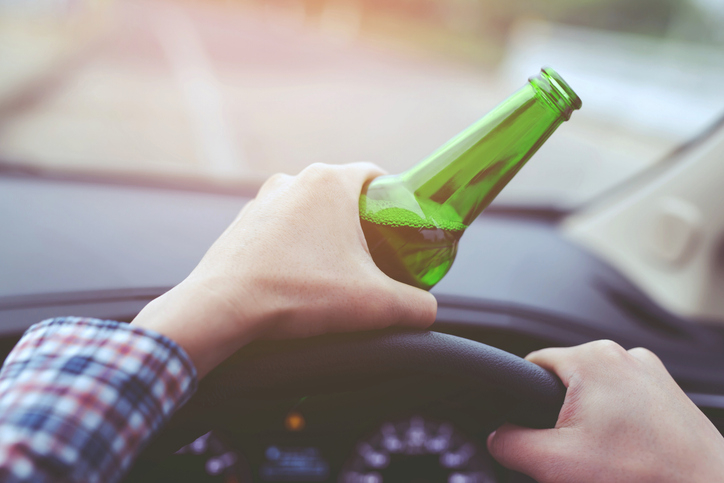
A court has ruled that dismissing a serving police officer who fled a drunk-driving checkpoint and refused a breath test was justified.
According to legal sources, the Suwon District Court's Administrative Division 4, presided over by Judge Im Su-yeon, ruled against the plaintiff last month in an administrative lawsuit filed by a former police inspector identified only as A, who had sought to overturn the dismissal. The court also ordered A to bear the litigation costs.
According to facts established by the court, A had been drinking with acquaintances at a restaurant in Gyeonggi Province in March last year and got behind the wheel around 11 p.m. to drive home. After traveling about 10 kilometers on a highway, A spotted a police sobriety checkpoint and fled. A drove roughly 8 kilometers before being caught by officers in pursuit, then refused four separate requests to take a breath test and was arrested on the spot.
A was dismissed in April last year. After an appeal to the civil service appeals commission was rejected, A filed a lawsuit in September last year.
During the trial, A argued the dismissal was "excessively harsh and unjust." The defense contended that the punishment was disproportionate given the circumstances leading to the drunk driving, the fact that A had belatedly attempted to comply with the breath test after being arrested, a blood alcohol reading of zero the following morning, and A's service record and commendations.
The court rejected the argument.
The panel said that without strict disciplinary action against police officers who violate traffic laws, "it becomes difficult to expect fair enforcement," adding that leniency would "breed public distrust of police and a perception that the law is applied unequally."
The court noted that A had gone beyond simply driving drunk — fleeing the scene for 8 kilometers to evade the checkpoint and refusing the breath test four times. "This was not merely a violation of the rules, but a refusal to comply with enforcement after the violation," the panel said.
The court added that A's culpability could not be considered low, given that A was a police officer with both the authority and the duty to enforce the law against such offenses.
On A's claim that a breath test the following morning showed no alcohol, the court said the submitted evidence was insufficient to establish the fact and that, in any case, it amounted to nothing more than a post-hoc circumstance that could not be seen as mitigating A's culpability.
The panel said police officers are held to a high standard of professional ethics and integrity and are obligated to maintain their dignity, warning that misconduct such as drunk driving "carries a significant risk of undermining public trust in the police force as a whole."
Taking into account public sentiment toward drunk driving and all other relevant circumstances, the court concluded it could not find the dismissal lacked rationality. The disadvantage suffered by A was not greater than the public interest served by the dismissal, nor so severe as to be unjustifiable.
The ruling was finalized Nov. 5. A did not appeal the first-instance decision.
notstrong@heraldcorp.com