Trial court finds dismissal lacked objective, rational basis and abused discretionary power; lawmaker Lee So-ra says council must weigh appeal carefully
The Seoul Metropolitan Council has lost a first-instance lawsuit over its dismissal of a policy support officer, drawing criticism that the council failed to adequately consider the personal harm caused to the individual when it exercised its personnel authority during a reorganization.
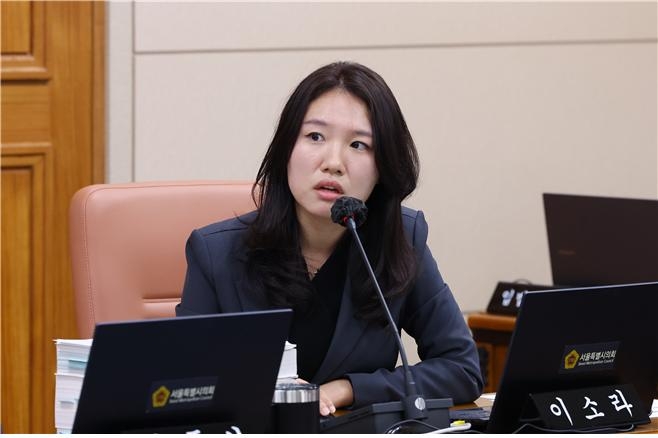
Seoul Metropolitan Council member Lee So-ra of the Democratic Party of Korea (Seongbuk District 4) pressed council Secretary-General Kim Yong-seok at an administrative audit of the operations committee during the 340th regular session Monday, demanding answers on why the council lost the first-instance case, whether the decision to appeal is justified, and what steps the council plans to take going forward.
Earlier, the Seoul Administrative Court ruled in August that the council must rescind the compulsory dismissal of its policy support officer, which the council had carried out on Dec. 11, 2024. The court found the dismissal lacked objective and rational grounds and violated the principle of proportionality, constituting an abuse and excess of discretionary authority.
Lee particularly raised questions about whether the council had sufficiently examined the appropriateness of hiring the officer through open recruitment, given that discussions about a reorganization were already under way at the time of appointment. Lee also pressed the secretariat on whether it had adequately explored alternative posts or ways to avoid dismissal for an officer who had been guaranteed a two-year term, only to be dismissed just five months after being hired.
"The council's argument on appeal is that the two-year term for an open-position appointment does not constitute an absolute guarantee of tenure — but then what was the intent behind setting a minimum two-year term in the relevant regulations?" Lee said.
In response, Secretary-General Kim said the policy support officer's workload had shrunk significantly after duties were reorganized around standing committees, and that the council had determined that creating a new field complaints unit would better serve the public interest. Kim added that alternative posts had been reviewed internally but could not be offered because other open positions had already been filled.
Lee said the case was not simply a dispute over one individual's dismissal but a matter that reflected the accountability of the council in exercising its personnel authority.
"In pursuing a policy decision to reorganize, the council dismissed within just five months a person hired through open recruitment — and the court also flagged a violation of the recusal rules for the personnel committee in that process," Lee said. "The court did not deny the need for the reorganization itself. What it said was that even when reorganization is necessary, the council must give sufficient weight to the appointee's length of service and the personal disadvantage caused, and must have objective and rational grounds to justify it."
The wisdom of pursuing an appeal also draws fire. Secretary-General Kim said the council had asked the Ministry of Justice to direct the administrative litigation, and the ministry determined that all three grounds for appeal the council had put forward were valid, instructing the council to proceed. Kim said first-instance legal fees came to just over 10 million won ($7,490), with an additional 3 million to 4 million won expected for the appeal.
Lee said the council should not simply defer to the Ministry of Justice's direction but must soberly assess on its own the likelihood of winning and the practical benefit of continuing the appeal.
"When pursuing future reorganizations or changes to personnel systems, it will be important to put in place institutional safeguards that minimize the personal disadvantage and infringement of rights that individuals may suffer in the process," Lee added.
Secretary-General Kim agreed that balancing the public interest against potential harm to individuals was essential, and said the final ruling, once confirmed, would serve as an important reference for future organizational management. Lee also requested that the council continue to report on the progress of the litigation and any follow-up measures.
seouldream01@heraldcorp.com