
'8-week rule' applies to accidents from Sept. 10
Patients must submit records for review by medical panel
Minor-injury claimants to be compensated for actual treatment costs only
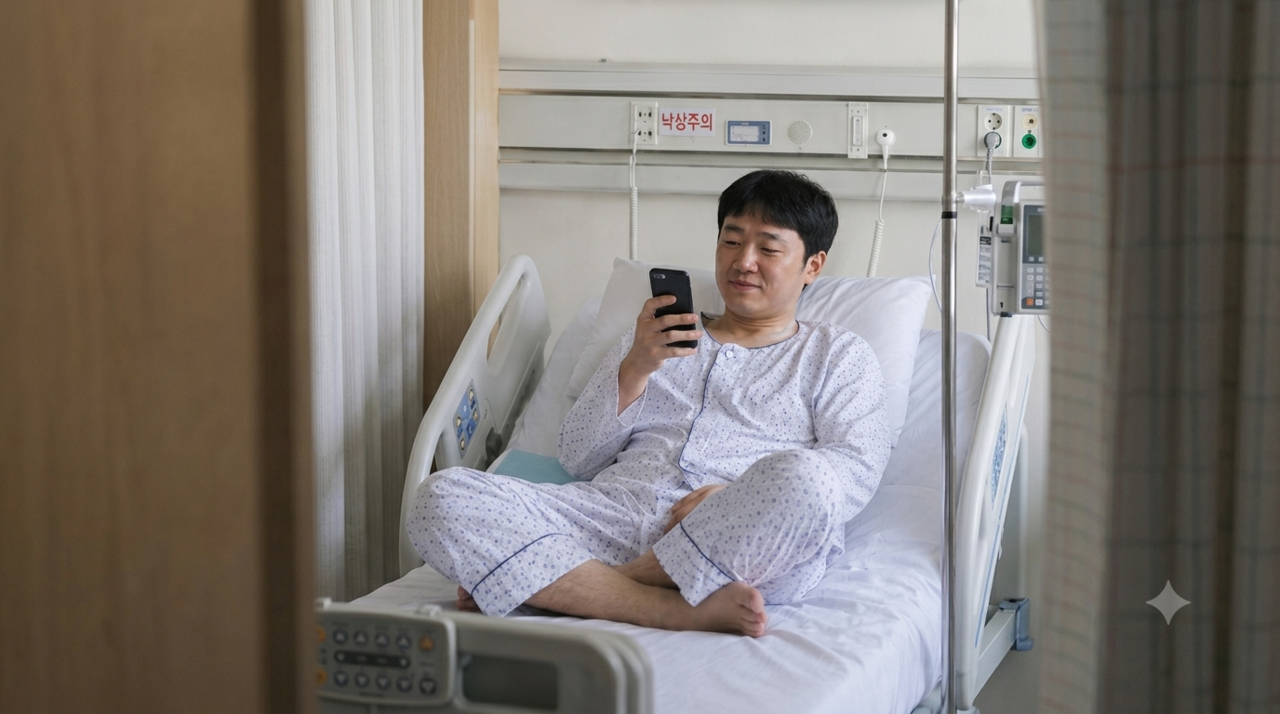
Person A was involved in a non-contact accident after a vehicle made a sudden stop while cutting in front of them. Diagnosed with muscle tension and a sprain, A went on to receive outpatient treatment 202 times, running up about 13.49 million won ($9,840) in medical bills.
Person B suffered a spinal sprain in a side-mirror collision between two vehicles and was classified as a grade-12 injury. After two weeks of hospitalization, B continued outpatient treatment for six months and received 5 million won in medical costs along with a 3 million won settlement.
To curb prolonged and excessive treatment by so-called "nailong" patients — fraudulent claimants who feign or exaggerate injuries — auto insurance compensation procedures are being tightened. Starting Thursday, minor-injury patients who sustained sprains or simple bruises in a vehicle accident and wish to continue treatment beyond eight weeks must undergo a medical necessity review by a specialist. Future medical expense payments that have routinely been made to minor-injury claimants will also be restricted as a rule.
The Financial Supervisory Service announced Wednesday that a long-term treatment necessity review process for minor auto insurance claimants will take effect Thursday. The measure targets patients classified as grade 12 to 14 under the Enforcement Decree of the Guarantee of Automobile Accident Compensation Act — specifically those with sprains or simple bruises. Seriously injured patients classified as grade 1 to 11, including those with fractures or internal organ damage, are not subject to the review.
Minor-injury patients seeking treatment beyond eight weeks must submit a medical certificate and copies of their treatment records to their insurer within seven weeks of the accident date. If they have undergone imaging tests such as X-rays, CT scans or MRI scans, they must also submit the imaging files on disc. The insurer then forwards the documents to the Korea Road Transport Authority under the Ministry of Land, Infrastructure and Transport, where specialist medical reviewers assess the need for continued treatment. Results are communicated within seven days of the review request.
The measure goes a step further than a system introduced in 2023 that required minor-injury patients to submit a medical certificate if they sought treatment beyond four weeks after an accident. The new rules add a separate specialist review process for treatment extending beyond eight weeks.
The government's push to manage long-term treatment comes against a backdrop of rising medical costs among minor-injury claimants. According to the Ministry of Land, Infrastructure and Transport, the number of minor-injury patients in vehicle accidents fell from about 1.554 million in 2019 to about 1.488 million in 2024, an average annual decline of 0.9 percent — yet treatment costs over the same period rose from 1 trillion won to 1.41 trillion won, an average annual increase of 7 percent.
![Financial Supervisory Service [Herald DB]](https://wimg.heraldcorp.com/news/cms/2026/09/02/news-p.v1.20260802.53795de5e7ec4885a53abce7966b65df_P1.jpg)
The auto insurance segment's financial performance has also deteriorated. The sector's underwriting loss widened from 9.7 billion won in 2024 to 708 billion won last year and reached 163.7 billion won in the first five months of this year. The Financial Supervisory Service has warned that continued leakage of insurance payouts could lead to premium increases, placing a greater burden on ordinary policyholders.
Safeguards have been put in place for patients who genuinely require long-term treatment. Infants, young children and pregnant women are in principle exempt from the review. If a patient submits a request within the seven-week window but the review is delayed, the insurer covers treatment costs incurred until the review is completed. Patients who disagree with the outcome may file an objection with the deduction dispute mediation subcommittee within seven days of receiving the result.
The Korea Road Transport Authority has assembled a review panel of about 200 specialists — including doctors of Western and traditional Korean medicine with at least 10 years of experience at general hospitals.
The longstanding practice of paying "future medical expenses" without a clear contractual basis is also being reformed. Going forward, such payments will be made only to seriously injured patients classified as grade 1 to 11 for whom a future need for treatment is objectively recognized. Minor-injury patients will no longer receive a separate future medical expense payment; instead, they will be covered for actual treatment costs incurred until their treatment concludes.
The long-term treatment necessity review applies to vehicle accidents occurring on or after Thursday. Accidents that occurred before Thursday are not subject to the new rules. The revised standards for future medical expense payments will apply to policies renewed under the updated terms from Thursday, with coverage periods beginning Oct. 25.
rim@heraldcorp.com



