Brands cut carbon and water use in down production
RDS certification and recycled fill gain traction
Eco-friendly desiccants and packaging join the shift
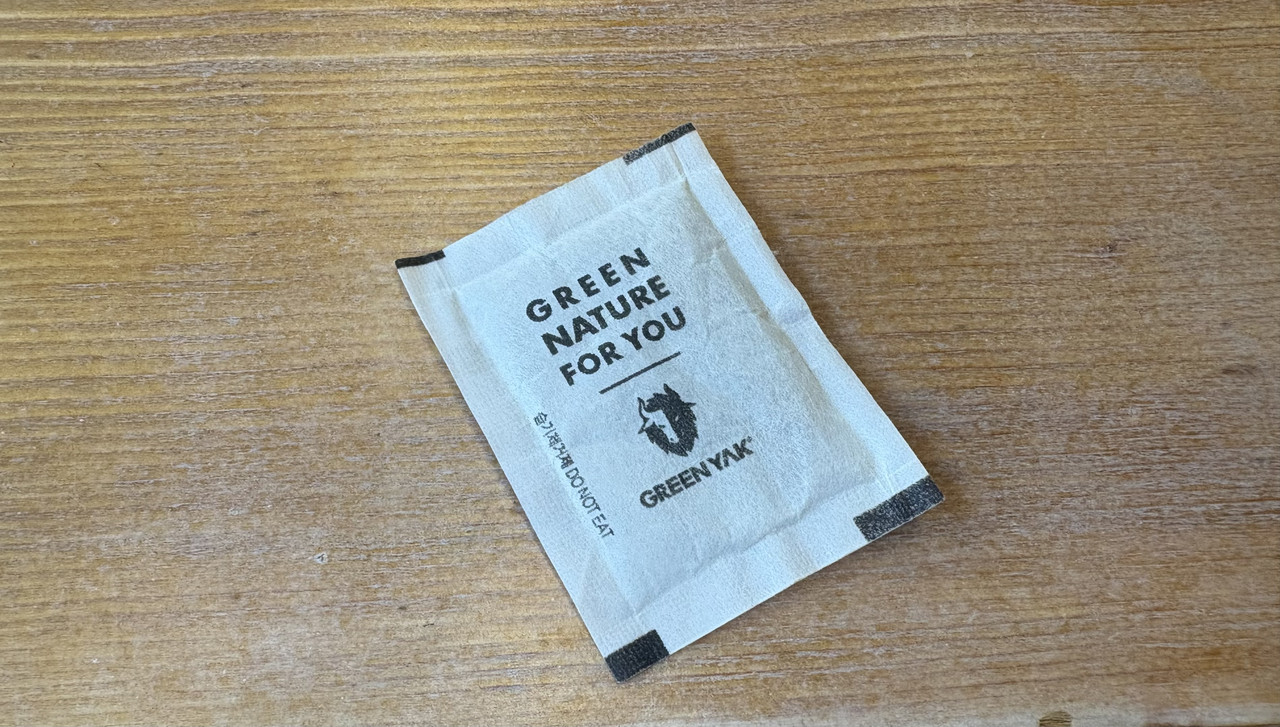
"What is this?"
A shopper who recently bought a new puffer jacket pulled an unfamiliar desiccant from one of its pockets. It was not the round silica-gel bead typically tucked inside. A small paper pouch held what looked like finely crushed leaves.
The packet contained bentonite, a naturally occurring mineral. Black Yak switched last year from silica gel to bentonite-based desiccants for storing and shipping its puffer jackets. Bentonite absorbs moisture to prevent quality degradation, and one or two packets go into each jacket pocket.
The shift away from silica gel was driven by a desire to reduce the environmental burden of manufacturing and disposing of desiccants. Round silica-gel beads have no dedicated sorting or collection system, making them difficult to separate for recycling — which is why most end up in general household waste bags.
How puffer jackets are made is changing. Winter outerwear relies on petrochemical-based synthetic fibers for insulation, and the use of goose and duck feathers as fill has drawn criticism over environmental pollution and animal welfare. The fashion industry is now working to reduce its environmental footprint across the entire chain — from raw-material sourcing through production and retail.
Puffer jackets rank among the most environmentally intensive garments to produce. According to a carbon and water footprint assessment of down jackets published in the academic journal SAGE Open, producing 100 puffer jackets generates a carbon footprint of 2,544.1 kg CO₂e.
Down processing is also highly water-intensive. Processing one ton of down requires roughly 350 to 400 tons of water. Washing goose and duck feathers and removing impurities demands both water and chemical inputs, and inadequate wastewater treatment carries a significant risk of water pollution.
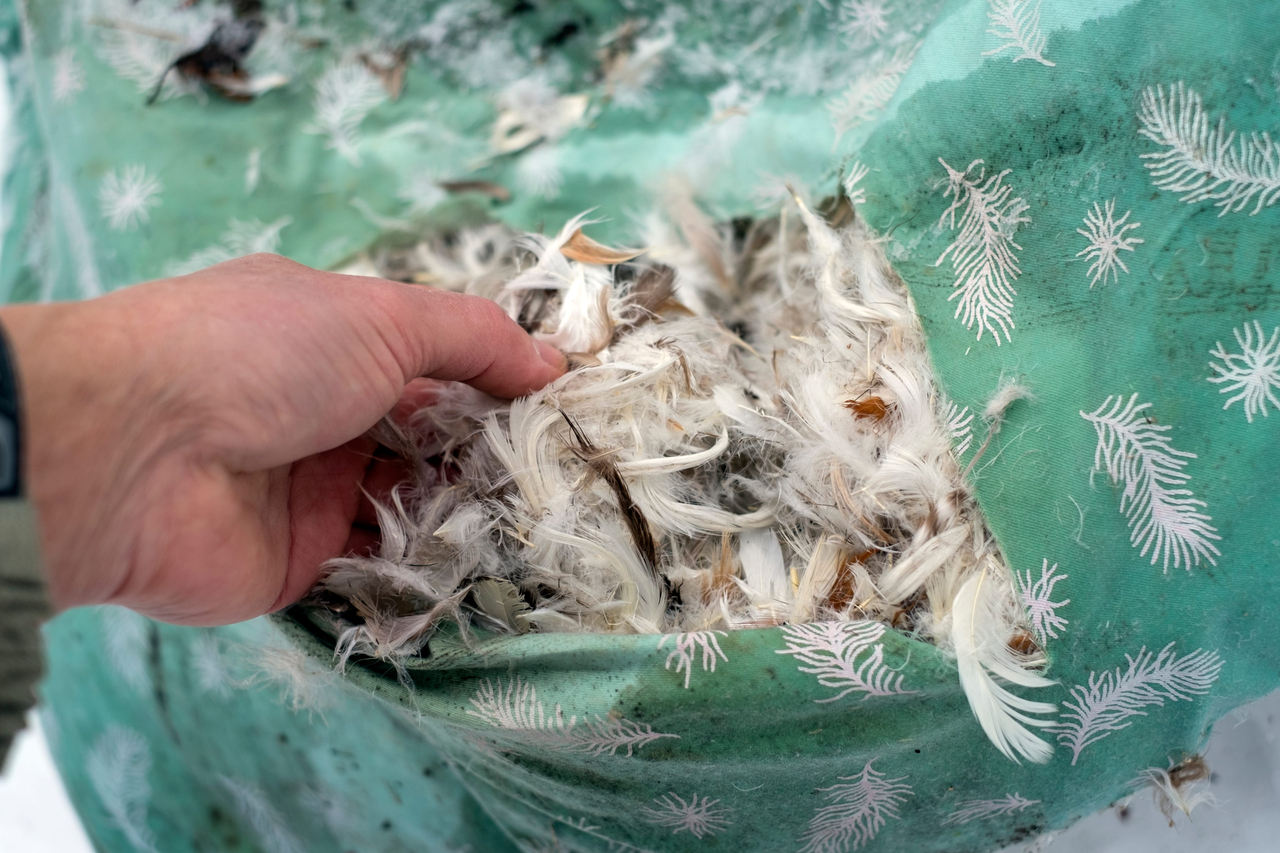
Animal welfare is another challenge. Goose-down production has faced scrutiny over the forced plucking of live geese and force-feeding practices. While geese do shed feathers naturally, some production facilities have practiced "live plucking" — forcibly harvesting feathers from live birds to speed up supply.
In response, the fashion industry is tightening animal welfare standards in down sourcing. The most prominent tool is the Responsible Down Standard (RDS), an international certification that prohibits live plucking and force-feeding and requires traceability of the down supply chain from farm to finished product. Kolon Sport applied RDS-certified European goose down — sourced in compliance with animal welfare standards — to its Egglight Lightweight Down Jacket at a 90-to-10 ratio.
Efforts to recycle used down are also gaining ground. Patagonia collects goose and duck feathers from discarded bedding and cushions, then cleans and reprocesses them into recycled down for use in its products. Recycled down is said to cut carbon emissions per kilogram of fill by about 33 percent compared with virgin down. Patagonia used roughly 69 tons of recycled down in its fall 2025 season.
Some brands are reviving discarded byproducts as fill. E-Land World introduced Duck Fiber, made by collecting and reprocessing the fine down fibers that break off and are discarded during duck-feather processing. The company also developed Flower Down, a blend of plant-based fiber derived from kapok fruit and recycled down — a way to extract more value from existing resources.
"As awareness of environmental and animal welfare issues grows, more savvy consumers are looking beyond the product itself to examine materials and production processes before they buy," an industry official said. "With ESG management and sustainability assessments becoming increasingly important, the fashion industry is expanding its efforts to reduce the environmental burden at every stage — from raw-material sourcing through production, retail and disposal."


siuu@heraldcorp.com