Herald Media Group CEO delivers opening remarks; agriculture minister offers congratulatory address
'Use domestic ingredients to drive parallel growth in farming and K-food'
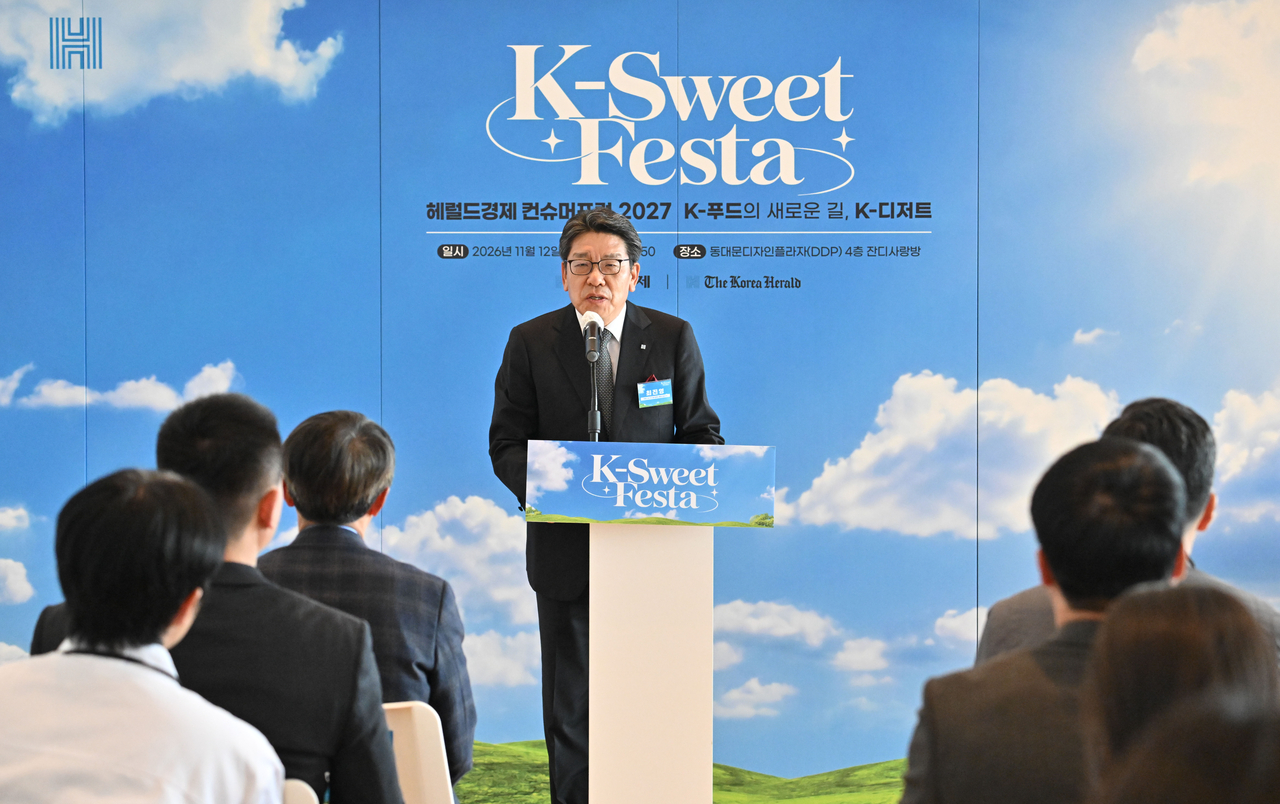
"Dessert can go beyond being a simple food item — it can become a field that showcases the appeal of our culinary culture and opens up new markets."
Choi Jin-young, publisher and CEO of Herald Media Group, made the remarks in an opening address at the Consumer Forum 2027: K-Sweet Festa, held Thursday afternoon at Dongdaemun Design Plaza (DDP) in Jung-gu, Seoul. Choi said the dessert industry has ample potential to grow into a new driving force for K-food.
"As K-food has been drawing global attention recently, Korean culinary culture and food brands are showing new possibilities," Choi said. "Among them, dessert is significantly expanding its reach by offering consumers fresh experiences through distinctive flavors, individuality and creative ideas."
Choi added that the sector is evolving in diverse ways — reinterpreting traditional snacks in a modern context and introducing products that reflect health trends and personal tastes. "I hope today's gathering serves as a meaningful foundation for discovering new opportunities in the domestic dessert industry and for advancing into global markets beyond Korea," Choi said.
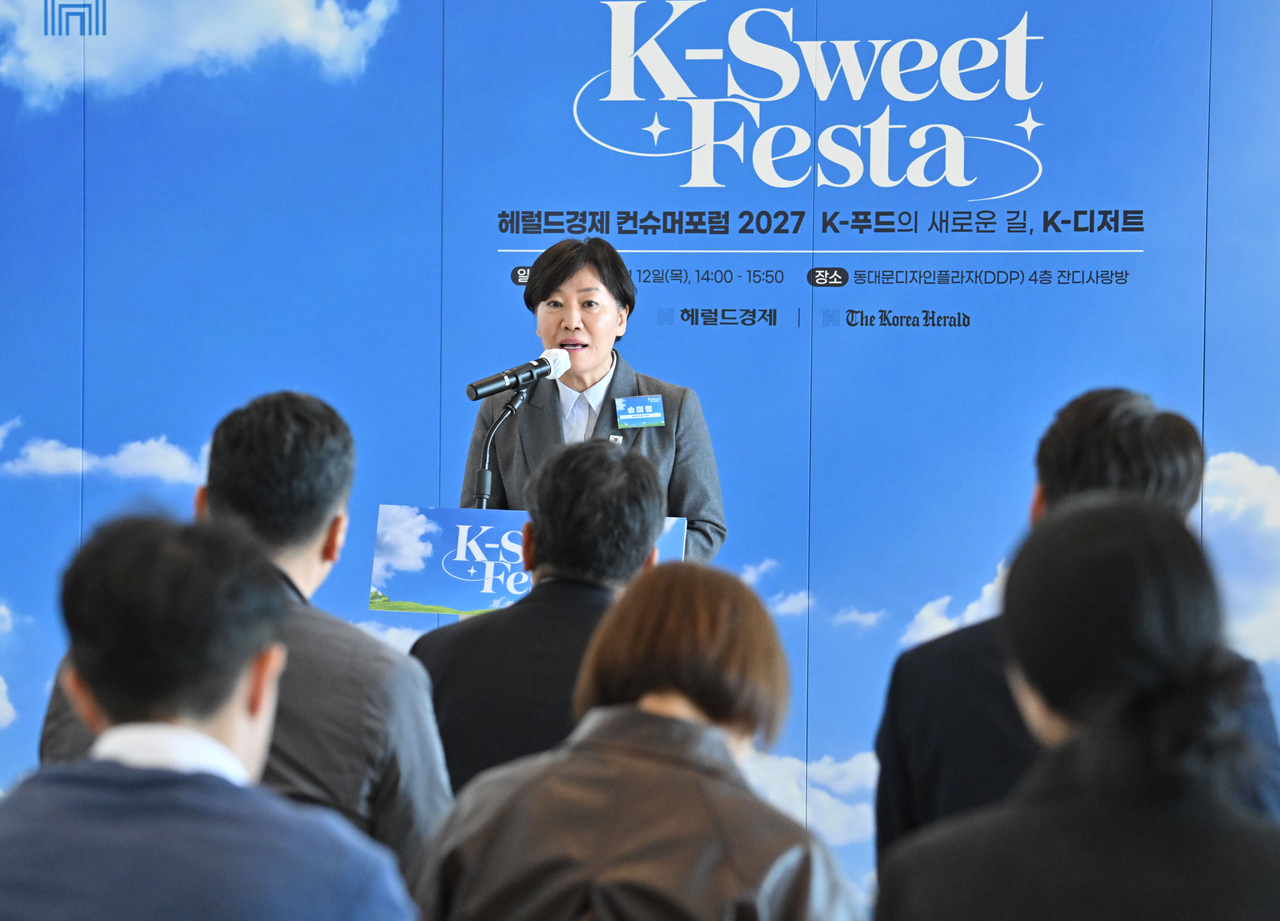
Song Mi-ryeong, minister of the Ministry of Agriculture, Food and Rural Affairs, who delivered a congratulatory address, also highlighted the industry's potential. "K-food has now established itself as cultural content enjoyed around the world, not just in Korea, and riding that popularity, our agricultural food exports have consistently grown and expanded their presence in global markets," Song said. "Now it is K-dessert's turn to introduce Korea's new flavors and appeal to the world."
Song particularly praised the way the dessert industry has been developing through a fusion of tradition and modernity. "We have traditional snacks that have been loved for generations — tteok, yeot and hangwa," she said. "The creativity of young entrepreneurs and new technology are being added to these, creating new desserts, which is why this field has even greater growth potential going forward."
Song also shared highlights from the Hansik Grand Festival, co-hosted by the Ministry of Agriculture, Food and Rural Affairs and the Ministry of Foreign Affairs in October at the National Museum of Korea in Seoul. She said she was impressed by tteok made in collaboration with traditional liquor breweries to create new flavors, and noted that Korean desserts are evolving in new directions — topping baeksulgi with pizza ingredients or reimagining yeot with a crispy texture.
Song also stressed the importance of using domestic ingredients such as garu-ssal (a type of dry-milled rice) and locally grown fruit. "The special flavors created when domestic agricultural produce meets innovative ideas rooted in our traditions — that is the competitive edge of K-dessert," she said. "If that happens, we can look for ways to revitalize our agriculture and further boost K-food exports."
"I hope these changes will create new opportunities for our agriculture, food and dining industries, and that K-food — including Korean desserts — can develop into a taste embraced worldwide and a new cultural code for the world," Song said, adding that the government would actively support the broader use of domestic agricultural produce, strengthen the competitiveness of food and restaurant businesses, and help them advance into overseas markets.
spa@heraldcorp.com