
Minister of SMEs and Startups nominee Lee So-young visits Korea Federation of Small and Medium Business on Tuesday
Pledges to quantify small-business cost burdens and build reduction roadmap
Rebuffs proxy donation allegations; plans to pay gift tax on mother's jeonse deposit
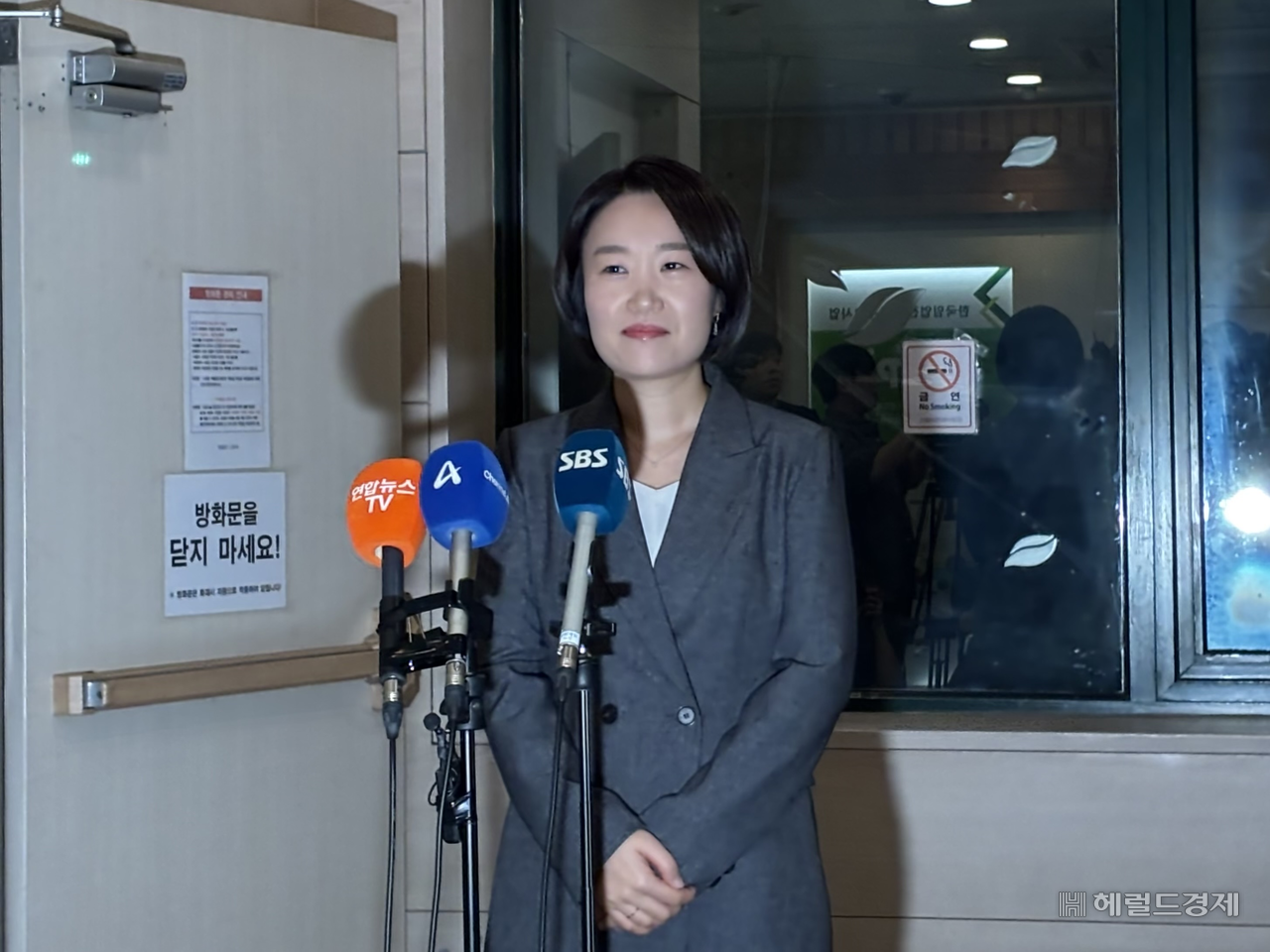
Lee So-young, nominee for minister of SMEs and Startups, said she plans to analyze the income and expenditures of small-business owners, quantify their total management burden and draw up a cost-reduction roadmap — going beyond one-time financial support to address the underlying cost structure pushed higher by elevated interest rates, inflation and platform fees. She said the jeonse deposit she provided to her mother was for the purpose of supporting a dependent, and she strongly rebuffed allegations that she had received political donations under others' names, saying the claims left her feeling "not just baffled, but insulted."
Speaking to reporters after visiting the Korea Federation of Small and Medium Business in Yeouido on Tuesday, Lee said self-employed workers feel they have nothing to show for their hard work because "the cost structure has already become unsustainable," adding that "what is needed is not frequent, piecemeal support measures but fundamental solutions for the self-employed."
She said small-business owners face a complex set of challenges beyond high interest rates and inflation — including an aggressive push by Chinese retailers, accumulated financial debt, a structural shift toward online retail, a shrinking consumer base and the hollowing out of regional commercial districts. Lee said the federation had also called for policies with a tangible impact that could address rising cost burdens and deteriorating external conditions.
Her proposed solution is to collect monthly income and expenditure data for representative types of small businesses, map out exactly where costs are going and by how much, and use that data to set targets and specific policies for reducing the burden. "This is the kind of attempt the Ministry of SMEs and Startups has never made before, and I want to try it," she said.
She singled out online food delivery platforms as a prime example of the cost burden. "When a 20,000-won ($15) order comes in, more than 6,000 won goes to the delivery app under various charges," she said. "The reality is that many self-employed owners are left unable to pay even their own labor costs after covering all other expenses from what remains." She said she would look into ways to reduce the platform cost burden on small businesses, including by fostering low-commission delivery apps.
She also said that subsidizing delivery coupons for public delivery apps "is extremely inefficient," arguing that coupons alone would struggle to attract new users who had not previously used cooperative delivery apps. Asked whether that position conflicted with next year's budget proposal, she said the government's plan had been drawn up before her nomination and that she would work to ensure the budget for cooperative delivery app support is used more efficiently during the National Assembly's budget review process.
On follow-up measures related to the Tmon-WeMakePrice settlement crisis, she said she had been briefed during a work handover that the ministry was considering various responses, including measures related to Homeplus, and that an announcement of related measures was planned.
Lee pushed back firmly against allegations that she had received political donations under others' names — so-called "proxy donations" — from candidates in local elections in her constituency, some of whom later received party nominations. She said some of those candidates had run in districts where it was difficult to find anyone willing to stand and had lost, others had received nominations after going through a primary election, and some were individuals she had worked with on climate policy. "Without verifying any of these facts, calling it 'proxy donations' or 'nomination money' left me feeling not just baffled, but insulted," she said. "This is an attack that does not match the facts."
On the allegation that she had provided her mother with a jeonse deposit without paying gift tax, Lee said the support was intended to fulfill her duty as a caregiver. "My husband and I contributed to the jeonse deposit when my mother, who has no real estate or income, was looking for a villa in Uiwang," she said. "Under the Inheritance Tax and Gift Tax Act, providing living expenses to a parent in a manner recognized by common social standards does not constitute a gift. I believe resolving the housing situation of a financially struggling mother is the fulfillment of a duty to support her." She added, however, that she would proceed with filing and paying gift tax "to prevent unnecessary controversy from spreading."
hong@heraldcorp.com
snsd@heraldcorp.com




