![한국 주거 문제의 본질은 기회가 집중된 곳에 집이 너무 부족하다는 것이다. 이에 단순히 주택의 수를 늘리는 게 아니라 기회를 확장할 수 있는 곳에 집을 공급하는 인내심 있는 선택이 필요하다는 지적이다. 사진은 서울 용산구 이촌동에서 산책 중인 시민 뒤로 보이는 반포 아파트 단지의 모습. [헤럴드 DB]](https://wimg.heraldcorp.com/news/cms/2026/05/15/news-p.v1.20260512.ea978cea62ac40cdb19285ad47fceec3_P1.jpg)

한국만큼 주소가 가진 의미를 진지하게 받아들이는 사회도 드물다. 부모들은 학군을 중심으로 삶 전체를 재편한다. 젊은 직장인들은 특정 지하철 노선을 쫓는다. 불과 몇 킬로미터 떨어진 두 동네의 차이는 한 아이의 미래와 가계의 자산, 심지어 아파트 단지마다 다르게 느껴지는 경제 상황 전반을 결정짓기도 한다. 흥미로운 건 여러 국가의 경제 연구들은 한국 가정이 오래전부터 직감해 온 사실을 확인해주고 있다는 점이다. ‘어디에 사느냐’가 ‘어떤 사람이 되느냐’를 상당 부분 결정한다는 사실이다.
결국 주거는 단순히 주거 면적이나 금리의 문제가 아니다. 이는 시민들이 자국 경제를 어떻게 인식하는지, 공정함과 기회에 대해 무엇을 믿는지, 그리고 자녀의 삶이 어떻게 펼쳐질지를 결정하는 근본적인 동력 중 하나다. 경제학 연구를 통해 밝혀진 세 가지 결과는 왜 주거 문제가 가계 예산에서 차지하는 비중 이상으로 사회에 큰 영향을 미치는지 설명준다.
자라는 곳이 미래를 만든다
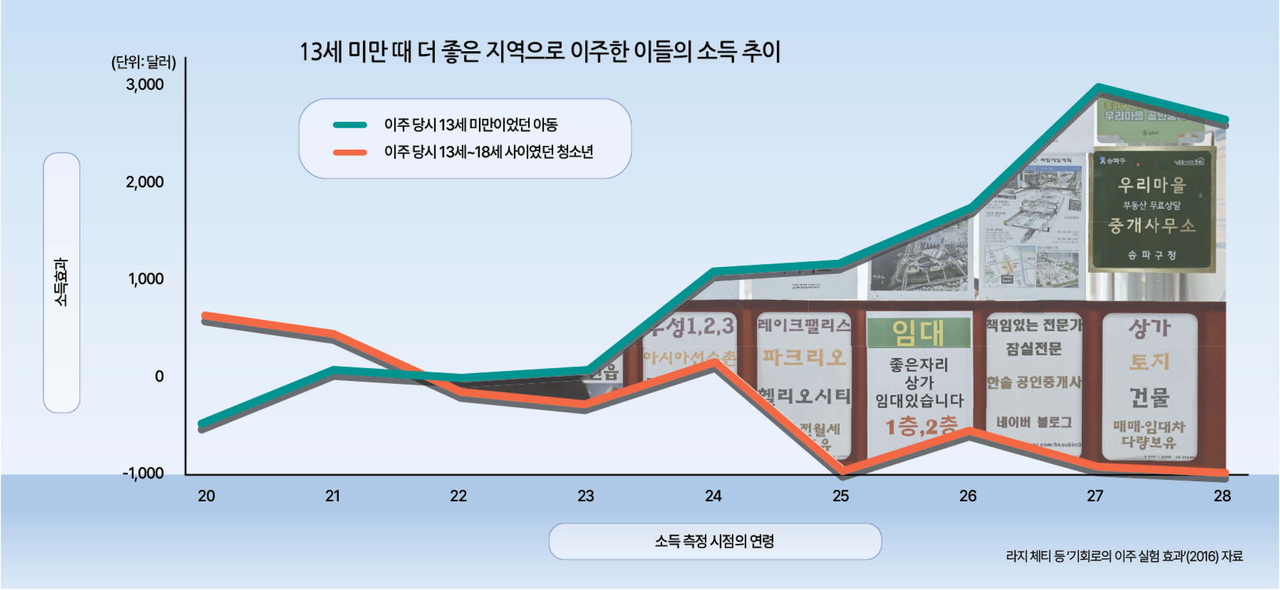
더 나은 학교를 찾아 대치동, 목동, 분당으로 이주하는 한국 부모들에게 주소가 아이의 인생 궤적을 바꿀 수 있다는 생각은 그리 놀라운 일도 아니다. 하지만 라지 체티, 너새니얼 헨드렌, 로런스 카츠 등 하버드대 연구진이 수행한 연구는 그 영향이 얼마나 큰지, 어느 연령대에 가장 결정적인지를 수치로 증명해냈다.
이에 따르면 13세 이전에 더 나은 환경의 동네로 이주한 아이들은 성인이 됐을 때 소득이 유의미하게 증가한다. 대학 진학률이 높고 기회가 많은 지역에 살 가능성이 크다. 더 나은 환경에서 보낸 매년의 시간이 누적돼 결과로 나타나는 것이다. 이러한 차이는 도시 간에만 존재하는 것이 아니라, 같은 대도시 내의 인접한 동네 사이에서도 나타난다. 교육 수준, 낮은 빈곤율, 안정적인 가정환경 등 ‘좋은 동네’의 지표는 국가를 막론하고 공통적이다. 미국의 ‘기회로의 이주 지원(Creating Moves to Opportunity)’처럼 가정이 이런 지역으로 이주하도록 돕는 공공 프로그램들은 고무적인 결과를 내놓고 있다.
한국 사회에 시사하는 바는 다소 불편하다. 기회와 직결된 동네의 집값이 오를수록 그곳에 진입할 수 있는 가정은 줄어든다. 부모의 자산과 자녀의 미래 사이의 연결고리는 문화나 노력 때문이 아니라, 우편번호의 가격이 계속 치솟기 때문에 더욱 공고해진다.
희소성이 조용히 사고방식을 재편한다
주택 시장의 수급 불균형이 지속하면 임대료 상승보다 더 미묘한 현상이 발생한다. 바로 사람들의 사고방식이 변하는 것이다. 하버드대 연구진은 ‘제로섬(zero-sum) 사고’라고 불리는 현상, 즉 ‘누군가의 이득은 반드시 타인의 손실’이라고 믿는 경향을 조사했다. 주택난이 가장 심각한 도시에 사는 거주자일수록 세상을 이런 방식으로 바라보는 경향이 강했다. 젊은 층 역시 마찬가지였는데, 이는 그들이 주거비 위기의 직격탄을 맞고 있기 때문이었다.
이것은 단순한 인지적 편향이 아니라 일상 경험에 뿌리를 두고 있다. 단 하나의 전세 계약을 두고 수십 명의 신청자가 경쟁할 때, 타인의 성공이 나의 패배라고 느끼는 것은 당연하다. 이러한 사고방식은 정치적 성향에도 영향을 미친다. 제로섬 사고를 가진 이들은 무역에 회의적이고 경제 전망을 비관하며, 모두를 위한 기회 확대보다는 타인의 것을 빼앗아 나누는 재분배에 더 끌리는 경향이 있다. 따라서 사람들의 마음을 바꾸려면 현실을 바꿔야 한다. 즉 기존의 부족한 공급을 재편(reshuffle)하려고 고민하는 게 아니라 새로운 기회를 창출하는 주택 정책이 필요하다.
이러한 역학 관계는 한국 사회의 화두인 ‘가족 형성 기피’ 현상도 설명해 준다. 젊은 세대가 노동과 저축으로 안정적인 내 집 마련이 불가능하다고 믿게 될 때, 주거 안정에 기반한 삶의 결정(결혼·출산)은 미뤄지거나 포기된다. 주거만으로 한국의 저출생을 다 설명할 수는 없지만, 관련이 없다고 보기는 어렵다. 청년층 대상 설문조사에서 주거비 부담은 결혼과 출산을 미루는 주된 원인으로 일관되게 꼽힌다.
주거가 경제적 불안을 부추기는 이유
선진국 전반에서 공식 물가상승률은 상당히 안정돼 있다. 그럼에도 가계는 경제 상황이 더 가혹해졌다고 느낀다. 한국도 예외는 아니다. 그 이유 중 일부는 주거비 측정 방식에 있다. 통계 기관은 대개 기존 임대료의 추이를 추적하지만, ‘오늘 집을 살 때 드는 비용’은 반영하지 않는다. 그러나 대다수 가구에 있어 체감 물가에 더 큰 영향을 주는 것은 주택 소유 비용이다. 아파트 가격과 전세 보증금이 급등할 때, 그것이 공식 통계에 잡히지 않더라도 사람들은 극심한 인플레이션을 느낀다.
삶의 경험과 주요 통계 사이의 이러한 간극은 왜 많은 시민이 물가상승률을 지속적으로 높게 체감하는지, 거시 데이터가 좋아져도 왜 경제적 불안이 가시지 않는지를 설명해준다. 가계 자산의 상당 부분이 부동산에 집중된 한국에서는 이 간극의 영향력이 특히 크다. 아파트 가격의 변동은 단순한 시장 신호가 아니다. 그것은 많은 가구의 체감 부(富)의 변화이며, 소비와 경제적 자신감에 연쇄적인 영향을 미친다.
한국이 얻어야 할 교훈
이 모든 사실이 정책에 주는 함의는 무엇일까. 이재명 정부는 대출 규제 강화, 토지거래허가제 확대, 외지인 매수자 중과세 등 수요 억제에 초점을 맞춘 대책들을 내놓았다. 이러한 도구들이 유용할 수는 있지만, 국내외 사례를 볼 때 이것만으로는 충분하지 않다. 지난 정부(문재인 정부)는 5년간 20차례가 넘는 부동산 대책을 내놓았음에도 가격은 계속 올랐다. 수요 규제는 압력을 해결하기보다 다른 곳으로 전이시키는 경향이 있기 때문이다.
한국 주거 문제의 본질은 지리적 불균형 위에 쌓인 공급 부족의 문제다. 기회가 집중된 곳에 집이 너무 부족하다는 점이다. 과제는 단순히 주택 수를 늘리는 게 아니다. 새로운 형태의 희소성을 만드는 대신 기회를 확장할 수 있는 곳에 공급하는 것이다.
이를 위해서는 수십 년을 내다본 인내심 있는 선택이 필요하다. 도심 용적률 완화, 예측 가능한 규칙을 바탕으로 한 재개발 가속화, 주택 공급을 분기별 실적이 아닌 장기적인 약속으로 다루는 자세가 필요하다. 한국의 최근 역사가 보여주듯, 시장은 오늘의 통계 수치만큼이나 향후 공급에 대한 신뢰할 수 있는 신호에 반응한다.
주택은 결국 머물 수 있는 지붕이다. 하지만 동시에 한 사회의 경제적 안녕과 젊은 세대에게 제공하는 기회, 사회를 지탱하는 연대감을 측정하는 척도이기도 하다. 경제적이면서 동시에 사회적이고 정치적인 문제는 드물다. 아울러 향후 10년 한국의 모습을 결정지을 만큼 결정적인 문제도 없을 것이다.
![The core of Korea‘s housing problem is a severe shortage of homes in areas where opportunities are concentrated. Experts point out that instead of merely increasing the total number of housing units, a patient approach is needed to supply homes in locations that can actually expand access to opportunities. The photo shows the Banpo apartment complexes seen behind a citizen taking a walk in Ichon-dong, Yongsan-gu, Seoul. [Herald DB]](https://wimg.heraldcorp.com/news/cms/2026/05/15/news-p.v1.20260515.40d2551ac19a4e409e1d435246b08fff_P1.jpg)

The Address Premium: What Housing Really Costs Korea
Few societies take the meaning of an address as seriously as Korea does. Parents reorganize entire lives around school districts; young professionals chase a particular subway line; the difference between two neighborhoods a few kilometers apart can shape a child‘s future, a household’s wealth, and even how the economy itself is perceived from one apartment block to the next. What is striking is that economic research, in country after country, is now confirming what Korean families have long suspected: where you live really does determine, to a remarkable extent, where you end up.
Housing, in other words, is not only a matter of square meters or interest rates. It is one of the underlying forces that shape how citizens perceive their economy, what they believe about fairness and opportunity, and how their children’s lives will unfold. Three findings from economic research help explain why housing weighs on a society far more than its share of household budgets would suggest.
Where you grow up shapes who you become
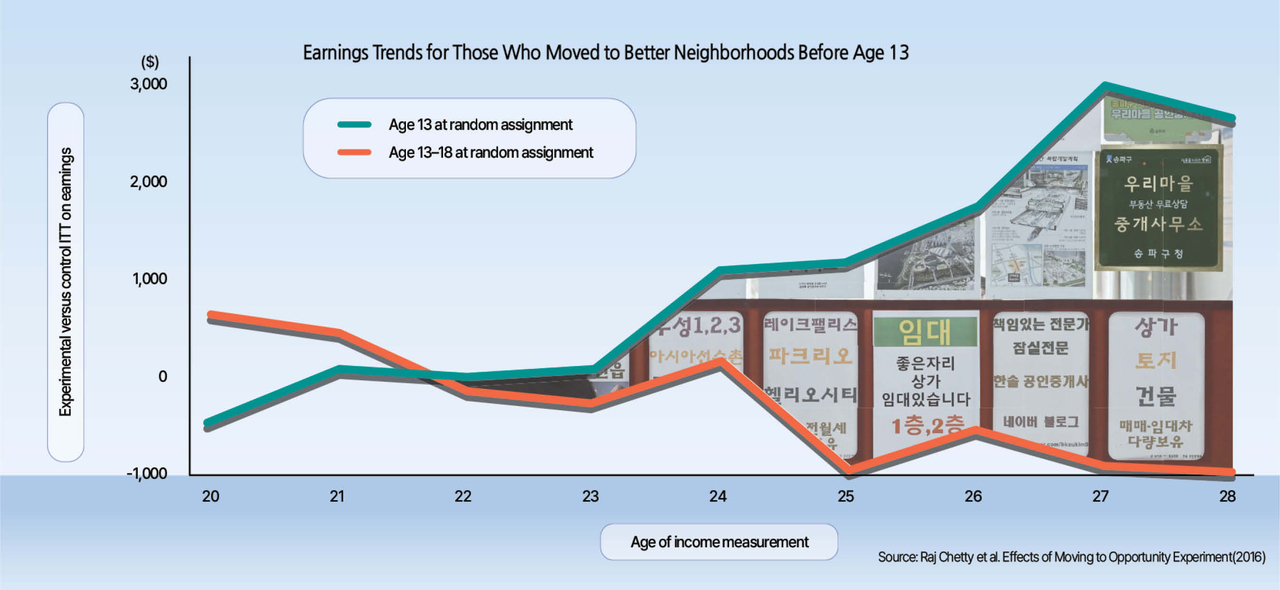
For Korean parents who relocate to Daechi-dong, Mokdong, or Bundang in pursuit of better schools, the idea that an address can shape a child’s trajectory is hardly a revelation. What research conducted at Harvard with several co-authors - including Raj Chetty, Nathaniel Hendren, and Lawrence Katz - has done is to quantify how much it matters and at what age it matters most.
Children who move to a better neighborhood before age 13 tend to see meaningful gains in their adult earnings, are more likely to attend university, and are themselves more likely to live in higher-opportunity areas as adults. Each additional year spent in a more favorable environment counts. The differences are not only between cities; they exist between neighborhoods within the same metropolitan area. The markers of a “good” neighborhood are recognizable across countries: better schools, lower poverty rates, and stable family environments. Public programs that have helped families move into such areas - such as Creating Moves to Opportunity in the United States - have produced encouraging results.
The implication for Korea is uncomfortable. As prices rise in the neighborhoods most associated with opportunity, fewer families can afford to enter them. The link between parents’ resources and children’s prospects hardens - not because of culture or effort, but because the price of a postal code keeps climbing.
Scarcity quietly reshapes how people think
When housing markets are persistently tight, something more subtle happens than higher rents. Mentalities shift. Research conducted at Harvard with several co-authors has examined what is sometimes called zero-sum thinking - the belief that what one person gains, another must necessarily lose. Residents of cities with the most strained housing markets tend to be more likely to see the world this way. Younger respondents are too, in part because they bear the sharpest edge of the affordability crisis.
This is not a simple cognitive bias. It is rooted in daily experience. When dozens of applicants compete for a single jeonse contract, it is natural to feel that one person’s success comes at another’s expense. The mindset, in turn, shapes political preferences. Zero-sum thinkers tend to be more skeptical of trade, more pessimistic about economic prospects, and more drawn to redistribution that takes from others rather than reforms designed to expand opportunity for all. Changing mindsets, then, requires changing reality - housing policies that create new opportunities rather than reshuffle an insufficient supply.
This dynamic may also help illuminate one of the questions most discussed in Korea: the deferral of family formation. When younger people come to doubt that work and savings can credibly lead to a stable home, life decisions that depend on that stability are postponed - and sometimes set aside. Housing alone cannot explain Korea’s birthrate, but it is unlikely to be unrelated. Surveys of young Koreans consistently place housing costs among the principal reasons for delaying marriage and childbearing.
Why housing quietly fuels economic anxiety
Across advanced economies, official inflation has cooled significantly. Yet households often continue to feel that the economy has grown harsher. Korea is no exception. Part of the explanation lies in how housing costs are measured. Statistical agencies generally track the evolution of existing rents, but not what it would cost to buy a home today. For most households, however, the cost of homeownership is the more salient figure. When apartment prices and jeonse deposits climb sharply, that climb feels like inflation - even when it is not officially recorded as such.
This gap between lived experience and headline statistics helps explain why many citizens persistently overestimate inflation, and why economic anxiety lingers even when the macro data improve. In Korea, where a large share of household wealth is concentrated in real estate, the gap is particularly consequential. A movement in apartment prices is not just a market signal; it is a change in many households‘ perceived prosperity, with knock-on effects on consumption and confidence.
The lesson Korea has already learned
What does this imply for policy? The Lee Jae-myung administration has introduced a series of measures - tighter mortgage caps, expanded land transaction permit zones, and a proposed surcharge on non-resident buyers - aimed largely at cooling demand. Such tools may be useful, but international and domestic experience suggests they are unlikely to be sufficient on their own. The previous administration introduced more than two dozen real estate measures over five years, and prices kept rising. Demand-side regulation tends to displace pressure rather than resolve it.
Korea’s housing problem is, at its core, a supply problem layered over a geography problem: too few homes in the places where opportunity concentrates. The challenge is not only to add units, but to add them where they expand opportunity rather than recreate scarcity in new forms. That requires patient, multi-decade choices: loosening floor-area ratios in central districts, accelerating redevelopment with predictable rules, and treating housing supply as a long-horizon commitment rather than a quarterly metric. Markets, as Korea’s recent history suggests, respond as much to credible signals about future supply as to today’s headline numbers.
Housing is, in the end, a roof. But it is also a measure of a society’s economic well-being, of the opportunities it offers its young, and of the cohesion of the bonds that hold it together. Few questions are simultaneously as economic, as social, and as political - and few are as decisive for what the next decade in Korea will look like.

![온기[溫記]](https://wimg.heraldcorp.com/svc/series/202601/2b3df642-aa35-42bd-a9e6-cb4ad932be11.png)