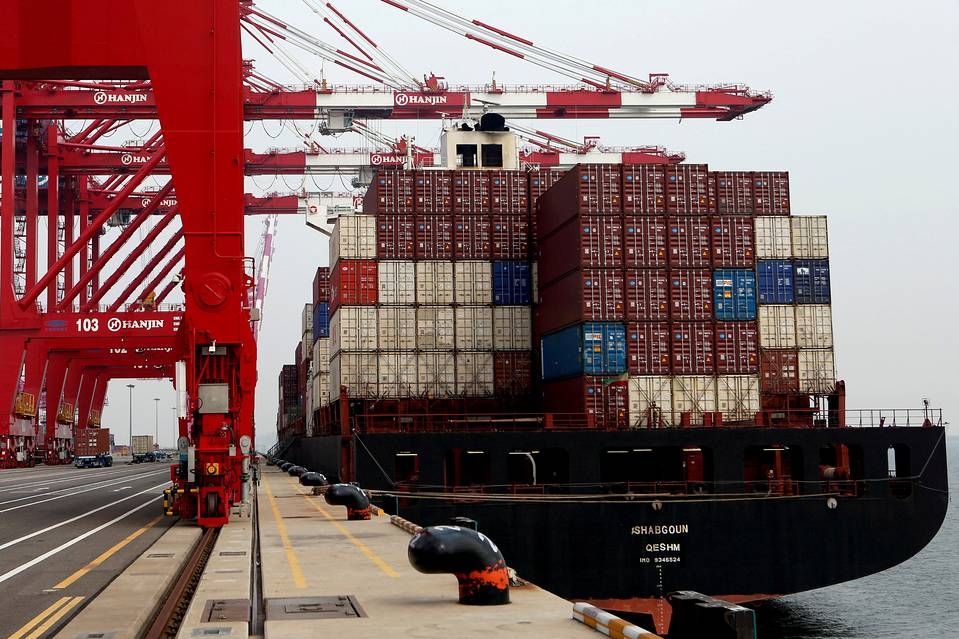
![인천신항에서 작업중인 크레인과 컨테이너 모습. [로이터]](https://wimg.heraldcorp.com/news/cms/2025/12/24/news-p.v1.20251219.1dcbdb0515c04865beb1a1ed4a5a6392_P1.jpg)

한국은 2025년에 수출액 7000억 달러를 돌파할 것으로 보인다. 이는 한국 역사상 최고치이자 무역 의존도가 높은 경제에 있어 하나의 이정표다. 그러나 성급하게 환호할 일은 아니다.
물론 이 수출 수치는 미국의 관세, 중국의 강력한 경쟁, 공급망 분절, 지정학적 불확실성 속에서도 한국이 핵심 글로벌 산업에서 경쟁력을 유지하고 있음을 보여준다. 한국은 반도체, 자동차, 조선, 전자 산업에서 여전히 세계적인 선두주자이며, 이들 부문이 해외 수요를 계속 견인하고 있다.
하지만 수출 호조라는 헤드라인은 몇 가지 중요한 도전을 가리고 있다. 첫째, 한국의 성장 모델은 여전히 소수의 수출 산업에 과도하게 의존하고 있다. 주요 수출 품목 전반을 보면 성장세는 반도체, 자동차, 조선 등 일부 산업에 집중되어 있으며, 다른 많은 부문은 정체되거나 감소하고 있다. 예를 들어 반도체는 한국 전체 수출의 약 28%를 차지하는데, 이는 2000년대 초반에 비해 크게 증가한 수치다. 이는 인공지능(AI) 서버와 데이터센터에 사용되는 첨단 반도체에서의 진정한 기술 리더십을 반영한다. 그러나 동시에 한국 경제에 새로운 위험을 초래한다. 글로벌 반도체 수요 둔화나 중국발 경쟁 심화는 큰 충격이 될 수 있다.
수출 성장이 소수의 산업에 집중될수록, 국내에서 통제할 수 없는 외부 충격에 대해 경제 전반은 더욱 취약해진다. 특히 중국이 경쟁력이 약한 분야를 중심으로 다른 산업의 수출을 늘리는 것은 필요한 다변화이자 위험 관리 수단이다.
둘째, 무역의 다른 한 축은 상대적으로 주목받지 못하고 있다. 한국의 정책 입안자들은 큰 무역수지를 성공의 신호로 여긴다. 그러나 그 이면에는 수입이 줄어들수록 한국 국민의 소비도 줄어든다는 사실이 있다. 한국의 무역흑자는 500억 달러를 넘는다. 이를 약 2300만 가구로 나누면 가구당 2000달러 이상의 소득에 해당한다. 이렇게 생각해보자. 만약 한국이 재화와 서비스를 500억 달러 더 수입한다면, 한국 국민의 삶의 질은 더 나아질 것이다.
![평택에 위치한 삼성전자 반도체 생산 공장 [로이터]](https://wimg.heraldcorp.com/news/cms/2025/12/24/news-p.v1.20251219.3b2da5a11663483f85ca8b59523deb31_P1.jpg)
최근 환율 움직임은 이러한 괴리를 더욱 분명히 보여준다. 지속적인 경상수지 흑자와 강한 주식시장에도 불구하고 원화는 약세를 벗어나지 못하고 있으며, 환율은 과거 심각한 금융 위기 시기와 유사한 수준에 머물러 있다. 약한 통화는 한국인이 해외여행을 할 때 더 많은 비용을 지불하게 만들고, 수입 재화와 서비스 가격도 높인다. 본질적으로 강한 수출을 가능하게 하는 약한 원화는 한국 가계에 부과되는 일종의 세금과 같다.
한국은행 자료에 따르면, 올해 1~3분기 동안 경상수지는 상당한 흑자를 기록했지만, 비슷한 규모의 금융계정 자본 유출이 이를 상당 부분 상쇄했다. 즉, 수출로 벌어들인 소득이 국내 통화 수요나 광범위한 소득 증가로 이어지지 않고 있다는 뜻이다. 이러한 구조는 무역흑자, 통화 강세, 가계 후생 간의 전통적인 연결고리를 약화시킨다.
한국의 발전 역사 대부분에서 수출 주도 성장 전략은 옳은 선택이었다. 이는 자본이 부족한 경제가 빠르게 성장하고, 해외 기술을 흡수하며, 글로벌 경쟁에 노출된 기업을 육성하는 데 기여했다. 그러나 그 단계는 이제 끝났다. 한국은 고소득 국가로서 인구 감소, 제조업 외 부문의 생산성 둔화, 그리고 심화되는 글로벌 무역 갈등에 직면해 있다. 미국과의 관계를 보자. 트럼프 행정부가 영국에는 10% 관세를 적용하면서 한국에는 15% 관세를 부과하기로 협상한 핵심 이유는 한국의 대미 무역흑자 때문이다. 미국으로부터 더 많이 수입하고(이미 많은 한국 대기업들이 그렇게 하고 있으며, 앞으로도 더 확대할 계획이다), 미국 내 생산을 늘린다면 미국과의 무역 긴장은 상당 부분 완화될 것이라고 나는 본다.
그러나 더 중요한 문제는 한국의 경제·통상 정책이 지난 75년 동안 자동 운항 상태에 있었다는 점이다. 이는 큰 성공을 거두었다. 하지만 이제 소수의 수출 챔피언에 의존하고, 수입과 국내 생산성 향상을 제한하는 전략으로는 지속적인 번영을 이루기 어렵다. 한국의 다음 단계는 몇몇 산업과 기업의 수출 촉진이 아니라, 경제 전반의 생산성 성장에 의해 주도되어야 한다. 이는 소득을 높이고 더 많은 기업이 성장할 수 있도록 할 것이다. 이를 위해서는 규제 장벽을 낮추고, 제조업뿐 아니라 서비스업에도 성장 정책의 초점을 맞춰야 한다.
통상 정책 역시 이에 맞게 진화해야 한다. 수입은 성장의 위협이 아니라 보완재로 인식되어야 한다. 비관세 장벽을 낮추고, 서비스 수입을 장려하며, 보호된 산업을 외국 경쟁에 개방하면 가계의 구매력은 높아지고, 기업의 투입 비용은 낮아지며, 수출 구조의 집중 위험도 줄어들 것이다.
사상 최대 수출은 분명한 성과다. 이제 한국의 경제 전략은 그 다음 단계를 고민해야 한다.

The Korea Herald_ Korea’s $700 Billion Export Record Is an Achievement, Not a Growth Strategy
Robert D. Atkinson
South Korea is poised to surpass $700 billion in exports in 2025, marking the highest total in the nation’s history and a milestone for a trade-dependent economy. But let’s not be so fast with cheers.
To be sure, these export figures reflect competitiveness in key global industries and resilience in the face of U.S. tariffs, robust Chinese competition, supply chain fragmentation, and geopolitical uncertainty.
Korea remains a world leader in semiconductors, automobiles, shipbuilding, and electronics, and these sectors continue to drive demand abroad. But at the same time, the export headline obscures some challenges. First, Korea’s growth model remains overly dependent on a narrow set of export industries.
Across Korea’s major export categories, growth is now clustered in a small group of sectors, including semiconductors, autos, and ships while many others are flat or declining. For example, semiconductors account for roughly 28 percent of Korea’s exports, up sharply from the early 2000s.
This reflects genuine leadership in advanced chips, including those used in AI servers and data centers. But it also introduces risk for the Korean economy. A downturn in chip sales globally and rising competition from China could be a major disruption. When export growth is concentrated in a few sectors, the broader economy becomes more vulnerable to downturns that are outside domestic control. Increased exports in other sectors, especially sectors China is weak in, provides needed diversification and risk management Second, the other side of the trade equation receives far less attention. Korean policy makers see large trade surplus as a sign of success. But what that misses is that by importing less, Koreans consume less. Korea’s trade surplus exceeds $50 billion. Spread across roughly 23 million households, that corresponds to more than $2,000 per household in income. Think of it this way, if Korea imported $50 billion more in goods and services Koreans would be better off.
![Samsung Electronics’ chip production plant at Pyeongtaek, South Korea. [File photo: Reuters]](https://wimg.heraldcorp.com/news/cms/2025/12/24/news-p.v1.20251224.fd242f01d2924c32ad141b4a71980163_P1.jpg)
Recent currency movements underscore this disconnect. Despite sustained current-account surpluses and a strong equity market, the Korean won has remained weak, with exchange rates hovering near levels last seen during periods of acute financial stress. A weak currency means Koreans pay more when they travel outside Korea and they pay more for imported goods and services. In essence, the weak won-which enables strong exports-is essentially a tax on Korean households. Bank of Korea data show that while the current account posted a substantial surplus through the first three quarters of the year, financial account outflows of a similar magnitude offset much of that inflow. In other words, export earnings are not translating into domestic currency demand or broad-based income growth. This dynamic weakens the traditional link between trade surpluses, currency strength, and household welfare. For much of Korea’s development history, export-led growth was the right strategy. It allowed a capital-scarce economy to scale quickly, absorb foreign technology, and build firms that had to compete globally. But that phase is complete. Korea is now a high-income economy facing demographic decline, slower productivity growth outside manufacturing, and rising global trade friction. Take relations with America. The core reason the Trump administration negotiated 15 percent tariffs on Korean imports, rather than the 10 percent the UK enjoys is largely due to Korea’s trade surplus with America. Buy importing more from America (and producing more in America as many large Korean firms are doing and plan to do more of), trade tensions with the United States would, I argue, significantly diminish. But more importantly, Korean economic and trade policy has been on autopilot for 75 years. And it was a major success. But now a strategy that relies on a narrow set of export champions while limiting imports and domestic productivity will struggle to deliver durable prosperity. Korea’s next phase should be driven by economy-wide productivity growth, not just the promotion of exports by a few firms in a few sectors. This would boost incomes and enable more firms to scale. That requires reducing regulatory barriers and focusing growth policy also on services, not just manufacturing. Trade policy should evolve accordingly. Imports should be treated as a complement to growth, not a threat to it. Lowering non-tariff barriers, encouraging services imports, and opening sheltered sectors to foreign competition would raise household purchasing power, reduce input costs for Korean firms, and reduce concentration risk in exports. Record exports are an achievement. Korea’s economic strategy now needs to focus on what comes next.

![온기[溫記]](https://wimg.heraldcorp.com/svc/series/202601/2b3df642-aa35-42bd-a9e6-cb4ad932be11.png)