![아시아 순방을 위해 24일(현지시간) 메릴랜드주 앤드루스 합동기지에서 에어포스 원에 탑승한 도널드 트럼프 대통령이 주먹을 쥐어 보이고 있다. [AFP]](https://wimg.heraldcorp.com/news/cms/2025/10/28/news-p.v1.20251026.14e58843ba164029a4cafe5c1526375c_P1.jpg)
아시아를 방문 중인 미국의 도널드 트럼프 대통령은 이번 주 중국의 시진핑 국가주석, 일본의 다카이치 사나에 총리, 한국의 이재명 대통령과의 양자 정상회담을 포함해 아시아 지역의 정치·경제 지도자들과 연쇄 회담을 갖는다. 이는 미국의 아시아 관여 정책에서 새로운 중대한 장(章)이 열리는 순간을 뜻한다. 이제 과거의 기준은 무의미해졌다.
세계 경제의 중심인 아시아에서 트럼프가 성공하느냐 실패하느냐는 글로벌 질서를 좌우할 것이다. 만약 중국과의 무역 휴전이 성사된다면, 이는 경제적 분절을 완화하고 전략적 조정의 시간을 벌어주는 ‘관리된 경쟁’(managed rivalry)의 단계로 이어질 수 있다. 또한 수정된 현실적 조건 속에서 미국의 동맹 관계가 안정된다면, 아시아 지역의 균형 유지에도 긍정적 영향을 미칠 것이다.
그러나 이 두 축 중 어느 하나라도 무너지면, 아시아와 세계는 심각한 혼란에 직면할 것이다. 이번에 트럼프를 맞이하는 아세안(ASEAN), 일본, 한국에게는 새로운 격변을 수동적으로 견디는 것이 아니라, 그 속에서 새 질서를 형성해야 한다는 과제가 주어졌다.
2017년 마지막 아시아 순방 이후 8년 만에 트럼프가 다시 아시아를 찾았지만, 그는 이제 완전히 변한 세계를 마주하고 있다. 미국은 이전과 다른 모습을 하고 있으며, 아시아 역시 중국의 부상으로 인해 새로운 경쟁 구도 속에 있다. 미·중 간의 첨예한 경쟁과 워싱턴의 장기적 의도에 대한 불확실성이 커지는 가운데, 아시아는 미국의 역사적 역할이 재정의되는 순간을 준비하고 있다.
전후 대부분의 기간 동안, 워싱턴의 아시아 전략은 중국을 ‘봉쇄할 것인가, 포용할 것인가’ 사이를 오갔다. 1949년 공산 중국을 고립시키려 했던 미국은 1970년대 화해를 통해 아시아 질서를 재편했다. 1978년 이후 중국의 개혁개방을 미국이 지원하면서, 이른바 ‘아시아의 경제 기적’이 가능해졌다. 빌 클린턴 대통령이 2001년 중국의 WTO 가입을 환영한 결정은 깊은 상호의존의 시대를 열었다.
그러나 트럼프의 첫 아시아 순방(2017)은 그 합의를 끝냈다. 그는 중국을 ‘전략적 경쟁자’로 규정하고, 대결의 시대를 열었다. 수십 년간의 대테러·대반란 전쟁이 끝난 후, 2017년 국가안보전략(NSS)은 ‘위대한 강대국 경쟁’, 특히 중국과의 경쟁을 미국 외교의 중심 원리로 선언했다.
그는 또한 동맹들을 놀라게 했다. 환태평양경제동반자협정(TPP) 탈퇴를 선언했고, 기존의 ‘아시아-태평양(Asia-Pacific)’ 대신 인도양과 태평양을 하나의 전략 공간으로 묶는 ‘인도-태평양(Indo-Pacific)’ 구상을 내세웠다. 처음에는 경제민족주의와 지정학적 경쟁의 결합이 모순적으로 보였지만, 두 가지 모두 살아남았다. 바이든 행정부는 수사를 완화했지만 구조는 유지했다-중국에 대한 수출통제 강화, 공급망 다변화, 쿼드(Quad) 재가동, 오커스(AUKUS) 출범, 양자 안보협력 복원 등이 그것이다.
아시아는 이제 훨씬 복잡한 환경에 직면해 있다. 트럼프의 보호무역 본능은 더욱 강화되었고, 관세는 협상의 수단이 아니라 ‘이념’이 되었다. 무역적자 축소와 제조업 부활이 그의 세계관을 지배한다. 동맹이든 적대국이든 모두가 이 교차 사격 속에 있다. 동시에 그는 중국과의 ‘대타협’ 가능성에도 베팅하고 있다.
트럼프는 동맹국들에게도 경고를 보냈다 - 안보 협력이 있다고 해서 관세 전쟁에서 예외가 될 수는 없다고. 무역 갈등은 새로운 미국의 요구에 따라 재조정되어야 하며, 동맹국들은 방위비를 더 부담하고, 주둔 미군 비용을 더 지불하며, 미국 경제에 대규모 투자(일본 5500억 달러, 한국 3500억 달러)를 해야 한다고 요구했다.
이 대담한 의제는 아시아 각국을 매혹시키면서도 불안하게 만든다. 중국은 더 이상 2017년의 신중한 신흥국이 아니다. 기술, 경제, 외교력에서 동등한 경쟁자로 부상한 ‘자신감 있는 강대국’이다. 트럼프의 ‘경제민족주의’가 지속 가능한 미국의 리더십과 양립할 수 있는지가 이번 순방의 시험대가 될 것이다.
이번 일정의 핵심은 10월 30일 부산에서 열릴 시진핑과의 회담이다. 양측 고위 관계자들은 트럼프와 시진핑이 부산에서 승인할 ‘잠정 합의’에 도달했다고 밝혔다. 세부 내용은 미정이지만, 미·중 무역전쟁은 휴전 국면에 들어서고 있다. 중국은 미국의 농산물·공산품 수입을 재개하고 희토류 수출 통제의 시행을 유예할 수 있다. 미국은 추가 관세를 보류하고 일부 품목에 대한 관세를 철회할 전망이다. 기술 분야에서는 반도체·인공지능(AI) 등 전략 부문을 분리하면서 상업 분야에서는 ‘안전 구역’을 설정하는 방안이 논의되고 있다.
이번 협상에서 시진핑은 트럼프의 압박 전술에 훨씬 잘 대비했다. 세계 희토류 공급의 약 90%를 차지하는 중국의 독점적 지위는 미국의 압박에 대한 강력한 반격 수단이 되었다. 희토류 수출 제한은 미국 산업에 심대한 타격을 줄 수 있다. 또한 중국이 미국산 농산물 수입을 중단함으로써 트럼프의 국내 정치에도 타격을 입혔다. 러시아와의 긴밀한 관계 역시 우크라이나 휴전을 원한 트럼프에 대한 협상 카드가 되었다.
시진핑은 4중전회(第四全會)를 통해 ‘기술 자립’과 ‘산업 현대화’를 재확인했다. 그의 목표는 단순한 무역을 넘어 정치적 양보, 특히 대만 문제로 향하고 있다. 트럼프가 최근 대만에 대한 무기 판매를 제한하고, 고위 지도자 방문을 거부한 것은 베이징과의 협상 의지를 보여준다. 그러나 이는 아시아 동맹국들을 불안하게 만든다. 마르코 루비오 미 국무장관이 “미국은 무역 합의를 위해 대만을 버리지 않을 것”이라고 말했지만, 지역의 불안을 완전히 가라앉히기엔 부족하다.
도쿄와 서울 등 아시아 동맹국들에게 트럼프의 방문은 기회이자 시험이다. 그들은 안보 보장을 재확인받기를 원하지만, 과도한 상업적 요구에는 저항하고 싶어 한다. 다카이치 사나에 일본 총리는 방위비 증액과 주일미군 주둔 확대에는 적극적이지만, 미국에 투자하는 5500억 달러 약속의 조건과 규모를 두고 국내의 비판에 직면해 있다.
이재명 대통령은 3500억 달러 규모의 미국 투자 계획을 유지하면서도 전략적 자율성을 확보하고, 미·중 경쟁의 함정에 빠지지 않기 위해 신중한 외교 균형을 시도하고 있다. 한편 트럼프와 김정은 간의 재회 가능성도 제기된다. 트럼프는 1기 집권 중 세 차례 김과 만났으며, 대화를 재개하길 원한다. 이 대통령도 평화 프로세스를 지지하고 있다. 하지만 김정은은 비핵화를 어떤 새 협상의 전제조건으로도 받아들이지 않겠다고 못박았다.
트럼프는 이번 아시아 순방을 말레이시아에서 열리는 아세안 정상회의로 시작했다. 캄보디아와 태국 간 평화협정 서명을 주재하며 ‘평화의 대통령’이라는 이미지를 강화했지만, 핵심 관심사는 무역이었다. 2017년 1420억 달러였던 아세안의 대미 수출은 2024년 3120억 달러로 급증해, 대중국 수출(2910억 달러)을 넘어섰다. 트럼프는 아세안 국가들과 여러 무역 협정을 체결하며, 미국 시장 접근 확대를 조건으로 이들의 대미 의존도를 활용했다. 또한 동남아 국가들은 미국에 핵심 광물(minerals)을 공급하기로 했다.
하지만 아세안은 미·중 경쟁 격화 속에서 ‘균형외교’ 전략이 한계에 부딪히고 있다.
2025년에 아시아로 돌아온 미국은 훨씬 더 내향적이다. 정치적 분열, 재정 경직, 고조되는 고립주의는 지속적인 해외 관여를 어렵게 만든다. 아시아 동맹국들은 예측 불가능한 미국의 변덕에 불안해하면서도, 여전히 미국의 힘을 인정하고 그 분노를 사는 것을 두려워한다.
장기적으로 트럼프의 아시아 외교가 성공하느냐 실패하느냐는 지역 질서뿐 아니라 세계 정치 구조 전체를 좌우할 것이다. 아시아는 시장 안정과 ‘디커플링(탈동조화)’ 속도의 완화를 가져올 수 있는 제한적 미·중 타협을 환영할 것이다.
지난 40년간 미·중 간의 평화와 상업 협력은 아시아 번영의 토대였다. 그러나 워싱턴의 안보 보장과 시장 접근에 의존해온 지난 80년을 돌아보며, 아시아는 이제 더 큰 ‘자조(自助)’의 시대를 모색하고 있다-미국과의 관계를 유지하되, 그것이 점점 더 ‘거래적 관계’가 되더라도 말이다.
아시아 동맹국들은 두 가지 위험을 모두 피하고 싶어 한다-미·중 경쟁에 휘말리는 것도, 트럼프-시진핑 간의 타협 속에 버려지는 것도. 트럼프의 변덕스러운 개인외교, 국내 포퓰리즘, 경제 자급주의, 미국 내 고립주의 부활을 감안하면, 그가 아시아 문제에서 ‘적정한 균형점’(goldilocks solution)을 찾기는 쉽지 않다. 결과가 어떻든, 트럼프의 이번 순방 이후 아시아는 결코 예전과 같지 않을 것이다.
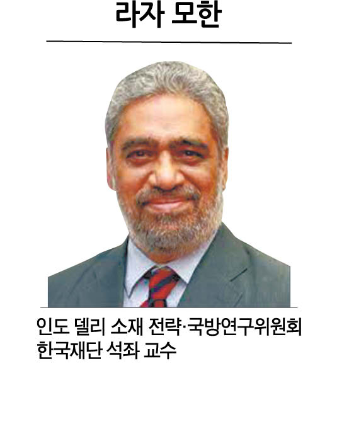
라자 모한(C. Raja Mohan) 교수는 누구
C. 라자 모한(C. Raja Mohan)은 델리에 있는 O.P. 진달 글로벌 대학교의 모트와니-자데자 미국연구소(Motwani-Jadeja Institute for American Studies)에서 특별교수(Distinguished Professor)로 재직 중이다. 델리에 있는 전략·국방연구위원회(CSARD: Council on Strategic and Defence Research)에서 한국재단(Korea Foundation) 의장직도 맡고 있다. 또한 그는 싱가포르 국립대학교 남아시아연구소(Institute of South Asian Studies, ISAS)의 방문연구교수로도 활동하고 있다. 2018년부터 2021년까지 ISAS의 소장을 역임했다.
모한 교수는 2022년부터 2024년까지 델리에 있는 아시아소사이어티 정책연구소(Asia Society Policy Institute, ASPI) 사무소를 이끌었으며, 현재는 비상임 연구원(non-resident fellow)으로 활동하고 있다. 그는 또한 2016년부터 2018년까지 델리에 있는 카네기 인디아(Carnegie India)의 창립 소장을 역임했다. 2013년에는 하버드 케네디스쿨(Harvard Kennedy School)에서 피셔 패밀리 펠로우(Fisher Family Fellow)로, 2009년부터 2010년까지는 미국 의회도서관(Library of Congress)에서 헨리 알프레드 키신저 외교정책 및 국제관계(Henry Alfred Kissinger Chair in Foreign Policy and International Relations) 의장을 맡았다.
이전에는 뉴델리에 있는 자와할랄 네루 대학교(Jawaharlal Nehru University)와 싱가포르 라자라트남 국제관계대학(Rajaratnam School of International Studies)에서 남아시아 연구 교수로 재직했다. 또한 그는 인도 국방연구분석소(Institute for Defence Studies and Analyses)와 옵저버 리서치 재단(Observer Research Foundation) 등 여러 인도 싱크탱크에서 활동했다.
![Trump boards Air Force One at Joint Base Andrews, Maryland. Trump is traveling to Malaysia for the Association of Southeast Asian Nations summit (ASEAN), Japan, and to South Korea for the Asia-Pacific Economic Cooperation forum (APEC), 24 October. [AFP]](https://wimg.heraldcorp.com/news/cms/2025/10/28/news-p.v1.20251028.11d2e14b163545e881372a99c83a6461_P1.jpg)
Asia and Trump Turbulence
By C. Raja Mohan
U.S. President Donald Trump’s meetings this week in Asia with the political and business leaders of the region-including bilateral summits with China’s Xi Jinping, Japan’s Sanae Takaichi, and South Korea’s Lee Jae Myung-mark the opening of a new and consequential act in America’s engagement with Asia. The past however is no longer a guide to the future.
Trump’s success or failure in Asia-the world’s economic power house-will shape the global order. A trade truce with China could inaugurate a phase of managed rivalry - slowing economic fragmentation, and buying time for strategic adjustment. Stabilisation of US alliances on revised but reasonable terms will ensure the prospects for a stable regional balance.
Breakdown on either front spells serious trouble for Asia and the world. For ASEAN, Japan, and Korea, who are hosting Trump, the imperative is no longer to passively endure the new turbulence but to shape the new order that emerges from it.
Eight years after his last Asia tour as US president in 2017, Trump returns to a transformed landscape - representing a very different America and confronting an Asia reshaped by China’s rise as a peer competitor. Convulsed by sharpening Sino-American rivalry and uncertainty about Washington’s long-term purpose, the region is bracing for a redefinition of America’s historic role in Asia.
For much of the post-war era, Washington’s Asian strategy oscillated between containment and engagement of China. Having sought to isolate Communist China after 1949, the U.S. rapprochement with Beijing in the 1970s re-ordered the region. American backing for China’s modernisation, particularly after 1978, underpinned the Asian economic miracle. President Bill Clinton’s decision to welcome China into the WTO in 2001 launched an era of deep interdependence.
Trump’s first Asia visit in 2017 ended that consensus. Declaring China a strategic rival, his administration launched a new phase of confrontation. After decades of counter-insurgency and counter-terror wars, Trump’s 2017 National Security Strategy proclaimed great-power competition, especially with China, as the central organising principle of U.S. policy.
He startled allies by abandoning the Trans-Pacific Partnership (TPP) and by replacing the familiar “Asia-Pacific” with the broader “Indo-Pacific” frame - linking the Indian and Pacific Oceans in one strategic theatre. Trump’s blend of economic nationalism and renewed geopolitical competition seemed contradictory at first; yet both ideas endured. The Biden administration softened the rhetoric but retained the architecture - tightening export controls on China, diversifying Asian supply chains away from China, reviving the Quad, launching AUKUS, and rebooting bilateral military cooperation with allies and partners.
Asia now confronts a more complex setting. His protectionist instincts have hardened: tariffs are no longer a bargaining chip but an ideology. Reducing the U.S. trade deficit and reviving domestic manufacturing dominate his worldview. Allies and adversaries alike are ensnared in this crossfire. At the same time, Trump has bet on the prospects for a new grand bargain with China.
Simultaneously Trump has put allies on notice-security cooperation does not exempt partners from the tariff war. The differences on trade, Trump insists, must be resolved on the basis of new US demands. Trump also insists that allies bear greater defence costs, pay more for U.S. troop presence, and pour investments into the American economy - an estimated $550 billion from Japan and $350 billion from Korea - to generate U.S. jobs.
The audacity of this agenda dazzles as much as it unnerves. Many Asian governments are adapting pragmatically; none are comfortable. China, unlike in 2017, is no longer a cautious aspirant but a confident great power - a peer competitor in technology, economy, and influence - ready to retaliate. Trump’s second Asia sojourn will test whether his economic nationalism can be reconciled with enduring U.S. leadership.
The centrepiece of the trip is Trump’s meeting with Xi Jinping in Busan on October 30 - the most closely watched diplomatic encounter of the season. Top officials of the two sides say they have arrived at a ‘preliminary consensus’ on a trade deal ready for approval by Trump and Xi in Busan. While details are awaited, US and China or close to a truce in their trade war. China could resume purchase of U.S. agricultural and industrial goods and defer the implementation of its sweeping export controls on rare earth materials. The U.S. is expected to pause further tariff escalation and selectively roll back duties on some imports. On technology, both could delineate “safe zones” for commercial interaction while fencing off strategic sectors such as semiconductors and AI.
This round of negotiations found Xi far better prepared to deal with Trump’s pressure tactics. China’s near-monopoly in rare-earth processing - accounting for roughly 90 per cent of global output - has become a potent counter-weapon against American tariff pressures. Any Chinese curbs on exports of rare earths could massively disrupt U.S. industrial activity. By holding back on agricultural imports from the US, China has inflicted considerable domestic pain on Trump. China’s close ties to Russia have also become a bargaining chip for Beijing with Trump, who is eager to secure a ceasefire in Ukraine.
At home, Xi has used the recent Fourth Plenum to reaffirm his commitment to technological self-reliance and to doubling down on industrial modernisation. His goals now go beyond trade: he seeks political concessions, especially on Taiwan. Trump’s recent restraint on arms sales to Taipei and the denial of visits by senior Taiwanese leaders suggest an eagerness to negotiate with Beijing on this sensitive issue. This unnerves America’s Asian allies, who fear abandonment. US Secretary of State Marco Rubio‘s comments that Washington will not abandon Taiwan for a trade deal with China is unlikely to sooth the ruffled feathers in the region.
For Tokyo, Seoul, and other Asian partners, Trump’s visit is both an opportunity to seek security reassurance while accommodating some of Trump’s commercial demands. They hope to stabilise relations with Washington but would like to resist extortion. Japan’s Prime Minister Sanae Takaichi, while eager to accelerate defence spending commitments and host U.S. forces, faces domestic scrutiny over the scale and conditionality of her predecessor’s pledge to invest $550 billion in America.
South Korea’s President Lee must navigate between sustaining a $350 billion U.S. investment package and widening Seoul’s strategic autonomy and avoiding an entrapment in escalating Sino-American regional contestation. Meanwhile speculation is mounting on the prospects for a meeting between Trump and North Korean leader Kim Jong Un. Trump, who has met Kim three times during his first term, is eager to resume the conversation. And President Lee is willing to support a renewed peace process. But Kim is insisting that denuclearization can‘t be part of any new dialogue with the US.
Trump begins his Asian swing in Malaysia for the ASEAN Summit. Trump’s self-image as a ’peace president‘ got a boost in Kuala Lumpur when he presided over the signing of a peace deal between Cambodia and Thailand. Trade, however, was his main priority with ASEAN, whose exports to the U.S. jumped from $142 billion in 2017 to $312 billion in 2024, surpassing exports to China ($291 billion). Trump announced several trade deals with the ASEAN nations0leveraging the region’s export dependence on the US for concessions on greater market access to US goods. The Southeast Asian nations will also sell critical minerals to the US.
ASEAN also fears being squeezed in the deepening regional rivalry between the US and China. Its long-standing strategy 0 of equidistance and quiet hedging - is under unprecedented strain.
The America that returns to Asia in 2025 is markedly more insular. Deep political polarisation, fiscal paralysis, and a resurgent isolationist current limit sustained engagement abroad. Asian partners are wary of the new American volatility and seek elusive predictability in US policies. Yet, they are acutely conscious of America’s enduring strengths and few would want to face its ire.
In the long run, the success or failure of Trump’s Asian diplomacy will shape not only regional alignments but the architecture of world politics. Asia will welcome a limited Sino-US accommodation with China that could calm markets, slow decoupling, and buy time to build resilience.
Peace and commercial collaboration between the US and China have indeed produced four decades of prosperity for Asia. After nearly eight decades of reliance on Washington for both security and market access, Asian partners are now contemplating a future of greater self-help - strengthening their own capabilities even as they try to preserve the American relationship, however transactional it becomes.
America’s Asian allies would want to avoid both dangers-of entrapment in US-China rivalry and an abandonment in a Trump-Xi accommodation. Given Trump’s erratic and personalised diplomacy, domestic populist pressures for economic autarky, and the revival of isolationist sentiment in American politics, it is hard to see how Trump can find the “goldilocks” solution to his challenges in Asia. Whatever might be the results, Asia is unlikely to remain the same after Trump’s sweep through the region.
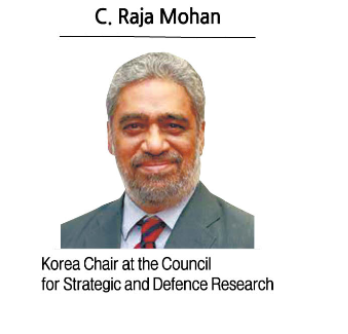
(C. Raja Mohan is the Korea Chair at the Council for Strategic and Defence Research, Distinguished Professor of American Studies at Jindal Global University, and Visiting Professor at the Institute of South Asian Studies, National University of Singapore.)