Seoul Institute of Public Health and Environment tests 79 chili powder products from stores and online
One mixed-origin product found with ethion at four times the permitted level, recalled from market
Ethion, an agricultural insecticide, can cause headaches, dizziness and nausea in humans
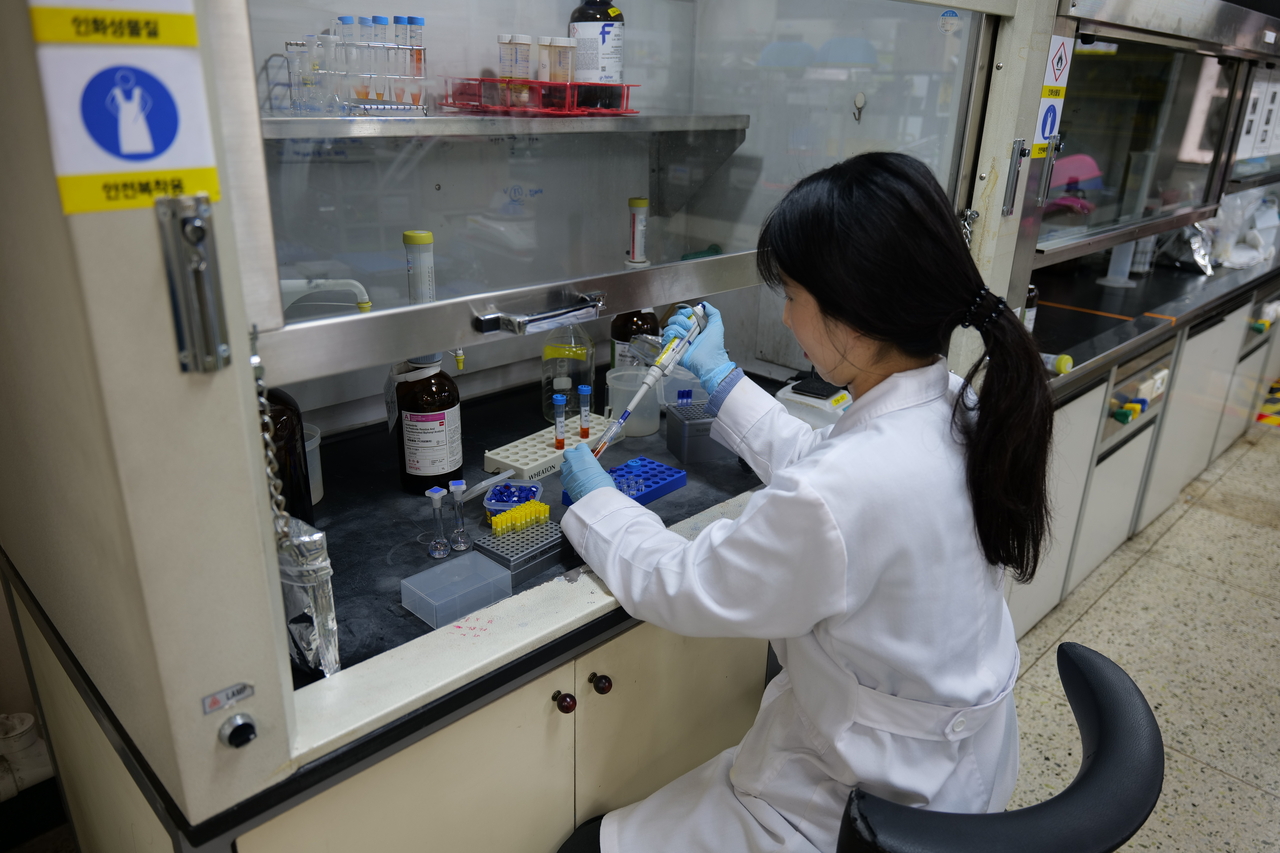
A chili powder product made from imported peppers has been found to contain pesticide residues exceeding the legal limit.
The Seoul Institute of Public Health and Environment said Tuesday it tested 79 chili powder products sold at stores and online shopping platforms, found one product that exceeded the permitted pesticide residue level, and moved to halt its sales and recall it from the market.
The institute tested 475 types of pesticide residues and two types of mycotoxins — aflatoxin and ochratoxin A — across 51 products from offline stores, including food ingredient stores and hypermarkets, and 28 products from online shopping platforms. All 79 products passed the mycotoxin standards.
By food type, the tested items comprised 78 chili powder products and one processed spice product. By origin of raw ingredients, 48 were domestic and 31 were imported, including products made with blended ingredients.
The noncompliant product was a chili powder made from a one-to-one blend of peppers from Vietnam and China. It tested positive for ethion, an insecticide, at 0.04 milligrams per kilogram — four times the permitted residue limit of 0.01 milligrams per kilogram. Ethion is an agricultural insecticide that can cause headaches, dizziness and nausea upon exposure.
The institute promptly notified the Ministry of Food and Drug Safety and the relevant local governments of the findings, directing them to suspend sales of the product and recall all units already in distribution.
The institute advised consumers to check the country of origin of raw ingredients and the expiration date on packaging when purchasing chili powder, and to store it in an airtight container away from heat and moisture. Peppers can retain residues from pesticides applied during cultivation, and the drying process can concentrate residue levels of some pesticides as moisture is reduced. The institute added that mycotoxins can also develop during storage, making proper handling important.
"Chili powder is a seasoning that Koreans use frequently, so continuous safety management is essential," said Park Ju-seong, director of the institute. "We will continue to do our utmost to conduct preemptive inspections of foods that pose potential risks and to block their distribution, so that citizens can choose what they eat with confidence."
Last year, Seoul also conducted collection inspections on 13,709 agricultural and fishery products. Separately, the city carried out radiation testing on 22,460 food items — 19,407 fishery products, 402 agricultural products, 88 livestock products and 2,563 processed foods. Of those, 257 agricultural and fishery products that failed inspection were immediately recalled, with a total of 11 tons destroyed and administrative action requested from the relevant authorities. All food items passed the radiation tests. The 257 failures comprised 251 agricultural products, five fishery products and one item classified for both food and pharmaceutical use, all of which exceeded the permitted residue limits for their respective categories. Among the 251 noncompliant agricultural products, leafy vegetables such as lettuce and perilla leaves accounted for the largest share of pesticide residue violations at 180 cases, followed by herbs such as coriander and basil at 44 cases.
cook@heraldcorp.com