BOK releases 'Monetary and Credit Policy Report'
'Need to decide timing, pace of additional hikes'
'Renewed Mideast tensions to hit prices hard'
'Too early to say what happens with October rate'
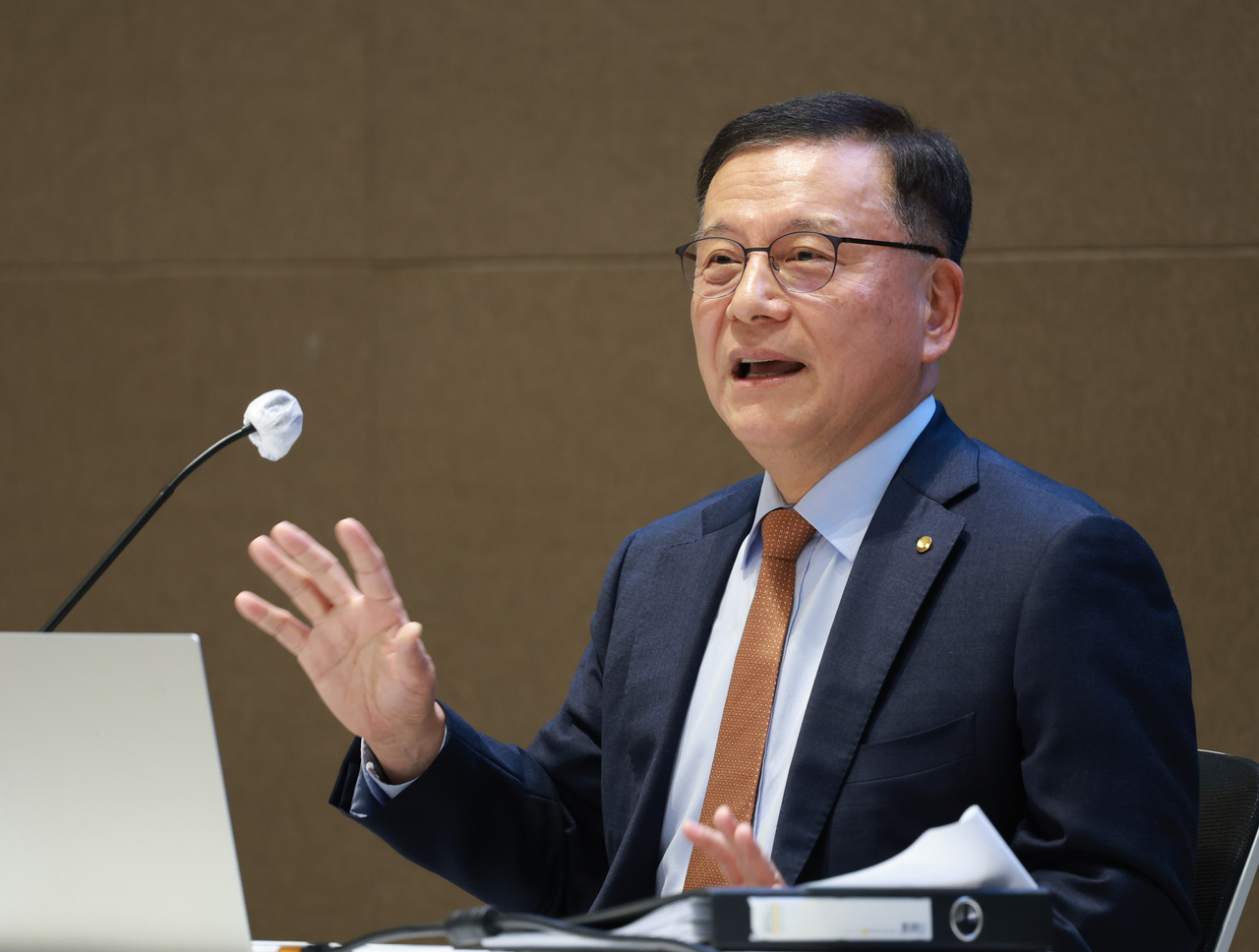
The Bank of Korea reaffirmed its rate hike stance on Thursday but said the tightening was expected to raise the burden on some vulnerable sectors, calling for a policy response through a mix of macroeconomic measures.
Kim Jong-hwa, a monetary policy board member at the BOK, said in a "Monetary and Credit Policy Report" released Thursday that the central bank preemptively raised its benchmark interest rate twice in a row — in July and August — to address price growth and economic expansion that exceeded expectations over the past six months, driven by the Middle East war and a boom in the semiconductor sector, as well as persistent risks to financial stability. Kim oversaw the drafting of the report.
On the future direction of monetary policy, Kim said, "As robust growth and price increases above the target level are expected to continue for a considerable period, we need to decide the timing and pace of additional rate hikes while monitoring changes in domestic and external conditions."
Kim said the biggest considerations from the standpoint of the real economy are whether the recently renewed military tensions in the Middle East will push cost pressures higher again, and how much and how quickly robust exports centered on the semiconductor sector will spill over into domestic demand and demand-side price pressures. "In terms of financial stability, we need to keep paying attention to risks in the Greater Seoul area's housing market and household debt, as well as the possibility of renewed exchange rate volatility stemming from shifts in the US Federal Reserve's monetary policy stance," he said.
Kim added that the effects of the two recent rate hikes need to be closely examined, and went on to say, "In this process, the burden on some vulnerable sectors is expected to grow, so a response through a mix of macroeconomic policies is necessary."
Park Jong-woo, deputy governor of the BOK, said at a press briefing Thursday morning that the central bank "will decide the timing and pace of additional benchmark rate hikes while closely monitoring price and growth trends as well as financial stability conditions."
Asked about the recent resurgence of tensions from the Middle East war, Park said, "As the risk has grown, it will have a negative effect on the domestic economy." He added, "It is uncertain how long the tension will last, but if it continues, it will have a negative impact on both growth and prices. We expect the impact on prices to be greater than the impact on growth."
Asked about the possibility of a further rate hike at the October rate-setting meeting, Park was cautious, saying, "Middle East war risk has emerged as a factor on the price front, but it is uncertain how strong it will be. Since the meeting is in late October, we need to check September price data before then, so it is difficult to say definitively at this point what will happen with rates next."
On the future price outlook, Park said, "Some of the accumulated shocks so far are being passed through to core prices, and demand-side price pressures are expected to keep expanding going forward, so we expect inflation to remain elevated, driven mainly by core prices."
kimstar@heraldcorp.com