226 highway gas stations managed by Korea Expressway Corporation to offer discount
Fuel tax cut saves drivers 122 won per liter on gasoline, 145 won on diesel
10th round of petroleum price cap to be announced Friday, freeze expected
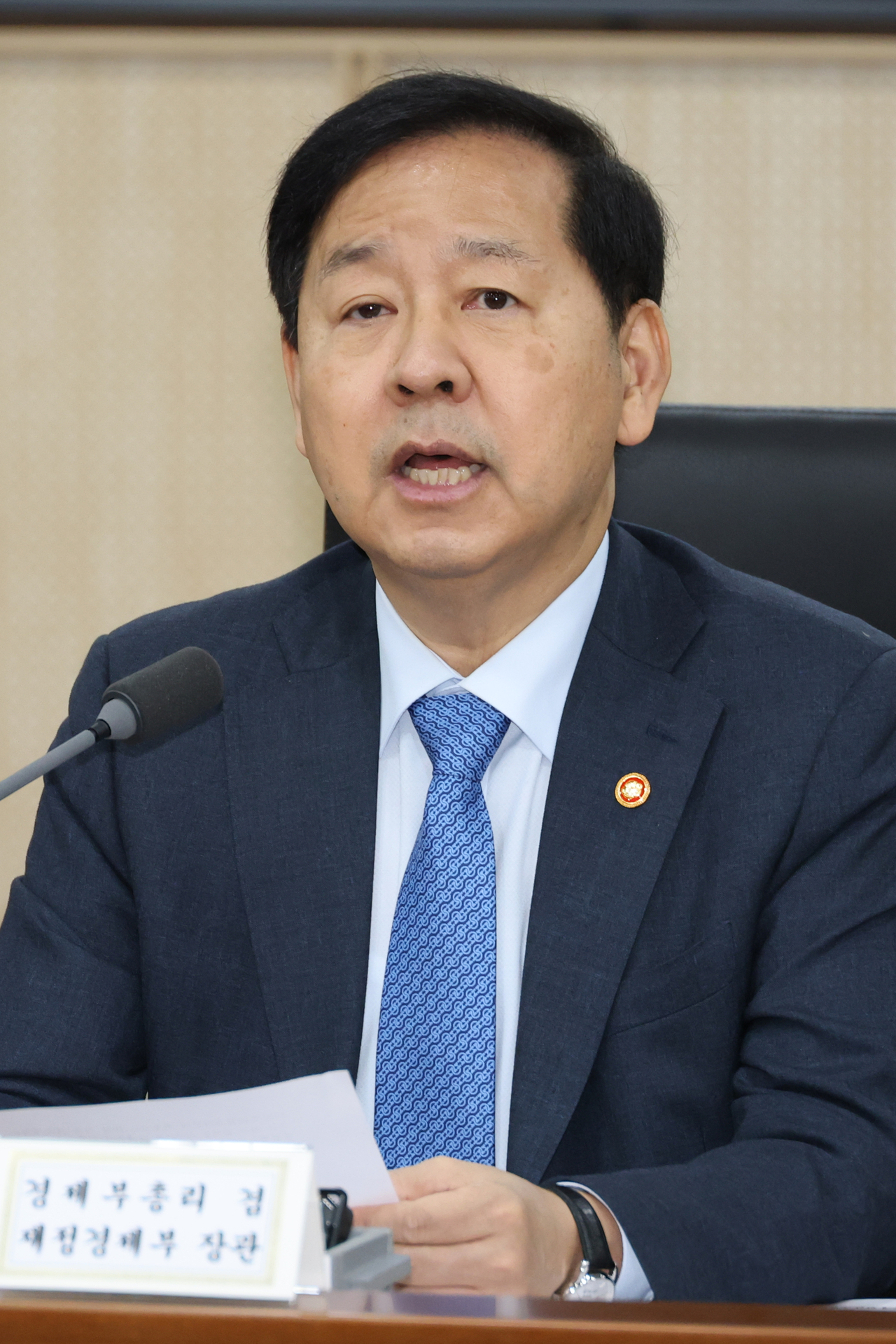
The government will cut fuel prices at highway gas stations nationwide by 100 won per liter during the Chuseok holiday and extend a fuel tax reduction — set to expire at the end of this month — by two months through late November. The 10th round of the petroleum price cap, which takes effect at midnight Saturday, is also widely expected to be frozen at current levels. The measures aim to ease the burden of high fuel costs on Chuseok household spending, while the government plans to monitor energy supply conditions daily amid ongoing instability in the Middle East.
Deputy Prime Minister and Minister of Economy and Finance Koo Yun-cheol announced the measures Friday at an emergency economic headquarters meeting and economic ministers' meeting held at Government Complex Sejong. "During the Chuseok holiday period from Monday through Thursday, we will cut fuel prices at highway gas stations nationwide by 100 won per liter compared with Thursday's prices, so that the public shares the burden of high fuel costs together," Koo said.
The discount applies to 226 fiscally managed highway gas stations operated by Korea Expressway Corporation. Those stations will sell fuel at 100 won per liter below regular prices throughout the four-day Chuseok holiday.
Koo also said the government would extend the fuel tax cut, originally set to end this month, by an additional two months through late November to ease the financial burden on consumers.
The current fuel tax reduction rate stands at 15 percent for gasoline and 25 percent for diesel and liquefied petroleum gas (LPG) butane. Compared with pre-cut levels, that translates to savings of 122 won per liter on gasoline, 145 won on diesel and 51 won on LPG butane.
The 10th round of the petroleum price cap is set to be announced Friday afternoon. The new ceiling, effective at midnight Saturday, is expected to be frozen at the level set in the seventh round, which has been in place since June 27. Under the current ninth-round cap — which maintained the seventh-round prices — the ceiling stands at 1,784 won per liter for gasoline, 1,773 won for diesel and 1,380 won for kerosene.
However, concerns are growing over a widening gap between international crude prices and domestic petroleum product prices. As conditions in the Middle East have deteriorated, Dubai crude surged to $128 per barrel as of Wednesday. International gasoline prices hit a record $145.22 per barrel, while diesel reached $200.72 per barrel.
The petroleum price cap system sets a ceiling on the prices refiners charge for petroleum products and requires the government to compensate refiners for losses incurred when prices exceed that ceiling. The cap applies to the supply price charged by refiners, not the retail price consumers pay at the pump.
The government introduced the petroleum price cap on March 13 after the US-Iran war deepened international oil market instability. Originally intended as a temporary six-month measure, the program drew on a supplementary budget of 4.2 trillion won ($3.04 billion), but the fiscal burden has grown as the system has lasted longer than initially expected.
The government has also set aside about 1.5 trillion won in next year's budget draft to cover refiner losses. Side effects from market distortions are also emerging, as consumption has not been adequately curbed. Domestic gasoline consumption reached 8.86 million barrels in July, the highest for that month on record.
"Uncertainty surrounding the Middle East situation is expanding again, with international oil prices rising sharply in recent weeks," Koo said. "The government will not let its guard down, will maintain its emergency response framework and will devote all efforts to the stable management of energy supply and prices."
He added that active diplomatic efforts, diversification of import sources and strategic petroleum reserve swaps meant energy supply disruptions were not expected for now. "We will operate a situation task force together with the refining industry to monitor crude oil supply conditions on a daily basis and take necessary measures swiftly," he said.
Koo said the South Korean economy was showing solid fundamentals despite difficult external conditions, including the war in the Middle East. "Exports have grown sharply, and domestic demand including consumption is showing signs of improvement. Global credit rating agencies Moody's and Fitch have also given positive assessments of our economy's robust growth," he said.
oskymoon@heraldcorp.com