
- HOME
- POLITICS
-
Ruling, opposition lawmakers call DAPA's push to strip LIG D&A of defense status 'excessive'
Industry committee members from both parties speak in unison; Trade Minister Kim Jung-kwan pledges 'balanced' review Committee chair warns ministry not to simply follow sub-cabinet agency's recommendation Lawmakers from both the ruling and opposition parties raised objections Friday to the Defense Acquisition Program Administration's request that the Ministry of Trade, Industry and Energy review revoking LIG D&A's designation as a defense contractor, calling the move excessive. Trade Minister Kim Jung-kwan said the ministry would make a "balanced judgment" on the matter. People Power Party lawmaker Ku Ja-geun asked Kim at a plenary session of the National Assembly's Trade, Industry, Energy, SMEs and Startups Committee whether the ministry had received a request to review revoking LIG D&A's defense contractor status. Kim confirmed it had. Ku said DAPA had already imposed a two-year ban on LIG D&A's bidding eligibility over allegations of bribery and cost fraud, and called it "unusual" for the agency to go further and seek revocation of the company's defense contractor designation on top of that. "Defense contractor status is not something built overnight," Ku said, questioning whether it was right to "strip away accumulated know-how in one stroke and impose sanctions on national competitiveness." Ku also cited past administrative penalty cases. He noted that in 2024, Hanwha Systems' bidding ban was replaced with a fine, and that HD Hyundai Heavy Industries, though referred for a bidding-restriction review over a military secrets leak the same year, retained its eligibility and received only administrative guidance. He also pointed to Korea Aerospace Industries' six-month bidding ban in 2022 being lifted on Liberation Day that year. "Illegal conduct must of course be dealt with strictly, and I have no intention of defending it," Ku said, "but this goes beyond one company's problem — it affects national defense and industrial competitiveness." Kim said he agreed with most of Ku's points and pledged to weigh "the severity of the matter, consistency with past cases, and the unique circumstances of South Korea's defense industry" in reaching a balanced decision. Democratic Party of Korea lawmaker Lee Eon-ju was more pointed in her criticism. "This is unthinkable," she said, arguing that an illegal act is an individual offense, while a defense contractor designation covers the entirety of a company's accumulated work — making the two categorically different. "To talk about revoking the designation on these grounds is absurd," she said. "It is not worth a moment's consideration." Kim told Lee that the ministry was obligated to review the request now that it had been received. Committee Chair Kim Sung-won of the People Power Party also urged the minister to scrutinize the sub-cabinet agency's recommendation more carefully rather than simply follow it. "I hope we do not make the mistake of letting an individual's misconduct shake the entire national defense industry," Kim Sung-won said. DAPA asked the Trade Ministry in September to consider revoking LIG D&A's defense contractor designation in connection with a small unmanned aerial vehicle countermeasure project. The authority to grant or revoke such designations rests with the trade minister. DAPA cited Article 48, Paragraph 1, Subparagraph 1 of the Defense Acquisition Program Act, which governs violations of integrity pledges, as the basis for its request. The two-year bidding ban blocks only new bids. If the designation is revoked, LIG D&A would also be barred from entering into a sole-source contract for the mass production phase of the small drone countermeasure project. DAPA had earlier voted on Oct. 20 to impose the two-year bidding ban on LIG D&A over allegations of bribery and cost fraud. LIG D&A subsequently filed for a stay of execution and a lawsuit to cancel the disposition. A court granted a temporary stay, suspending the sanctions through Nov. 20, and deferred its ruling at a formal hearing Wednesday.
Nov. 13, 2026
-
Nuclear submarine program gets first budget of W96.6b, but fuel deal with US stalled
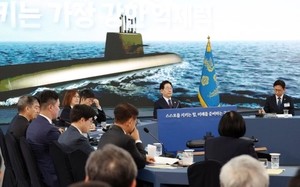
Total project cost still undecided as design and development contracts are funded No progress on fuel agreement since June; US Congress adds uncertainty South Korea's budget for next year includes 96.6 billion won ($72.5 million) — the first-ever allocation for its nuclear-powered submarine program — but negotiations with the United States over nuclear fuel remain stuck at the starting line. Lawmakers have raised concerns that the project's timeline and funding are moving ahead before the fundamental question of how to secure fuel has been resolved. The National Assembly's Defense Committee is set to hold a plenary session Monday to vote on next year's budget for programs under the Defense Acquisition Program Administration (DAPA). The 96.6 billion won covers startup and design costs, broken down into five items in the committee's budget review report: a 44 billion won down payment for submarine platform design, a 41.33 billion won down payment for nuclear propulsion system development, an 8.6 billion won down payment for integrated combat system development, 1.67 billion won in research and development activity costs, and 1 billion won for facility construction. The report said budget allocations and their appropriate scale should be determined "by comprehensively considering the implementation of overseas consultation procedures and the overall conditions necessary for project advancement." The total project cost has yet to be set. Minister of Planning and Budget Park Hong-keun said at the Future Defense Strategy Committee in May that costs could reach as much as 28.9 trillion won under certain assumptions. The final figure is to be confirmed in the first quarter of next year following a cost analysis by the Korea Institute for Defense Analyses. The report noted that preliminary research was still ongoing when the government drafted its budget proposal, concluding that "it appears the budget was calculated on a provisional basis, as it was difficult to finalize detailed project content and required costs." Domestic procedures are moving quickly. The Defense Project Promotion Committee approved the basic strategy for the Jangbogo-N program on Nov. 6. The goal is to begin development next year, sign contracts with industry partners, and launch a lead vessel of roughly 8,000 tons in the mid-2030s. A feasibility study was waived in August on security grounds. Fuel remains the biggest obstacle. The government has decided to use low-enriched uranium with less than 20 percent enrichment, but who will supply the fuel, how, and when has not been determined. Without settled fuel terms, the basis for reactor design, related facilities, and operating cost estimates could be undermined. The report said the existing South Korea-US nuclear cooperation agreement is insufficient to support the military use of fuel for nuclear submarines, and that a separate cooperation agreement under US atomic energy law would be required. Such an agreement must undergo a 60-consecutive-session review by the foreign affairs and armed services committees of both chambers of Congress. The report noted that since consultations in June, "no progress has been confirmed regarding the conclusion of a nuclear fuel supply agreement." It added that, given the budget now covers system development, "there is a need to carefully examine, for each detailed task, whether overseas consultation results must be finalized and whether a start within the year is feasible." Negotiations have made no headway since their initial step. A senior Cheong Wa Dae official said Thursday that on the South Korea-US nuclear submarine and atomic energy consultations, "we have not yet entered a normal stage of discussion, but we are making great efforts to do so as soon as possible." The two countries held their first follow-up consultations in Seoul on June 2 and 3, chaired by a deputy foreign minister, but have not scheduled a next round. Foreign Minister Cho Hyun met US Secretary of State Marco Rubio in Paris on Tuesday (local time), but the two sides were unable to coordinate a date to resume talks. The US congressional variable has also grown. With the Democratic Party winning control of both chambers in the midterm elections, observers say ratification of the agreement could become even more difficult.
Nov. 13, 2026
-
Will a hearing on Czech nuclear plant contractor dispute go ahead? 'No agreement yet,' parties say
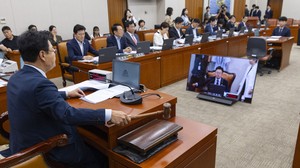
Park Sung-min calls for hearing to uncover the truth; Kim Sung-won urges negotiators from both parties to work toward one Calls are growing in the National Assembly for a hearing to investigate the dispute between Korea Hydro & Nuclear Power and its contractors over the Czech Dukovany nuclear power plant project, but the ruling and opposition parties have yet to reach an agreement after holding talks on the matter. According to the National Assembly's Industry, Trade, SMEs and Energy Committee on Friday, the ruling and opposition parties discussed holding a hearing to look into the controversy surrounding the replacement of the contractor for South Korea's nuclear power plant exports to the Czech Republic. The Democratic Party of Korea, however, indicated it does not consider it appropriate to push for a hearing immediately given the Assembly's schedule, and negotiators from both parties have not reached a consensus. People Power Party lawmaker Park Sung-min, speaking at a plenary session of the committee Friday, called for a hearing to get to the truth. "There are allegations that KHNP tried to favor a specific company during contract negotiations with firms," Park said. "I cannot shake the feeling that KHNP, in a nuclear project that should be generating national wealth, is holding back our own companies because of internal problems." Democratic Party lawmaker Park Hee-seung also backed an early hearing. "Reports have continued to emerge that the breakdown in negotiations was driven by KHNP's excessive changes to contract terms and its unilateral conduct of talks, and a blame game is now playing out among the government, KHNP and the contractors," Park said. "I, too, am putting forward the view that a hearing should be convened as soon as possible." In response, committee Chairman Kim Sung-won urged both sides to act. "Please make efforts through consultations between the negotiators from both parties so that a hearing can be held," Kim said. Earlier, KHNP announced Oct. 29 that it was ending contract negotiations with the Daewoo Engineering & Construction and Doosan Enerbility consortium for the construction of Dukovany units 5 and 6, and that it would begin the process of selecting a new contractor. KHNP said the two sides had been unable to narrow their differences over construction costs and the contracting method. Daewoo E&C pushed back, saying it had submitted a final proposal that absorbed losses worth hundreds of billions of won at KHNP's request, only to be notified unilaterally that negotiations were over. The company also called on the Ministry of Trade, Industry and Energy and other government bodies to mediate a resumption of talks. Some have raised allegations that KHNP deliberately torpedoed the negotiations to steer the contract toward a specific company, and if a hearing is held, the Assembly is widely expected to scrutinize those claims intensively. The Dukovany new nuclear power plant project involves building two APR1000 reactors, with a total project cost of 422 billion Czech koruna ($19.5 billion). KHNP plans to select a contractor through competitive bidding and sign a contract in July next year, with site preparation work set to begin in January 2028. KHNP said Friday that "there will be no disruption to the overall project schedule even with the reselection of a contractor, and we are proceeding as planned with a construction permit application in April next year and a ground-breaking in November 2029."
Nov. 13, 2026
-
PM Han orders conversion of W2.1tr in dormant card points to local currency
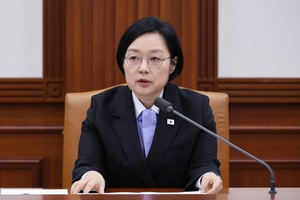
Conversion service to launch in May next year; integrated elementary school care service to begin in December Some 2.1 trillion won ($1.58 billion) in unused credit card points will be made available for conversion into local currency. Prime Minister Han Seong-sook announced the move Friday morning at the 17th National Policy Coordination Meeting held at Government Complex Seoul, saying the president had directed officials at a Cabinet meeting in late June to review ways to convert dormant points of various kinds into local currency. Han said the government would start with credit card points, whose accumulated balance has reached roughly 2.1 trillion won, enabling holders to convert them into local currency. "We will link the systems of card companies, the Korea Financial Telecommunications and Clearings Institute, and local currency operators to provide the conversion service starting in May next year," Han said, and went on to say the government would work to expand participation to a wider range of public and private points, boosting household spending power and injecting vitality into local neighborhood commerce. The meeting also took up a plan to establish an integrated brand for elementary school care services. Under the plan, the government will upgrade the "On-dongne Dolbom" integrated portal on the Government24 platform so that users can search for needed services, submit applications and check results all in one place. In addition, the government plans to simplify the documents required to apply for services and will make care information available through "AI Gungmin Biseo," a conversational public-service AI assistant. "We will launch the integrated service on a priority basis starting in December," Han said, pledging to incorporate user feedback on inconveniences or areas needing improvement into the unified system to make it more user-friendly. The meeting also discussed a pan-government joint response plan for an international aviation safety assessment scheduled for December. "Achieving a good result in the assessment is important, but we should use this as an opportunity to put public safety first and conduct a thorough review," Han said, calling on officials to do their utmost to establish an aviation safety system that meets international standards — covering the regulatory regime, personnel, flight operations, accident investigation and follow-up measures. The meeting also received a report on the selection of outstanding proposals from a public competition on regulatory rationalization. Among the proposals recognized as exemplary were allowing an "act first, report later" approach to cultural heritage protection, and permitting accident victims and others to request access to and preservation of CCTV footage.
Nov. 13, 2026
-
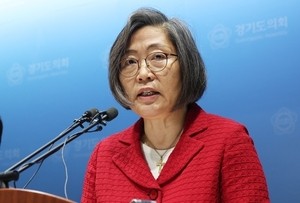
Lee Soo-jung appeals to Supreme Court after second conviction over false post about Lee Jae Myung's sons
Lee Soo-jung, a People Power Party constituency committee chair and Kyonggi University professor, has decided to appeal to the Supreme Court after an appellate court upheld a fine that strips her of the right to run for public office — a penalty handed down over a social media post falsely claiming that President Lee Jae Myung's two sons had been exempted from military service ahead of the 21st presidential election. Lee wrote on SNS Friday that before the 2025 presidential election, Lee had downloaded a single image file about "Lee Jae Myung and his three male relatives' failure to complete military service" from KakaoTalk and saved it to Facebook, only to delete it within 10 minutes. Lee said the Suwon High Court, in its ruling Thursday, found that saving the file constituted public dissemination and that Lee had intended to influence the election — even without knowing the content was false — and convicted Lee on that basis. "I have decided to appeal to the Supreme Court, as I believe there are points worth contesting," she said. "I will let the Supreme Court determine what is right and wrong." Lee was indicted on charges of violating the Public Official Election Act — for publishing false information and defaming a candidate — as well as the Act on Promotion of Information and Communications Network Utilization and Information Protection for defamation. Both the trial court and the appellate court sentenced her to a fine of 3 million won ($2,250). If the sentence is finalized, her right to stand for election will be suspended for five years under the Public Official Election Act, which bars anyone fined 1 million won or more from running — meaning she would be ineligible for the 23rd general election in April 2028. Lee had earlier explained that she "briefly shared information circulating online, then immediately deleted it after confirming it was incorrect," and asked for "generous forgiveness." During the appeals process, she also argued that she "did not recognize the possibility that the post was false at the time of uploading" and had "voluntarily deleted it immediately after confirming the facts were wrong," adding that the post had been live for only about nine minutes. The court rejected those arguments.
Nov. 13, 2026
-
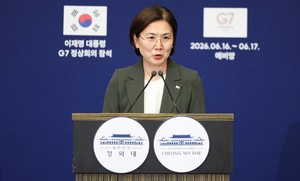
Oh Hyun-joo named new KOICA president
Official appointment set for Monday ... career diplomat from 28th foreign service exam cohort South Korea's first female ambassador to the Holy See; former director-general for development cooperation Three-year term ... vows to establish KOICA as unified platform for grant aid Oh Hyun-joo, former third deputy chief of the National Security Office, has been tapped as the new president of the Korea International Cooperation Agency, the Ministry of Foreign Affairs agency responsible for South Korea's overseas grant aid. The Ministry of Foreign Affairs said Friday that Oh will be officially appointed KOICA president on Monday. Oh is a career diplomat who graduated from Korea University with a degree in Western literature and joined the Foreign Ministry after passing the 28th foreign service examination. She has built broad expertise in development cooperation and multilateral diplomacy, having served as director-general for development cooperation and deputy permanent representative to the UN, among other posts. She was appointed South Korea's first female ambassador to the Holy See in January 2023, and was later tapped as third deputy chief of the National Security Office in June last year, overseeing economic security and multilateral diplomatic affairs. The Foreign Ministry said it expects Oh to "actively realize KOICA's vision as a leading global development cooperation agency that pursues universal values and mutually beneficial national interests," while establishing and advancing KOICA's role as South Korea's unified platform for grant aid. The KOICA president serves a three-year term, selected through an open recruitment process and review by an executive recommendation committee, and may be reappointed on a year-by-year basis after the initial term expires.
Nov. 13, 2026
-

PPP uses Jensen Huang affair to blast Lee government's counterintelligence policy
"Chinese spy operation ensnared Jensen Huang while Korea's counterintelligence is shackled" "Democratic Party government has split overseas intelligence network and counterintelligence investigations in two" The People Power Party used the scandal surrounding former Nvidia CEO Jensen Huang's alleged affair with a woman suspected of being a Chinese spy to criticize the Lee Jae-myung government's counterintelligence policy. Choi Su-jin, the PPP's floor spokesperson, said in a statement Friday that Huang's affair scandal had expanded into allegations that the woman helped smuggle advanced AI chips into China, ultimately leading to Huang's resignation. Choi added that Nvidia's share price had plunged amid reports of a Chinese Ministry of State Security spy operation said to mobilize up to 800,000 agents, and that the fallout had pushed US-China relations into serious confrontation. Choi warned that the situation carried a strong message for South Korea. "Advanced memory chips from Samsung Electronics and SK hynix underpin half of Korea's exports," Choi said. "If that technology is stolen, the foundation of the Korean economy could collapse." Choi noted that the United States had responded by mobilizing its full intelligence and legislative apparatus. The FBI, which holds both counterintelligence collection and criminal investigative authority, is working alongside the Bureau of Industry and Security and the National Security Agency to protect classified information, Choi said. In Congress, Democrats have joined Republicans in both chambers to advance a package of three bills targeting China's chip access — measures aimed at blocking indirect technology leakage and tracking chip locations. Choi also warned that technology theft had crept dangerously close to home, citing China's "Thousand Talents Plan" recruitment of key personnel at Samsung Electronics and SK hynix, as well as the alleged leak of Samsung's DRAM manufacturing process — developed at a cost of 1.6 trillion won ($1.2 billion) — to Chinese chipmaker CXMT. "Even so, the Democratic Party government stripped the National Intelligence Service of its investigative authority and then dismantled the prosecution's security and technology investigation functions, offloading counterintelligence work onto the Serious Crime Investigation Agency — barely a month old — and the police," Choi said. Choi also questioned whether South Korea would even be able to detect a repeat of the Jensen Huang operation. "Having split overseas intelligence and counterintelligence investigations in two, would we even know such an operation existed if a second Jensen Huang scheme unfolded?" Choi said. Choi called the protection of advanced semiconductors a matter of national security that corporate security measures alone cannot handle. "This is not the time to rush headlong into legislation designed to shield the administration," Choi said. "The government must first confront the technology security crisis that risks turning Korea into a hunting ground for global spies." Choi called on the Lee Jae-myung government and the Democratic Party to immediately restore the NIS's counterintelligence investigative authority, which had been dismantled for political reasons, and to stake everything on defending South Korea's semiconductor sovereignty.
Nov. 13, 2026
-

Defense Ministry launches survey of military academy cadets on unified academy plan
About 2,350 cadets from first through fourth year to participate Results to be made public after review South Korea's Ministry of National Defense launched an online survey Friday to gather cadets' opinions as part of efforts to refine its basic plan for establishing a unified national military academy. A Defense Ministry official told reporters that day the survey would run for five days, from Friday through Wednesday, targeting approximately 2,350 first- through fourth-year cadets at the Army, Navy and Air Force academies. About 140 fourth-year Naval Academy cadets currently on an ocean training voyage were unable to participate. The survey consists of four open-ended questions: what improvements are needed to strengthen the academies' educational capabilities; what essential elements must be preserved to maintain each service's traditions and specialized expertise; whether cadets would apply to a graduate program if one were established and what field of study they would prefer; and what factors should be considered in creating a unified national military academy. To protect the anonymity of participating cadets, KIDA will collect the survey results and pass on to the Defense Ministry only data with personal identifying information removed. The ministry plans to release a comprehensive analysis of the findings to the public. Earlier, Defense Minister Kang Shin-chul pledged at a cadet forum Tuesday to conduct a survey of all cadets and make the results public, saying their views were "the most important."
Nov. 13, 2026
-
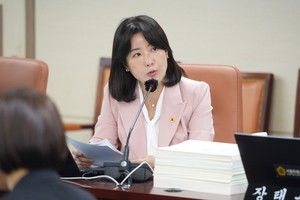
Seoul lawmaker slams education office over student gambling response, record-keeping failures
468 students caught gambling over three years, yet only one prevention staffer and 20 million won budgeted for next year; lawmaker also flags school record duplication, bullying file deletions and private school employment rule gaps A total of 468 students in Seoul were caught gambling and disciplined over the past three years, yet the Seoul Metropolitan Office of Education has just one staff member dedicated to gambling prevention, a lawmaker said Thursday. Concerns were also raised over sloppy management of school record entries and the deletion of school violence disciplinary records, with calls for stronger oversight and systemic reform. Yoon Yu-jin, a People Power Party lawmaker on the Seoul Metropolitan Council's education committee representing Songpa District 1, used Thursday's comprehensive administrative audit of the Seoul Metropolitan Office of Education to scrutinize the city's response to student gambling, follow-up measures on findings by the Board of Audit and Inspection, and the management of employment rules at private schools. At the audit, Yoon said student gambling had moved beyond simple misconduct and could lead to additional crimes such as fraud and extortion, and challenged the education office's overall response framework. Lee Baek-hyeong, a school police officer team leader from Dongjak Police Station who appeared as a reference witness, said many students start gambling at a friend's suggestion and that some become addicted using smartphones while hiding the habit from family and teachers. Lee also shared field cases showing how the problem can escalate — students seeking gambling funds have turned to secondhand-market fraud and extortion, highlighting the severity of the issue. Data submitted by the Seoul Metropolitan Office of Education showed that the number of students caught and disciplined for gambling fell from 237 in 2024 to 167 in 2025, with 64 cases recorded through the end of September this year, bringing the three-year total to 468. Yoon said the figures almost certainly understate the true scale, noting that this year's count covers only through late September and excludes students who were never caught, making a separate survey of actual gambling prevalence necessary. "This is not a problem that can be solved simply by warning students who are caught and giving them prevention education," Yoon said. "The education office needs to conduct its own survey to find out how many students are actually gambling, and then connect them to counseling and recovery support." Yoon also said the way prevention education outcomes are measured needs to change — moving away from tracking the number of sessions held and participants enrolled, and toward an evaluation system that can determine whether students' awareness and behavior actually changed after the education. Yoon particularly noted that the education office has only one staff member handling gambling prevention and that its proposed budget for the program next year stands at about 20 million won ($15,000), calling for more personnel and funding. The reliability of school record management was another major focus of the audit. A Board of Audit and Inspection report released in June found that 15,377 teachers at 239 high schools under review had entered duplicate content in the "subject-specific abilities and special notes" section of student school records. In the "behavioral characteristics and general comments" section, 1,604 teachers at 236 schools were found to have written identical entries for 10,624 students. Because school records are the primary document used to assess students' academic achievement and school life — and are used in university admissions — Yoon said the persistent practice of duplicate entries must be addressed to ensure accuracy and fairness. The Seoul Metropolitan Office of Education said it had begun training one teacher per school and launched ongoing monitoring following the Board of Audit and Inspection findings. Yoon questioned, however, whether training a single designated teacher at each school and passing information down through them could fundamentally change entrenched practices. Yoon also called on the education office to publicly disclose specifics of its ongoing monitoring — which schools and grade levels are being checked, what items are being reviewed and what improvements have resulted. Procedural problems in the deletion of school violence disciplinary records were also examined in depth. Under relevant law, certain school violence disciplinary measures may be expunged from a student's record upon graduation, provided legal requirements and procedures are met and the school's dedicated review body approves. However, the Board of Audit and Inspection found cases in which records were deleted for students who did not qualify, and instances where review body meetings lacked the required quorum. When Yoon requested meeting minutes from the 42 schools that voted in 2025 to delete Level 6 or higher school violence disciplinary records, only 17 schools submitted the documents. Of those, only seven schools had meeting minutes that confirmed all required supporting materials — including homeroom teacher opinions and proof of completed corrective measures — were in place. That represents just 16.7 percent of the 42 schools under review. Yoon said that because the deletion of school violence records is a consequential administrative act that can affect a student's academic future and school life, the review process and the reasoning behind each decision must be clearly documented. "If a perpetrator's record is deleted without proper procedure, it is tantamount to inflicting secondary harm on the victim, and it also undermines the very purpose of the system — keeping records to deter repeat offenses," Yoon said. "The system must be reformed so that the review process and the basis for each decision are always preserved when a disciplinary record is deleted." In response, the director of the Seoul Metropolitan Office of Education's lifelong learning and career education bureau said the office would propose improvements to the relevant guidebook. The management of employment rules governing working conditions for private school teachers was also raised. Employment rules set out basic conditions covering working hours, leave, wages, safety and health, and the prevention of workplace harassment. The Seoul Metropolitan Office of Education, however, told Yoon in submitted materials that private schools are governed by higher-level statutes and therefore do not need to draft or file employment rules, and that the office does not manage them separately. Yoon cited a Ministry of Employment and Labor advisory opinion from May 11, 2021, arguing that working conditions not separately governed by the Private School Act are still subject to the statutory obligation to draft and file employment rules. Yoon said the obligation to draft and file employment rules may apply to private schools with 10 or more teaching staff, and that even schools operating their own personnel regulations need to separately verify whether they have completed the filing procedures required by law. Yoon called on the education office to conduct a comprehensive survey of whether private schools in Seoul have drafted and filed employment rules for their teaching staff, take necessary action against schools that have not met their obligations, and report the results on a school-by-school basis. In response, the director of the Seoul Metropolitan Office of Education's education policy bureau said the office would review the matter and report back. Yoon said the problems identified through the audit were not mere administrative oversights but were directly tied to fundamental rights in schools — student safety, fairness in education and teachers' working conditions. Yoon said the response to student gambling in particular requires a connected system running from prevention education through surveys of actual prevalence, counseling and recovery support, while school record management and the handling of school violence records must be continuously monitored to ensure legal procedures are being properly followed in practice. "I listened to the voices of parents and school communities ahead of this administrative audit and demanded effective measures from the education office," Yoon said. "I will not stop at receiving answers in the audit chamber — I will follow through to make sure the measures the education office has promised are reflected in its budget and policies and translate into real change in students' daily lives."
Nov. 13, 2026
-

Lawmaker calls for relocation plan for Cheongnyangni fish market traders ahead of redevelopment
Public redevelopment of Yongdu District 1, Zone 6 approved, with plans for a mixed-use complex up to 199 meters tall Lawmaker says livelihood plan for traders at 60-year-old market remains unclear Calls on Seoul Housing & Communities Corporation to secure alternative and temporary business sites before management and disposal plan A long-stalled public redevelopment project in Dongdaemun-gu has cleared a key regulatory hurdle after more than two decades of delays, but questions remain over what will become of the traders at Cheongnyangni Fish Market — a 60-year-old institution that sits within the project boundary. Critics say the development cannot claim to serve the public interest unless it also secures space for those traders to continue their livelihoods. Seoul Metropolitan Council member Oh Jung-seok of the Democratic Party of Korea, representing Dongdaemun District 2, raised the issue Monday during an administrative audit of the Seoul Housing & Communities Corporation at the council's 340th regular session Housing and Space Committee, calling for concrete relocation and alternative business-site plans for the market's traders. The Yongdu District 1, Zone 6 site was designated a maintenance zone in 2000 but saw prolonged delays. The project gained new momentum in January 2021, when it was selected as a public redevelopment candidate site, and in July of the same year, when the Seoul Housing & Communities Corporation (SH) was designated as the project operator. The project passed an integrated review in June last year and received project implementation plan approval from Dongdaemun-gu on Oct. 19. Under the plan, the site will accommodate 958 residential units and 138 officetel units in a complex reaching a maximum height of about 199 meters. The implementation period runs 96 months from the approval date. Oh acknowledged the significance of reviving a long-dormant maintenance project through the public redevelopment framework, but said the benefits of development must extend to protecting the livelihoods of existing traders. Oh said Cheongnyangni Fish Market, which has anchored the local commercial district for roughly 60 years, requires a different approach from a standard commercial tenant relocation. Traders at the market have voiced concerns throughout the development process about whether they will be able to continue operating. In 2023, more than 130 traders formed an emergency committee and demanded that the project operator draw up a practical relocation plan. The traders said at the time that they were not opposed to the development itself, but were asking for realistic alternatives that would allow them to keep their businesses. Options discussed included replacement land, cash compensation and relocation near a neighboring agricultural market, though no specific plan has been finalized. Some have also raised doubts about whether a traditional fish market — with its characteristic odors and early-morning noise — can coexist with a high-rise residential complex, making the question of how to accommodate the market within the new urban space a central challenge for the project. Oh said it was problematic that no concrete relocation plan for the market's traders had been presented during either last year's integrated review or this year's project implementation approval process. He asked SH to provide information on the current number of stalls, the scale of traders and workers, the scope of those eligible for business compensation, and the status of tenants who may be excluded from compensation — as well as whether alternative and temporary business sites have been secured and when relocation is planned. Oh said compensation payments alone would not resolve the traders' livelihood concerns. While business compensation is calculated through appraisals under relevant laws, securing a space where traders can actually continue operating requires policy judgment and coordination on the part of the project operator, he said. "I am not asking about the compensation amount — I am asking about a place to keep doing business," Oh said. "The law sets the amount, but the operator can design the alternative site, the temporary site and the timing of the move." "This is precisely where public redevelopment must differ from private redevelopment," he added, emphasizing the responsibility of a public project operator. Public redevelopment is an approach in which public institutions participate to strengthen the public character of development and revitalize stalled maintenance projects. Oh said the approach must go beyond accelerating timelines to also address the protection of the livelihoods of existing residents and traders. He said a market like Cheongnyangni Fish Market, built up over decades, involves not just individual business rights but tightly interconnected supplier relationships, customer bases and retail networks — making continuity of the commercial district during relocation essential. Oh called on SH to draw up a concrete relocation plan agreed upon with traders before the management and disposal plan is established, warning that leaving the issue until that stage could lead to prolonged business disruptions and conflict. To that end, he requested that SH submit data including the current status of stalls, traders and workers; records of consultations with traders conducted from 2021 through this year; draft plans and estimated costs for alternative and temporary business sites; business compensation standards; and the management, disposal and relocation schedule. He also ordered SH to prepare a relocation and alternative business-site plan reflecting the results of consultations with traders, and to report the findings to the Seoul Metropolitan Council's Housing and Space Committee by Dec. 31. "If public redevelopment displaces the livelihoods that were already there, the justification for calling it public redevelopment weakens," Oh said. "Before the management and disposal plan is drawn up, a relocation plan agreed upon with the traders must come first."
Nov. 13, 2026
-
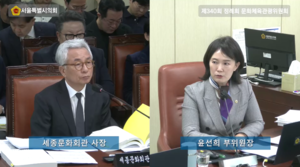
Assembly member slams Sejong Center over plan to exclude injured artists from workers' comp
Legal advice sought on blocking industrial accident insurance and additional compensation claims Consultation conducted while 'The Magic Flute' accident victim was still fighting for life Law firm also warned against restricting damage claims Stage structure collapse and missing guardrail reported to council as 'performer carelessness' Guest artists left out of safety statistics; member calls for corrected reports and mandatory coverage The Sejong Center for the Performing Arts sought legal advice from a major law firm on how to exclude industrial accident compensation insurance for artists injured during performances and block additional damage claims, a Seoul Metropolitan Council administrative audit revealed Thursday. The disclosure drew sharp criticism, given that the center has publicly championed improved safety and treatment for guest artists while quietly exploring ways to minimize its legal liability in contracts. Yoon Seon-hee, vice chairperson of the council's Culture, Sports and Tourism Committee and a Democratic Party of Korea member representing Jongno District 1, presented legal consultation documents and accident reports submitted by the center during Thursday's audit, pressing officials on systemic failures in artist protection. Yoon particularly highlighted discrepancies between the center's internal accident records and those submitted to the council, and called for a comprehensive overhaul of safety management covering guest performers. According to documents Yoon made public, the center consulted law firm Yulchon in July last year in connection with the performance contract for the opera "Aida," seeking advice on how to prevent additional compensation beyond insurance payouts in the event of injury during performances or rehearsals. The consultation also examined whether to explicitly state in service contracts that industrial accident compensation insurance does not apply. The consultation took place while An Yeong-jae, a guest chorus member critically injured during a rehearsal for the opera "The Magic Flute" at the center's main hall in 2023, was still undergoing treatment and pursuing litigation. An suffered severe injuries when a stage structure weighing approximately 400 kilograms fell during the rehearsal, leaving him paralyzed from the waist down. He died in October last year at the age of 30. Police referred Sejong Center officials to prosecutors in July last year on charges of professional negligence causing bodily harm in connection with the accident. Yoon said it was deeply troubling that the center had been exploring contract clauses to limit its compensation liability to injured artists under those circumstances. Yulchon itself advised caution, noting that clauses requiring performers to waive damage claims exceeding insurance payouts or agree not to file suit were unlikely to be recognized as legally valid and would probably be voided. When asked whether those clauses had in fact been included in the "Aida" performance contract, the center said they had not been applied. But when Yoon pressed further — asking whether the clauses had been left out by choice or because they could not be used — the center acknowledged, "We could not." "Last July was when An Yeong-jae was fighting for his life and pursuing a lawsuit," Yoon said. "At that very moment, instead of apologizing to the victim or putting together measures to prevent a recurrence, the center was consumed with figuring out how to exclude workers' compensation and cut off any additional claims at the source." Sejong Center President Ahn Ho-sang said he had not been aware of the consultation, but added, "I think it was deeply inappropriate. I am sorry." Problems also emerged in how the center records and manages performance-related accidents. The same incidents were described with different causes in internal documents versus those submitted to the Seoul Metropolitan Council. Legal consultation materials and litigation status reports the center sent to the law firm described the "The Magic Flute" accident as a stage equipment incident caused by a collision between a chorus member's cane and a falling stage structure. The official accident summary submitted to the council, however, listed the cause as "injury due to carelessness during rehearsal." A fall during a rehearsal for the opera "Faust" in April last year was cited as a similar case. The center's internal safety accident report recorded that the fall occurred because no guardrail had been installed on a revolving stage staircase 1.25 meters high, but the document submitted to the council described it as "a wrist fracture due to performer carelessness." According to Yoon, all four documented accidents involving external performers in opera productions — including a coccyx fracture sustained by a performer in "Turandot" and a lip laceration suffered by a stunt actor in "Tosca" — were classified as performer negligence in the materials submitted to the council. Three of the four had no formal safety accident report on file at all. The exclusion of guest artists from the center's safety and health management statistics also came under fire. The center's basic safety and health management plan categorizes accident management targets as workers and members of the public, with no separate provision for external guest performers or artists. As a result, Yoon noted, the 2026 safety and health management plan — approved after An's death — recorded zero industrial accidents over the preceding two years. Yoon said this approach to statistical management makes it nearly impossible to accurately assess the actual accident situation for external artists participating in productions, and could limit the center's ability to develop effective prevention policies. Yoon called on the center to correct the reported causes of the "The Magic Flute" and "Faust" accidents — to a falling structure and a missing guardrail, respectively — in line with its own internal reports, and to resubmit the corrected records to the council. Yoon also urged the center to create a separate category for guest performers and external artists in its safety and health statistics, make industrial accident insurance enrollment mandatory for external performers across all venues it operates, and establish clear compensation standards for when accidents occur. At the close of questioning, Yoon drew on her own background as a vocal music major to argue that the labor and safety of artists who bring performances to life behind the scenes deserve proper protection. "I also majored in vocal music, but I ran away when I faced the bleak reality of the pure arts," Yoon said. "I ran, but these people stay true to their calling and hold the stage even in that dark and uncertain reality — and for that, I respect them deeply." "The star onstage can shine only because of the countless people in supporting roles working behind them," she added. "Stop treating those people like ghosts, and stop abandoning guest artists."
Nov. 13, 2026
-
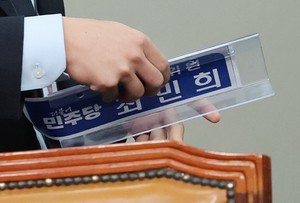
Nameplate of absent Supreme Council member removed at Democratic Party meeting
A Democratic Party of Korea official removed the nameplate of Supreme Council Member Choi Min-hee, who was absent from the party's Supreme Council meeting held Friday morning at the National Assembly in Yeouido, Seoul. Choi skipped the meeting and instead held a press conference at the National Assembly's media center alongside fellow Supreme Council members Han Min-su and Lee Sung-yoon, addressing issues that have recently come to the fore.
Nov. 13, 2026
-
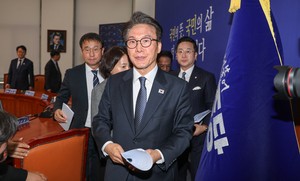
[Herald pic] Democratic Party leader Kim Min-seok leaves supreme council meeting
Kim Min-seok, leader of the Democratic Party of Korea, leaves after a supreme council meeting held Friday morning at the National Assembly in Yeouido, Seoul.
Nov. 13, 2026
-

Kim Min-seok lost in thought
Kim Min-seok, leader of the Democratic Party of Korea, is seen deep in thought during a Supreme Council meeting at the National Assembly in Yeouido, Seoul, on Friday morning.
Nov. 13, 2026
-
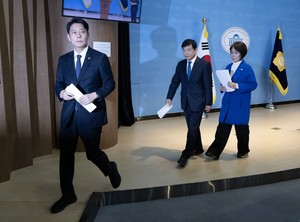
[Herald pic] Democratic Party supreme council members leave press conference
Han Min-su (from left), Lee Sung-yoon and Choi Min-hee, supreme council members of the Democratic Party of Korea, leave after a press conference calling for party reform at the National Assembly's communication hall in Yeouido, Seoul, on Friday morning.
Nov. 13, 2026
-
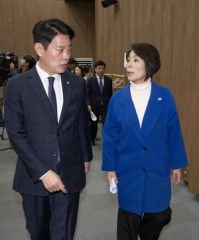
[Herald pic] Democratic Party supreme council members Han Min-su, Choi Min-hee enter press conference venue
Democratic Party of Korea supreme council members Han Min-su and Choi Min-hee arrived at the National Assembly's media center in Yeouido, Seoul, on Friday morning to hold a press conference calling for party reform.
Nov. 13, 2026
-
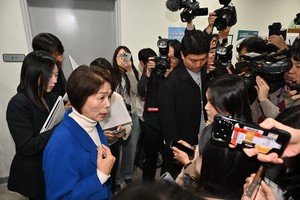
Choi Min-hee fields questions from reporters
Democratic Party of Korea lawmaker Choi Min-hee answers reporters' questions after holding an emergency press conference on current issues at the National Assembly's media center in Yeouido, Seoul, on Friday morning.
Nov. 13, 2026
-
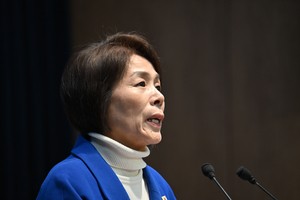
[Herald pic] Rep. Choi Min-hee holds press conference
Democratic Party of Korea Rep. Choi Min-hee holds an emergency press conference on pending issues at the National Assembly's communication room in Yeouido, Seoul, on Friday morning.
Nov. 13, 2026
-
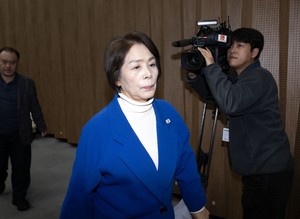
[Herald pic] Choi Min-hee enters press conference room
Democratic Party of Korea lawmaker Choi Min-hee arrives at the National Assembly's press conference room in Yeouido, Seoul, on Friday morning to hold an emergency press conference on current issues.
Nov. 13, 2026
-
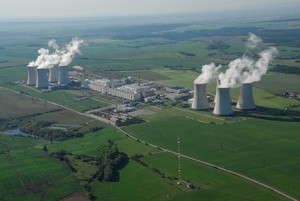
National Assembly moves toward hearing on Czech nuclear plant contractor dispute
PPP's Park Sung-min cites allegations that Korea Hydro & Nuclear Power favored a specific company; committee chair calls on ruling and opposition parties to reach agreement The National Assembly is moving to hold a hearing to investigate the controversy surrounding Korea Hydro & Nuclear Power's decision to replace the contractor for the Czech Dukovany nuclear power plant construction project. According to an official from the National Assembly's Trade, Industry, Energy, SMEs and Startups Committee, People Power Party lawmaker Kim Sung-won, who chairs the committee, called on both the Democratic Party of Korea and the People Power Party on Friday to reach a bipartisan agreement on holding a hearing into the contracting dispute for the Dukovany project. At a plenary session of the committee held Friday morning, People Power Party lawmaker Park Sung-min said there are allegations that Korea Hydro & Nuclear Power tried to favor a specific company during contract negotiations. "I cannot shake the feeling that Korea Hydro & Nuclear Power, in a nuclear power export project that should be generating national wealth, is holding back our companies because of its own internal problems," Park said. Park called for a hearing to get to the bottom of the matter, saying the National Assembly should use the occasion to actively support the nuclear power export drive. Democratic Party lawmaker Park Hee-seung also proposed holding a hearing along the same lines, according to sources. The two parties' negotiators on the committee are now seen as likely to reach an agreement on convening the hearing. However, the specific timing of the hearing and the scope of witnesses to be called have yet to be determined and will require further coordination. Earlier, Korea Hydro & Nuclear Power announced Oct. 29 that it was terminating contract negotiations with the Daewoo Engineering & Construction–Doosan Enerbility consortium for the Dukovany project and would begin preparations to launch a new bidding process to select a replacement contractor. Korea Hydro & Nuclear Power said the breakdown stemmed from unresolved differences over contract terms, adding that the two sides had gone through working-level negotiations, a dispute-adjustment committee process and executive-level talks but had failed to reach a final agreement. However, some have raised allegations that Korea Hydro & Nuclear Power deliberately walked away from the negotiations in order to replace the contractor with a specific company it had in mind. The Dukovany nuclear power plant construction project is valued at 422 billion Czech koruna ($19.5 billion). Under the project, Korea Hydro & Nuclear Power is to supply two units of the APR1000, a 1,000 MW Korean-designed reactor, at the Dukovany site in the Czech Republic. Korea Hydro & Nuclear Power had agreed to deliver the full scope of the project — covering engineering, procurement and construction, commissioning and nuclear fuel supply — together with its "Team Korea" partners: Kepco Engineering & Construction, Daewoo Engineering & Construction, Doosan Enerbility, Kepco Fuel and Kepco Plant Service & Engineering.
Nov. 13, 2026
MOST READ
- 1Malaysia's BE International brings 1,500-strong incentive tour to Korea, bypassing Turkey
- 2AI singer tops Melon chart for first time with 'Did You Become the Adult You Dreamed Of?'
- 3Jensen Huang's daughter took the photo of him embracing his alleged mistress
- 4Man beat live-in girlfriend 514 times over 3 hours, killing her; forensic expert says footage was too disturbing to watch
- 5Madison Huang acted as de facto chief of staff at Nvidia, shouted at vice president: report
- 6'A concert is a ritual for the soul': Currentzis makes long-awaited Korea debut after six years
-
WORLD

US warns of punishment for anyone enabling Iran's Strait of Hormuz toll scheme
-
INDUSTRY
Toyota union puts productivity first; Hyundai Motor union demands bigger share of profits
-
FINANCE
National Growth Fund to invest $531M in FuriosaAI, which rebuffed Meta's $800M takeover bid
-
INDUSTRY
Korea Shipowners' Association holds amateur baduk tournament for Maritime Day