Conversion service to launch in May next year; integrated elementary school care service to begin in December
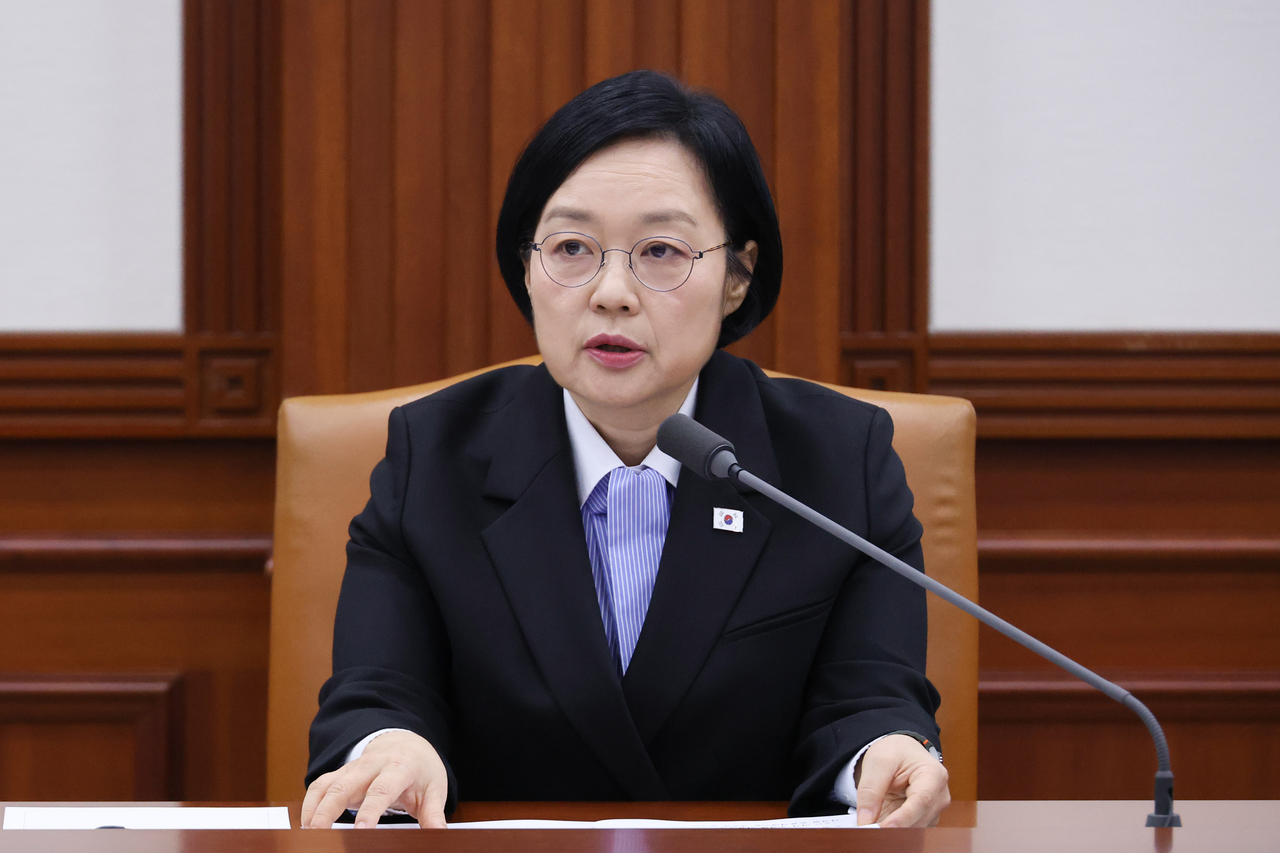
Some 2.1 trillion won ($1.58 billion) in unused credit card points will be made available for conversion into local currency.
Prime Minister Han Seong-sook announced the move Friday morning at the 17th National Policy Coordination Meeting held at Government Complex Seoul, saying the president had directed officials at a Cabinet meeting in late June to review ways to convert dormant points of various kinds into local currency.
Han said the government would start with credit card points, whose accumulated balance has reached roughly 2.1 trillion won, enabling holders to convert them into local currency.
"We will link the systems of card companies, the Korea Financial Telecommunications and Clearings Institute, and local currency operators to provide the conversion service starting in May next year," Han said, and went on to say the government would work to expand participation to a wider range of public and private points, boosting household spending power and injecting vitality into local neighborhood commerce.
The meeting also took up a plan to establish an integrated brand for elementary school care services.
Under the plan, the government will upgrade the "On-dongne Dolbom" integrated portal on the Government24 platform so that users can search for needed services, submit applications and check results all in one place.
In addition, the government plans to simplify the documents required to apply for services and will make care information available through "AI Gungmin Biseo," a conversational public-service AI assistant.
"We will launch the integrated service on a priority basis starting in December," Han said, pledging to incorporate user feedback on inconveniences or areas needing improvement into the unified system to make it more user-friendly.
The meeting also discussed a pan-government joint response plan for an international aviation safety assessment scheduled for December.
"Achieving a good result in the assessment is important, but we should use this as an opportunity to put public safety first and conduct a thorough review," Han said, calling on officials to do their utmost to establish an aviation safety system that meets international standards — covering the regulatory regime, personnel, flight operations, accident investigation and follow-up measures.
The meeting also received a report on the selection of outstanding proposals from a public competition on regulatory rationalization.
Among the proposals recognized as exemplary were allowing an "act first, report later" approach to cultural heritage protection, and permitting accident victims and others to request access to and preservation of CCTV footage.
oskymoon@heraldcorp.com