
- HOME
- POLITICS
-

Special prosecutor raids National Election Commission headquarters, 8 other sites
The special prosecutor's team led by Lee Tae-han launched its first major investigative action Thursday, just 10 days after its formation, moving to uncover the truth behind a ballot shortage that marred the June 3 local elections. The team dispatched prosecutors and investigators to nine locations Thursday morning, including the National Election Commission headquarters and regional election commissions, conducting simultaneous search and seizure operations. It is the first search and seizure operation since the special prosecutor's team officially launched on Sept. 7. Investigators are securing internal servers and other materials from National Election Commission offices. The team is investigating 12 allegations, including the ballot shortage during the local elections, manipulation of voting statistics, overseas junkets by National Election Commission officials, improper hiring and promotion practices, preferential no-bid contracts, and illicit ties with vendors.
Sept. 17, 2026
-

Hanam launches Future Development Committee as permanent policy advisory body
Top policy think tank to chart city's future and drive new growth engines The city of Hanam has officially launched the Hanam Future Development Committee, a top-level policy think tank tasked with charting the city's long-term direction and identifying new growth engines. The committee held its inaugural ceremony and workshop Wednesday at the main conference room of Hanam City Hall, formally beginning its advisory work on key policies and pending issues of the ninth elected municipal administration. The launch marks a significant step as the committee takes shape as a permanent advisory body established under a municipal ordinance. The city had previously operated a temporary Future Development Committee — modeled on a mayoral transition team — during the lead-up to the ninth elected administration, with that body's mandate expiring July 20. On Aug. 31, the city enacted the Ordinance on the Establishment and Operation of the Hanam Future Development Committee, laying the legal foundation for a sustained structure. The transition body set up to prepare for the new administration has thus been converted into a standing policy organ designed to help shape four years of city governance. The committee's focus is not on reviewing projects already underway. Its core function is to identify areas where Hanam has unmet needs not yet addressed by city policy, and to propose new measures to fill those gaps. With the Gyosan new town development, expanded metropolitan transportation networks and large-scale cultural industry projects all advancing simultaneously, the committee is positioned to serve as an urban strategy think tank — looking beyond individual projects to survey the city as a whole and flag missing priorities. The committee is led by Hanam Mayor Lee Hyeon-jae as chair and former Korea Research Institute for Local Administration President Kim Il-jae as vice chair. About 60 people participate in total, including specialists in urban planning, economics, transportation and culture, civic representatives from each district, and civil servants. Of these, 42 are appointed members. The committee is organized into five subcommittees: future strategy and planning (7 members), urban development and transportation (8), investment attraction and employment (8), education and welfare (9), and culture and tourism (10). Senior city officials — including the directors-general of planning and finance, economy and culture, and transportation and construction, as well as the heads of the Future City Project Division and the Lifelong Education Institute — also participate to provide departmental expertise and implementation capacity. Each subcommittee will focus on identifying new policy tasks that Hanam needs within its respective area. The approach combines the subject-matter expertise of specialists with the on-the-ground experience of civic representatives to generate policy proposals, which the relevant city departments then review for implementation. The first part of Wednesday's event featured the presentation of appointment certificates and an overview of the committee's operating direction. The second part was a workshop in which Kim Kyung-min, a professor at Seoul National University's Graduate School of Environmental Studies and a Harvard University doctoral graduate in urban planning and real estate, delivered a special lecture titled "K-Culture Complex and Hanam's Urban Competitiveness Enhancement Strategy." Participants examined growth strategies linking K-culture with urban space and explored ways to strengthen Hanam's city brand and competitiveness. A discussion session following the lecture allowed subcommittees to share their respective agendas and directions. "The Future Development Committee will serve as a central pillar of the ninth elected administration and play a pivotal role in shaping Hanam's future," Mayor Lee said. "I ask that you go beyond reviewing projects already in progress and propose new tasks that Hanam truly needs. We will actively examine the feasibility of every proposal that comes out of this committee." He added that "the specialized knowledge and experience each member brings, along with the voices of residents felt firsthand in the field, are Hanam's greatest asset," and urged members to "draw on the capabilities you have built in your respective fields and work actively for the development of Hanam."
Sept. 17, 2026
-
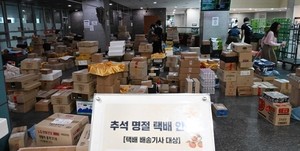
Delivery packages pile up at National Assembly ahead of Chuseok
Postal parcels and other delivery packages were stacked up at the National Assembly members' office building in Yeouido, Seoul, on Thursday morning, a week before the Chuseok holiday.
Sept. 17, 2026
-

Chuseok delivery boxes pile up at National Assembly building
Parcel deliveries, including postal packages, were stacked at the National Assembly members' office building in Yeouido, Seoul, on Thursday morning, a week before the Chuseok holiday.
Sept. 17, 2026
-
![[Herald pic] Holiday gift packages pile up at National Assembly office building](https://wimg.heraldcorp.com/news/cms/2026/09/17/news-p.v1.20260917.59c829935a5647f1ac973837d37e414c_T1.jpg?type=h&h=240)
[Herald pic] Holiday gift packages pile up at National Assembly office building
Postal parcels and other deliveries were stacked up Thursday morning at the lawmakers' office building in Yeouido, Seoul, a week before the Chuseok holiday.
Sept. 17, 2026
-
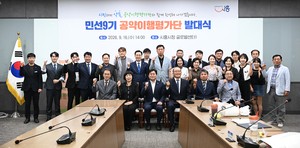
Siheung launches citizen panel to monitor mayor's campaign pledges
'We will scrutinize every pledge to ensure projects stay on track' Siheung launched its "9th Elected-Term Campaign Pledge Evaluation Panel" on Wednesday at Global Center 1 on the fourth floor of City Hall, aimed at ensuring the successful implementation and transparency of campaign pledges made during the current mayoral term. Siheung Mayor Lim Byeong-taek, panel chief Ko Yeong-jin and 25 newly appointed citizen members attended the inaugural ceremony, along with the head of the Planning and Coordination Office and other key officials. The panel, which allows citizens to directly monitor pledge fulfillment, is organized into five subcommittees covering economic balance, traffic safety, education and welfare, culture and tourism, and ecological health. The ceremony opened with a briefing on the panel's operating plan, followed by the presentation of appointment certificates, a city administration briefing and a reception. Mayor Lim personally outlined the city's vision and key policy directions for the current term, emphasizing the importance of citizen participation in driving campaign pledges forward. The panel will objectively assess the progress of campaign pledge projects from a citizen's perspective until the end of the mayor's term and propose improvements and supplementary measures where needed. It will also work to enhance the transparency and accountability of pledge implementation and ensure that citizen opinions are reflected in city governance. "Campaign pledges are the most important and solemn promise to citizens, and faithfully fulfilling them is the top priority of the 9th elected term," Mayor Lim said. "We will actively incorporate the panel's keen attention and sharp recommendations to bring about changes in Siheung that citizens can truly feel." Panel chief Ko said, "With a deep sense of responsibility as representatives of citizens, we will scrutinize every pledge project to ensure it proceeds as planned."
Sept. 17, 2026
-
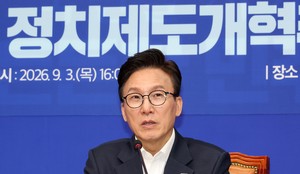
Kim Min-seok says police probe into Shincheonji's party infiltration is advancing
'Testimony from top Shincheonji figure already handed to police' Dual membership must be resolved before merger vote with Rebuilding Korea Party, Kim says Rebuilding Korea Party rebuffs contact claim: 'That's why trust breaks down' Democratic Party of Korea leader Kim Min-seok said Thursday that the police investigation into allegations of Shincheonji's infiltration of political parties is making progress, adding that findings would be disclosed "at an appropriate time." Speaking on the party's YouTube channel "Democratic Party TV" that morning, Kim said lawmaker Park Seon-won is handling the matter through a task force, covering allegations related to the infiltration of parties by heretical groups including Shincheonji, dual party membership, and polling irregularities during the party leadership election. "It is proceeding carefully," he said. Kim said he had already passed on to police all relevant information he possessed, including testimony from one of the most senior figures to have come out of Shincheonji, during the party leadership election period. "We are reviewing the progress of the police investigation and working out what additional lines of inquiry to request," he said. On the issue of dual party membership, Kim said it must be resolved before any merger discussions with the Rebuilding Korea Party can be concluded. "If the question of a merger with the Rebuilding Korea Party arises and a membership vote is envisioned, this is something that must be settled beforehand without exception," he said. "I said from the outset that even if merger talks proceed, a conclusion would only be reached after the dual membership issue is sorted out." He added that under current law, progress is impossible unless each party releases its membership rolls. "As far as I know, we are reviewing various practical scenarios to work out how to handle this," he said. On a proposal to lower the threshold for forming a negotiating bloc in the National Assembly from 20 seats to 15, Kim said the idea had long been agreed upon within progressive parties. "Responses have come from the Rebuilding Korea Party, the Progressive Party and others, and most are positive," he said. Kim also pushed back against the Rebuilding Korea Party's suggestion that it had not been contacted in advance. "We had already met before that," he said. Kim said he instructed party officials — including floor leader Park Beom-gye, lawmaker Jin Seong-jun who handles Progressive Party relations, and lawmaker Lee Hae-sik who handles Rebuilding Korea Party relations — to make contact on the morning of Wednesday. "Contact was probably made around yesterday," he said. The Rebuilding Korea Party, however, said it had never agreed to the 15-seat threshold proposal and had not received any direct communication from the Democratic Party on the matter. A senior Rebuilding Korea Party official rebuffed the claim in a phone interview, saying, "Who met whom exactly? That is why trust breaks down. We have not communicated."
Sept. 17, 2026
-
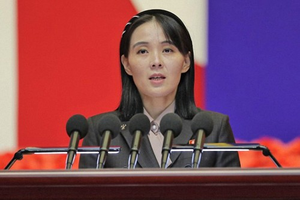
Kim Yo-jong dismisses IAEA denuclearization call, declares North Korea's nuclear status 'absolute'
Pyongyang shrugs off 'familiar noise'; North Korea's Defense Ministry also threatens to invoke nuclear law over US-South Korea CWMD talks Kim Yo-jong, a senior Korean Workers' Party official and sister of North Korean leader Kim Jong-un, pushed back Thursday against the International Atomic Energy Agency's call for denuclearization, declaring that North Korea's status as a nuclear-armed state "cannot be reversed by anything." North Korea's Defense Ministry also raised the stakes by invoking the possibility of triggering its nuclear force policy law in response to US-South Korea CWMD consultations. According to KCNA, Kim issued a statement Thursday dismissing criticism at the 70th IAEA General Assembly — including references to UN Security Council resolution violations and demands for denuclearization — as "familiar noise." "It is nothing more than the same old chatter we hear every year at this time, like a sound playing on an answering machine day and night — nothing surprising, nothing new," she said. "Those who gather and jabber in a bid to change our state's current status must clearly understand how pathetically delusional and utterly futile their efforts are." She went on to say that "no matter how passionately the IAEA and the West periodically convene meetings and chorus calls for denuclearization following a fixed script, it cannot have any effect whatsoever on our will and capability to take all necessary measures to defend the supreme interests of the state." "The nuclear-armed state status of the Democratic People's Republic of Korea is an absolute reality that cannot be reversed by anything," she said, adding that "no matter how rhetorically the hostile forces deny it, they cannot alter by even a fraction the reality that the DPRK's nuclear status is permanently and irreversibly established, both physically and legally." Kim's statement was a direct response to remarks made at the IAEA General Assembly, which opened Monday, where South Korea and European nations flagged North Korea's nuclear program as a serious threat to the international nonproliferation regime and urged Pyongyang to fulfill its international obligations and pursue complete denuclearization. Ahead of the assembly, the IAEA had also released its annual report documenting signs of expanded uranium enrichment capacity and continued reactor operation in North Korea. On Wednesday, North Korea's Defense Ministry issued a separate spokesperson statement condemning US-South Korea CWMD consultations — asserting the irreversibility of its nuclear status in response to international denuclearization demands while warning of its nuclear force policy law in response to allied military preparations. The Defense Ministry spokesperson said the two allies had agreed at a CWMD committee meeting on Sept. 10 to build an intelligence-sharing framework against potential North Korean CWMD attacks, enhance joint response capabilities, and step up combined response exercises. The ministry called this "a brazen declaration of confrontation that presupposes the use of nuclear and biological and chemical weapons against our state in the event of a contingency on the Korean Peninsula and seeks to accelerate real-world preparations for their use" — framing the allies' enhanced CWMD posture as preparation to deploy nuclear and biochemical weapons against North Korea. The spokesperson also took issue with CWMD-related drills conducted during the Freedom Shield joint exercise and with US CWMD strategy, and alleged that the United States was conducting biological weapons-related activities in Ukraine and at USFK bases — though the statement offered no specific evidence to support the claims. The spokesperson then warned that "such threats of mass-casualty weapon attacks and use by the enemies targeting our state can be regarded as a grave security challenge that demands the invocation of the relevant provisions of the state nuclear force policy law." "We recommend that they carefully interpret what the invocation of those provisions means and take it as a stern warning," the spokesperson added. However, the statement did not specify which provisions of the law it was referring to.
Sept. 17, 2026
-

Han Dong-hoon courts PPP lawmakers with noodles while keeping up pressure on ruling party
Shares polling data, says 'I want to earn more trust from the people' Sends Gupo noodle gift sets to 109 PPP Assembly members Independent lawmaker Han Dong-hoon has been raising his profile within the opposition camp by sharing a string of favorable polling results, while continuing to press the ruling bloc over Justice Minister nominee Kim Seung-won and leveraged exchange-traded funds — and quietly broadening his ties with People Power Party lawmakers through gifts from his home district. Han shared a news report Thursday on Facebook showing he had been named the most trusted politician among ruling and opposition figures in a recent poll. "I truly want to earn even more trust from the people," he said. "I will keep my eyes on the people alone and move forward without looking left or right." He also shared a separate poll showing him in first place among potential presidential candidates. "Let us fight together, win together, and protect and advance the Republic of Korea," he said. Han kept up his offensive against the ruling bloc as well. Targeting Justice Minister nominee Kim Seung-won, he said the so-called "oppa poison-lobbying" case was also a "legal corruption scandal," adding that if President Lee Jae Myung appointed Kim — whom Han described as implicated in legal corruption — to lead the Ministry of Justice, "the Lee Jae Myung administration won't last three years. The people will not stand for it." Han also raised the issue of leveraged ETFs. "I will absolutely hold those responsible for the tears shed by retail investors over the push to allow leveraged ETFs," he said. He criticized the Democratic Party, saying it had always been "sincere about suppressing retail victims" — pointing to what he called the party's defense of a broker linked to a sister while ignoring retail investors harmed by alleged share-price manipulation involving Genencell. In a separate post, Han brought up the SBW North Korea remittance case. "The money was indeed the cost of Lee Jae Myung's trip to North Korea," he said. "I will reveal the 'source' that the Democratic Party is fixated on as its one and only argument. The source is a final ruling by the Supreme Court of the Republic of Korea." Han also moved to expand his ties with the People Power Party. On Wednesday, he delivered gift sets of Gupo noodles to the offices of 109 PPP lawmakers at the National Assembly members' office building. PPP leader Jang Dong-hyeok and floor leader Jeong Jeom-sik were among those who received the gifts. Gupo noodles are a signature food of Buk-gu in Busan, the district Han represents. Each gift set included white thin noodles alongside five-color noodles tinted with gardenia, dragon fruit, green tea and buckwheat. In a handwritten note accompanying the gift, Han wrote: "Lawmaker, this is Han Dong-hoon. I am sending you 'Gupo noodles,' the signature food of Buk-gu, Busan. Gupo noodles carry the story of our modern history. During the Korean War, they were a hearty meal for refugees who gathered in Busan, and after the war ended, they spread across the country along the Gyeongbu Line railway. They were a food that sustained the lives of the people in their hardest and most difficult times." Han is also expected to send Gupo noodles and handwritten notes to National Assembly Speaker Jo Jeong-sik, Deputy Speakers Nam In-soon and Park Deok-heum, and Budget and Accounts Committee Chairman Lee Gwang-jae, along with other standing committee chairs.
Sept. 17, 2026
-

Gyeonggi Province steps up livestock disease prevention ahead of Chuseok
'Follow basic biosecurity rules,' province urges Gyeonggi Province is tightening its disease prevention posture ahead of the Chuseok holiday, when large-scale population movement raises the risk of introducing livestock diseases including foot-and-mouth disease, African swine fever and highly pathogenic avian influenza. According to the province, it will maintain an emergency operations system at its livestock disease control headquarters throughout the Chuseok holiday period from Sept. 24 to Sept. 27, and will conduct advance checks on personnel and equipment mobilization plans. Before and after the holiday, municipal disinfection vehicles and joint pest-control teams will carry out intensive disinfection of high-risk areas — including roads near wild boar virus detection sites and migratory bird habitats — in coordination with livestock facilities and farms. The province plans to urge Chuseok travelers and grave visitors to refrain from visiting livestock farms in their hometowns. Farmers will be instructed to follow biosecurity protocols: restricting outside visitors and vehicles from entering their farms, disinfecting inside and outside the farm daily, wearing dedicated boots and sanitizing hands when entering livestock sheds, and inspecting wildlife barriers and perimeter fencing. The province and individual cities and counties will use banners and electronic displays at terminals, train stations and other public facilities, as well as village broadcasts and text messages, to continuously remind the public to avoid farm visits and observe biosecurity rules. Gyeonggi Province began its second-half foot-and-mouth disease vaccination campaign on Sept. 1, targeting all cattle and goat farms, and is strengthening individual animal vaccination management to prevent any animals from being missed. The province is also conducting preemptive inspections of biosecurity facilities at poultry farms in preparation for the winter season to guard against highly pathogenic avian influenza. Lee Eun-kyung, head of the province's Animal Disease Control and Hygiene Division, said highly pathogenic avian influenza had broken out last September and that the risk of further outbreaks of African swine fever and foot-and-mouth disease remained ongoing. "During the Chuseok holiday, we urge livestock farmers to strictly follow basic biosecurity rules, including restricting access by outsiders and vehicles and disinfecting inside and outside their farms," she said.
Sept. 17, 2026
-
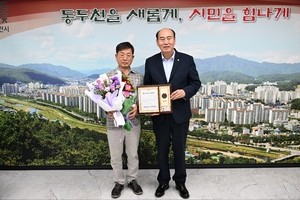
Lee Eun-jun named successor instructor for Dongducheon's Intangible Heritage No. 4, Tapdong funeral ritual chants
Dongducheon appointed Lee Eun-jun as the successor instructor for Tapdong Sangyeo and Hoedaji Sori — the city's Intangible Heritage No. 4 — and presented him with an appointment certificate on Tuesday. Lee has served as a lead singer of Tapdong Sangyeo and Hoedaji Sori since 2001, accumulating roughly 25 years of experience. Beyond performing, he has spent that period overseeing the tradition's overall operations and training the next generation of practitioners, earning recognition as the right person to carry the heritage forward. Tapdong Sangyeo and Hoedaji Sori is a traditional funeral ritual chant passed down in the Nangmoru area of Tapdong, Dongducheon. The city formally recognized its cultural value in 2022, designating it Intangible Heritage No. 4. In his new role, Lee will oversee systematic education to transmit the tradition, lead training programs for aspiring practitioners, and run public education programs to raise awareness of the chant's value and broaden its reach. "Through this appointment, I expect our city's precious intangible heritage — Tapdong Sangyeo and Hoedaji Sori — to be passed on to future generations in a more stable and professional manner," Dongducheon Mayor Park Hyeong-deok said. "We will continue to spare no support for the preservation and revitalization of local traditional culture."
Sept. 17, 2026
-
![[Interview] Yoon Yu-jin, Seoul Metropolitan Council member](https://wimg.heraldcorp.com/news/cms/2026/09/17/news-p.v1.20260917.c09d1804f8cf434f845fd7c04ae1f986_T1.jpg?type=h&h=240)
[Interview] Yoon Yu-jin, Seoul Metropolitan Council member
'Apartments keep rising, but schools stay the same — Jamsil needs a new education map' Student numbers grew after reconstruction, but school infrastructure did not keep pace Overcrowding at Jamsil Middle School and unmet high school demand create an 'education bottleneck' Seoul's education budget should be judged by student impact, not spending volume AI education gap and out-of-school youth must be brought into the support system Large-scale reconstruction has transformed the face of the neighborhood, but the schools children attend have not kept up with the change. That is where Seoul Metropolitan Council member Yoon Yu-jin (People Power Party, Songpa District 1) sees the Jamsil education problem beginning. In an interview Wednesday, Yoon raised two concerns at once: overcrowding at Jamsil's middle school and unmet demand for high school places. With the area already converted into a high-density residential district, she argued that simply searching for land to build new schools is not enough — what is needed is a comprehensive new plan for school supply that includes expanding existing schools, making use of available sites and adjusting student placement. She said future reconstruction projects must take a fundamentally different approach: rather than scrambling to fix school shortages after residents have already moved in, projected student numbers and school demand should be built into urban planning from the very start of each project. It is also notable that Yoon, who spent years working in tax administration, chose to join the education committee after entering the Seoul Metropolitan Council. She had initially considered the planning and economy committee, where she could draw on her experience at the National Tax Service and in the financial and tax sectors, but changed her mind after visiting local schools in person. The problems she found in those schools were more serious than she had expected. Since then, her legislative focus has expanded to cover school supply, education finance and the AI education gap. The 'school bottleneck' exposed by reconstruction — from middle school to high school The area she identified as the most urgent local education issue is the Jamsil-dong neighborhoods 4 and 6. Between the two neighborhoods, there is only one middle school: Jamsil Middle School. According to Yoon, the school has up to 14 classes per grade, reflecting a heavy concentration of students. She visited the school recently and saw firsthand the conditions students face in the limited space available. The problem carries over into the high school stage as well. Jamsil High School, formerly an all-boys school, converted to coeducation, but the total number of classes per grade did not increase. The existing seven classes were simply divided into four for boys and three for girls, meaning the options available to local students did not meaningfully improve, Yoon said. Some students are now having to apply to schools in other districts, including Gangdong-gu. "Jamsil Middle School has up to 14 classes per grade, yet even after Jamsil High School went coeducational, the number of classes per grade did not increase," Yoon said. "The most pressing problem to solve is that middle schools in the same area are overcrowded while there are not enough high school seats to go around." She does not see this as a problem confined to individual schools. She believes that a failure to properly align education facility planning with large-scale reconstruction and demographic change has allowed school supply problems to pile up and surface all at once. During reconstruction, securing school sites tends to be deprioritized because it can affect floor-area ratios and project viability. The result, she said, is a recurring pattern in which existing schools are left to absorb the surge in students after move-in. In Jamsil, where development is already largely complete, finding land for new schools is not easy either. In response, Yoon is exploring several alternatives simultaneously — among them a concept called "J Campus," which would place dedicated education facilities on available spaces such as retention basins, alongside expanding existing schools and adjusting student placement. She said future reconstruction projects must adopt a fundamentally different approach from the outset: at the planning stage, developers should be required to assess not only the expected number of households but also the projected student population and school capacity, so that decisions about securing education facilities can be made before construction begins. 'What matters is not how much was spent, but where it went' Visiting schools on the ground has led Yoon to apply her tax expertise to education finance. The Seoul Metropolitan Office of Education operates a budget exceeding 10 trillion won ($7.39 billion), yet individual schools continue to raise urgent problems — overcrowded classrooms, aging facilities — that still await solutions, she said. Since taking office, Yoon has been visiting schools in her district and meeting directly with principals and parents to hear their concerns. In the process, she said, she has found cases where school requests were not being passed smoothly through the district education support office and the Seoul Metropolitan Office of Education. Even when parents raise an issue, they are sometimes bounced between departments before reaching the right contact, and problems between schools and education authorities can drag on unresolved for long periods, she said. To change that communication structure, she has set up messaging channels with parents at individual schools and collects their concerns and questions before holding meetings. Rather than simply receiving complaints and forwarding them to the education office — the conventional role of a council member — her focus is on connecting schools, parents and education authorities so they can share problems and work toward solutions together. She also argued that the standard for evaluating education budgets must shift from "how much was spent" to "what effect it had on the ground." "What matters in the education budget is not the size but whether the money was spent where it was actually needed," Yoon said. "I will look at whether funds are sitting unspent or tied up in low-priority projects, and make sure the budget goes first to problems students are facing right now — overcrowded classrooms and poor learning environments." At the upcoming administrative audit, she plans to go beyond simply checking the execution rate for each project, and instead examine whether funds were used in line with each project's stated purpose and whether students and parents actually felt the benefit of the policies. The AI gap reaches beyond the classroom: 'We have to look at who is being left out' Her attention is also turning to the rapidly shifting education landscape beyond school buildings and budgets. The number of students using AI is growing fast, but school education and support systems are not keeping pace with the speed of technological change, Yoon said. She taught university students on the morning of the interview and said AI is already transforming the very way students learn. She is particularly focused on the risk that as generative AI services become more advanced and move behind paywalls, students' access to those services and their hands-on experience with them will diverge along economic lines. Simply distributing new digital devices to schools or introducing AI programs is not enough, she said. Policy must also ask whether some students are being left unable to make full use of new technology because of cost. The same concern applies to out-of-school youth. If AI education and digital device support policies are designed around schools as the delivery point, young people who are not enrolled will fall outside the support system entirely. Yoon said the scope of AI education policy should be broadened beyond enrolled students to include out-of-school youth and any young people at risk of being left behind by technological change. Ultimately, the direction she envisions for education policy comes down to one principle: find the answers in the field first. Her plan is to factor school demand into reconstruction projects from the planning stage, direct education budgets toward the most urgent student needs, and bring the new inequalities of the AI era within the reach of policy. "Becoming a council member made me realize there is so much more I can do than when I was just a resident," Yoon said. "I want to be a diligent politician who keeps studying, keeps doing research, keeps meeting people, and turns the problems I find on the ground into real change."
Sept. 17, 2026
-
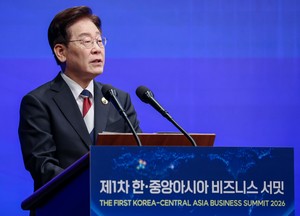
Lee calls for 'new Silk Road' with Central Asia, urges stronger critical minerals cooperation
President Lee Jae Myung delivers keynote at Korea-Central Asia Business Summit President Lee Jae Myung unveiled a "new Silk Road" vision Wednesday aimed at deepening economic cooperation between South Korea and five Central Asian nations. Speaking at a special session of the Korea-Central Asia Business Summit in Seoul, Lee said he wanted to lay out a shared path forward. "If we walk it together, the road traveled 1,500 years ago will open again as a new Silk Road," he said. The summit brought together leaders and business representatives from South Korea, Uzbekistan, Turkmenistan, Kazakhstan, Tajikistan and Kyrgyzstan. Korea Chamber of Commerce and Industry Chairman Chey Tae-won led a South Korean business delegation of about 130 executives. Lee noted that young people in South Korea and Central Asia now watch the same drama series and listen to the same music, saying the relationship had evolved from the mere exchange of goods into "full-scale cooperation where culture and people flow freely." He added that this shift pointed the way forward for both sides. Lee said Central Asia is emerging as a treasure trove of critical minerals essential to electric vehicle, battery and semiconductor production as global supply chains are restructured. "When Central Asia's abundant mineral resources — lithium, uranium and others — meet our battery and semiconductor manufacturing capabilities, we will be able to lead world markets," he said. He called for cooperation spanning the full cycle of the critical minerals sector, from exploration and smelting to high-value materials processing and finished-product manufacturing, going well beyond simple raw materials trade. The government, he said, would use rare metals centers being established at key locations in the region as a springboard for joint research and development and specialist workforce training, helping Central Asian resources generate greater added value. Lee acknowledged that trade between South Korea and Central Asia remains skewed toward South Korean exports of automobiles and auto parts and imports of Central Asian energy and raw materials. He said both sides needed to broaden the scope of trade into new industries such as consumer goods, biotech and digital sectors. He pledged to send trade missions to the region to help Central Asian products gain a foothold in the South Korean market, and said the government would move quickly to build a digital customs clearance system to lower non-tariff barriers and streamline customs procedures. Korea Desks to be established in each of the five Central Asian countries, he added, would serve as channels for resolving business difficulties. Lee also promised that South Korea would be "a reliable partner in building future infrastructure together."
Sept. 16, 2026
-
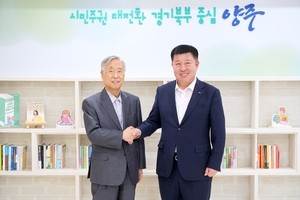
Yangju mayor meets Daiso chairman to discuss cooperation, investment expansion
'We will actively continue administrative support needed for a smooth move-in and project progress' Yangju city announced Wednesday that Mayor Jeong Deok-yeong met with Park Jeong-bu, chairman of Aseong Daiso Co., at city hall to discuss the company's move-in plans for the Eunnam General Industrial Complex, share the direction of future business expansion, and explore ways to cooperate for local economic revitalization. The meeting covered strategies to ensure that corporate investment translates into tangible regional growth, including the hiring of local talent and cooperation with local businesses. Yangju city expects Aseong Daiso's entry into the complex to create new jobs, boost local consumption, attract related businesses, and invigorate the logistics and retail industries — delivering a broad positive impact on the local economy. "We will work to build a foundation that supports Daiso's continued business expansion through our move into the Yangju Eunnam General Industrial Complex, and we will make efforts to hire local talent and cooperate with local businesses so that we can grow together with the community," Park said. Mayor Jeong said the city would "actively continue to provide the administrative support needed for a smooth move-in and project progress so that Aseong Daiso can grow together with Yangju."
Sept. 16, 2026
-

Guri's citizen-report program turns one-minute videos into city fixes
Guri Mayor Shin Dong-hwa: 'Your one minute will change Guri's tomorrow' "If residents film it on their smartphones, Guri will change." The city of Guri has launched a civic-participation program called "That's Not Right!" through which residents report everyday problems, the city verifies and fixes them, and the entire process is captured in short videos shared with the public. The initiative debuted alongside the start of the ninth elected-term administration. Since opening for submissions on Aug. 6, the program had received 74 reports as of Friday, 68 of which had already been resolved, the city said. "That's Not Right!" invites residents to flag everyday hazards and inconveniences — cracked or uneven sidewalk pavers, dangerous crosswalks, trash-strewn alleyways, environmental concerns, and broken park or exercise equipment. Residents submit a report, the relevant city department visits the scene to verify and address the issue, and each month two cases are selected and turned into short-form before-and-after videos released to the public. The program goes beyond simply logging complaints. By presenting the full cycle — from report to fix to visible change — in a single video, residents can see for themselves how their city has improved. "A one-minute video you shoot becomes the first step toward a safer, more convenient Guri," Mayor Shin Dong-hwa said, urging residents to take an active part. To submit a report, residents film a vertical video of up to one minute showing the location and a brief description of the problem, then send it to the city's KakaoTalk channel. The relevant city department reviews each submission, conducts an on-site inspection and carries out the necessary improvements. Once resolved, the case is produced as a before-and-after short-form video and posted on the city's YouTube channel. Each month, two selected contributors receive a gift voucher worth 10,000 won ($7). The program is open year-round to anyone with an interest in Guri. "Your one minute will change Guri's tomorrow," Mayor Shin said. "A city is not completed by administration alone. When the attention and participation of each and every resident come together, Guri will become a safer, more livable city — one where citizens are the true mayor."
Sept. 16, 2026
-
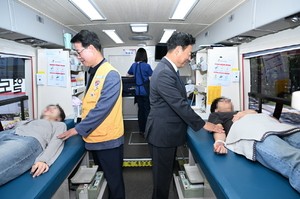
Guri holds third blood drive of the year
Mayor Shin Dong-hwa: 'We will work to root a culture of respect for life and sharing in our community' Guri held its third "Happy Sharing Blood Drive" of the year Tuesday, partnering with the Seoul Eastern Blood Center of the Korean Red Cross to run the event at three locations: Guri City Hall, Guri Gymnasium and Guri Agricultural and Marine Products Wholesale Market. The event was organized to encourage voluntary blood donations from city employees and residents and to promote a broader blood-donation culture, as declining donor numbers driven by the country's low birth rate and aging population have made it increasingly difficult to maintain stable blood supplies. Six blood donation buses were deployed across the three venues — three at City Hall, two at the gymnasium and one at the wholesale market. A total of 260 city employees and residents took part. Forty members of the Korean Red Cross Volunteer Association's Guri chapter helped participants fill in pre-donation questionnaires and conducted street outreach, contributing to a welcoming atmosphere at each site. Kim Bok-jo, chair of the Guri chapter, thanked participants for their generosity. "We are grateful to the residents and city employees who practiced neighborly love despite their busy schedules," Kim said. "We will continue to actively raise awareness of the importance of blood donation so that a culture of life-sharing can spread further." Guri Mayor Shin Dong-hwa said he hoped the drive would bring hope to those in need of blood and help ease the shortage. "We will consistently work to ensure that a culture of respect for life and sharing takes deep root in our community," Shin said. A combined 544 city employees and residents participated in Guri's first- and second-quarter blood drives this year. The city plans to continue holding similar events to promote blood donation and a culture of life-sharing.
Sept. 16, 2026
-
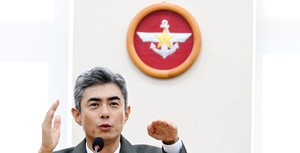
Kang Shin-cheol answers questions at defense minister confirmation hearing
Kang Shin-cheol, nominee for minister of national defense, answers questions from members of the National Assembly's National Defense Committee during his confirmation hearing at the National Assembly in Yeouido, Seoul, on Wednesday afternoon.
Sept. 16, 2026
-
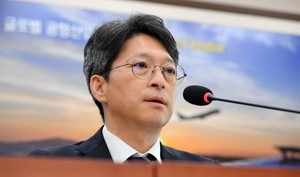
Hong Ji-sun answers questions at confirmation hearing for land minister nominee
Hong Ji-sun, nominee for minister of land, infrastructure and transport, responds to questions from committee members at her confirmation hearing at the National Assembly in Yeouido, Seoul, on Wednesday afternoon.
Sept. 16, 2026
-
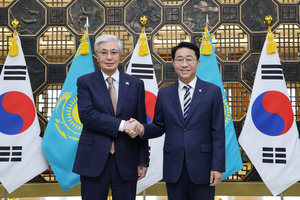
National Assembly speaker meets Kazakh president, vows 'future-oriented strategic partnership'
Expanded economic cooperation expected; people-to-people ties flourishing Speaker thanks Tokayev for repatriation of Gen. Hong Beom-do's remains National Assembly Speaker Jo Jeong-sik met with Kazakh President Kassym-Jomart Tokayev at the National Assembly reception room on Wednesday to discuss ways to strengthen bilateral relations and expand inter-parliamentary exchanges and cooperation. Jo opened the meeting by welcoming Tokayev and his delegation to South Korea and the National Assembly. "I congratulate you on successfully completing the constitutional reform in March and the general election in August this year," he said. He added that he was pleased to see the bilateral relationship elevated to a "future-oriented comprehensive strategic partnership" on the occasion of Tokayev's visit, noting that the two countries had steadily expanded cooperation across multiple areas. Jo also expressed optimism about deepening economic ties. "Kazakhstan is South Korea's largest trading partner and investment destination in Central Asia, and last year Samsung Electronics and Kia began local production at their factories there," he said. "I look forward to further strengthening cooperation in future industries such as energy supply chains and digital AI." On people-to-people exchanges, Jo said he was pleased that the number of mutual visitors between the two countries exceeded 100,000 last year, and expressed hope that such exchanges would continue to grow. Jo also touched on the historical bond between the two countries through the Korean diaspora. "Kazakhstan was the first country to welcome the Koryo-saram who migrated to Central Asia, and 120,000 of them still live there today," he said, expressing gratitude for the Kazakh government's support for the community. He said South Koreans were deeply grateful to Tokayev for his role in facilitating the repatriation of the remains of independence fighter Gen. Hong Beom-do to his homeland. Jo closed by expressing hope that the two countries would continue to advance along a path of mutual cooperation and shared prosperity, pledging that the National Assembly would actively support the development of bilateral relations. Tokayev said South Korea was one of Kazakhstan's most trusted and friendly partners, adding that he was pleased to see active cooperation between the two countries' parliaments. The Kazakh president also highlighted achievements in economic and social cooperation, noting that more than 1,000 joint ventures involving South Korean capital were operating in Kazakhstan and delivering successful projects. He said bilateral relations were developing across a wide range of fields, including education, science, healthcare, culture and tourism. Tokayev added that next year would mark the 90th anniversary of the Koryo-saram's settlement in Kazakhstan, calling it a meaningful occasion he hoped both countries could commemorate together. He also invited Jo to make an official visit to Kazakhstan and conveyed his intention to continue building inter-parliamentary exchanges and cooperation. After the meeting, Jo and Tokayev attended a Kazakh nomadic cultural heritage exchange event at Yeouido Park in Seoul. The two tried traditional Kazakh musical instruments and a traditional Kazakh bow, and watched a "Dance of Friendship" performance blending Kazakh and Korean traditional dance.
Sept. 16, 2026
-
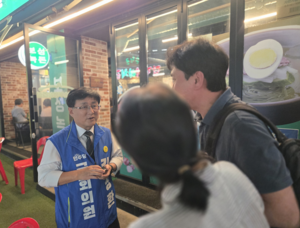
Nearly 80% of Democratic Party lawmakers join 'Bulfeum Minsendan' outreach; Kim Min-seok proposes e-book of members' activities
Climate Minister Kim Sung-hwan joins grassroots outreach in his home district Kim Min-seok calls initiative a 'comprehensive livelihood photo album and white paper' Close to 80 percent of Democratic Party of Korea lawmakers took part in the second round of the party's "Bulfeum Minsendan" (Friday Night Livelihood Alley Squad) grassroots outreach initiative, with members fanning out across the country. According to the Bulfeum Minsendan, a tally of the second round of activities — held from Friday through Sunday — showed that 121 of the 154 Democratic Party lawmakers not serving as cabinet ministers or ministerial nominees participated, putting the voluntary participation rate at 78.5 percent. Among the participants was Climate, Environment and Energy Minister Kim Sung-hwan, who also serves as the party's regional committee chair for Seoul's Nowon-gu, drawing notice for his active involvement. On Friday, Kim spent more than two hours meeting residents along Suraksan Design Street in Nowon-gu, listening directly to their concerns about the livelihood economy, national health insurance, and housing stability for young people and newlyweds. He followed up on Sunday by holding a "Field Petition Day" to hear residents' everyday grievances and local issues. His efforts earned him recognition as a model case for the initiative. From the policy proposals gathered during this round, the Bulfeum Minsendan selected a "Top 5 Policy Proposals" — ideas requiring follow-up through budgeting, policy action or legislation — as well as "Four Nationwide Common Public Sentiment Tasks" drawn from concerns raised consistently across multiple regions. The first proposal, expanding support for five-day-a-week lunch service at senior centers, was gathered by lawmaker Lee Geon-tae. It calls for stable central government funding and support criteria that reflect actual usage. The proposal reflects on-the-ground voices saying national-level support is needed to faithfully implement the party's 2024 general election pledge and to sustainably expand lunch provision at senior centers. The second proposal, boosting the use of Onuri gift vouchers, came from lawmakers Park Ji-won, Kim Tae-nyeon and Choi Min-hee. It calls for expanding the vouchers' accepted venues to include general retail stores and converting the existing senior sports voucher program into everyday-use vouchers such as Onuri. The aim is to improve convenience for residents while revitalizing neighborhood commercial districts. The third proposal — pursuing UNESCO World Heritage designation for traditional markets — was gathered from traditional market vendors by lawmaker Lee Hun-gi, who leads his party's side on the committee. It calls for recognizing the historical and cultural value of traditional markets as K-culture assets and linking that recognition to tourism and local commerce. The underlying goal is to develop traditional markets beyond simple retail spaces into cultural and tourism assets for their communities. The fourth proposal, shortening the service period for military doctors and public health physicians, was submitted by lawmaker Jin Sung-joon. It is a legislative task to reduce the current 36-month service requirement to 24 months, on the grounds that the existing term is disproportionately long compared with other forms of military service and warrants a rational adjustment. The fifth proposal, put forward by lawmaker Im Mun-yeong, calls for building parking facilities on the outskirts of commercial districts and linking them to autonomous driving transport to ease downtown parking shortages and traffic congestion. The proposal also takes into account the possibility of testing real-world applications in connection with autonomous driving pilot projects set to begin in the Jeonnam-Gwangju Special City this autumn. The Bulfeum Minsendan also announced the "Four Nationwide Common Public Sentiment Tasks," compiled from concerns raised consistently across multiple regions during this round. The most widely raised concern nationwide was revitalizing traditional markets and neighborhood commercial districts, with 19 lawmakers and regional committee chairs collecting related opinions. Calls came from multiple regions for expanded support for traditional markets and neighborhood shopping streets, and for widening the accepted venues for local currency and Onuri gift vouchers to inject vitality into local commerce. Real estate policy was flagged as a common concern for the second consecutive round. Twelve lawmakers and regional committee chairs relayed a range of field opinions, including expanding housing support for first-time buyers such as young people and newlyweds, easing loan regulations, resolving delays in reconstruction and redevelopment projects, increasing housing supply, and relaxing regulations on temporary two-home owners. Easing the financial burden on small business owners was also raised again as a common concern. Eight lawmakers and regional committee chairs conveyed calls to expand policy financing and financial support and to ease the burden of loan repayments and interest rates for struggling small business owners. Demands for expanding public parking and improving parking convenience were heard across the country as well. Fifteen lawmakers and regional committee chairs reported chronic parking shortages in traditional markets, neighborhood commercial districts and residential areas, calling for more public parking facilities and better parking conditions in living zones. Meanwhile, Democratic Party leader Kim Min-seok proposed creating a continuously updated e-book compiling each lawmaker's activities as a way to build a lasting record of the Bulfeum Minsendan's work and achievements. "It would be wonderful to compile each lawmaker's activities and produce an e-book that keeps being updated and accumulated," Kim said. "It will become a comprehensive livelihood photo album and a livelihood white paper." Park Ji-won, who heads the Bulfeum Minsendan, said he was grateful that most lawmakers and regional committee chairs had participated in an exemplary manner. "We will stay even closer to public sentiment, with the resolve to find answers from within the people, and we will work hard to uncover more model cases," he said. Lawmaker Lee Hun-gi said the group would go deeper into communities every Friday, encouraging one another alongside senior and fellow lawmakers and regional committee chairs. "This is not a one-off or two-off event — if we consistently visit the field and sincerely listen to the people's voices, I believe the public will ultimately recognize that sincerity and be moved by it," he said.
Sept. 16, 2026
MOST READ
- 1KAIST develops high-performance bio-based adhesive using E. coli instead of petroleum
- 2Pope Leo XIV declines French honors and banquet, accepts only private meeting with Macron
- 3Daimler Truck unveils next-generation transport solutions at IAA 2026
- 4What was Rachmaninoff's performance fee? A 1928 price list tells all
- 5Samsung Biologics union's show of force backfires at the bargaining table
- 6APR says hair-loss treatment research published in international journal
-
WORLD

US warns of punishment for anyone enabling Iran's Strait of Hormuz toll scheme
-
INDUSTRY

Toyota union puts productivity first; Hyundai Motor union demands bigger share of profits
-
FINANCE

National Growth Fund to invest $531M in FuriosaAI, which rebuffed Meta's $800M takeover bid
-
INDUSTRY
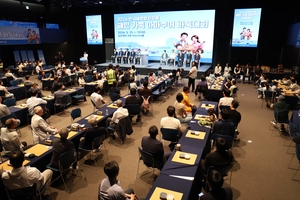
Korea Shipowners' Association holds amateur baduk tournament for Maritime Day