24,711 ATMs left as of June, down 15% from 2022
Ulsan, South Gyeongsang, Jeju see drops of over 20%
Internet banking use surges 112% from 2020
Bank branches down 4.9% amid shift to shared ATMs, banking agents
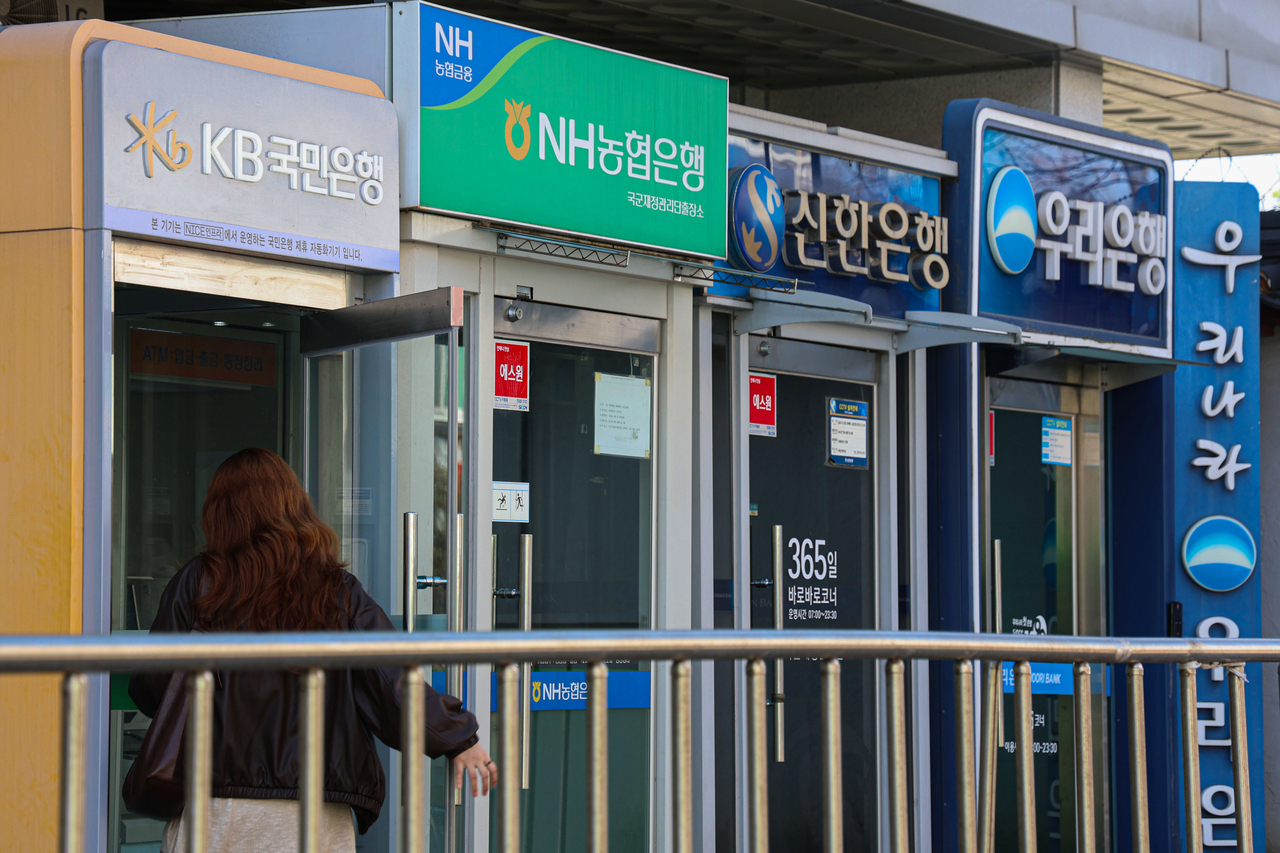
The number of automated teller machines operated by banks nationwide has fallen by more than 15 percent over the past three and a half years. Ulsan, South Gyeongsang Province and Jeju posted declines exceeding 20 percent, raising concerns that cash accessibility is deteriorating in regional areas.
Rep. Seo Il-jun of the People Power Party, a member of the National Assembly's National Policy Committee, released data from the Financial Supervisory Service on Wednesday. The data showed the number of bank ATMs nationwide stood at 24,711 as of the end of June, down 636, or 2.5 percent, from the end of last year. That marked a decrease of 4,610, or 15.7 percent, from 29,321 at the end of 2022.
By region, Ulsan saw the sharpest decline. The number of ATMs there fell to 472, down 129, or 21.5 percent, from the end of 2022. South Gyeongsang Province's count dropped to 1,265, a decrease of 332, or 20.8 percent, while Jeju's fell to 183, down 48, or 20.8 percent.
The decline in the Greater Seoul area, including Seoul and Gyeonggi Province, was in the mid-teens percentage range, similar to or slightly below the national average. Sejong saw a relatively smaller drop, down 17 machines, or 9.0 percent, to 171, while Daejeon fell by 104, or 13.0 percent, to 695.
The decline varied widely by bank as well. Citibank Korea, which withdrew from its consumer finance business, saw its ATM count fall to 68, down 58, or 46.0 percent, from the end of 2022.
Among the five major banks, NH NongHyup Bank posted the steepest decline, down 1,110 machines, or 21.8 percent, followed by Shinhan Bank, down 1,020, or 21.0 percent. Hana Bank, by contrast, saw a decrease of only 44 machines, or 1.3 percent, over the same period.
The shrinking ATM and branch networks reflect the broader spread of non-face-to-face financial transactions. According to the Bank of Korea, the daily average number of internet banking transactions last year, including mobile banking, reached 28.29 million, up 112.2 percent from 13.33 million in 2020. As financial transactions shift rapidly toward mobile and online channels, banks continue to streamline their in-person service networks.
Bank branches are also shrinking. The number of domestic commercial bank branches fell from 5,657 at the end of 2022 to 5,381 as of the end of June this year. That marked a decrease of 276, or 4.9 percent, according to disclosures from the Korea Federation of Banks.
Financial authorities are pushing to expand alternative channels to offset the decline in accessibility caused by shrinking branch and ATM networks. The Financial Services Commission is piloting a banking agent service that allows post offices in areas with low financial accessibility, mainly outside the capital, to handle some banking functions. It is also expanding shared ATMs.
"As bank branches shrink and ATMs disappear along with them, financial exclusion is spreading across regions," Seo said. "This is causing significant inconvenience, particularly for elderly residents and rural communities who rely heavily on cash, so financial authorities and banks need to come up with complementary measures, including alternative services for financially vulnerable groups."

rim@heraldcorp.com