NTS to release virtual asset tax guidelines next month
Key disputes include scope of 'other income,' loss carryover rules
Deferral petition tops 50,000 signatures, reigniting Assembly debate
First filing deadline falls one month before general election
Youth investors who lost money in crypto downturn may resist tax
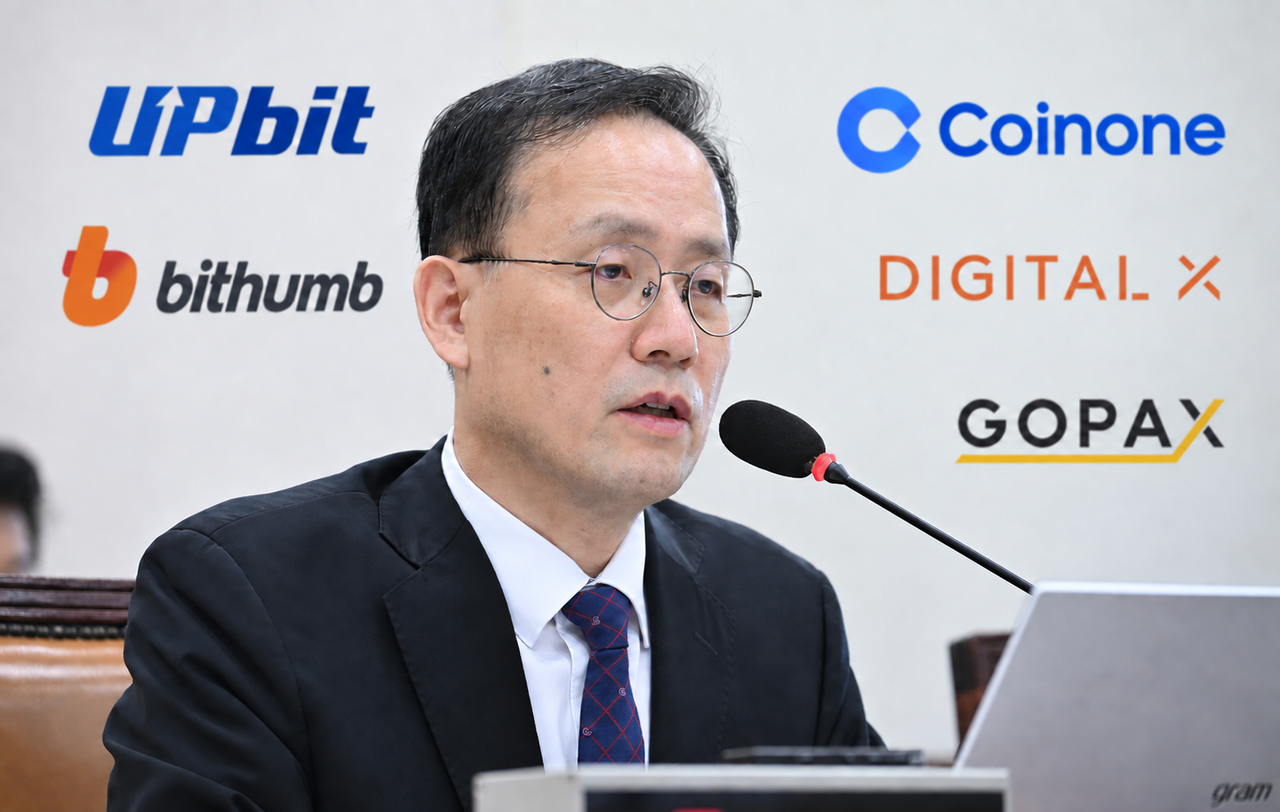
The National Tax Service is preparing to release detailed virtual asset tax guidelines next month, targeting a January implementation, even as a second public petition demanding a two-year deferral has cleared the legal threshold of 50,000 signatures.
The government is holding firm on its plan to proceed with taxation as scheduled, but resistance from investors and the political opposition is mounting. Industry insiders and lawmakers say the ruling party could once again pull out a deferral card if the controversy deepens — drawing comparisons to the financial investment income tax, which was repeatedly delayed before ultimately being scrapped.
The government reaffirmed its position Thursday, saying it will classify income earned from transferring or lending virtual assets starting Jan. 1 as "other income" subject to taxation. Gains exceeding the basic deduction of 2.5 million won ($1,850) per year will be taxed at a combined rate of 22 percent — 20 percent in other income tax plus a 2 percent local income tax surcharge.
To support the rollout, the NTS is preparing to publish its official tax guidelines around October, laying out the tax authority's position on key industry disputes, including the scope of taxable "other income" and whether loss carryovers will be permitted. Also drawing attention is how much of the tax workload the agency's new "virtual asset integrated analysis system" — built at a cost of about 3 billion won — will actually be able to handle.
The NTS issued a request for proposals for the integrated system in February to build a platform capable of analyzing virtual asset transactions across exchanges. According to the proposal documents released at the time, the agency planned to complete system development, unit testing and performance trials by October, then begin a pilot operation and user training from November.
The system is designed to link transaction records between exchanges and personal wallets with overseas financial account filings and on-chain data, enabling the NTS to analyze transactions by taxpayer and calculate acquisition costs. It will also directly collect raw data from the Ethereum and Tron blockchains to track stablecoin transactions, including USDT and USDC.
The industry, however, warns that errors could arise in calculating acquisition costs because custody deposits and withdrawals, as well as staking deposits and releases — which do not constitute acquisitions or transfers — still appear on transaction statements as inflows or transfers. Industry groups say the tax infrastructure must be fully in order before enforcement begins.
The NTS has also been running on-chain nodes capable of directly collecting and analyzing blockchain transaction data for major virtual assets for several months, sources said. While this gives the agency a foundation for tracking asset movements through personal wallets and decentralized finance protocols, it remains unclear whether it can accurately identify the actual owners of wallets, the nature of each transaction, or original acquisition costs. Observers note a persistent gap between the principle of taxing DeFi activity and the agency's actual enforcement capacity.
The government believes the market impact of implementing the tax will be limited. Lee Hyeong-il, nominee for deputy prime minister and minister of economy and finance, said at his confirmation hearing Tuesday that "quite a bit of time has already been pushed back," adding that "the shock of starting now will likely be smaller than expected."
Lee said a review of the data showed that 85 percent of investors hold virtual assets worth less than 5 million won. "If it is difficult to verify the acquisition cost and find a separate price, up to 50 percent of earnings can be recognized as necessary expenses," he said. "Given that the basic deduction is 2.5 million won, most of these investors will either be exempt or face a negligible tax burden."
Despite the government's firm stance, a different mood is emerging in political and market circles. A public petition calling for a two-year additional deferral of the January virtual asset tax crossed the legally required threshold of 50,000 signatures on Monday — reaching 51,988 as of Tuesday — reigniting the deferral debate with roughly 100 days to go before implementation.
Under the public petition system, any petition that gathers 50,000 or more signatures within 30 days of being posted is referred to the relevant standing committee for review, though the committee's decision carries no legal binding force. Still, analysts say the Assembly could move toward a full debate on the issue, given that the opposition has already introduced a deferral bill and this marks the second time such a petition has been referred to a standing committee.
That dynamic has fueled speculation that the ruling party, mindful of public sentiment and approval ratings heading into year-end, could again opt for a deferral. Particularly notable is that the first filing and payment deadline for income earned next year falls in May 2028 — just one month before a scheduled general election — raising the prospect that the tax issue could once again be driven by political calculations.
"With the financial investment income tax, there was broad agreement on the need to tax, yet the debate over deferral and abolition dragged on because of political pressure from public sentiment and the approaching election," a ruling party official said. "Looking at the current atmosphere around virtual asset taxation, it feels like a repeat of that story."
Industry and political observers alike point to the sentiment of younger investors in their 20s and 30s — the core of the virtual asset investor base — as a key variable in determining whether the tax goes ahead.
"A significant number of investors in their 20s to 40s have taken losses in the recent market downturn, and some have likely moved into stocks or leveraged products — or even taken on additional loans — to recoup those losses," one industry official said. "Pushing ahead with taxation under these circumstances risks fueling tax resistance and weighing on youth sentiment and approval ratings."
The petition itself argues that the tax should be deferred for two more years until the tax infrastructure is properly in place, noting that "with youth voters emerging as a critical political issue, and given that 50 percent of virtual asset investors are in their 30s or younger, virtual asset taxation runs clearly counter to the policy direction of the current government and political establishment."
Industry groups are also calling for the tax to be introduced in tandem with the implementation of the Digital Asset Basic Act — the second phase of crypto legislation.
The argument is that forcing income from a wide variety of virtual asset types into the existing "other income" framework makes it difficult to properly capture the acquisition and transaction structures of individual assets, or the ways in which gains are realized. Proponents say the virtual asset ecosystem and asset categories should first be clearly defined in law, with a separate tax framework then designed to match.
There are also concerns that premature implementation could trigger a flight of investors away from domestic exchanges. "Overseas exchanges offer products that are difficult to provide domestically, such as tokenized stocks, ETF-type products and leveraged instruments," one industry official said. "Once money flows out, there is a real possibility it will not come back to the domestic market."
Meanwhile, the NTS has adopted a low-profile approach as public attention around the virtual asset tax intensifies. The agency had originally planned to formally launch an advisory committee with an official appointment ceremony, but scrapped those plans and is now gathering expert opinions on an individual basis, sources said.

kyoung@heraldcorp.com
forest@heraldcorp.com