
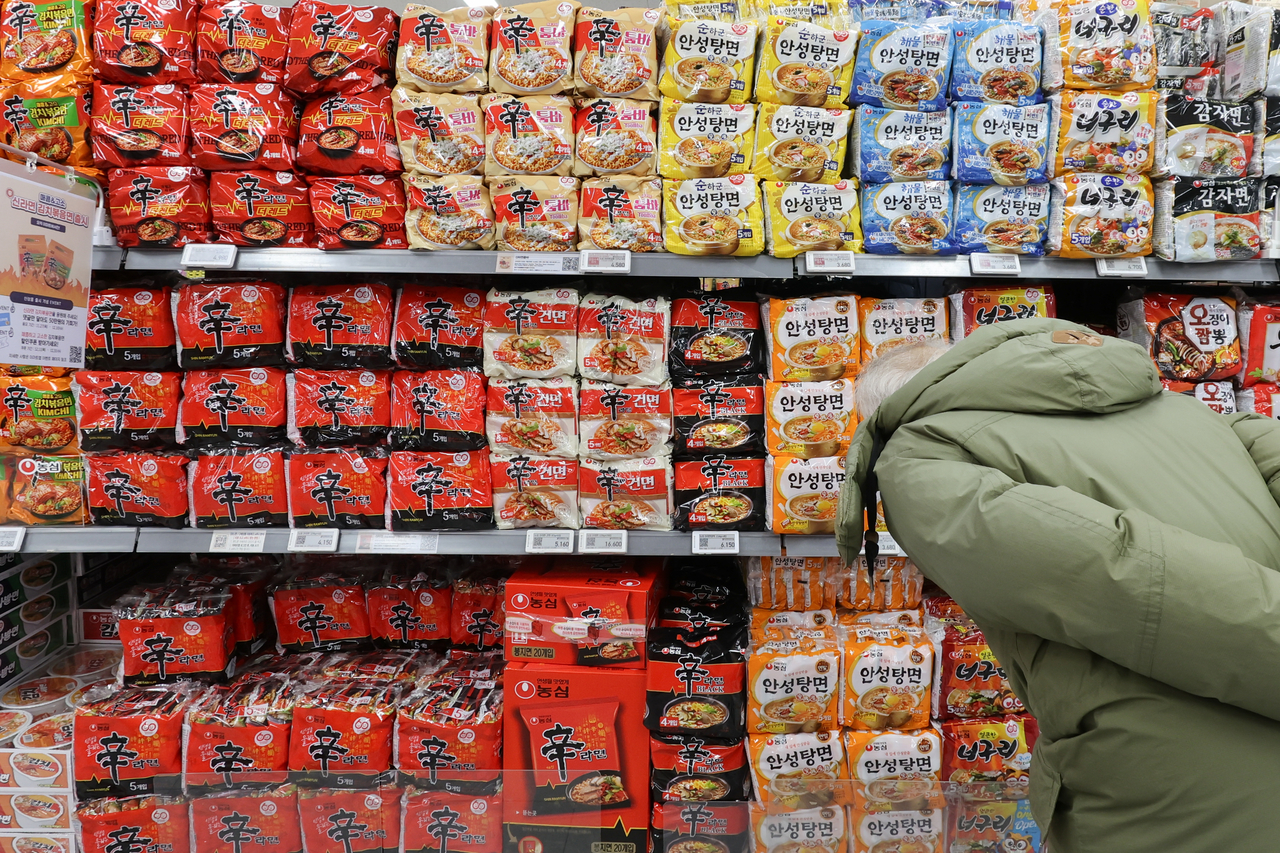
Exports of K-food, including ramyun, to the Middle East continue to grow.
South Korean agricultural and food exports to the Gulf Cooperation Council region rose from $248.5 million in 2021 to $411.63 million in 2025, a 65.6 percent increase. The figures come from a briefing book for a strategy seminar on expanding K-food's entry into halal markets, held by the Korea Agro-Fisheries and Food Trade Corporation, or aT, on Wednesday.
The UAE stands out as a major export destination. Exports to the UAE rose from $199 million to $335.24 million over the same period, up about 68 percent.
By product, ramyun exports rose 22 percent, from $38.9 million in 2024 to $47.46 million last year. Over the same period, exports of sauces increased 31.8 percent, from $3.62 million to $4.77 million. Exports of rice-based food products climbed 42.6 percent, from $4.04 million to $5.76 million. Ice cream exports rose from $2.83 million to $3.75 million, and beverage exports increased from $3.15 million to $4.07 million.
Food consumption culture in the Middle East is shifting. Cho Min-su, head of aT's Time Out Dubai office, cited growing demand for home meal replacement products like ramyun and frozen food, and rising interest in health and wellness food. He named these as key recent shifts in the Middle East food market, according to the seminar's briefing materials.
However, given the region's strict halal standards, exporters need to review each country's regulations and systems in advance. "Raw materials, manufacturing processes and production facilities all must meet halal standards," Cho said. "Middle Eastern countries require imported food to carry labeling in both English and Arabic, and mandate disclosure of country of origin, ingredients, allergens and expiration dates."
"There is also a trend toward tighter regulation on sugar, particularly for sweetened beverages, and stricter nutrition labeling standards for some foods," he added. He said companies should review their product ingredients and labeling requirements in advance.
Lee Seul, a researcher at the Korea Food Research Institute, also stressed the importance of obtaining halal certification through agencies recognized by each country. "Companies should also check in advance for the possible presence of ethanol, which can occur or remain during fermentation and processing, and for the potential mixing of pork-derived ingredients," she said.
korean@heraldcorp.com




