Repeat test-takers and final year of elective-subject CSAT shake up secondhand book market
Social studies textbook transactions up 13%; science down 20%
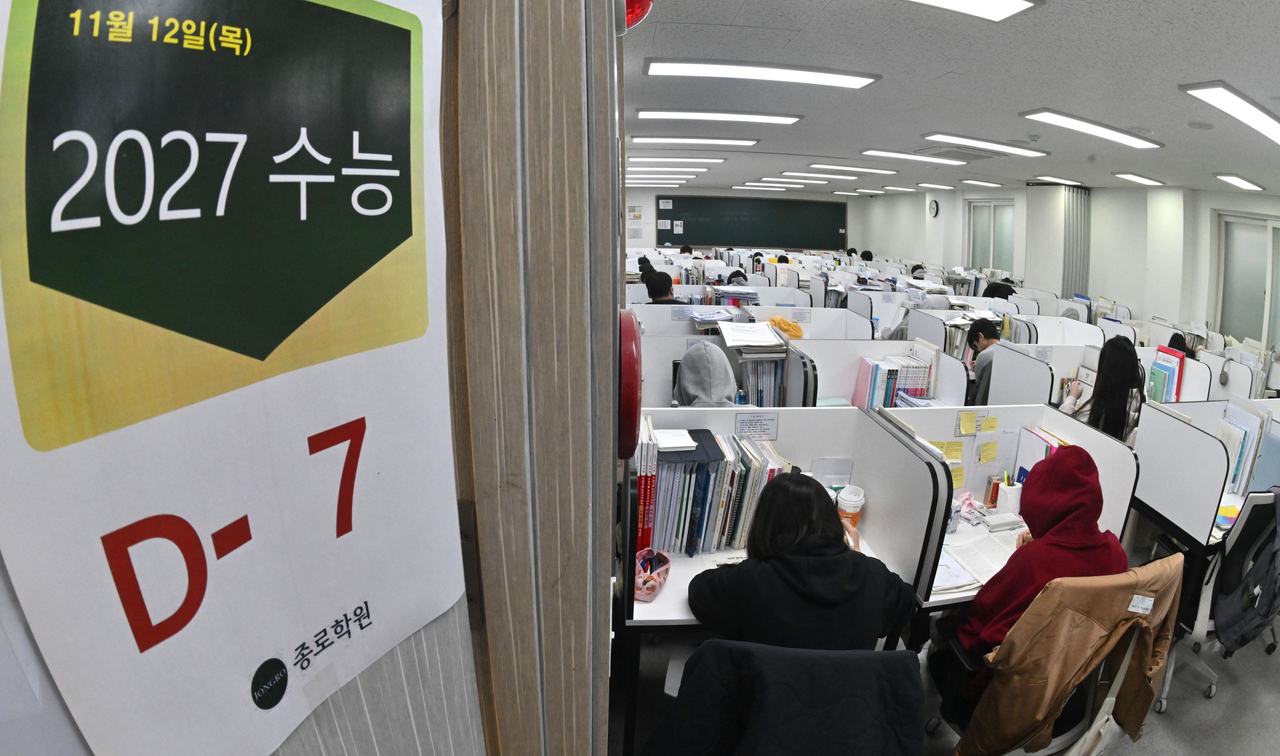
With the College Scholastic Ability Test three days away, the secondhand textbook market is reflecting two clear trends: students switching from science to social studies, and others dropping calculus in favor of probability and statistics.
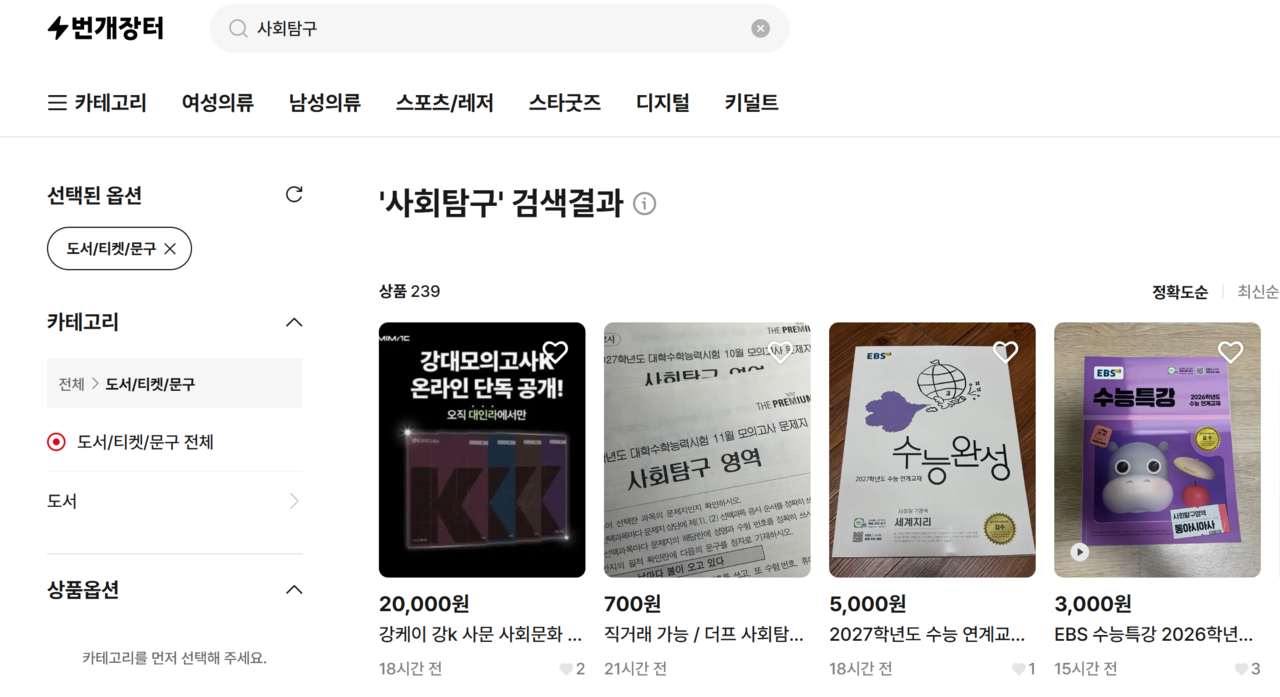
According to secondhand marketplace Bungaejangter, transactions of social studies textbooks from January through October this year rose 13 percent compared with the same period last year, while science textbook transactions fell 20 percent. In mathematics, trades of probability and statistics books climbed 30 percent, while calculus books dropped 16 percent. The shift stands out against the near-flat 0.8 percent increase in English and Korean history textbook transactions over the same period.
Social studies titles have also overtaken science in their share of all subject-area textbook trades. Last year, science books accounted for the larger share, but this year social studies pulled ahead. Social studies has held more than 50 percent of subject-area transactions every month since June, reaching 57 percent in September.
The same pattern appeared on the supply side. Listings for science textbooks fell 32 percent year-on-year over the same period. Chemistry saw the steepest drop at 41 percent, followed by biology at 35 percent, physics at 28 percent and earth science at 27 percent. Social studies listings, by contrast, rose 10 percent, with world geography up 27 percent, social and cultural studies up 21 percent and Korean geography up 19 percent.
This year's CSAT is the last to be administered under the current elective-subject system, and some observers say students are migrating toward subjects with a lighter study load or a better chance of a high score within a limited preparation window. Official registration data supports the trend: the number of students who signed up to sit the social studies section rose 11.4 percent from last year, while science section registrations fell 28.3 percent.
A rise in repeat test-takers also appears to be a factor. The number of graduates and GED holders registered for this year's CSAT reached 196,473 — about 14,000 more than last year and the highest figure in 23 years since the 2004 academic year. Graduates hit a 23-year high, while GED candidates reached their highest level in 32 years.
"Students are buying and selling textbooks as they shift subjects in line with their exam strategies," a Bungaejangter official said. "Particularly because this is the last CSAT under the elective-subject system, the change in demand by subject appears especially pronounced."

siuu@heraldcorp.com