First drive: Volvo's first all-electric flagship, the ES90
Sedan-like quiet and smooth ride
SUV-like sightlines and generous cargo room
Liftback body well suited for family use
Stable and composed even at highway speeds
Short rear seat cushion and tight driver footwell are drawbacks
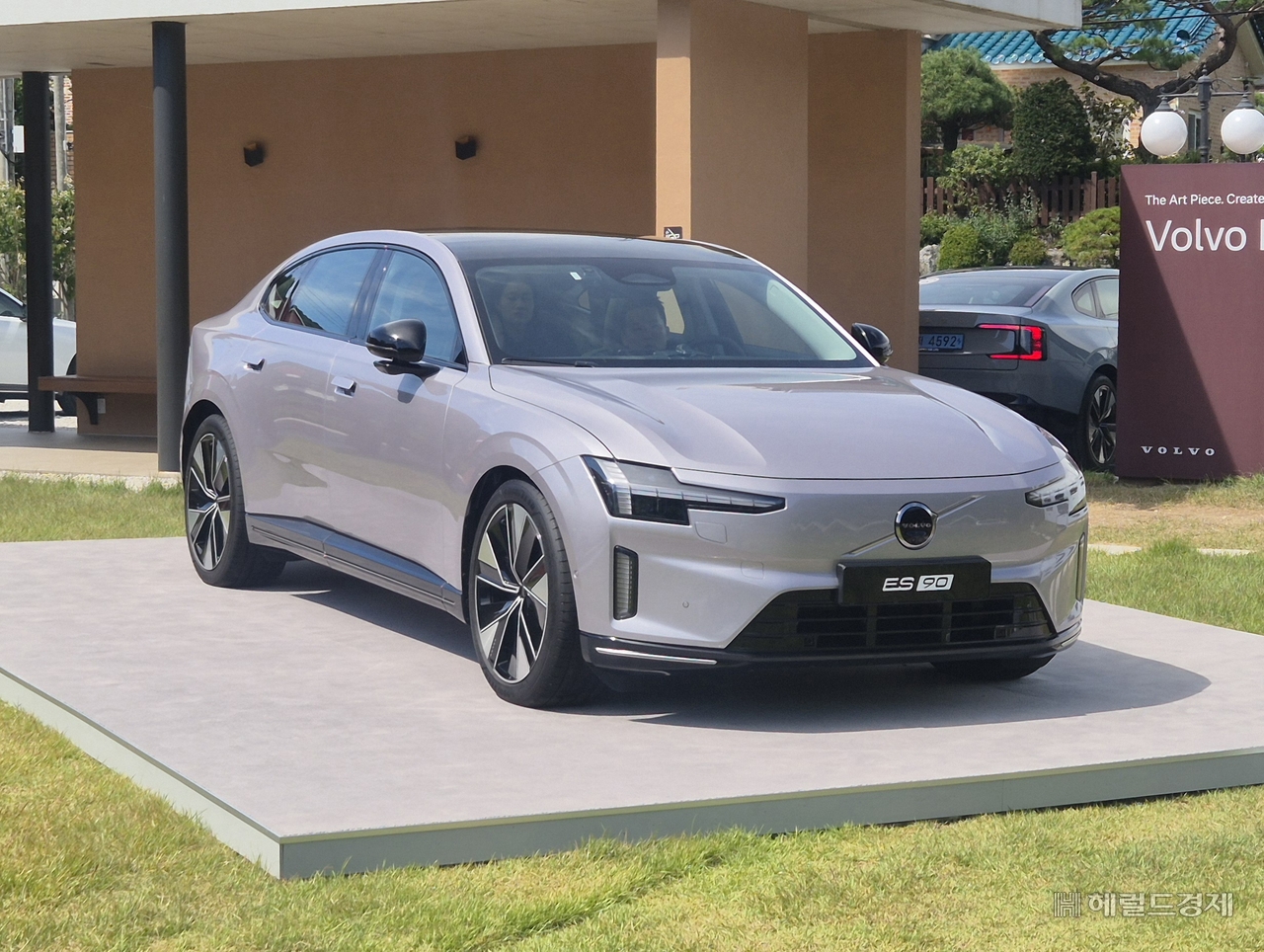
"Found it!" That was the text I sent my wife after stepping out of the car.
On Thursday I drove Volvo's new all-electric flagship, the ES90, from Pocheon in Gyeonggi Province to Magok in Seoul's Gangseo-gu. I have driven dozens of cars while covering the auto industry, but few have made me want to put them at the top of my actual shopping list once price is factored in.
Particularly for a family of three with a 4-year-old, the ES90 hits a remarkably precise sweet spot. I did not want to give up the quietness and smooth ride of a sedan, yet I also wanted the wide cabin, elevated sightlines and large cargo space of an SUV. The ES90 manages to satisfy both demands — which might seem contradictory — in a single vehicle.
The ES90 is Volvo's reinterpretation of the traditional premium sedan for the electrification era. Volvo itself describes it as an electric flagship that is "more practical than a sedan and more efficient than an SUV." The car also embodies the company's latest SPA2 architecture and software-defined vehicle strategy.
Higher than a sedan from the moment you climb in
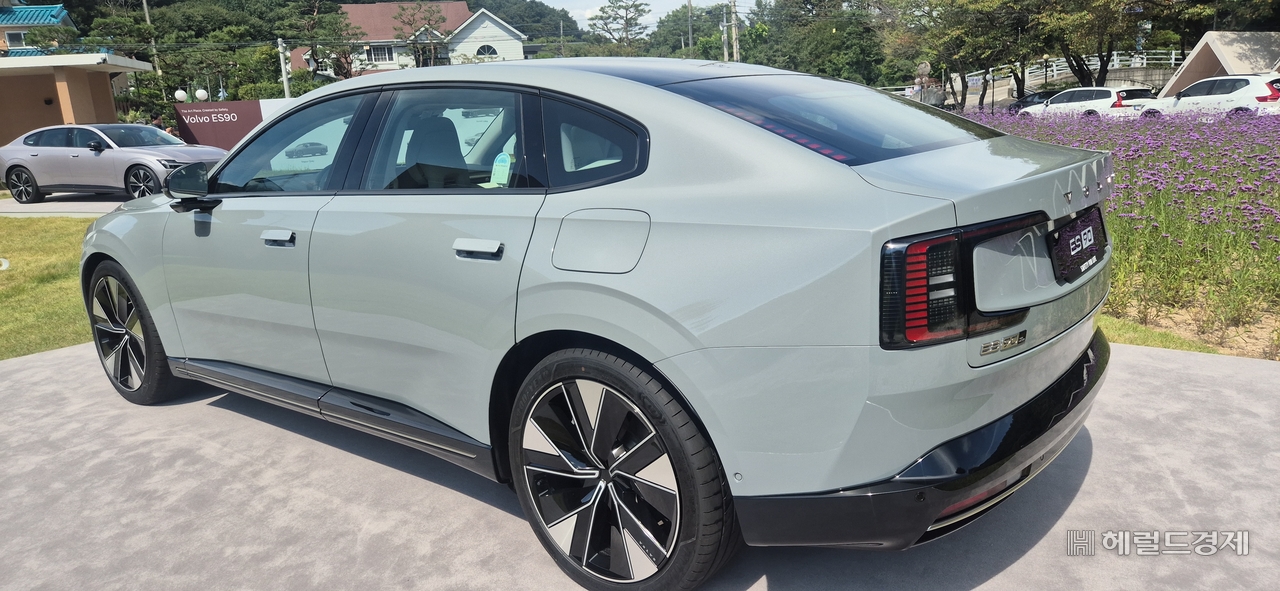
The first impression differs from a typical large sedan. The ES90 measures 5,000 millimeters in length with a 3,102-millimeter wheelbase. Its height stands at 1,550 millimeters, and ground clearance reaches up to 188 millimeters — considerably more than a conventional sedan.
The car's character becomes clearer the moment you settle into the driver's seat. Rather than sinking low as you would in a typical sedan, the experience is closer to climbing into an SUV. The elevated seat position opens up a wide forward view. Despite the 5-meter body, the sense of bulk from behind the wheel was smaller than expected.
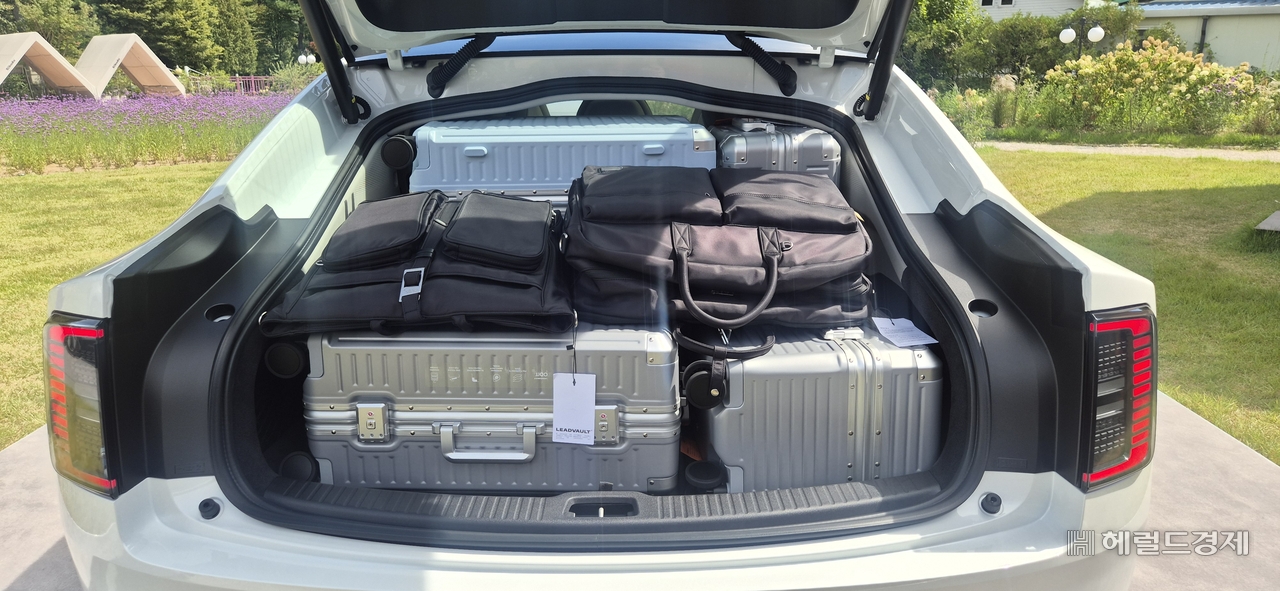
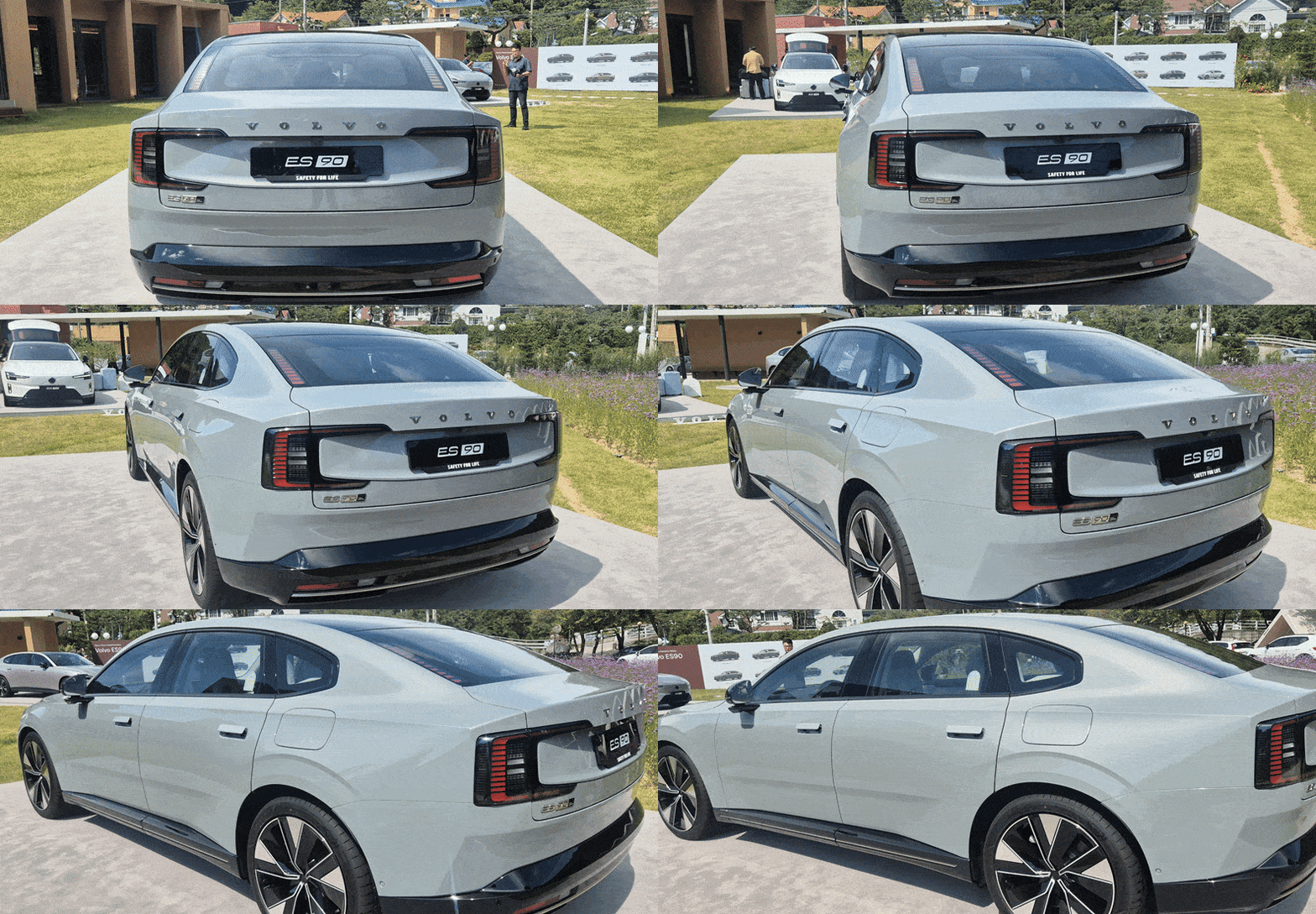
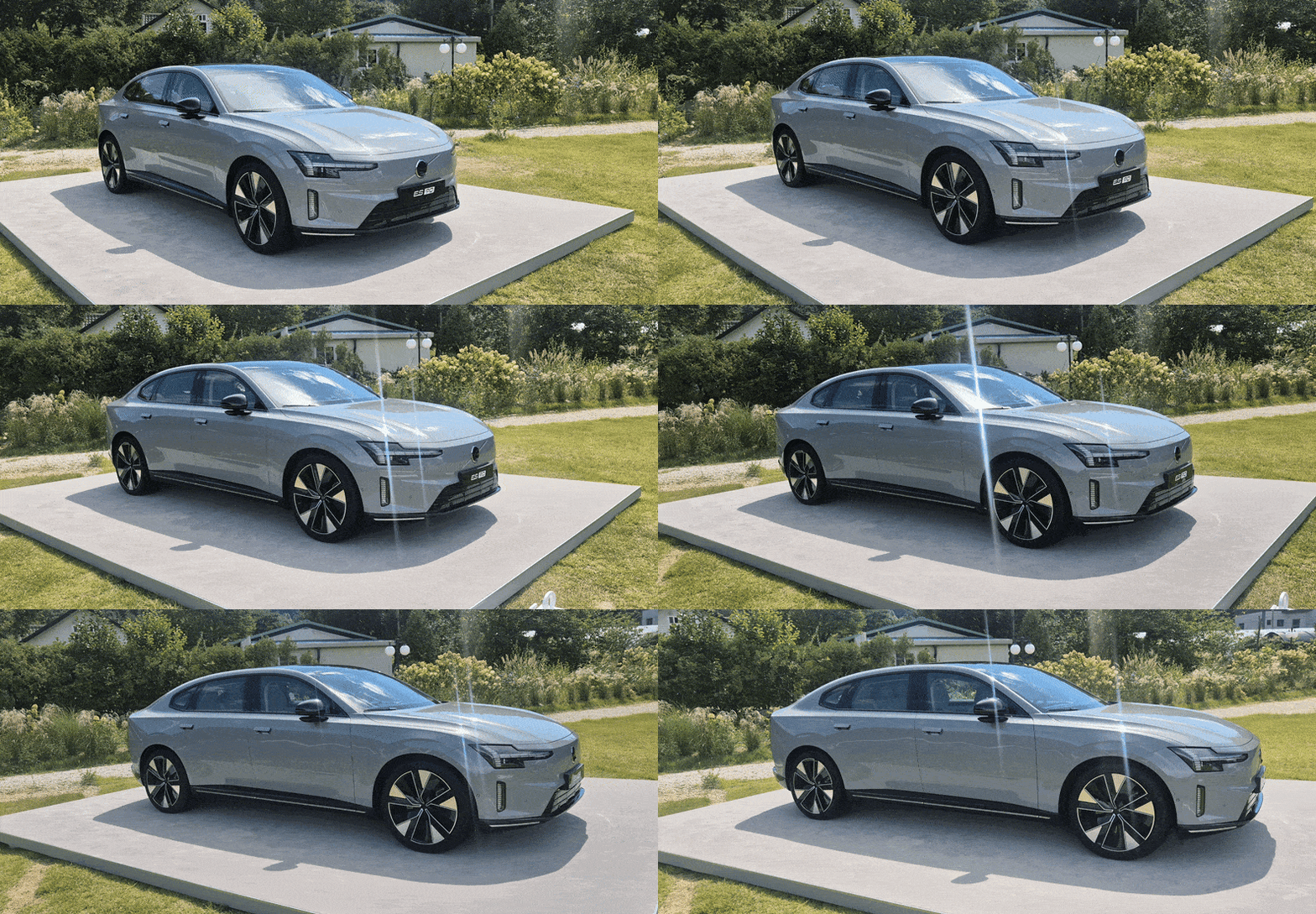
The exterior also departs from orthodox sedan design. Volvo chose a liftback layout in which the rear glass and trunk lid open together, connecting the cabin and cargo area the way an SUV does rather than isolating the trunk as a separate compartment.
With the rear seats folded, cargo capacity expands to a maximum of 1,445 liters. At the test site I loaded one 26-inch suitcase, two 24-inch suitcases, a 20-inch case, a flat-top carrier, a tote bag and a duffel bag — an entire family's worth of travel luggage — and the powered trunk lid closed without complaint.
Not having to bend deeply at the waist to push bags in is another SUV-like trait.
On the open road, road texture simply disappeared
The highest marks go to the ride quality.
The test car was the ES90 Twin Motor AWD Ultra, equipped with dual-chamber air suspension. Volvo said it used cast aluminum at the suspension mounting points to suppress body flex and micro-vibrations, and added separate damping to reduce the high-frequency motor whine.
Driving the national roads around Pocheon, the fine surface imperfections barely registered inside the cabin. Speed bumps and uneven stretches were handled with composed, stable body movement.
The tuning makes it easy to forget you are in a large, heavy electric vehicle. Soft does not mean wallowy, however — at highway speeds the body held its line without swaying side to side.
The twin-motor AWD system produces 456 horsepower and accelerates from a standstill to 100 kilometers per hour in 5.4 seconds. Even pushing past 150 km/h, the perceived speed felt surprisingly low — the body gripped the road so calmly that I found myself double-checking the speedometer. Even so, the ES90's personality leans toward "fast but comfortable" rather than a driver-focused sports sedan. Its combined-cycle range on a single charge is 520 kilometers.
Audio that shines because the cabin is so quiet
The ES90 has a drag coefficient of 0.25Cd — the lowest of any Volvo production car despite its tall body. The Ultra trim adds acoustic glass and sound-absorbing materials designed to reduce the high-pitched motor whine. Volvo's own tests measured interior noise at around 55.6 decibels.
The hushed cabin lets the Bowers & Wilkins audio system truly stand out. The 25-channel, 1,610-watt setup supports Apple Music and Dolby Atmos. Source quality matters: with high-resolution audio files, the sense of space filling the cabin and the precise placement of individual instruments became noticeably more vivid.
'Ariya, turn on the ventilated seat' — and it knows exactly where you're sitting
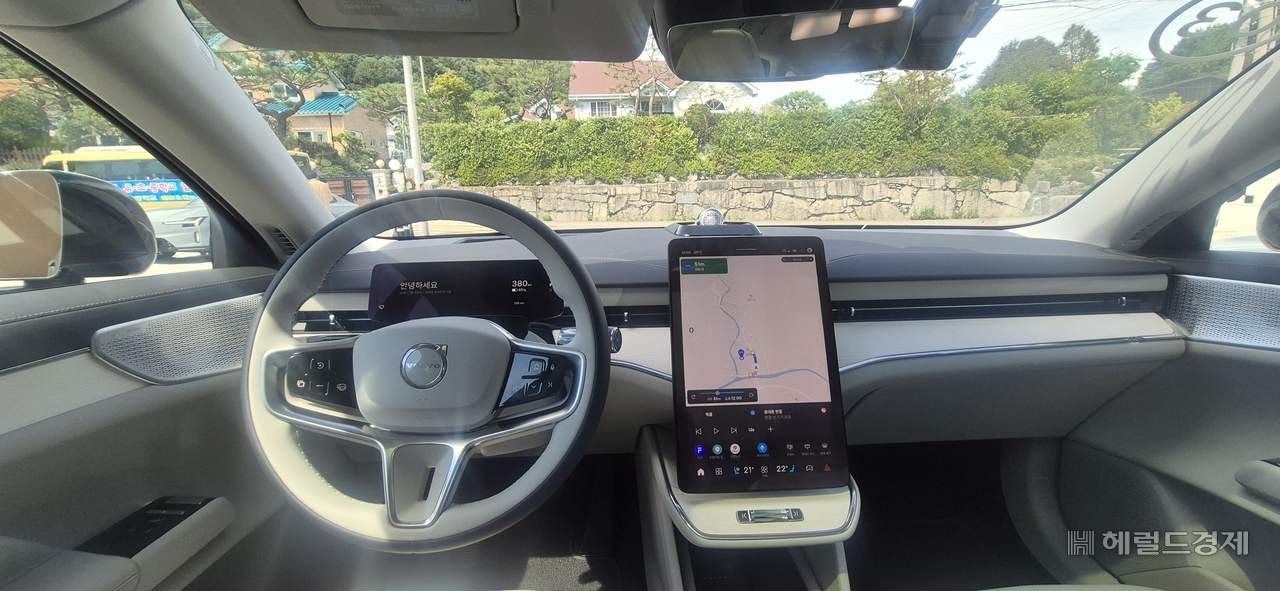
Inside, the near-absence of physical buttons is immediately noticeable. A 14.5-inch portrait display sits at the center console, with a 9-inch display in front of the driver. The layout is clean, yet it can surface a wide range of key information — speed, surrounding vehicles, navigation guidance and more.
The voice recognition proved particularly useful. Sitting in the front passenger seat and saying "Ariya, turn on the ventilated seat," the car recognized which seat the voice came from and activated the passenger-seat function — no need for the driver to answer a follow-up question about which seat was meant. A four-zone voice recognition system distinguishes the source position across all four seating areas, front and rear.
Pilot Assist was equally straightforward. Pushing the right column stalk downward while driving activates it immediately. The acceleration and braking to maintain following distance were smooth, and the lane-centering corrections were not overly twitchy.
When maneuvering into a tight space, the surround-view camera feed appeared automatically — a welcome touch that lets you check the sides of the large body without fumbling for a button.
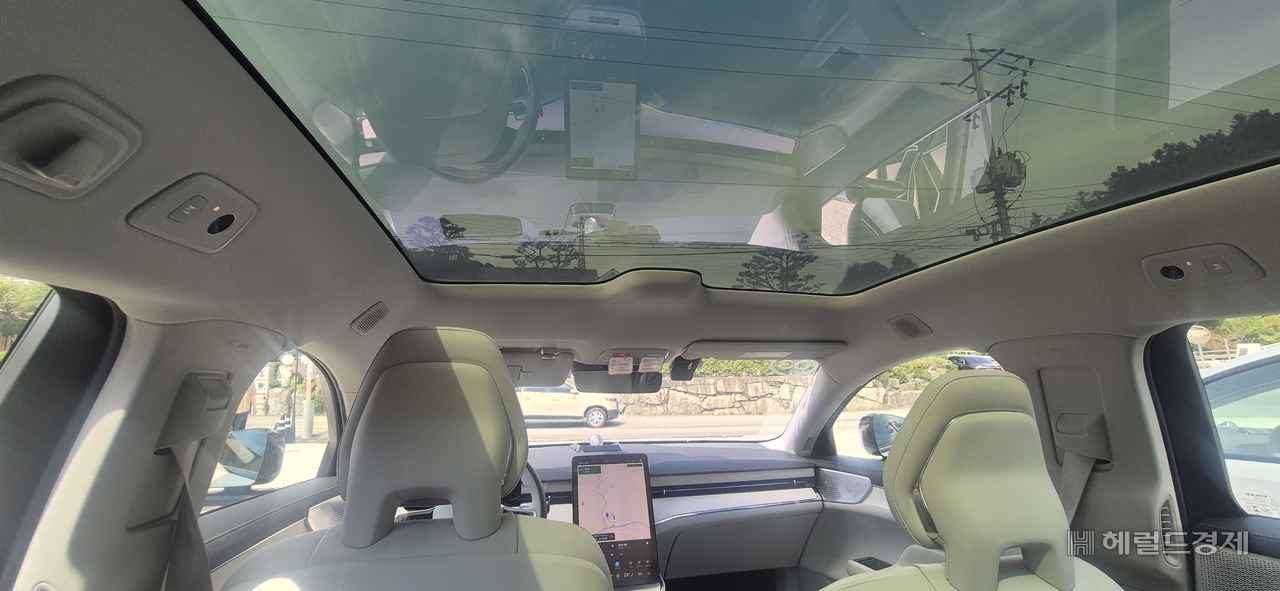
The Ultra test car also featured electrochromic glass. A button press adjusts the tint level: darken it when the sun is strong, clear it again when you want the open feel back.
Spacious rear seats — but taller adults should sit in them before buying
There are drawbacks, however. The rear seat cushion is on the short side. Taller adults may find that their thighs are not fully supported toward the knee.
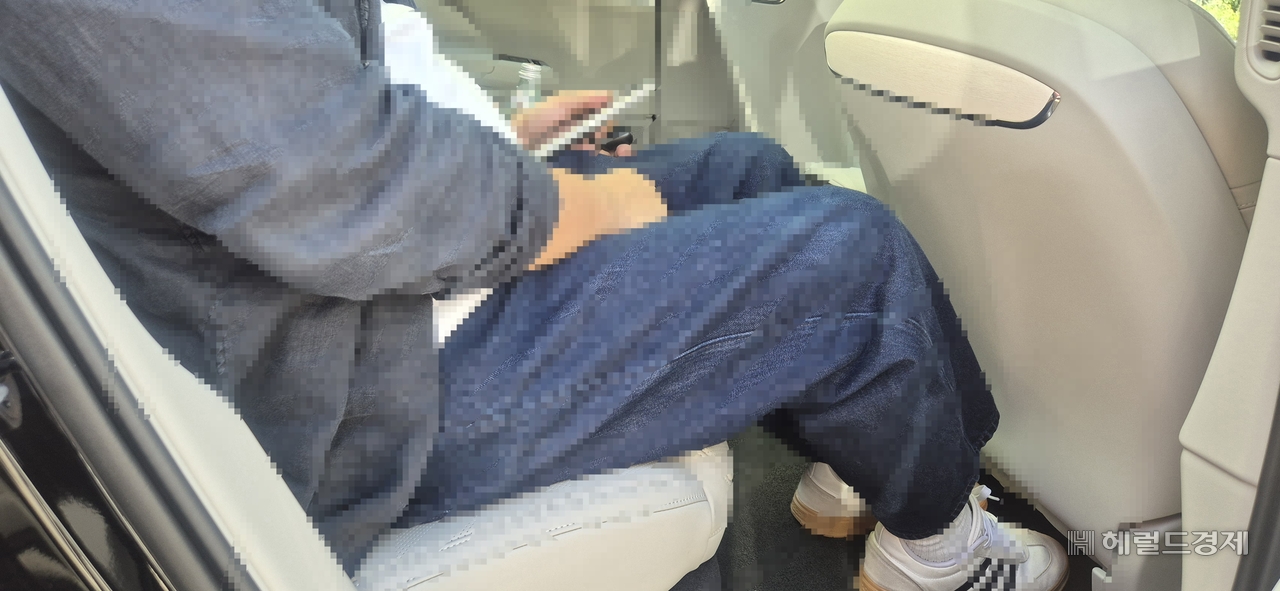
Because the battery pack sits under the floor — raising the floor height — and headroom still needs to be preserved, the seat ends up positioned relatively low. This can push the knees upward and leave the thighs floating slightly off the cushion.
Families with young children may actually find the lower seat height easier for getting in and out, but buyers who expect adults to use the rear seats regularly should try sitting in them before committing to a purchase.
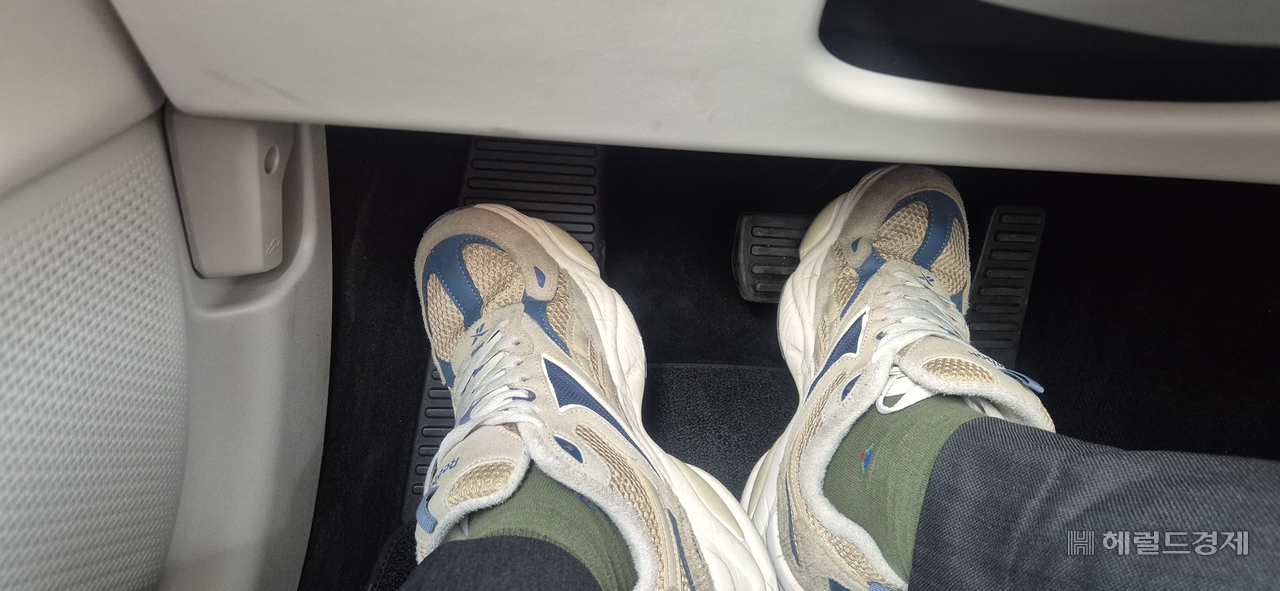
The driver's seat had its own frustrations. Space tightens toward the center console, leaving little room to rest the left foot comfortably. The area around the accelerator and brake pedals also felt somewhat cramped at first.
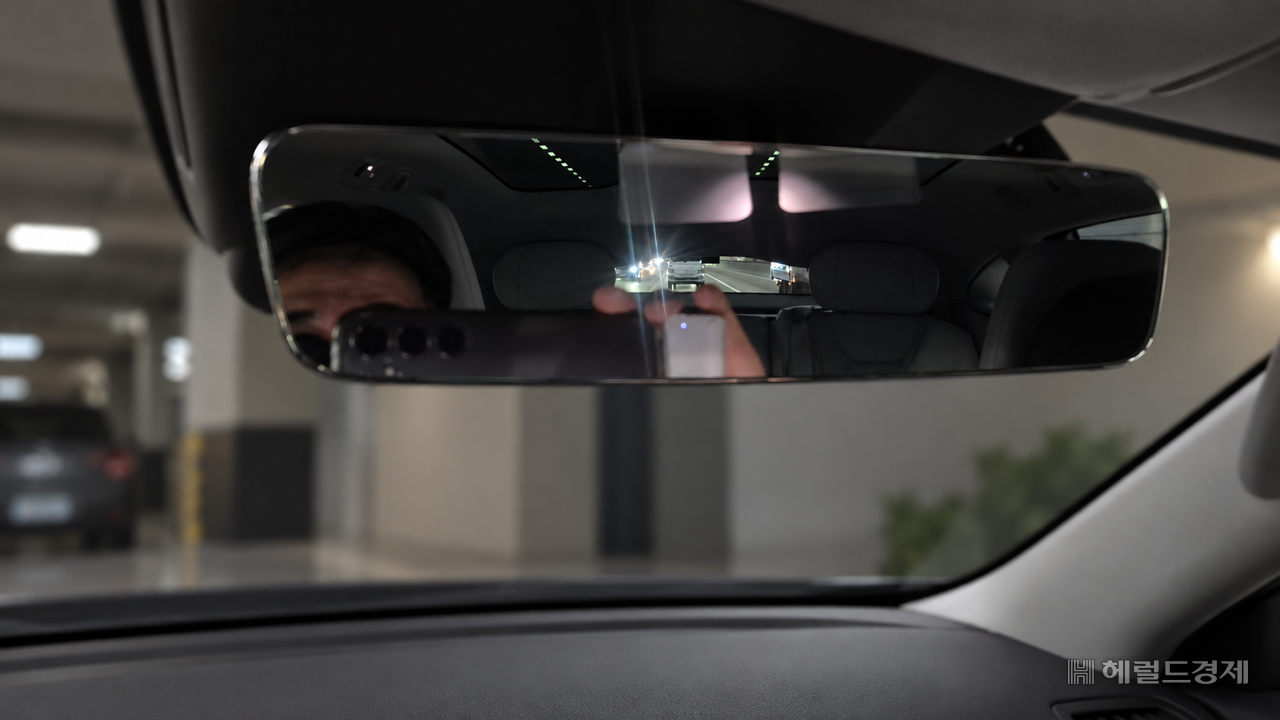
One other quirk took some getting used to: the rear window is small, which limits the rearward view through the rearview mirror.
In the end, you find yourself looking at the price tag again
After the drive, I found myself looking at the price list again. The Single Motor Extended Range Plus starts at 72.94 million won ($52,800), while the Twin Motor AWD Plus begins at 79.6 million won. Ultra trims are priced at 80.55 million won and 87.41 million won respectively, and the top-of-the-range Twin Motor Performance AWD Ultra comes in at 95.41 million won.
Electric vehicle subsidies vary by region, but with combined national and local support of around 2 million won, the effective purchase price of the entry model could fall into the upper 60 million won range — a point that makes the pricing feel genuinely competitive.
Volvo opened pre-orders in late June, and domestic reservations surpassed 3,500 units in roughly two months — a number too large to be explained by brand loyalty alone.
The ES90 also supports up to 350-kilowatt fast charging via an 800-volt electrical system. Under the right conditions, charging from 10 percent to 80 percent takes about 22 minutes.
Choosing a family car always comes down to a familiar dilemma: prioritize ride comfort and quietness and you gravitate toward a sedan; think about children and luggage and you end up back at an SUV. The ES90 offers a persuasive answer to that dilemma.
kwater@heraldcorp.com