PPP's 'blank budget' claim disputed
104.4 trillion won to be held as reserve
Budget-before-legislation, feasibility waiver rows also rebutted
Standoff intensifies ahead of Wednesday deadline
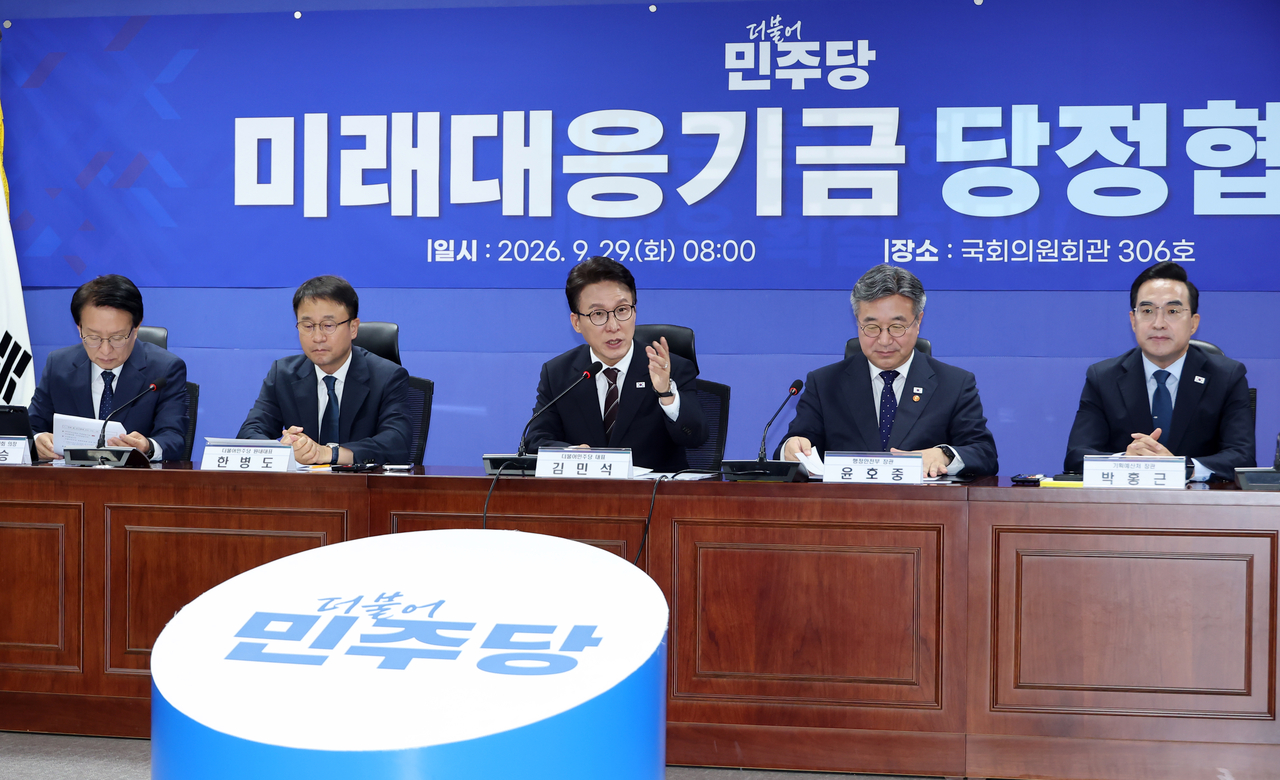
The Democratic Party of Korea has directly rebuffed the People Power Party's demand to eliminate the 162.3 trillion won ($121 billion) Future Response Fund in its entirety, saying the opposition's objections to the fund's financing and project procedures fail to account for established budget practices and the fund's actual operating structure.
Democratic Party floor spokesperson Jeon Eun-su said in a written briefing Sunday that the PPP's stated grounds for a full cut are "nothing more than a political offensive that ignores longstanding budget practices and the fund's structure."
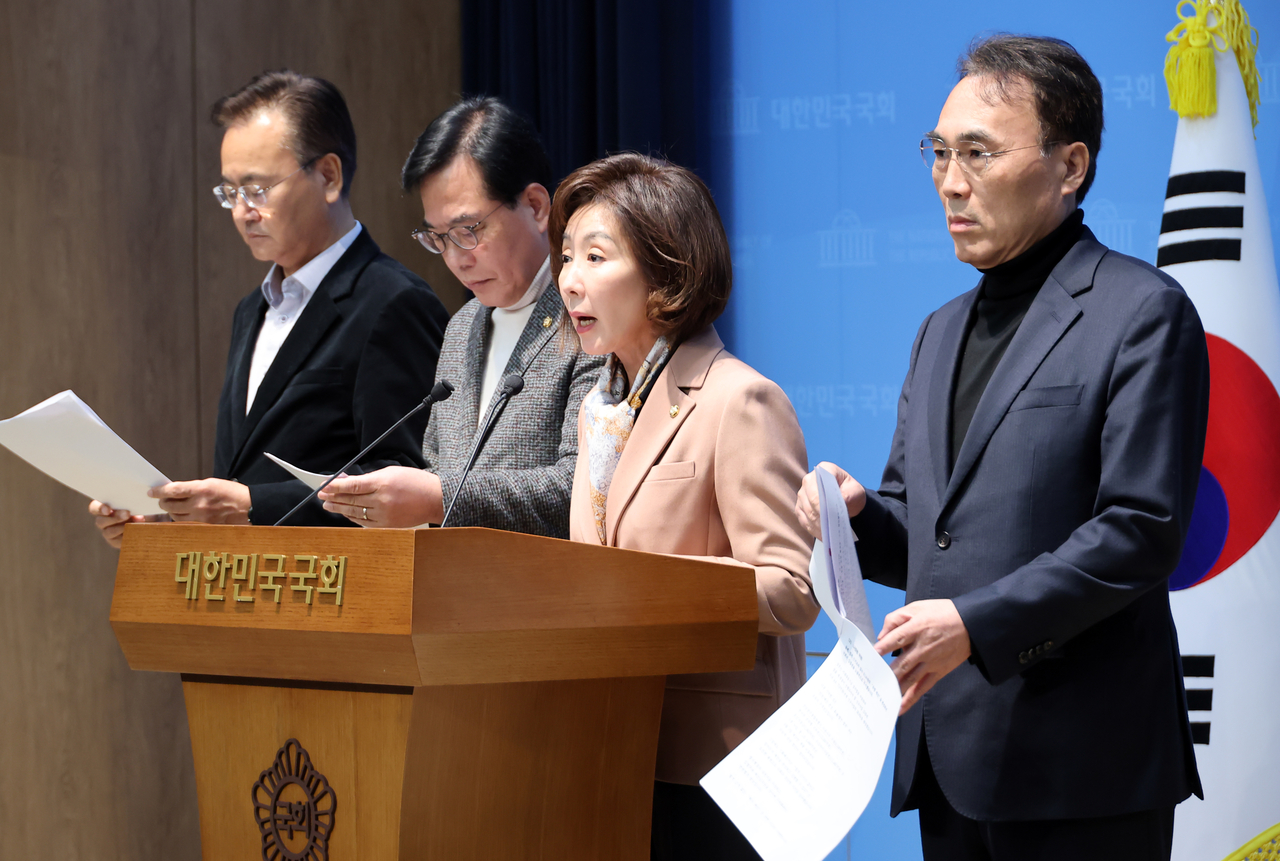
The PPP had argued that while 20.8 trillion won was allocated across 79 new projects under the Future Response Fund, a significant number lacked proper legal basis or feasibility reviews. The party particularly objected to projects for which budgets were drawn up before enabling legislation was in place, or for which preliminary feasibility studies were waived, and called for the fund to be cut in full.
The Democratic Party pushed back first on the so-called budget-before-legislation issue, saying similar precedents existed in the past. Jeon cited the local extinction response fund included in the 2022 budget and the basic pension in the 2014 budget as examples.
Jeon then listed support for the administrative transfer to the proposed South Jeolla Province-Gwangju integrated special city, a marriage support grant and the Child Independence Fund as key projects that must move forward next year.
"If we leave the budget empty while waiting for bills to pass, what happens to support for the integrated special city next year, and to support for newlyweds and children?" Jeon said.
The party also rebuffed criticism that many projects were included without completing preliminary feasibility studies. Although a 2020 revision to the National Finance Act tightened the review process for feasibility-waived projects, the Democratic Party said precedents existed even after that revision in which budgets were drawn up before such reviews were completed.
On that basis, the Democratic Party said the PPP was applying a different standard to the Future Response Fund than it had applied in the past.
The party also drew a line on concerns about the long-term sustainability of the fund's financing. The PPP has argued that because the fund relies on a temporary surge in tax revenue driven by factors such as a semiconductor boom, securing project funding after 2029 could become difficult.
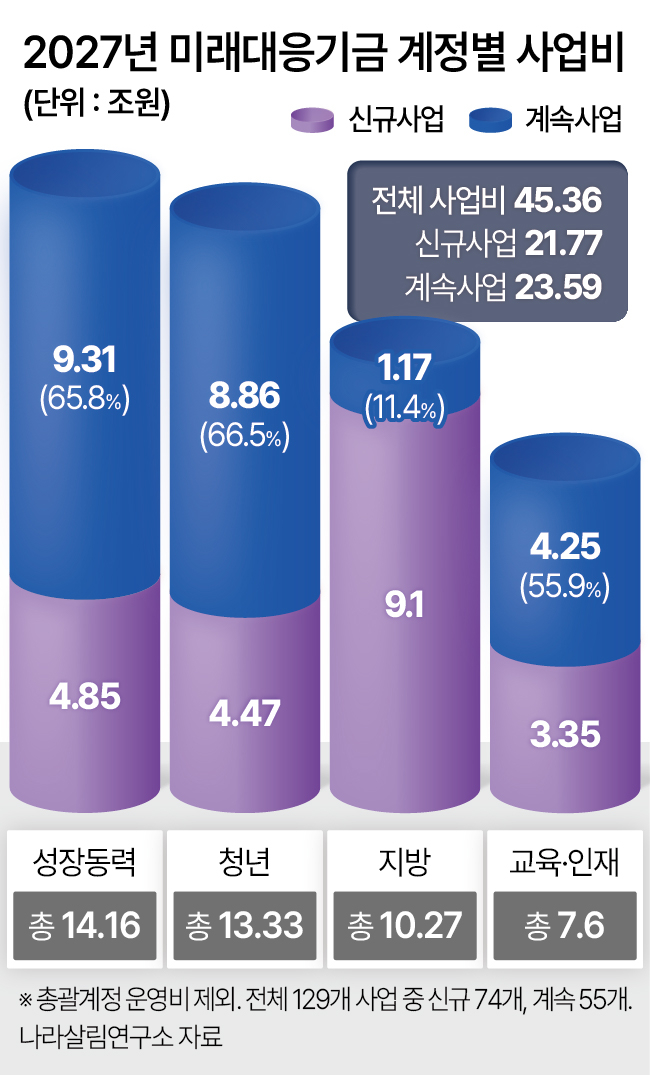
In response, the Democratic Party said the full 162.3 trillion won would not be spent on projects immediately. Of the total, 104.4 trillion won would be set aside as a reserve to be drawn on when fiscal conditions deteriorate, the party said.
"The claim that funding will dry up after 2029 because the fund relies on temporary tax revenue shows a failure to understand the fund's structure," Jeon said. "Of the 162.3 trillion won in the Future Response Fund, 104.4 trillion won will not be spent on projects — it will be held as a reserve."
"The fund's purpose is to break the vicious cycle of cutting spending every time tax revenue falls short, which only deepens economic downturns," Jeon added.
The Future Response Fund has emerged as the central flashpoint in deliberations over next year's budget. The ruling and opposition parties are continuing last-minute negotiations over fund-related projects that the National Assembly's budget subcommittee failed to resolve.
Meanwhile, National Assembly Speaker Jo Jeong-sik on Friday designated 49 revenue-related bills as budget-linked legislation, including the bill establishing and governing the Future Response Fund. A bill to revamp the formula for calculating local education finance grants was also included. The National Assembly must pass next year's budget by Wednesday.
With the budget deadline approaching, the Democratic Party said the PPP should withdraw its demand for a full cut and engage in deliberations on the basis of specific, substantiated grounds.
"We ask that they set aside the baseless call for a full elimination and come to the review process with reasoning the public can accept," Jeon said.
kwater@heraldcorp.com