

"People over 40 are banned from hoodies, banned from Seongsu-dong, banned from Uniqlo, Crocs and iPhones."
That is the gist of a so-called "40-and-over banned list" that recently circulated on South Korean online communities. The post enumerated items — from hoodies and miniskirts to specific brands, smartphone models and neighborhoods — that people in their 40s supposedly should avoid. It spread rapidly, racking up more than 610,000 views and drawing over 570 comments as of Monday.
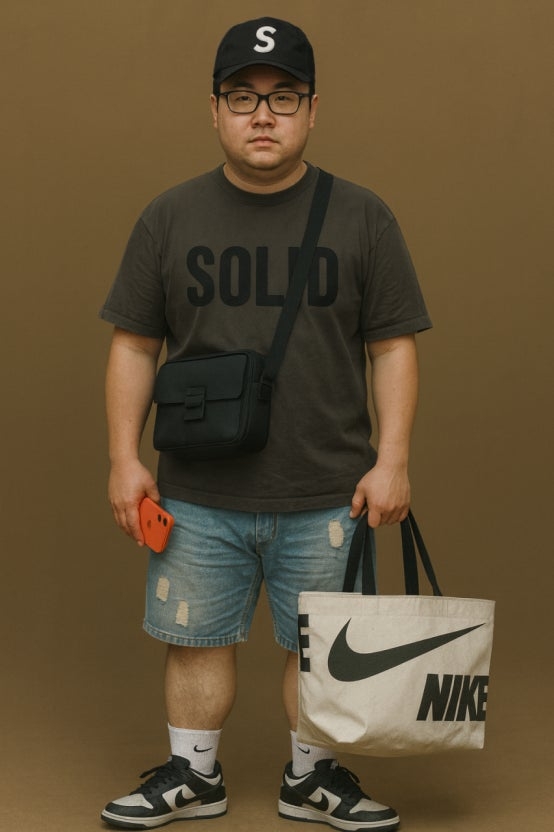
The joke has a clear target: middle-aged Koreans who follow youth fashion and culture, a group now labeled "young forties," or "yeong-poti." What began as gentle ribbing has escalated into a kind of generational dress code — the idea that what you wear and where you go must match your age.
The term originally described 40-somethings with a youthful sensibility and strong spending power. Online, however, it has shifted into a sneer at middle-aged people seen as straining to keep up with younger trends. As iPhones, certain fashion brands and places like Seongsu-dong became shorthand for the "young forties" type, individual taste has been turned into a yardstick for judging an entire generation.
The deeper concern is that satire aimed at specific behavior can slide into hostility toward an entire age group. Criticizing an authoritarian attitude or a failure to communicate across generations is fair. But labeling someone a "young forty" simply for wearing a hoodie or visiting Seongsu-dong moves beyond behavioral critique into exclusion based on age alone.
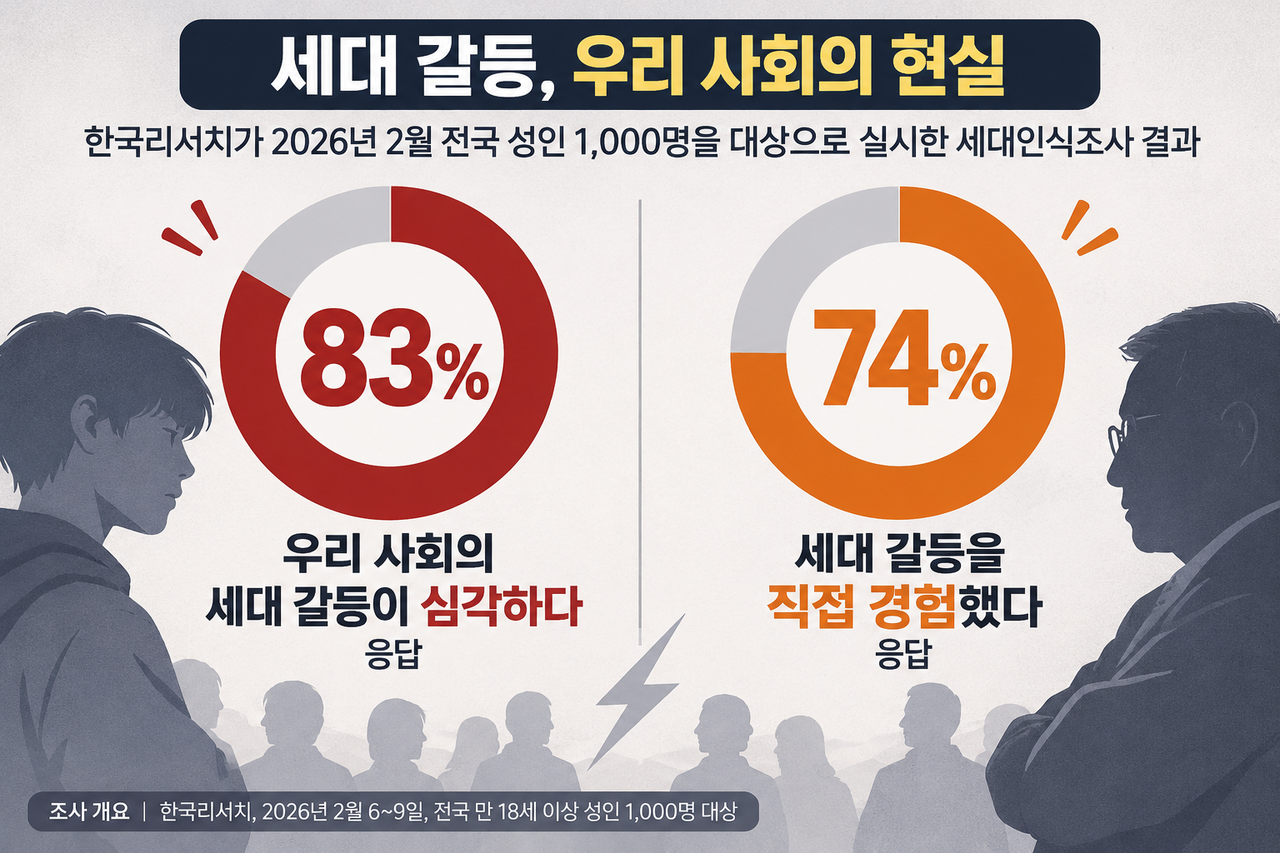
Survey data suggest the underlying tension is real. In a generational-perception survey conducted by Korea Research in February this year among 1,000 adults nationwide, 83 percent of respondents said generational conflict in South Korean society was serious, and 74 percent said they had experienced it firsthand.
Many also reported difficulty communicating across generational lines. Some 44 percent said they found it hard to talk with younger generations, and the same share said collaboration was difficult; 38 percent said the same about talking with older generations, and 39 percent about working with them. More than half — 53 percent — believed their own generation was viewed negatively by others. People in their 20s and those in their 40s and 50s each identified the other as the group most likely to hold a negative view of them.
Mainstream media, not just social media, bears responsibility for deepening the divide. In a 2025 survey of 1,000 adults by the Korea Press Foundation's Media Research Center, 82.3 percent said generational conflict in South Korea was serious. Some 74.1 percent said news coverage was stoking that conflict. While 66.8 percent said media reporting helped them understand generational differences, only 47.4 percent said it strengthened bonds between generations.
Online memes compress complex social phenomena into short, provocative phrases. Labels like "kkondae," "MZ generation" and "young forties" may seem to explain generational traits neatly, but they also erase individual differences and reinforce stereotypes — reducing one person's behavior to a trait of an entire cohort, then feeding that caricature into a cycle of mockery.
A statistical review published in the winter 2025 issue of a Korea Employment Agency for the Elderly journal warned that online generational discourse can widen the distance between age groups. When generational labels are used repeatedly, a specific age bracket becomes fixed to a single image, making the differences between generations appear larger than they actually are.
Experts point to online platforms and media as key drivers of the exaggeration and entrenchment of generational conflict. Lee Ha-na, a research professor at Ewha Womans University's Institute for Age Integration and Aging Society, wrote in the winter 2025 issue of "Life and Work in an Aging Society," published by the Korea Employment Agency for the Elderly, that terms such as "kkondae," "MZ generation" and "young forties" are "turning into the language of prejudice, locking specific age groups into fixed images." Casual jokes in online communities, Lee noted, get repackaged by news coverage as emblematic examples of generational conflict, and emotionally charged, adversarial content spreads further through algorithms.
Lee called on media outlets and platforms to develop guidelines that reduce content mocking or caricaturing specific generations. Lee also stressed that structural issues — youth employment, retirement-age extension and welfare fiscal policy — should be framed as challenges for society as a whole to solve, rather than blamed on any single generation. Expanding intergenerational joint projects and mutual mentoring programs in communities, schools and workplaces, Lee added, would create more opportunities for direct communication across age groups.
123@heraldcorp.com




