Cumulative application would bring 65-retirement benefit to those born in 1973
Five years with no mandatory retirees projected between 2029 and 2037
Wage reform exemptions, rehiring criteria need revision, federation says
Youth hiring, labor market inequality seen worsening
South Korea's main business lobby is calling for revisions to the Democratic Party of Korea's retirement age extension proposal, warning that it would concentrate corporate burdens in a short window and reduce hiring opportunities for young workers. Although the plan envisions raising the statutory retirement age to 65 over eight years, the actual method of application could mean some workers reach that benefit in as few as four years, the federation said.
The Korea Enterprises Federation released a report Sunday titled "Problems with the Democratic Party Special Committee's Retirement Age Extension Bill and the Business Community's Views," identifying three areas requiring supplementary measures to ease the burden on companies: the method of applying the new retirement age, wage system reform and post-retirement rehiring.
The bill reviewed by the federation would raise the statutory retirement age by one year every two years starting in 2029, reaching 65 by 2037. It also proposes introducing a one-year rehiring system for retirees from 2028 and applying special exemptions to wage system reform for workers covered by the extension.
The federation's chief concern is how the new retirement age would be applied. If each successive increase in the statutory retirement age is applied repeatedly to workers already on the job, some employees could reach the 65-year retirement benefit far sooner than originally anticipated.
For example, a worker who reaches 60 and has retirement deferred under a newly raised limit of 61 could see retirement pushed back again if the limit rises to 62 before they leave — effectively extending their tenure a second time.
Under this scenario, the Korea Enterprises Federation calculated that the first workers to benefit from a retirement age of 65 would be those born in 1973 — four years earlier than the originally projected 1977 birth cohort. Those born in 1973 would reach 60 in 2033 and, by continuing to receive each successive retirement age increase, could remain employed until 65.
The federation also flagged that this process would produce five years between 2029 and 2037 — once every two years — in which no workers retire at the mandatory age. Fewer natural workforce vacancies from mandatory retirement would reduce companies' capacity to bring in new hires, it said.
The youth job market is already under strain. According to employment data released by the Ministry of Statistics, the employment rate for those aged 15 to 29 stood at 42.9 percent in October, down 1.7 percentage points from the same month last year. The number of employed young people fell for 48 consecutive months.
The federation also warned that the extension could create equity problems based on birth year, not just affect youth employment. Depending on when the retirement age rises, workers of the same age could end up with different actual retirement dates and lengths of employment.
The federation said the special exemption provisions for wage system reform also need to be revised.
The committee's bill includes a temporary measure, effective through 2036, that would ease the procedures required to amend workplace rules when adjusting the job duties, titles or working hours of workers covered by the retirement age extension. Under current law, such changes require the consent of a majority of workers, but the exemption would allow that requirement to be replaced with a consultation process.
The federation said the scope of the exemption is too narrow. Companies that want to adjust the rate of wage increases tied to seniority — without changing job duties or working hours — or shift to a performance-based pay structure would not qualify for the exemption.
According to the federation, workers with 30 or more years of service in South Korea earn 2.95 times the wages of those with less than one year — higher than the ratios in Japan (2.27 times), Germany (1.80 times) and France (1.63 times). Extending the retirement age without addressing this seniority-based wage structure would significantly increase labor costs for companies, the federation said.
The post-retirement rehiring system was also identified as a sticking point. The committee's bill sets rehiring of all applicants as the default, allowing refusal only in limited circumstances such as health problems, loss of required qualifications or serious violations of job duties.
The federation said that excluding job performance and work capability from the primary criteria for rehiring decisions would in effect add another year to the retirement age. It cited Singapore and Japan as examples of countries that incorporate work performance and job capability into rehiring assessments.
In response, the federation called for the retirement age application criteria by birth year to be clearly defined in law and for companies to be given sufficient preparation time. It said companies should be free to choose their own approach to wage system reform based on their circumstances, and that rehiring decisions should be based on objective criteria including job performance and work capability.
The federation particularly stressed that the post-retirement rehiring system should be implemented before the statutory retirement age is raised, giving companies time to adjust their wage structures and workforce plans.
Lee Dong-geun, the Korea Enterprises Federation's standing vice chairman, said the committee's bill "looks like an eight-year phased increase in the statutory retirement age, but in practice the 65-year retirement age would kick in within four years, further squeezing job opportunities for young people who are already struggling." He added that "the benefits of the retirement age extension will be concentrated among full-time workers at large companies and in the public sector, while workers at small and medium-sized enterprises and those in non-regular employment will be left behind, deepening the dual structure of the labor market."
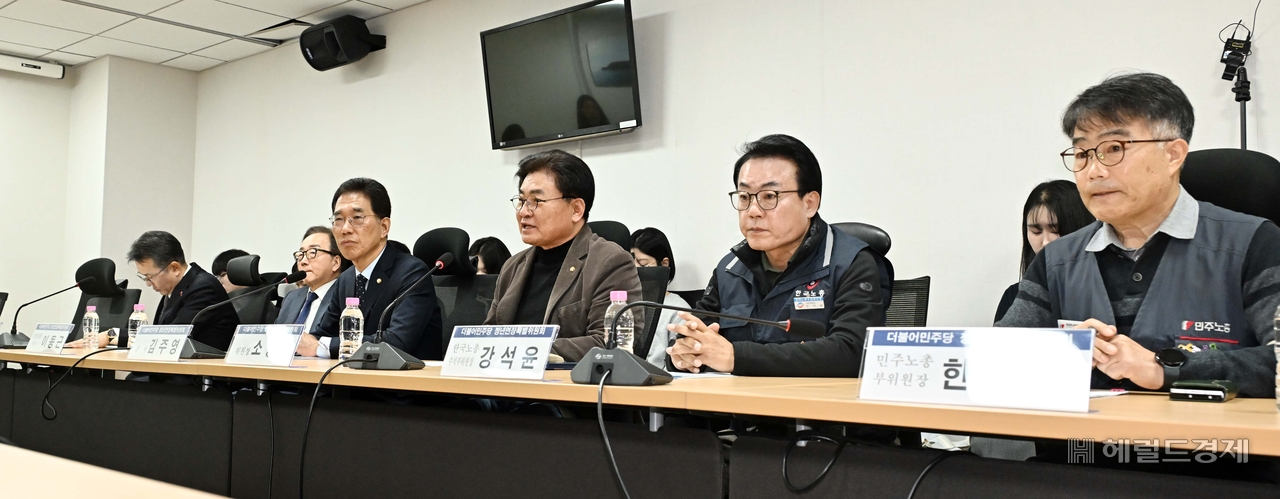
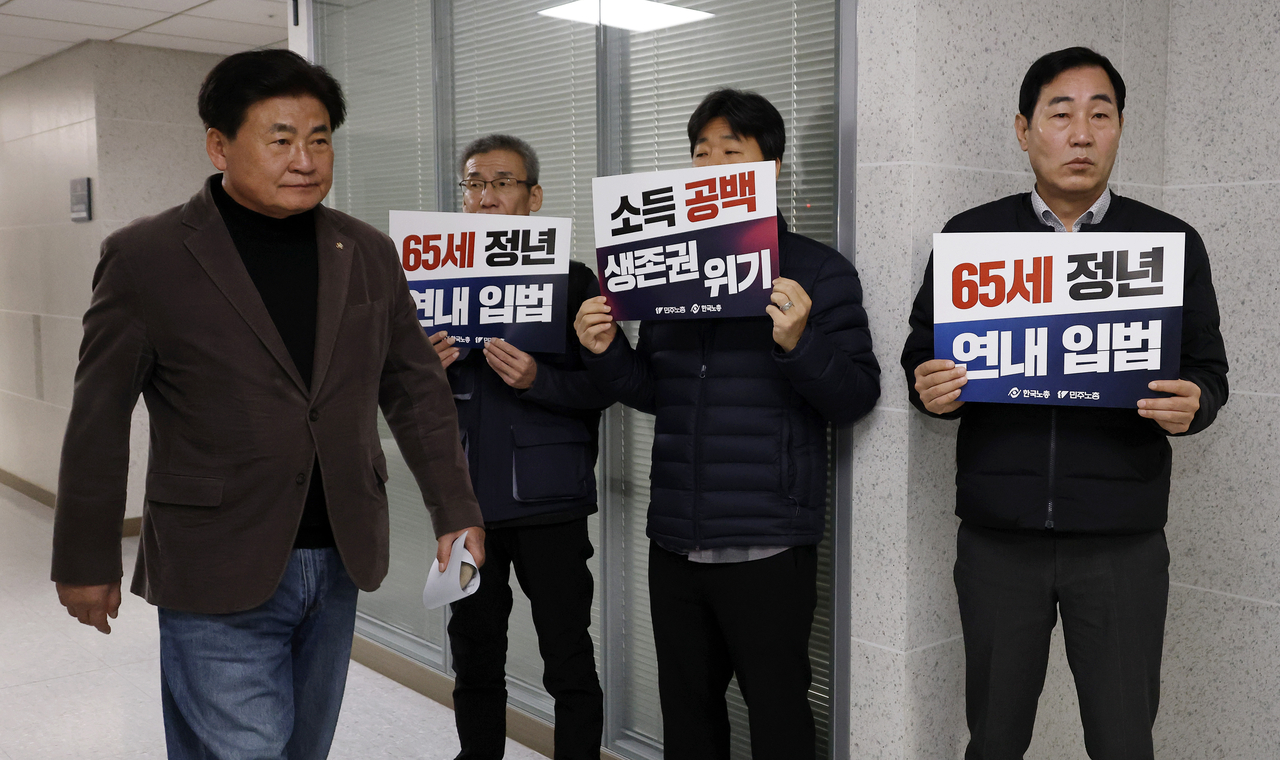
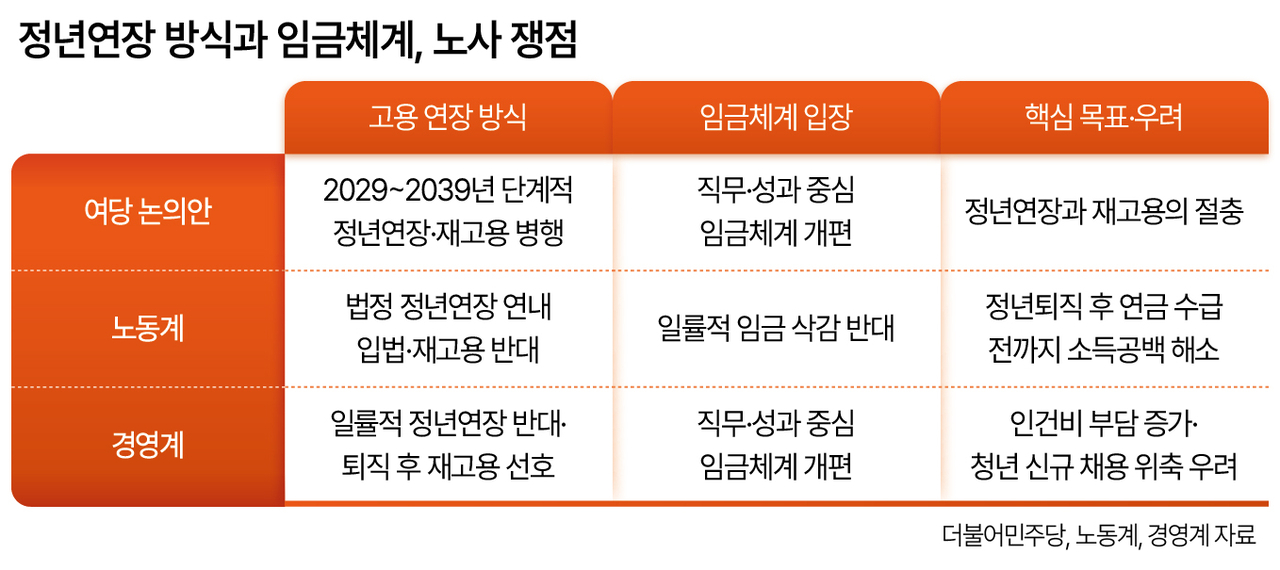
Labor-management disagreements over the retirement age extension persist. The Democratic Party's special committee held labor-management consultations at the National Assembly on Friday but failed to reach an agreement. Labor groups are concerned about income gaps and the possibility of wage cuts, while the business community objects to rising labor costs and a chilling effect on youth hiring.
Lee said the retirement age extension "is a national challenge touching on youth employment, corporate competitiveness, and the pension and fiscal systems — it is not something to be resolved on a deadline set by a special committee of one political party." He called for "discussions at the National Assembly level with both ruling and opposition parties participating, and a social dialogue that includes the voices of those directly affected by the retirement age extension, including young people, to find a sustainable approach to employing older workers."
kwater@heraldcorp.com