Netflix series 'The Blue Road,' starring Son Suk-ku
A breakdown of music director Primary's sound design
'The body display is Shunsuke's other exhibition'
132 bars of psychological tension held together by silence
A woman barely escapes a killer's lair and sprints barefoot into the night. Over the tense percussion of blows and ragged breathing, a piano enters. The camera cuts to a worn cassette tape, then to a newspaper spread open to coverage of the 2002 World Cup opening ceremony and a search operation in the Yangpyeong area. A man sits at ease on the wooden floor of a Japanese-style house, listening to music. The camera pulls back at an angle, giving him only a third of the frame — a shoulder, the back of a head, a pair of hands. The drama withholds his face. It is the closing moments of episode two, as two detectives close in on a series of murders whose victims — their limbs twisted at grotesque angles — have been turning up in Seoul and Tokyo. The show feeds the music straight from the man's headphones into the viewer's ears.
A single B-flat, low in the register, holds for two beats. Three notes then creep upward in hushed triplets and stop on an F. The short, octave-doubled phrase — a sentence with its pitch rising at the end — repeats once more. One beat of silence. Two. Five. The silence swells and tears open. A fortissimo B-flat crashes down across three octaves, and four chords hammer the keys like a sledgehammer. There is no buffer between the whisper and the scream. Chopin's Scherzo No. 2 in B-flat minor, Op. 31, opens with a breathless question and a thunderclap of an answer.
The courtyard is still; the melody is elegant. That stillness is precisely what unsettles. This is the back of the most suspicious figure at the center of a serial-murder story, and the viewer, denied a face, fills in the blank and marks this man as the killer. The 30-second scene — face erased, only hands and sound remaining — is an edit that subtly misdirects the gaze and is itself a question. It is fitting, then, that Chopin called the opening motif of this piece "the question."
The music in that scene is a recording by Czech pianist Josef Bulva (1943–2020). Primary, the music director for the Netflix series "The Blue Road" (eight episodes), said the choice was deliberate. "The fact that the killer is a sound artist was an important reason for selecting this music," Primary told The Herald Business, adding that Chopin's Scherzo No. 2 "has a beautiful and elegant melody, yet within it coexist dramatic tension and unstable emotional shifts."
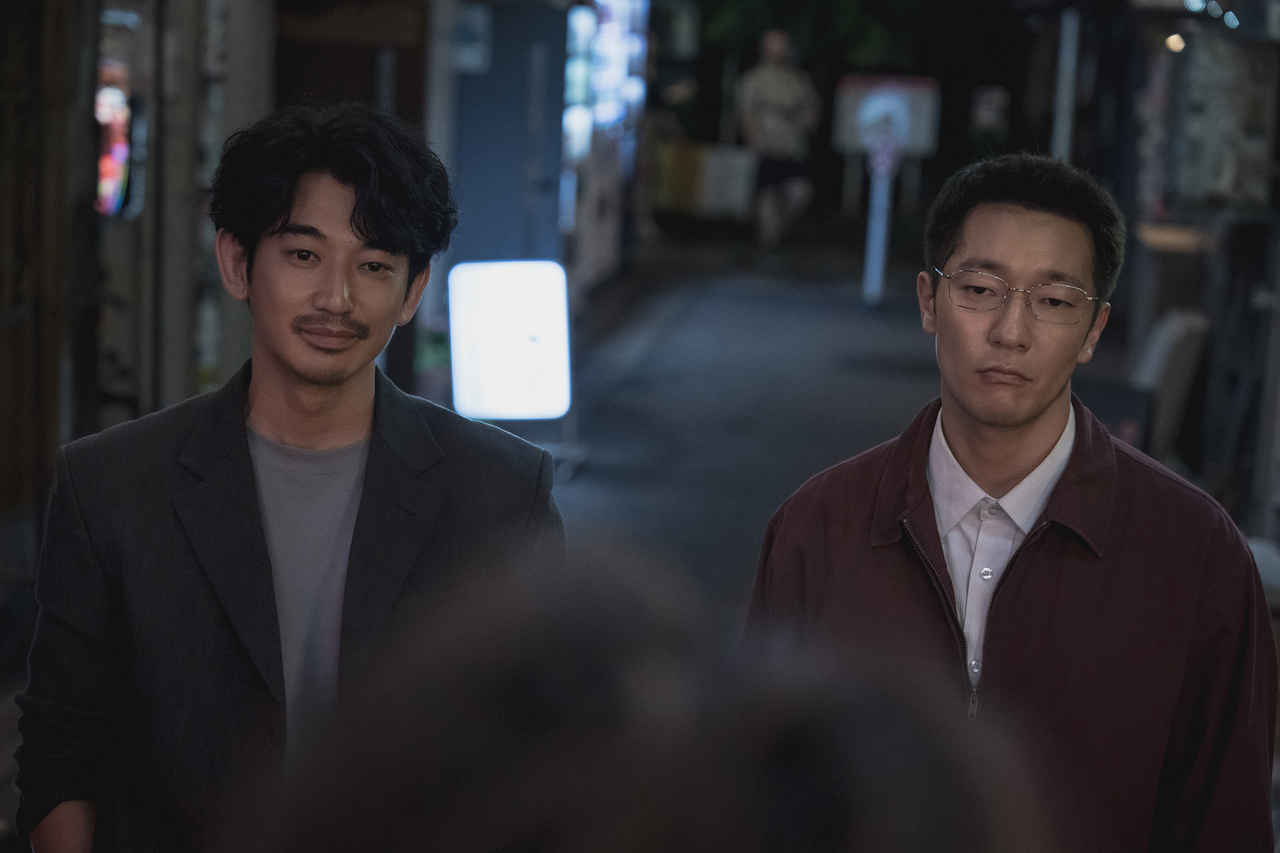
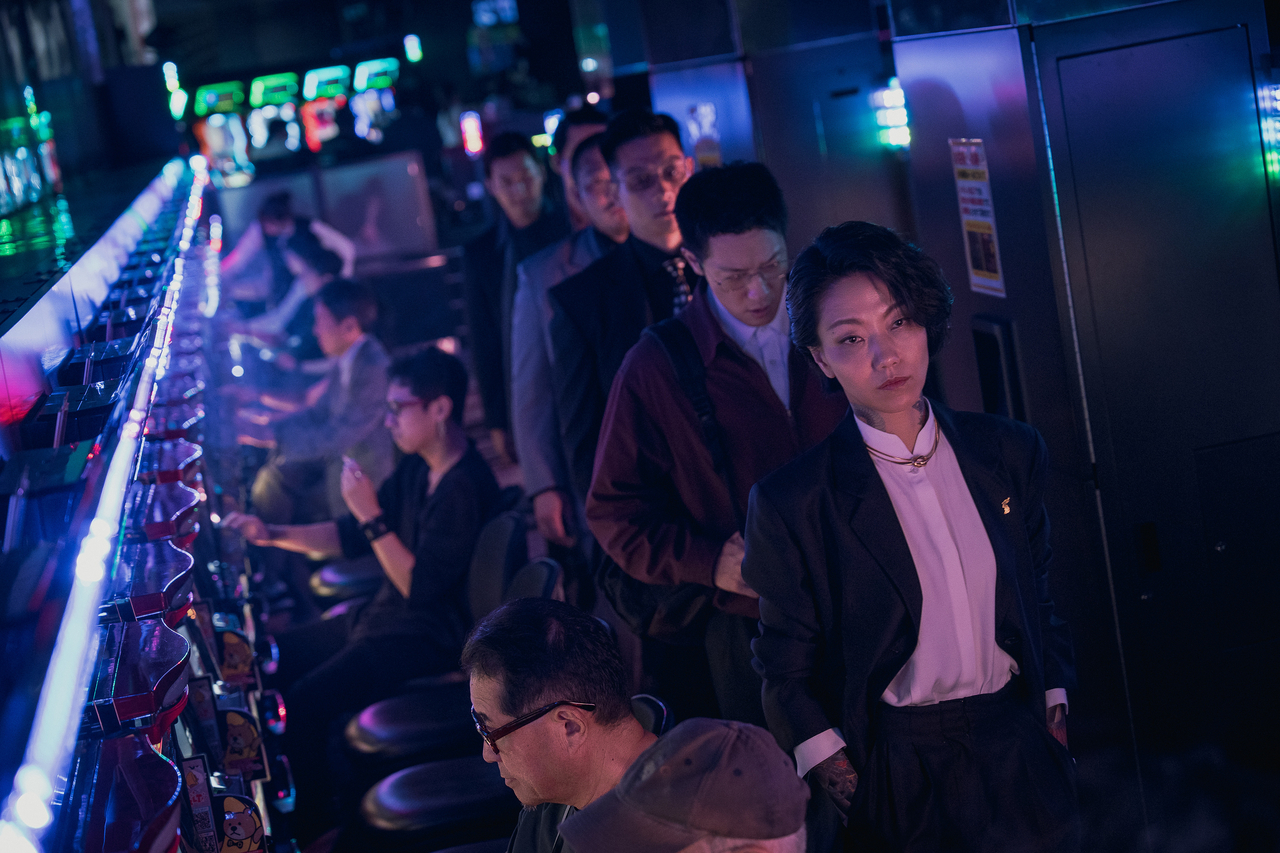
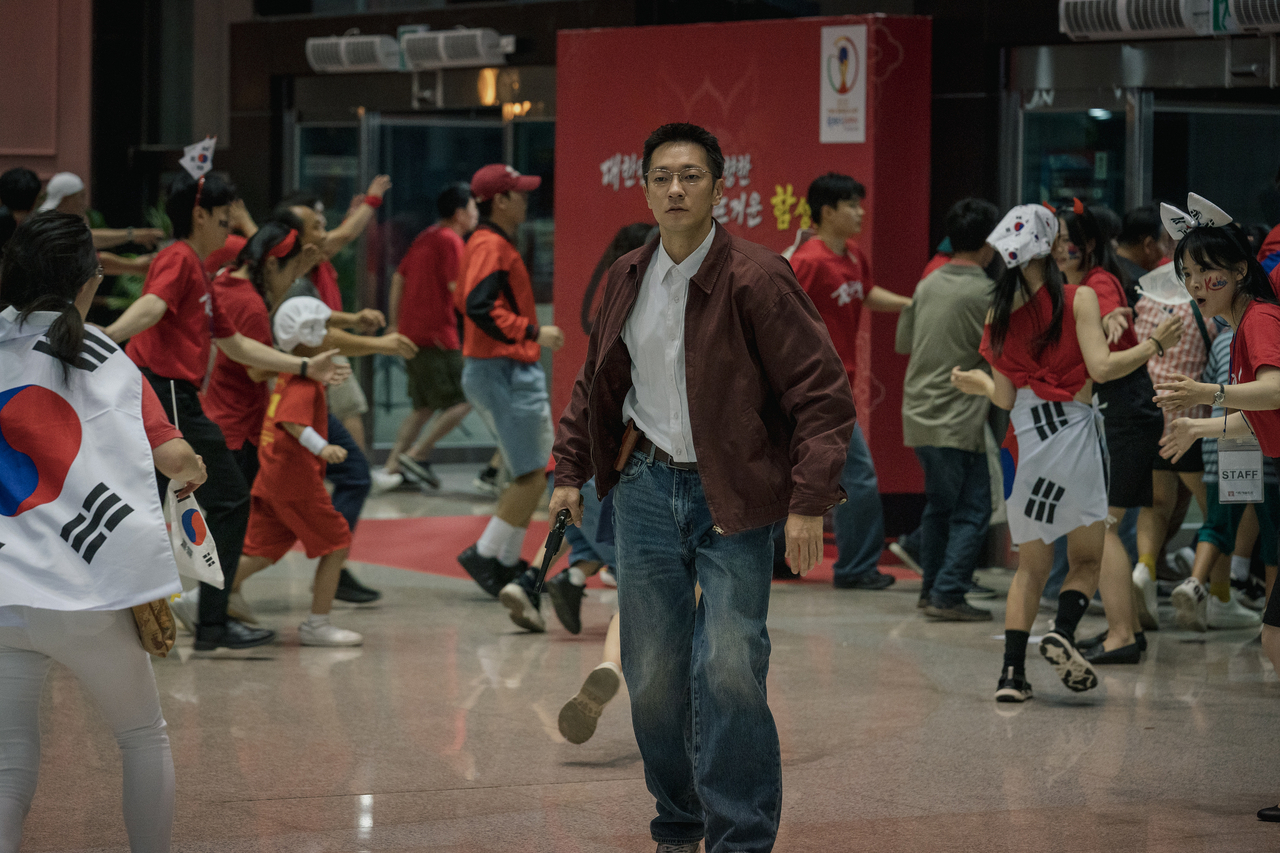
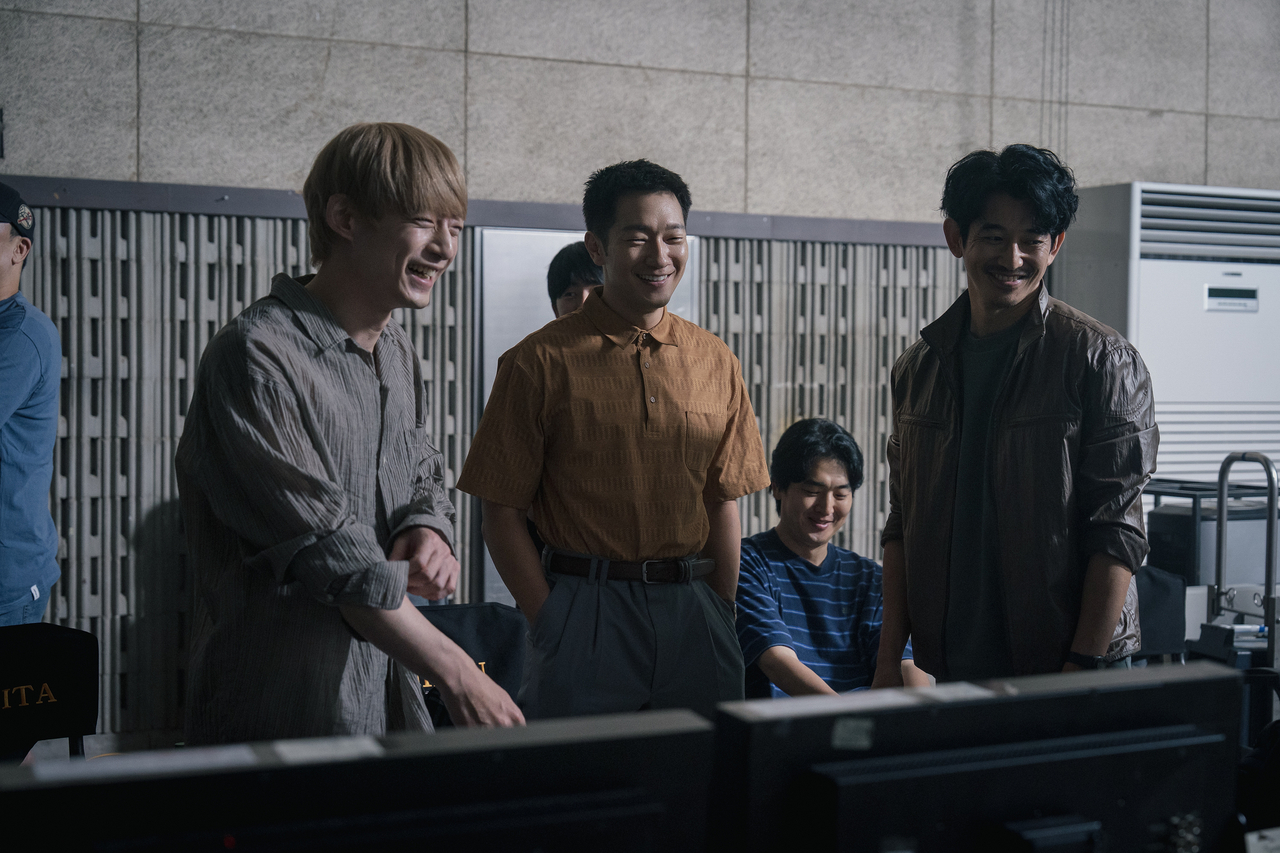
"The Blue Road" follows two detectives — Kim Seok (Son Suk-ku) and Inose (Nagayama Eita) — as they investigate a string of murders around the time of the 2002 Korea-Japan World Cup, the victims' limbs wrenched into unnatural positions. The series is directed by Han Jun-hee of "D.P." and is based on a manga of the same name, written by Edogawa Keishi and illustrated by Kwon Ga-ya, which ran simultaneously in Korean and Japanese magazines in 2002.
The era the show inhabits — a festival of reconciliation and exchange with the violence of modern Northeast Asian history coiled beneath it — mirrors the aesthetic ambivalence of Chopin's music, where beauty and madness uneasily coexist. Emi Shunsuke (Sakaguchi Kentaro), the serial killer's hands-on executioner, is portrayed as a sound artist who plays piano. The Scherzo No. 2 passes by him three times: inside his headphones in his first scene, beside the bodies in the ice factory, and in the memory of the first murder he ever witnessed.
132 bars that open with a question and endure in silence
The first four bars of Chopin's Scherzo No. 2 contain no chords at all — only octave-doubled notes. The score's instruction is "sotto voce" (in a low voice); the dynamic marking is pianissimo. A B-flat is held for two beats, then a triplet climbs within a single beat to land on F. Like a sentence whose pitch rises at the end, the music waits for a reply. The answer arrives only in the fifth bar, as a fortissimo chord.
Chopin was obsessed with those four bars. Wilhelm von Lenz, who studied piano under Chopin in the 1840s, recalled his teacher's lessons in an 1872 article in the Berlin music journal Neue Berliner Musikzeitung. "It must be a question," Chopin insisted — and for him, that question was never soft enough, never curved enough in its rise, never weighty enough. Lenz wrote that Chopin returned to those bars and their repetition again and again, lingering over them at length. He also recalled his teacher saying, "This is the key to the entire piece." Chopin had another way of describing the opening: "It must be a house of the dead (Todtenhaus)."
The German word "Totenhaus" can refer to a place where the dead are laid out. Whether or not the production team had this anecdote in mind, the metaphor Chopin attached to the opening motif in a lesson more than 180 years ago lands with chilling precision in front of the ice factory in "The Blue Road."
The whisper-and-shout exchange plays out once more. From bar 14, a chord in the parallel major — D-flat major — briefly lets in some light, only to plunge back into the minor at bar 18. The chords then dissolve, leaving only a low bass line that seems to end but sidesteps into a deceptive cadence. The same question returns at the close of bar 25, but this time it draws a darker answer.
At bar 49, the music cascades from an F at the top of the keyboard down through a D-flat major arpeggio. The melody slides down by half-steps, like a cloud shadow crossing a clear sky. As the key climbs step by step, the left hand rolls arpeggios without pause; a suspension — a note outside the chord that holds for a moment before resolving — pulls the melody along like a sigh. After a bright arpeggio ripples through, the music reduces to a single D-flat and rests in silence for two bars before falling back, at bar 133, to the opening question.
At a standard tempo, those 132 bars last somewhere between one minute 20 seconds and one minute 30 seconds. "The Blue Road" gives the viewer exactly 30 seconds — the overwhelming opening of the Scherzo No. 2 as heard through headphones — before layering in the sounds of the outside world: a woman's distant scream, the creak and groan of a Japanese wooden house. The viewer, eavesdropping on the scene of a murder, feels dread in Shunsuke's ease and composure as he sits absorbed in Chopin's elegant melody, and can only conclude that this man is the killer.
The composer Robert Schumann compared the piece to Byron's poetry, writing that it "overflows with tenderness and boldness, love and contempt." Despite a title that means "joke" in Italian, Chopin filled the scherzo not with laughter but with questions, silences and answers. The piece was published nearly simultaneously in Paris, Leipzig and London in late 1837 — the year his engagement to Maria Wodzińska quietly fell apart.
Twisted bodies in the ice factory, a distorted Chopin melody
The same piece returns while Shunsuke is being questioned by police. This time it does not come through headphones. Kim Seok and Inose stand before an ice factory where bodies with joints bent backward are on display, and Chopin reaches them with notes that sag, stretch and blur. Because the melody was so crisp in the headphone scene of episode two, the distorted version triggers the uncanny — the eerie sensation of something familiar made strange — and burrows deeper as a result.
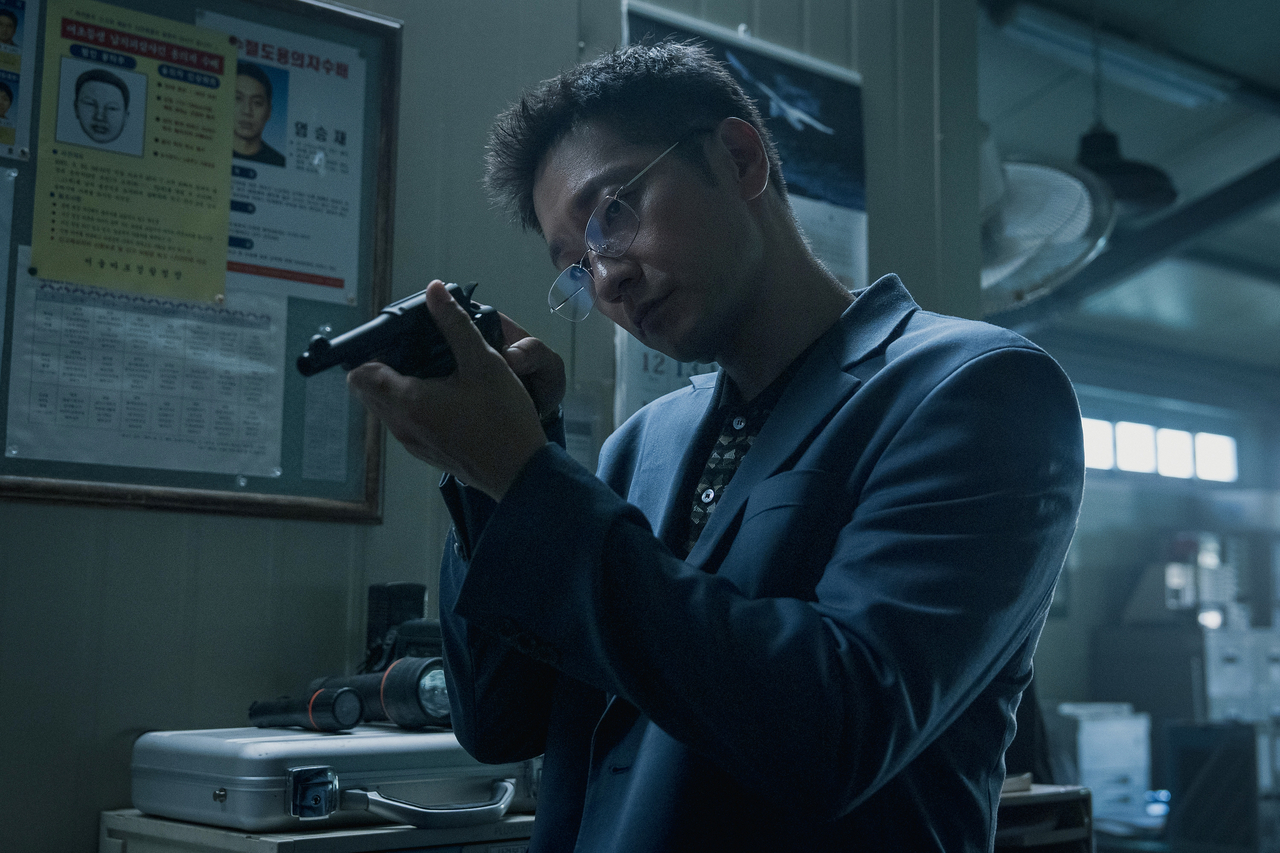
Primary said the dual nature of the music was what drew attention from the outset. "I thought this ambivalence in the music resembled a character who simultaneously possesses the delicate sensibility of an artist and the unstable inner world of a killer," the music director said. That is why the Scherzo No. 2 became more than background music for a murderer — it became a piece that could "metaphorically reveal the character's personality and inner life."
The guiding principle of the transformation was not deconstruction but distortion. "I tried to preserve the beautiful melody and musical flow of the original as much as possible," Primary said. "Instead, I created a grotesque and unsettling atmosphere through sound manipulation — stretching certain passages and subtly warping the tone." The idea was that a familiar, beautiful piece of music growing gradually strange mirrored the character's unstable interior.
The work began with Bulva's piano recording. Using a sequencer, Primary altered the pitch and timing of the recording, then built a foundation of synthesizer sounds and layered effects on top: tape delay, which makes sounds repeat as if a cassette tape is stretching; reverb, which adds the resonance of a space; overdrive, which deliberately distorts the tone; and pitch modulation, which makes the pitch waver. "I shifted the pitch slightly off-center, warped the sound, and stacked layers of reverb," Primary said.
The dissonant result came from placing Chopin's notes — deliberately detuned to drift out of tune — over a synthesizer bed. In a sense, it inverted the instruction Lenz recorded from Chopin. The question that Chopin had wanted softer and more gently curved was stretched, twisted and acoustically decayed.
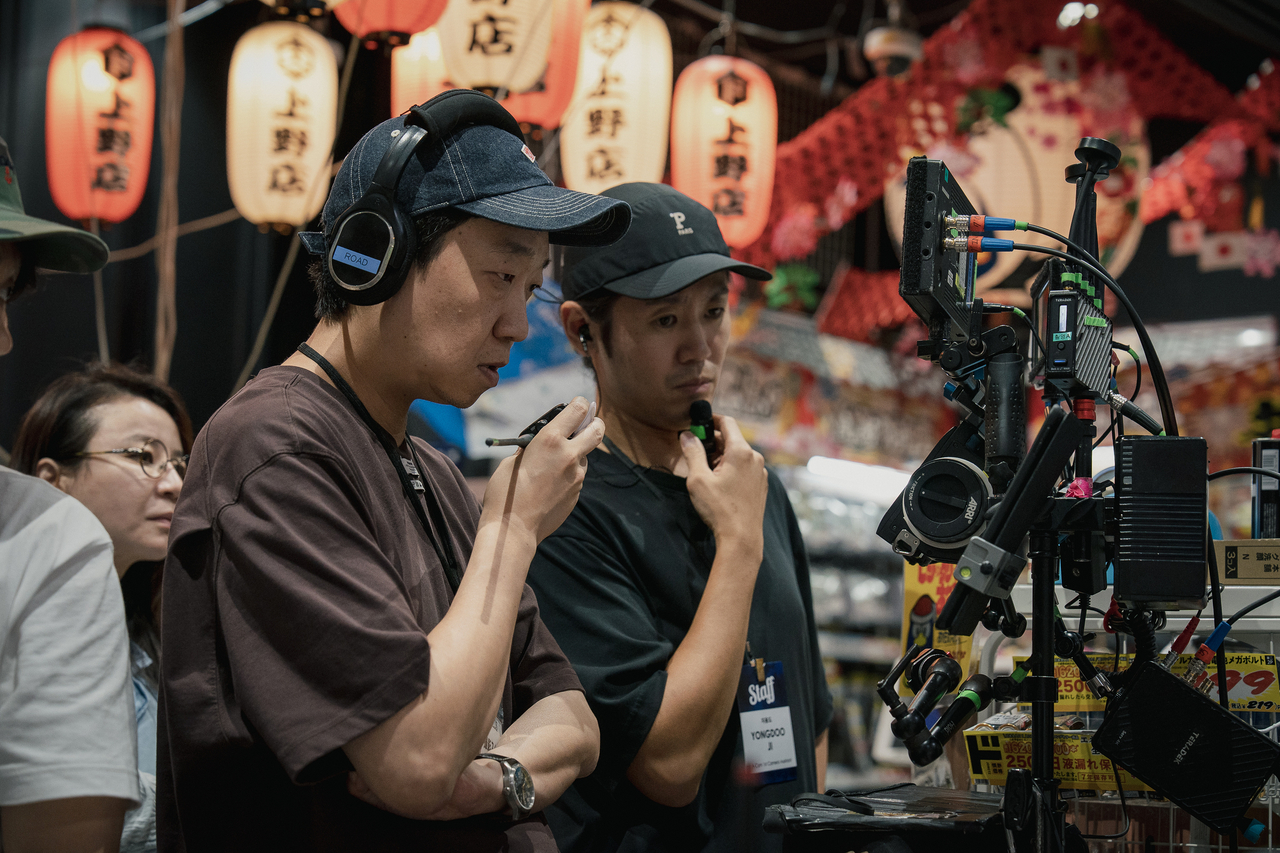
Director Han Jun-hee said he does not know classical music well and merely felt the piece was a good fit, leaving the selection and transformation to the music director. His own directorial principle, however, was clear. "From the storyboard through to the edit, I wanted to minimize scenes that directly show physical mutilation," Han said. "I tried to convey it through sound or other means instead." What the camera withheld, the distorted Chopin supplied.
Primary's interpretation of the scene went further. "There was originally a scene of Shunsuke playing the Scherzo No. 2 himself — it was cut in editing," the music director said. In the final version, the hands on the keys are gone; only the back of a figure in headphones remains. "I thought of the body display as Shunsuke's other exhibition," Primary said. "As a sound artist, he is presenting an installation using corpses as if displaying his own work, and I interpreted the Scherzo as one element that makes up that work."
The ice factory is transformed from a crime scene into a gallery. The blurred Chopin becomes an acoustic docent addressing the visitors to a grotesque installation of the dead. The effect of the melody growing progressively more distorted as it approaches was also intentional. "I wanted to express in music the moment when the message Shunsuke was trying to convey through his work reaches Kim Seok and Inose," Primary said. "I intended it to feel as if the message Shunsuke left was seeping into the two characters through the music."
The scherzo plays once more in episode eight — the moment a young Shunsuke watches Seo Hyeon-tae (Jung Jae-young) arrange a body with its joints bent and smiles. An elegant melody settles over a face that should register horror. Taken together across its three appearances, the piece becomes a chronicle of one character. The Chopin heard through headphones in episode two is the killer's taste; the distorted Chopin in the ice factory is the killer's work; the Chopin in episode eight is the origin of that work. The boy who listened to music grew into a killer who speaks through it.
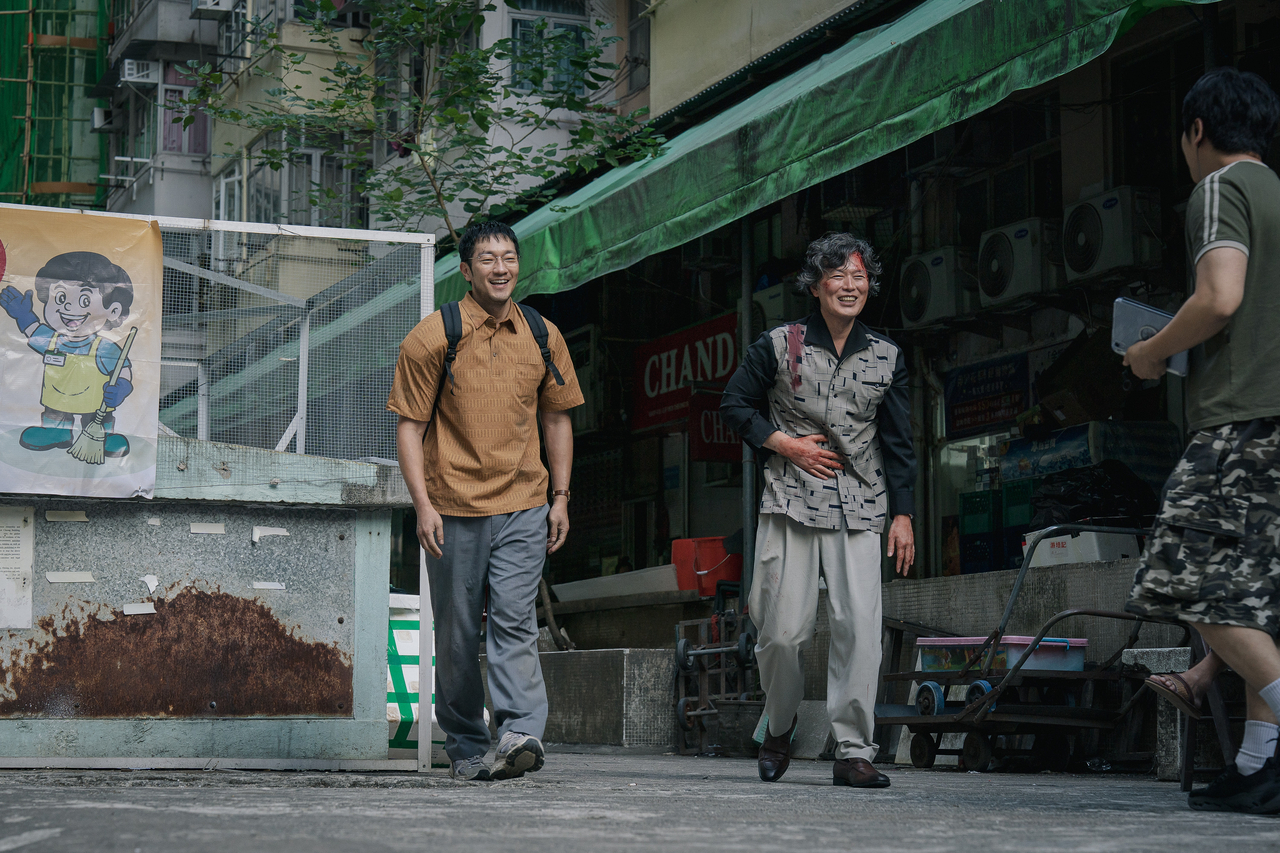
The precise notes left behind by 'a pianist of the scientific age'
The pianist behind the recording Primary chose is a name unfamiliar to most Korean listeners.
Josef Bulva was born in Brno, Czech Republic, in 1943. At his debut at age 13, he performed works by Mozart, a Liszt étude and Brahms's "Paganini Variations." At 21 he became a national soloist of Czechoslovakia. In 1971 a mountaineering accident left him with roughly 50 broken bones and kept him hospitalized for nearly a year. The following year, during his first overseas tour, he defected to the West, was charged with treason in his home country, obtained Luxembourg citizenship and based himself in Munich.
Bulva summed up his own creed as "natural musicality, taste, knowledge of one's craft, and discipline." He asked for nothing beyond respecting the score and rendering it without exaggeration. What set him apart most sharply from other pianists was his use of the grand piano's middle pedal — the sostenuto pedal. By using it to sustain only selected notes, he brought transparency to passages where multiple voices intertwined. German critic Joachim Kaiser called Bulva "a pianist of the scientific age," writing that "the masterworks appear in new clothes." Others criticized what they heard as analytical detachment and a lack of Romantic feeling, particularly in his Chopin.
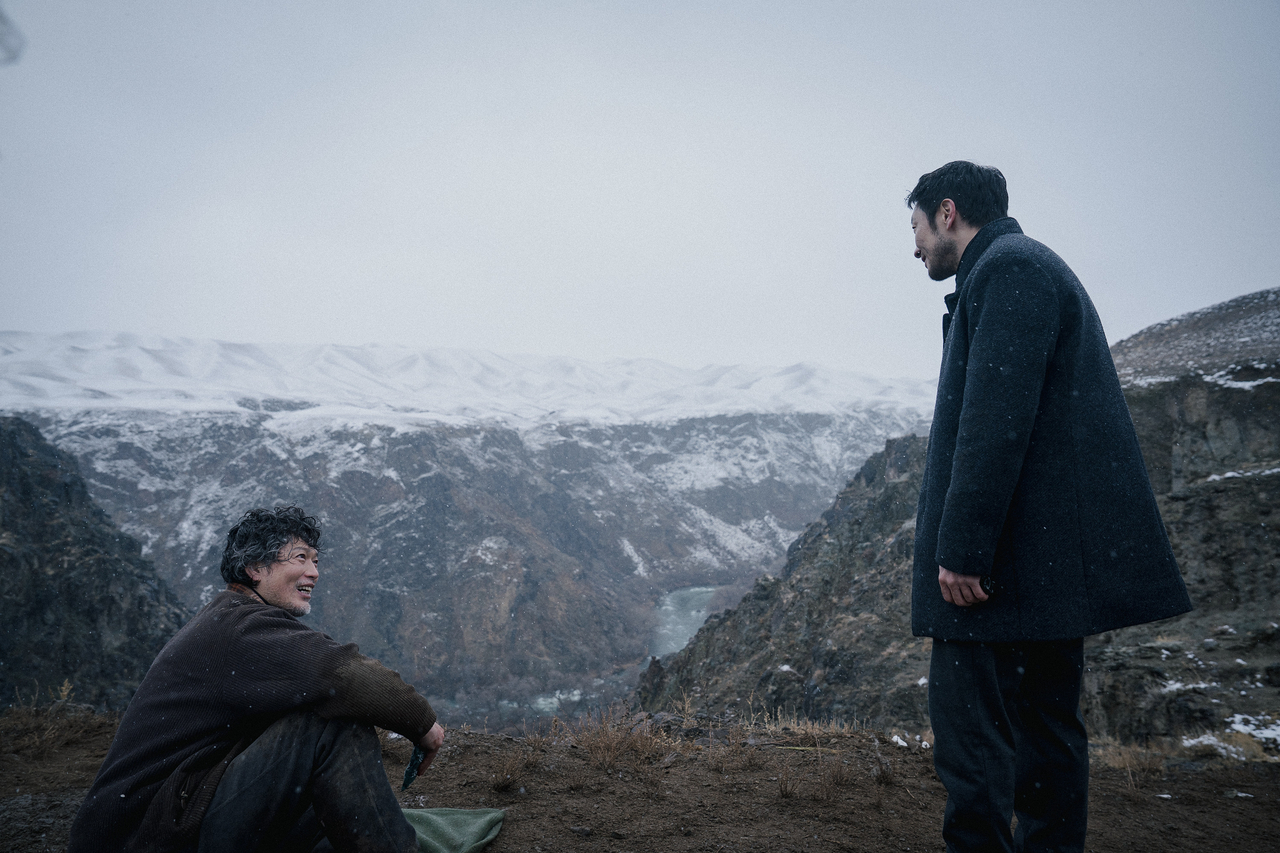
That "coldness" proved to be the sharpest weapon in the drama's arsenal. Notes stripped of sentiment, with each voice clearly defined and unsmeared, meant that when a sequencer shifted the pitch and stacked reverb on top, the texture of the dissonance — exactly where and how the sound had been bent — registered in the ear immediately. Bulva recorded the piece at least twice. His 1987 RCA recording runs 9 minutes 33 seconds; a recording released in 1991 runs 10 minutes 41 seconds.
Bulva's biography carries its own story of hands. In March 1996, he slipped on an icy street in Ostrava, Czech Republic, and badly cut his left hand on a beer bottle buried in the snow. Told the injury was irreparable, he moved to Monaco and worked as a financial investor. After surgery and a long rehabilitation, he returned to the keyboard 13 years later. He died in August 2020. A recording by a pianist who nearly lost his hand now plays over a close-up of someone else's hands — and became the theme of a killer who breaks joints.
The Chopin in "The Blue Road" never fully breaks. Even stretched and bent out of shape, the melody first heard through headphones remains clearly audible within the distortion. The music is ruined without being ruined. The ear still recognizes the beauty, but that beauty no longer sounds safe. "Rather than completely dismantling the original, I focused on making a strange discomfort felt within its inherent beauty," Primary said.

shee@heraldcorp.com