
- New drug candidate selectively reactivates dormant bacteria to restore antibiotic effectiveness
- Efficacy confirmed in three animal infection models, including sepsis and pneumonia
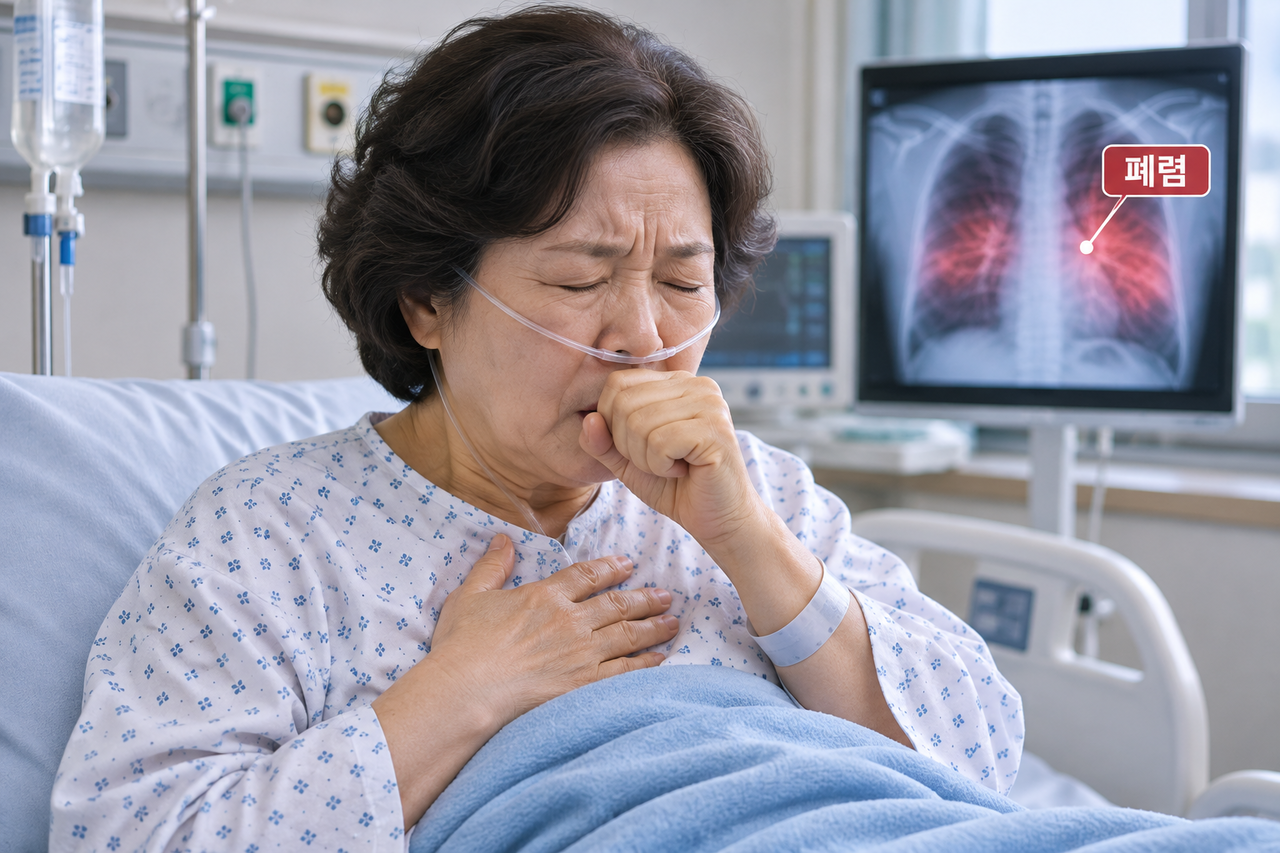
South Korean researchers have developed a new treatment strategy that wakes dormant bacteria hiding inside the body — bacteria that evade antibiotics by entering a kind of hibernation — and then eliminates them. Rather than developing new antibiotics, the approach restores the killing power of existing ones, potentially opening a new path for treating chronic and relapsing infections that have long resisted conventional therapy.
The Korea Research Institute of Bioscience and Biotechnology announced Friday that a research team led by Dr. Ryu Choong-min of its Infectious Disease Research Center, working jointly with Dr. Lee Hyeok of the Korea Research Institute of Chemical Technology, Professor Yong Dong-eun of Yonsei University and Professor Kim Jun-seop of Incheon National University, had identified the mechanism of action of a compound (C10) that restores antibiotic susceptibility in dormant bacteria and discovered a new drug candidate (KP35) with reduced toxicity.
Severe infections such as sepsis and pneumonia frequently recur even after antibiotic treatment because some bacteria survive. When attacked by antibiotics, certain bacteria can halt their own growth and activity and enter a dormant state.
Most antibiotics target actively dividing bacteria and are largely ineffective against dormant ones. Once a course of antibiotics ends, the dormant bacteria can reawaken and multiply, triggering chronic or relapsing infections.
Previous attempts to address this involved supplying nutrients to rouse dormant bacteria, but that approach carried the risk of triggering rapid, uncontrolled bacterial growth.
The research team focused on Pseudomonas aeruginosa, a notoriously drug-resistant pathogen responsible for life-threatening pneumonia and sepsis in immunocompromised patients.
In laboratory experiments, the compound neither killed bacteria directly nor promoted their proliferation on its own. When administered alongside existing antibiotics, however, dormant bacteria regained sensitivity to those antibiotics and died off in large numbers.
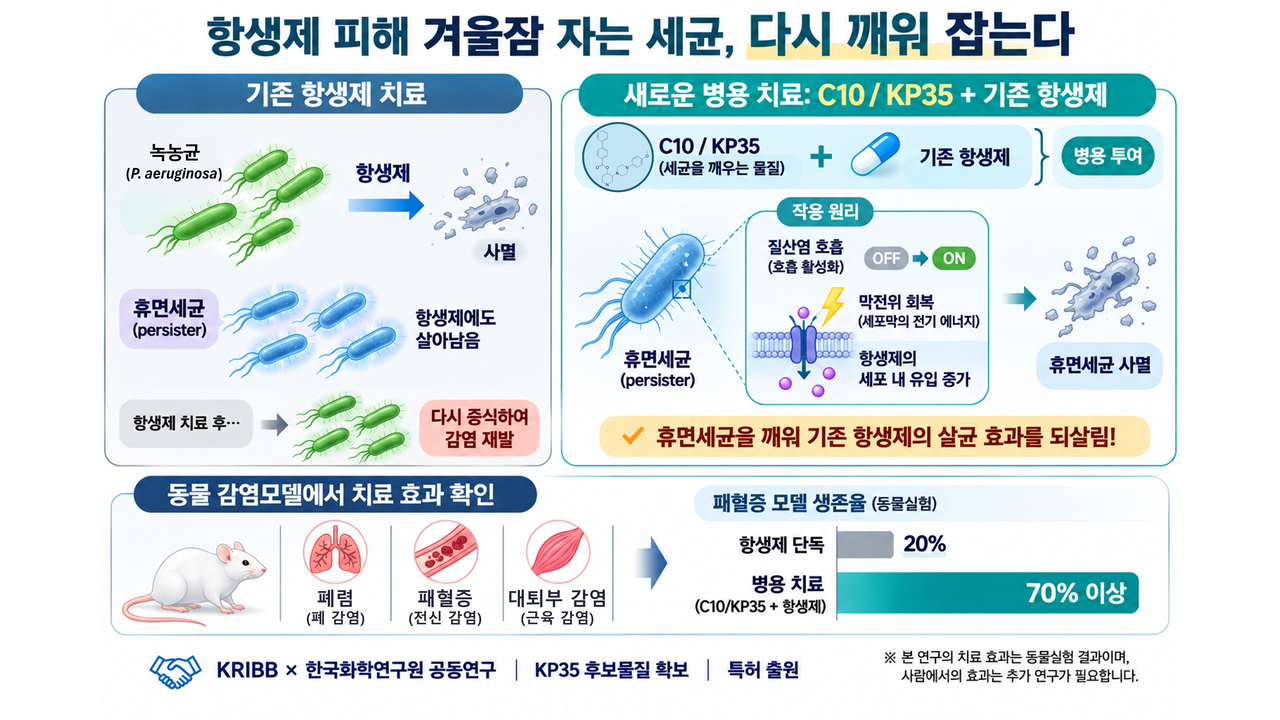
Animal experiments confirmed the therapeutic effect. The team validated the combination treatment in three animal infection models covering sepsis, pneumonia and thigh muscle infection.
In the sepsis model, the survival rate of animals treated with antibiotics alone stood at just 20 percent, while the group that received the compound alongside antibiotics saw survival climb to more than 70 percent.
The team also refined the compound's structure to substantially reduce its toxicity to human cells while preserving its ability to reactivate dormant bacteria, yielding the new drug candidate.
The key mechanism is the selective activation of energy metabolism in dormant bacteria — without indiscriminately promoting bacterial growth — in a way that allows existing antibiotics to enter the bacterial cell.
The research is significant because it presents a new treatment paradigm that restores the efficacy of existing antibiotics rather than relying on the development of new ones.
Before the candidate compound can be applied clinically, its safety and therapeutic effectiveness will need further validation, and its efficacy against a broader range of clinically isolated bacterial strains will have to be confirmed.
"We have found a clue to effectively controlling dormant bacteria that survive antibiotic treatment and cause chronic infections and relapses," Ryu said. "We hope that through additional safety improvements and follow-up research, this work will contribute to better treatment outcomes for patients with intractable infectious diseases."
The findings were published in Drug Resistance Updates, an international journal in the field of antimicrobial resistance.
nbgkoo@heraldcorp.com




