Crackdown runs through Nov. 20 at traditional markets, food marts
Seoul to check origin labels on chili powder, garlic, ginger, salted shrimp
Violators face criminal charges
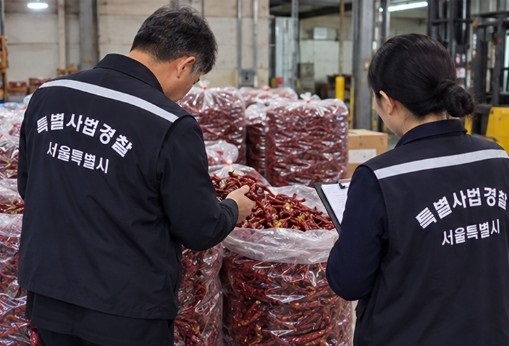
The Seoul Metropolitan Government's Livelihood Justice Police Bureau announced Wednesday that it will conduct a special crackdown on false country-of-origin labeling and food hygiene violations at kimchi ingredient vendors — including traditional markets and food marts — from Nov. 9 through Nov. 20.
The operation aims to prevent vendors from exploiting rising demand during kimchi-making season and the price gap between domestic and imported goods to mislabel the origin of ingredients, and to ensure residents can shop for kimchi supplies with confidence.
The crackdown will cover vendors selling kimchi ingredients — including chili powder, garlic, ginger and salted shrimp — at produce stalls and ready-made food preparation and processing outlets in traditional markets and food marts across Seoul.
Inspectors will focus on four types of violations: mixing imported ingredients into products labeled as domestic, selling imported goods falsely labeled as domestic, non-compliance with country-of-origin labeling requirements, and improper storage, handling and hygiene practices.
To strengthen the effectiveness of the operation, inspectors will purchase suspected mislabeled kimchi ingredients directly from vendors and submit them to specialized testing agencies, including the National Agricultural Products Quality Management Service, for scientific origin verification.
Vendors found to have violated the law will be referred for criminal charges, and cases subject to administrative action will be reported to the relevant district offices for strict follow-up measures.
The bureau urged residents to check country-of-origin labels carefully when buying kimchi ingredients and to actively report any suspected violations.
"We plan to conduct an intensive crackdown during kimchi-making season to protect residents from harm caused by false origin labeling and other illegal practices," bureau chief Lee Chang-seok said. "We will continue to actively respond to illegal activities that threaten food safety so that residents can buy food with peace of mind."
This year's supply outlook is favorable: output of autumn cabbage and radish rose 18.5 percent and 11.1 percent, respectively, from a year earlier thanks to good weather conditions, pointing to ample supply and lower costs for households making kimchi this season.
ikson@heraldcorp.com