
Seocho-gu becomes first in Seoul to install sewer-connected Seoripul Cup bins
Leftover beverages flow directly into drainage pipes, eliminating odor
Separate collection containers had overflowed, drawing complaints about smells and insects
District plans expansion after six-month pilot based on resident feedback
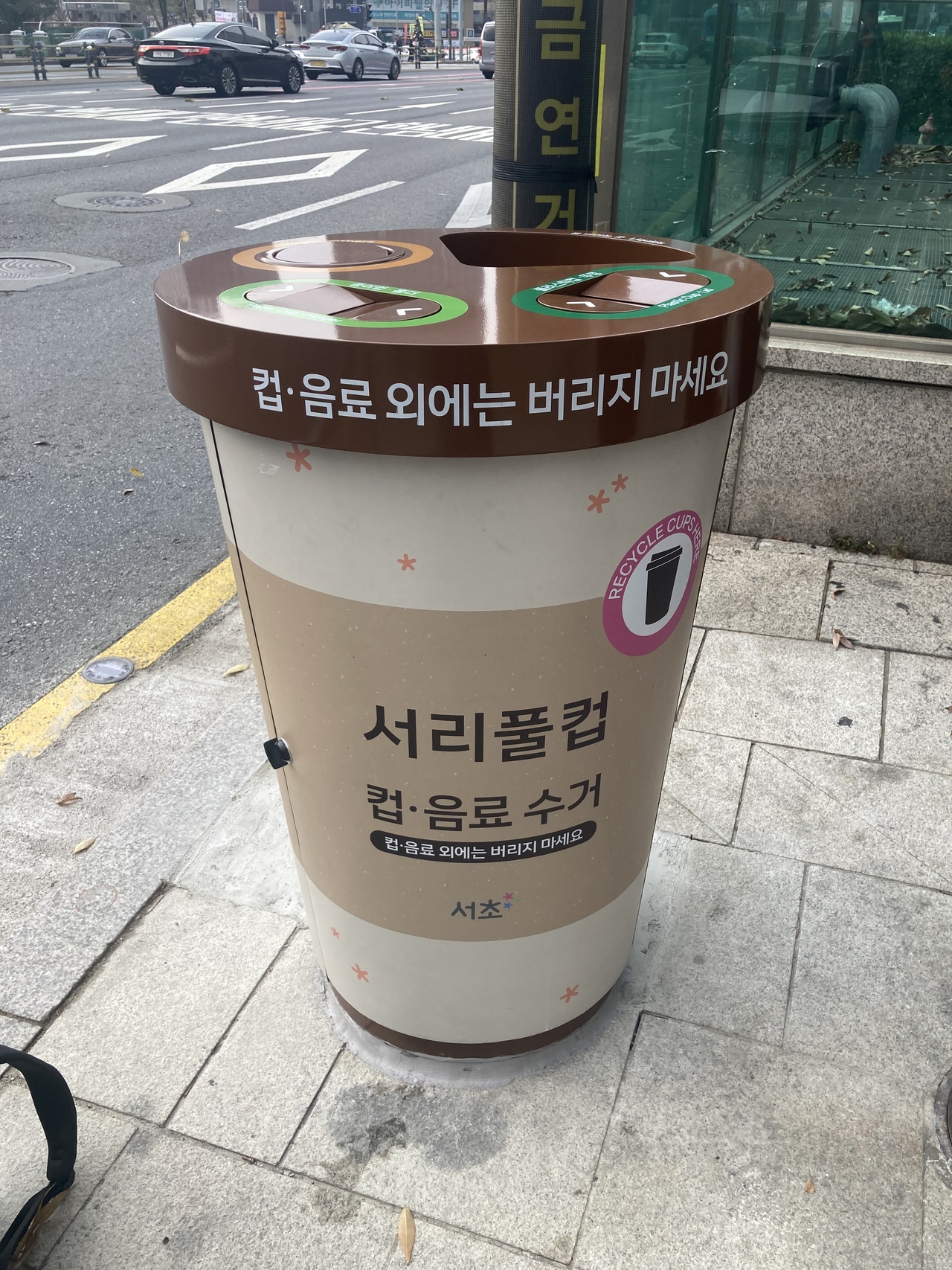
Seocho-gu in Seoul has become the first district in the city to install street trash bins that allow residents to dispose of leftover beverages and their containers separately. Previously, people would throw away cups with drinks still inside, causing foul odors and making recycling difficult. The new bins feature an internal pipe connected directly to the sewer system, so leftover liquid drains away immediately. The district said the design resolves longstanding problems with odors and improper waste sorting.
The Herald Business visited the sewer-connected Seoripul Cup bin installed in front of Exit 7 of Yangjae Station in Seocho-gu on Friday. The Seoripul Cup — a street trash bin designed in the shape of a beverage cup — was introduced by Seocho-gu in 2016 to improve the street environment and deter illegal dumping. A total of 172 Seoripul Cup bins are currently in operation across the district.
The newly introduced sewer-connected version retains the original design while adding enhanced waste-sorting functionality, allowing users to separately dispose of paper cups, plastic cups and leftover beverages.
Seocho-gu launched a pilot program with the bins on Nov. 6, placing units at two locations: in front of Exit 7 of Yangjae Station and near the futsal court along the Yangjae Stream walking path.
Im Seong-jae, head of Seocho-gu's urban cleanliness team, said residents had long been tossing half-finished drinks directly into trash bins or into separate liquid collection containers that would overflow. "Particularly in summer, we received many complaints about the smell," Im said. After mulling the problem since early this year, the team found inspiration in a similar bin system that Busanjin-gu in Busan had installed in 2019.
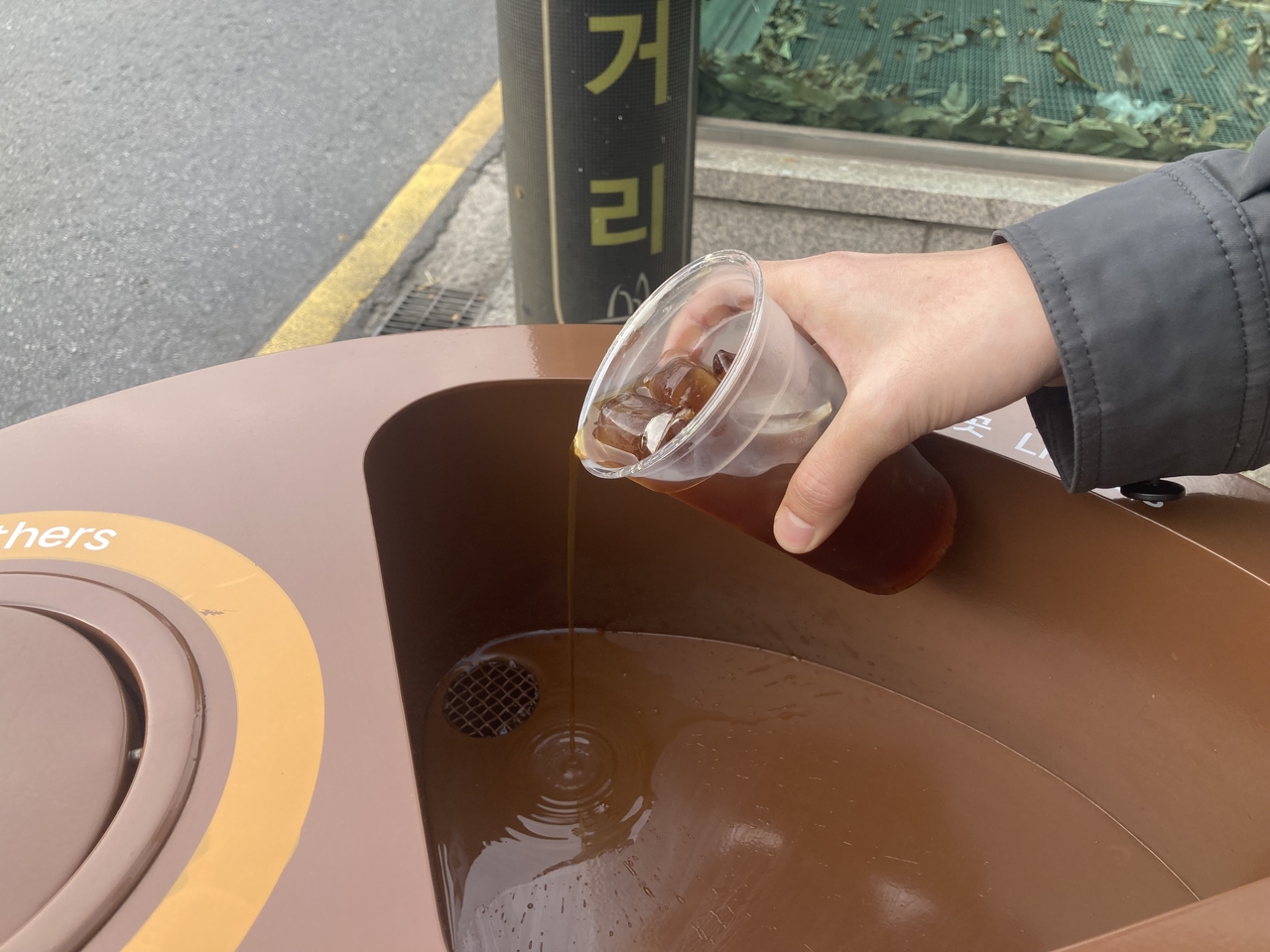
The sewer-connected Seoripul Cup has four separate openings: one for paper cups and cup sleeves, one for plastic cups and lids, one for other waste, and one for leftover beverages. The beverage slot accepts both liquid and ice.
Drinks poured into the beverage opening flow through an internal pipe directly into the connected sewer system. A trap installed inside the bin prevents odors from backing up, allowing for hygienic maintenance.
Lee Ji-woo, 27, who used the bin on Friday, said the new design was a clear improvement. "Before, I would either throw away a cup with the drink still in it or just leave it standing next to the trash can," Lee said. "Being able to pour out the drink and sort the container separately feels much cleaner. I hope they install these all around the city."
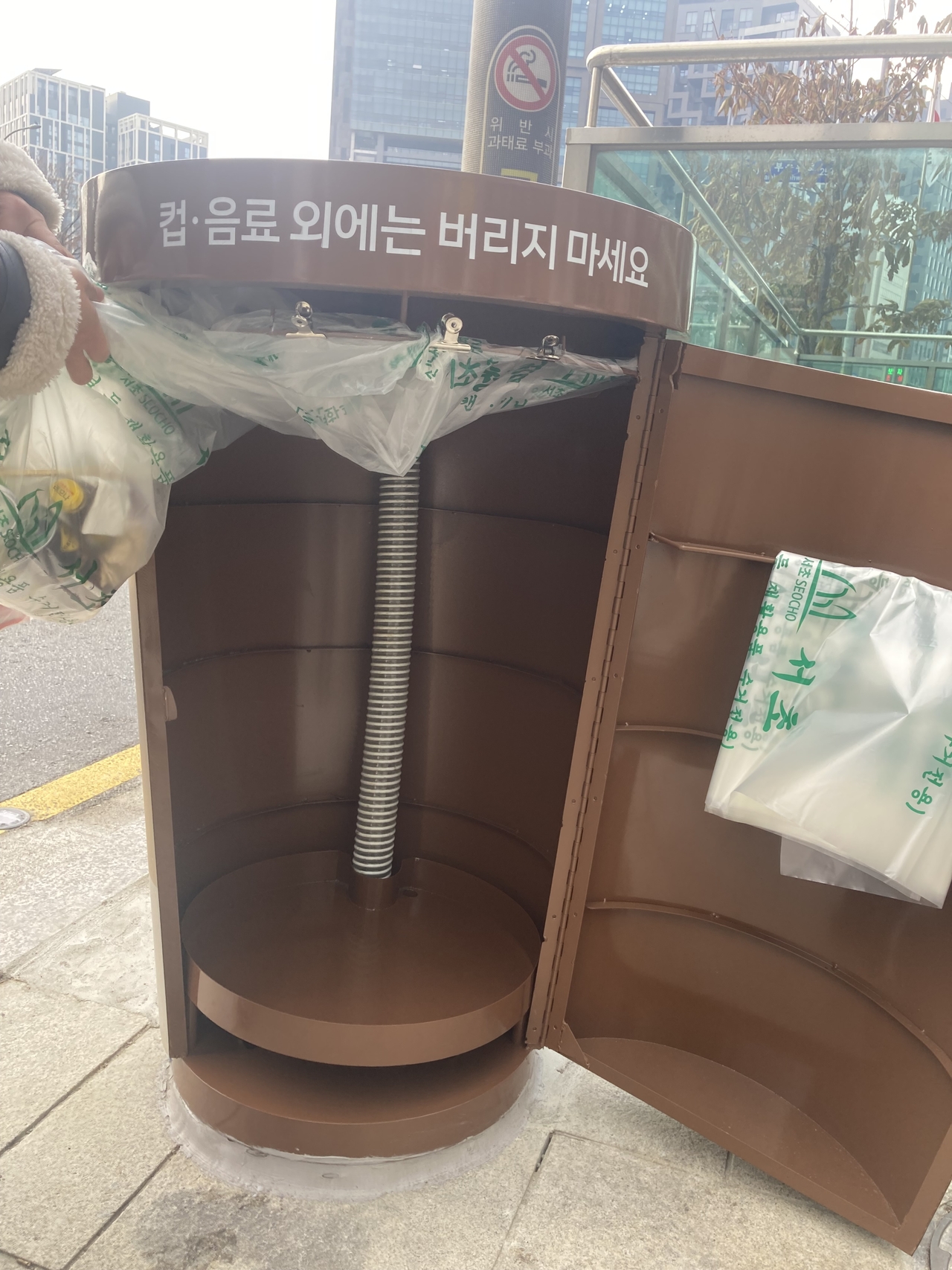
Beverage collection containers operated by some local governments gathered leftover drinks in a separate receptacle, which often overflowed and produced foul odors, making management difficult. The sewer-connected Seoripul Cup eliminates the need to separately collect and rinse those containers, preventing ground contamination and odors while reducing the maintenance burden.
A telecommunications store employee in their 30s who works near Yangjae Station said the area had long been an eyesore in summer, with rows of half-finished drinks lined up around the trash cans and overflowing collection bins attracting insects. "Now that there's a bin where you can dispose of drinks separately, I think that kind of inconvenience will go away," the employee said.
Seocho-gu plans to run the pilot for six months through April next year, then review usage patterns, management effectiveness and resident feedback before deciding whether to expand the installation.
Im said mixing leftover beverages with other waste in street bins makes recycling harder and contributes to odors and environmental contamination nearby. "When you factor in the labor, time and cost of collecting and cleaning the containers, this approach should be far more economical," Im said.
ikson@heraldcorp.com




