
Rainwater runoff has caused erosion and ground subsidence at the site
Cultural Heritage Administration rejects relocation plan after two deferrals spanning two and a half years
Seoul calls for concrete measures to prevent further damage to the relics
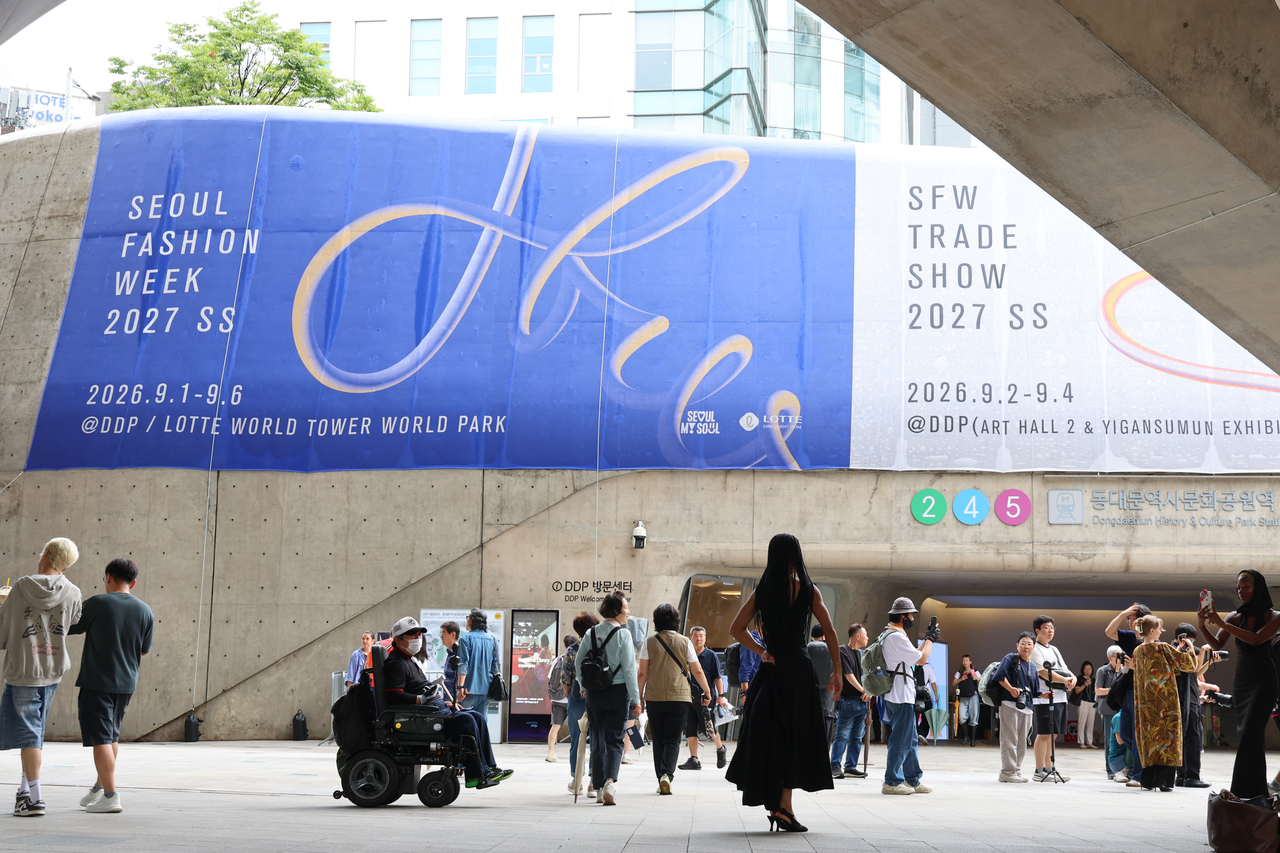
The Seoul Metropolitan Government said Friday it regrets the Cultural Heritage Administration's rejection of a proposal to relocate the outdoor relic exhibition site at Dongdaemun Design Plaza to a park area behind the building.
The DDP relic exhibition site preserves architectural, military and lifestyle artifacts dating from the Joseon era to the modern period, unearthed during the construction of DDP and Dongdaemun History and Culture Park. The relics — remnants of Hadogam, a branch garrison of the Hullyeondogam military training command — were discovered during excavations of the former Dongdaemun Stadium site and relocated to DDP's Eoulrim Plaza in 2013.
Since then, however, rainwater dripping from the curved eaves of DDP's roof has concentrated on specific sections of the site, causing erosion and ground subsidence that have steadily damaged the relics.
In response, Seoul applied to the Cultural Heritage Administration in May 2024 for a review of a revised preservation plan that would move the relics to a landscaped island in the park behind DDP, eliminating the source of the damage.
The Cultural Heritage Administration's Cultural Heritage Committee deferred the proposal at its first review in May 2024, saying it would reconsider after monitoring the condition of the relics for one year.
Seoul subsequently submitted scientific findings — including ultrasonic inspection results obtained through expert consultation — to the Cultural Heritage Administration, and from June 2025 launched a feasibility study on preservation and utilization options for the DDP relics, conducting regular assessments of their deterioration.
The committee again deferred a decision at a second review in October 2025, citing insufficient grounds and data for the relocation and a lack of a concrete post-relocation utilization plan.
Seoul then resubmitted the proposal after conducting additional monitoring during winter and peak-crowd periods and refining its utilization plan. The Cultural Heritage Administration ultimately rejected the relocation after two and a half years, instructing the city to "find the best possible measures to prevent damage from rainwater and runoff at the current location."
"The reason Seoul pursued the relocation was to prevent damage to the relics," said Choi In-gyu, the city's design policy director. "Rather than simply repeating the principle of in-situ preservation while ignoring the reality that the relics are being damaged by rainwater, the Cultural Heritage Administration should work together with Seoul to develop practical measures to stop the deterioration."
ikson@heraldcorp.com




