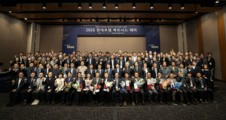
Record-breaking event draws 1,000 firms from 46 countries
Smart factories, youth startups and food-tech share the spotlight
Agriculture minister vows support for high-value product development
From bread made with locally grown potatoes to AI-designed foods tailored to individual nutritional needs, K-food products blending Korean agricultural ingredients with fresh ideas and advanced technology gathered under one roof. Domestic food companies are breaking into new markets by combining traditional food manufacturing with smart factories, AI and food-tech.
Agriculture Minister Song Mi-ryeong visited Food Week Korea 2026 at COEX in Seoul on Saturday to review the technology achievements and products on display, according to the Ministry of Agriculture, Food and Rural Affairs. The fair drew 1,000 companies from 46 countries, making it the largest edition on record.
Song's first stop was the Samsung Smart Factory Support Project pavilion, where 30 small and medium-sized food companies showcased results from adopting large-company manufacturing expertise — including automated production lines, robotics and data-driven manufacturing systems.
As automation and data utilization spread through the food manufacturing sector, collaboration between large and small companies is driving change on the factory floor. Song called it "an exemplary model of mutually beneficial cooperation, where private-sector capabilities and know-how translate into structural improvements and stronger competitiveness for small and medium-sized food enterprises."
Song then visited the pavilions of the Korea Food Cluster Institute and the Korea Food Research Institute to examine how research and development results in the food sector are being translated into actual products and commercial ventures.
Youth-led startups that have added creative value to local farm produce also drew attention.
Jeju Gotbat crafted premium traditional liquor using low-grade agricultural produce that would otherwise go unsold, while Bat Co. presented potato bread made from regional specialty crops — examples of companies moving beyond raw commodity sales to generate new value through processing and brand development.
One company was turning basil grown in a smart farm into food products. Startup Fromwater used vertically farmed basil to produce pesto, and Song sampled the product firsthand to explore the possibilities of combining agriculture with advanced technology.
AI-powered personalized food also drew notice. Medisola presented customized care food that uses AI for individual nutritional planning. The company won a special innovation award at SIAL Paris in France this year.
Companies merging traditional food with new technology and product concepts were also on hand. Samjay introduced canned kimchi made using postbiotic technology, Kkocheul Damda showcased premium flower tea developed in partnership with domestic flower farms, and Gamseonok presented premium desserts combining Sancheong dried persimmons with traditional local specialties.
Song also visited the BKF+ participants' promotional hall to assess the potential for Korean agri-food products to expand into overseas markets.
The visit highlighted how the food industry's growth model is expanding beyond agricultural production and basic processing toward technology development, product differentiation and brand competitiveness. The government plans to support the development of high-value products that combine domestic agricultural produce with food technology, and to help food companies enter overseas markets.
"Food Week Korea 2026 has been an opportunity to imprint on the world the underlying strength of our food companies and the innovative potential of future industries such as food-tech and AI," Song said. "We will continue to actively support the development of high-value products that combine excellent domestic agricultural produce with food technology, and spare no policy support for our companies' entry into global markets and the sustainable growth of K-food."
adastra@heraldcorp.com