
Michelin-starred chef Hooni Kim leads kimjang demonstration
Fermented foods gain mention in new US dietary guidelines
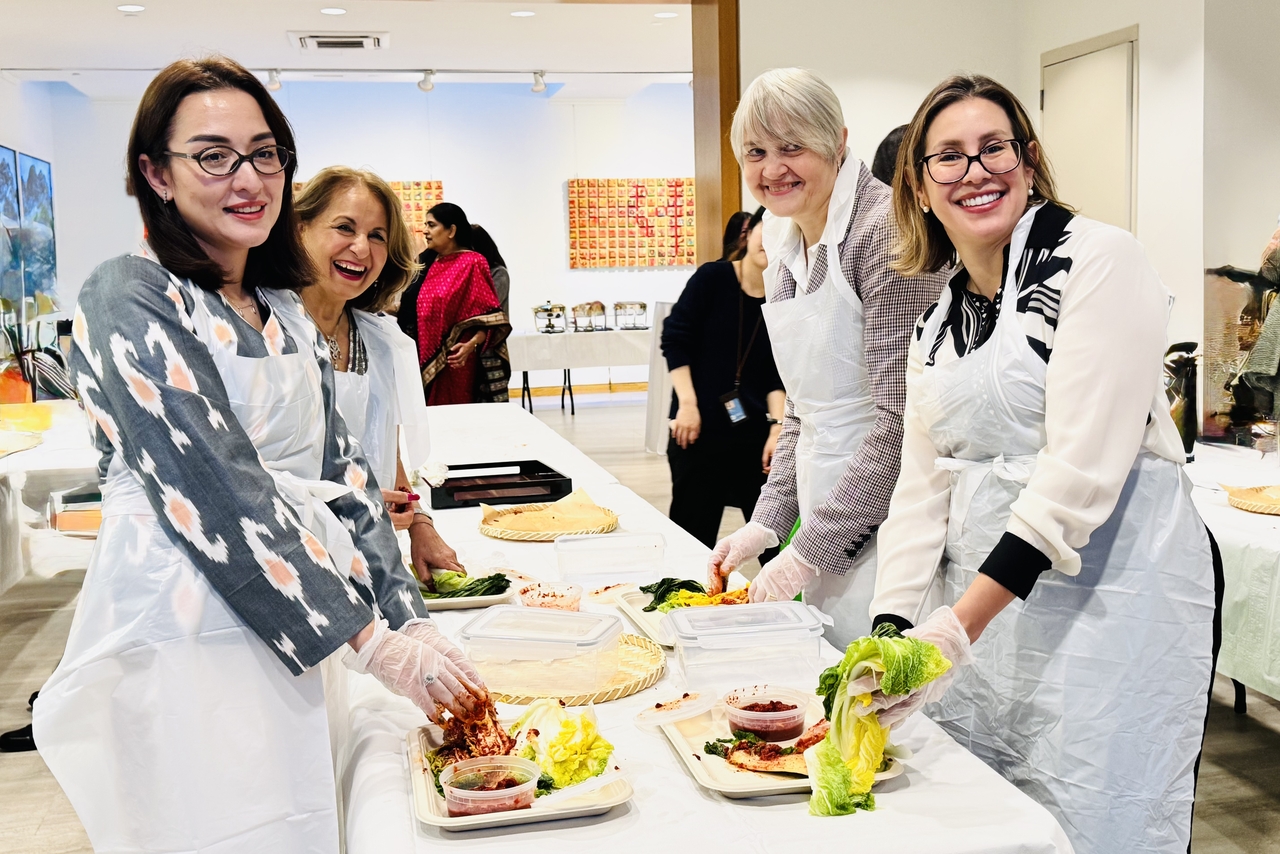
UN diplomats from around the world made kimchi by hand in New York this week, experiencing Korea's kimjang tradition firsthand. The event came as fermented foods, including kimchi, received mention in new US dietary guidelines, prompting the South Korean government to step up its promotion of K-fermented foods among diplomatic circles.
The Ministry of Agriculture, Food and Rural Affairs and Korea Agro-Fisheries & Food Trade Corp. (aT) announced Friday that they held a Korean fermented food promotion event Monday at the Permanent Mission of the Republic of Korea to the United Nations in New York, drawing diplomatic representatives and officials from about 60 countries.
Hooni Kim, this year's K-food promotional ambassador and owner-chef of New York Michelin-starred hansik restaurants Danji and Meju, headlined the event. Kim introduced the science behind kimchi fermentation, how its flavor deepens over time, and the traditions surrounding Korea's kimjang culture.
Following Kim's demonstration, diplomats from the participating countries mixed kimchi filling into salted cabbage themselves. Attendees also showed keen interest in learning how kimjang — the communal practice of making and sharing kimchi with family and neighbors — embodies Korea's spirit of community.
The venue also displayed a range of kimchi products currently sold in the United States. Alongside the hands-on kimjang experience, organizers introduced locally available kimchi products to highlight kimchi as a food that can be enjoyed at everyday tables.
Myriam, one of the attendees, said she had always thought of kimchi simply as a spicy food, but making it herself revealed how fascinating the ingredients and fermentation process were. "I was particularly struck by how the flavor of kimchi deepens over time," she said. "I want to share the kimchi I made today with my family."
Jeon Gi-chan, aT's director of export food, said kimchi embodies Korea's long tradition of fermentation technology and food culture as a defining K-food. "We will continue to expand our promotional and export support efforts to share the appeal of K-fermented foods with the world and help them become a more familiar presence on tables everywhere," Jeon said.
adastra@heraldcorp.com




