
Index rose 12.4 points in September after an 11.4-point gain in August
Jeonse index also climbed 5.8 points from previous month, highest nationwide
National housing market index continues upward trend
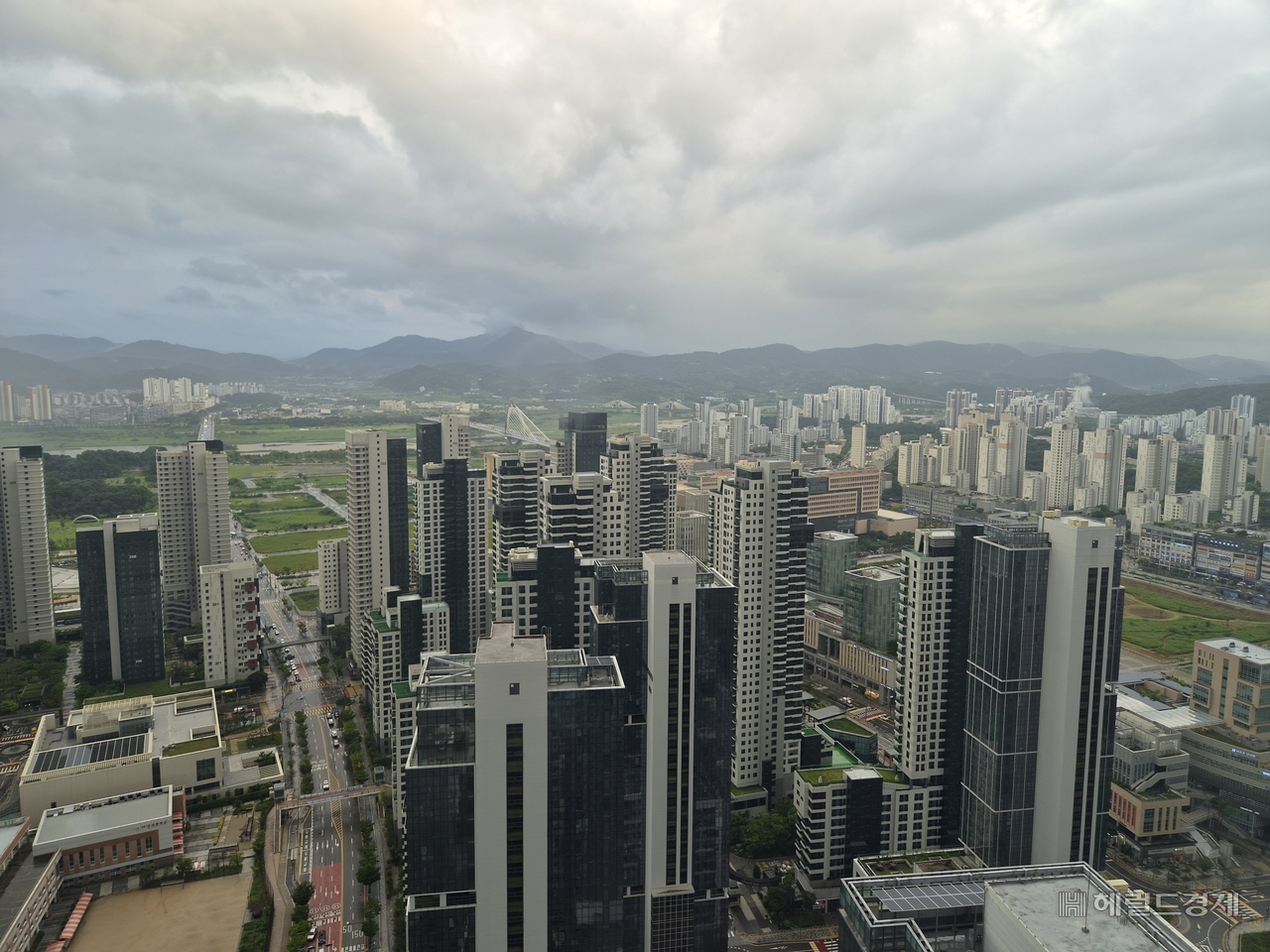
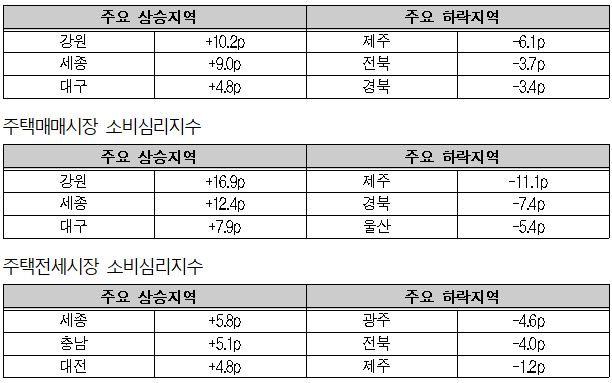
The government's plan to relocate state agencies to Sejong is heating up the city's real estate market. Residents and real estate agents in Sejong say they are seeing rising home sale prices and increased transaction volumes — a trend reflected in the city's housing sale market sentiment index, which climbed 12.4 points in September from the previous month.
According to the Korea Research Institute for Human Settlements' "September Real Estate Market Consumer Sentiment Survey" released Thursday, overall figures rose across the housing sale and jeonse markets. The nationwide real estate market consumer sentiment index — covering both housing and land — edged up 0.5 points, from 111.5 in August to 112.0 in September. The housing market index alone rose from 115.1 to 115.9.
Breaking the housing market down further, the sale index rose from 116.7 to 117.3, while the jeonse index climbed from 113.5 to 114.4. In the sale market, the Greater Seoul area remained in an upswing but edged down slightly from 125.6 to 124.9, while non-metropolitan regions strengthened from 106.5 to 108.4. The jeonse market posted gains in both the Greater Seoul area (119.0 to 119.8) and non-metropolitan regions (107.3 to 108.3).
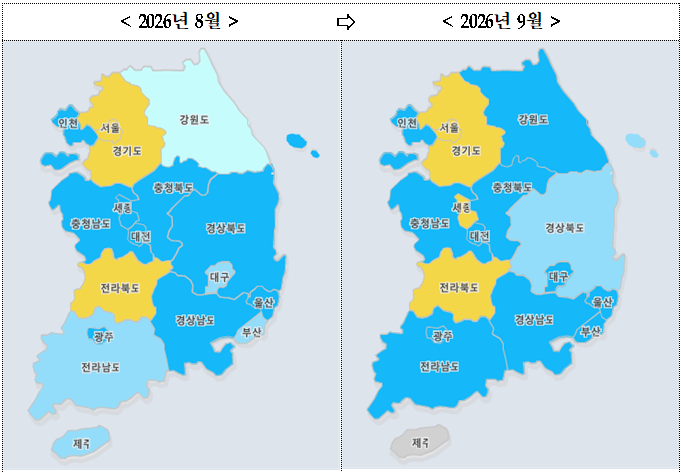
Seoul's housing sale market index stood at 130.8, edging down for two consecutive months, while the jeonse index rose to 122.8, marking two straight months of gains.
Particularly striking among non-metropolitan areas is Sejong's surge. The city's sale market index was just 101.5 in July — essentially flat — before climbing sharply to 112.9 in August and 125.3 in September. The jeonse market index also rose, from 119.2 in August to 125.0 in September.
The government announced the second phase of its central government agency relocation plan on Sept. 3, and followed up on Tuesday with details: the Financial Services Commission, the Personal Information Protection Commission and the Korea Communications Commission are set to move to Sejong in 2027, alongside the Ministry of Justice and the Ministry of Gender Equality and Family. The Board of Audit and Inspection, the Korean National Police Agency, the Public Prosecution Service, the Serious Crime Investigation Agency, the Ministry of Foreign Affairs, the Ministry of Unification and South Korea's Ministry of National Defense are also slated to relocate, either by constructing new buildings or through legislative amendments.
The government also unveiled plans to build a presidential office in Sejong by August 2029 and to complete a National Assembly annex there by 2033 — moves analysts say are fueling the city's real estate market revival in earnest.
Against this backdrop, apartment sale transactions in Sejong surged over the past month, topping 500 deals. A total of 509 transactions were recorded in September, according to real estate platform Asil, up 56.6 percent from 325 the previous month. The figure is likely to climb further, as the deadline for reporting September transactions falls at the end of this month.
"Indicators rose mainly in major metropolitan cities nationwide," said Kwon Geon-u, a researcher at the Korea Research Institute for Human Settlements. "In Sejong's case, the continued flow of news about government agency relocations has pushed the index higher." He added that while Seoul's sale and jeonse indices moved in slightly different directions, both remained in an upswing phase. "In the field, awareness of price peaks and the impact of tightened regulations have contributed to a slight dip in the sale index," he said.
smh@heraldcorp.com




