New body to mediate cost hikes, payment disputes between contractors
To be established under Land Ministry, operated by overseas construction association
Industry calls for broader support covering disputes with foreign clients
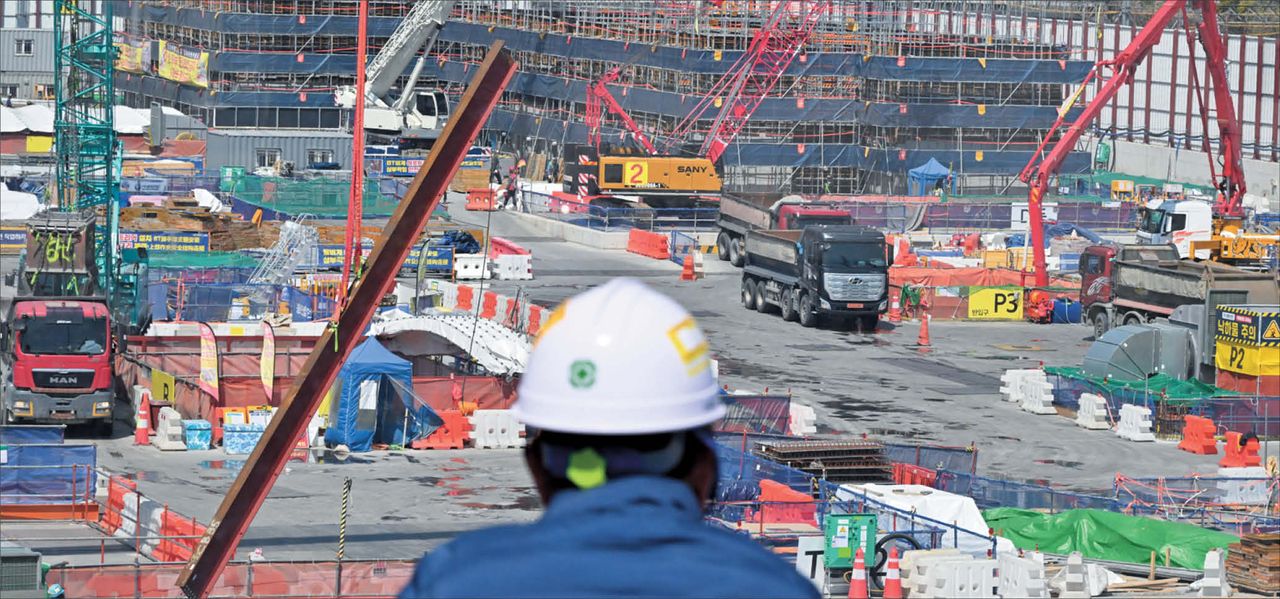
South Korea's Ministry of Land, Infrastructure and Transport plans to establish a dedicated mediation body for overseas construction disputes, as conflicts over design changes and project delays multiply at job sites abroad. The move comes as Korean construction firms win more overseas contracts, driving a rise in disputes not only between clients and contractors but also between prime contractors and subcontractors.
The Ministry of Land, Infrastructure and Transport and the Korea Overseas Builders Association have decided to set up a separate dispute mediation committee exclusively for overseas construction projects, according to government and industry sources Thursday. The two bodies have begun preparatory work to establish the committee under the Overseas Construction Promotion Act, and a related amendment bill has already been introduced in the National Assembly.
The committee will be placed under the Land Ministry and is expected to launch with around eight members. A budget of approximately 5 billion won ($3.73 million) has been allocated for the body. The Korea Overseas Builders Association will handle its operations. The ministry is reviewing a plan to staff the committee with specialists in subcontracting, construction cost assessment and dispute resolution.
The new body will be tasked with mediating conflicts that arise throughout the entire lifecycle of overseas construction projects, including disputes over cost increases, schedule delays, unpaid construction fees and liability for construction defects.
Domestic dispute mechanisms already exist under the Framework Act on the Construction Industry — including a construction dispute mediation committee and a subcontracting dispute mediation council — but officials have concluded that the growing volume of overseas contracts warrants a dedicated body capable of more specialized arbitration. There has also been a growing call to resolve disputes between domestic firms quickly, given that conflicts escalating into international litigation or arbitration proceedings can consume considerable time and money.
Korean construction firms have been steadily expanding their overseas order books. According to the Korea Overseas Builders Association, overseas construction contract awards rose for four consecutive years through last year — $31 billion in 2022, $33.3 billion in 2023, $37.1 billion in 2024 and $47.3 billion last year. This year, contracts through the end of September came to only $20.7 billion, weighed down by the prolonged war in the Middle East, though Korean firms continue to push into overseas markets.
The core problem is that rising construction costs have fueled a wave of disputes over the scope of liability and contract amounts. The Korea Institute of Civil Engineering and Building Technology said the construction cost index hit a record high of 139.48 (provisional) in September, up 5.94 percent from the same month a year earlier. With oil prices expected to remain elevated for an extended period, construction costs are likely to keep climbing, placing a growing burden on both prime contractors and subcontractors.
"As construction costs have surged on the back of higher oil prices and exchange rate movements, demands for cost increases from both prime contractors and subcontractors on overseas projects have been rising sharply," a Land Ministry official said. "We plan to efficiently coordinate and mediate various disputes through a dedicated overseas construction dispute mediation committee."
Whether the body will operate with real effectiveness once established, however, remains an open question.
"Given the complexity of projects involving foreign clients and local laws, it will be difficult for the mediation body to exercise binding authority," an industry official said. "There is also a risk that it could inflame tensions between prime contractors and subcontractors, ultimately making it harder for domestic subcontractors to expand overseas."
Some in the industry also argue that the body should play a broader mediation role, given the ongoing disputes over risk allocation between foreign project owners and Korean contractors.
Data obtained by National Assembly Land and Infrastructure Committee lawmaker Hwang Un-ha from the Land Ministry showed that unpaid overseas construction receivables stood at $1.27 billion as of the end of June last year.
"Cost adjustments must be made within the scope of the contract, and the parties responsible for any problems during construction must be clearly identified," said Lee Eun-hyeong, a research fellow at the Construction Policy Research Institute. "Since disputes arising from rising construction costs are not limited to domestic prime and subcontractors, support for dealing with foreign project owners will also be necessary."
lucky@heraldcorp.com
smh@heraldcorp.com