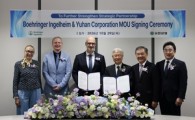
Purchase agreement under discussion
Negotiations more advanced than rival bidder; final terms not yet set
Australian media reports US government pressuring Austal to sell to Hanwha
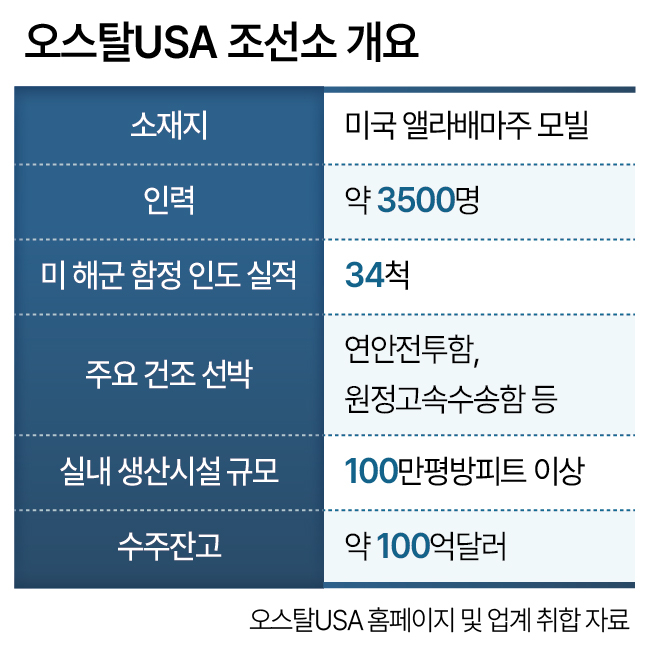
Austal USA site larger than Philly Shipyard, with extensive indoor production facilities
Track record supplying US Navy vessels; submarine supply chain capabilities in place
Acquisition would give Hanwha naval shipbuilding presence in US South as well as East Coast
Move seen as deepening Hanwha's foothold in US defense supply chain amid shipbuilding revival push
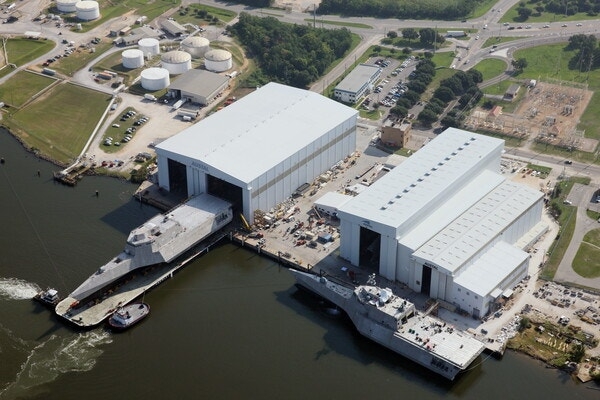
Hanwha Group's bid to acquire Austal USA has advanced to the stage of negotiating a purchase agreement, and reports of US government involvement have drawn fresh attention to whether the deal will close. If Hanwha secures the Austal USA shipyard, it would gain a production base in Mobile, Alabama — in the US South — to complement the Philly Shipyard it already operates in Philadelphia, Pennsylvania, on the East Coast. The acquisition would also broaden Hanwha's foothold in the US shipbuilding and defense industry as it moves to expand its local business in line with Washington's push to revive American shipbuilding.
The Australian Financial Review reported Tuesday (local time) that officials in the Donald Trump administration are pressuring Australian shipbuilder Austal to sell its US operations to Hanwha. The outlet said the US Department of Defense has decided to halt discussions on additional US Navy contracts that would have expanded Austal's business, effectively narrowing the company's position in the American market. It also criticized the Australian government for failing to respond more assertively.
Some analysts are skeptical, however, that the US government is actively throwing its weight behind any single buyer. In the domestic defense market, long-established relationships and supply chains between existing contractors and the government and military carry significant weight, making it difficult to abruptly restructure business arrangements simply because ownership changes hands — and there is little incentive to openly favor one company over another, the analysts said.
Austal chairman: Hanwha talks 'significantly more advanced'
Separate from the intervention reports, the acquisition process itself appears to be moving in Hanwha's favor. Austal Chairman Richard Spencer, in a shareholder address published recently on the Australian Securities Exchange, said negotiations with Hanwha had progressed to the point of discussing transaction documents. While talks with rival bidder Wildcat Infrastructure are continuing, Spencer described the Hanwha discussions as "significantly more advanced." A Hanwha spokesperson said the final terms of any deal and the schedule for a formal acquisition offer have not been confirmed.
Hanwha submitted a non-binding, conditional offer in August through its US defense subsidiary Hanwha Defense USA to acquire Austal's US operations, valued at between $1.05 billion and $1.2 billion, according to earlier reports. US investment firm Wildcat Infrastructure, the competing bidder, submitted a non-binding letter of intent last month valuing Austal USA at between $1.25 billion and $1.35 billion. Some analysts note that simply offering a higher price may not be enough to be seen as the right buyer for a deal framed around the policy goal of rebuilding American shipbuilding.
For Hanwha, acquiring Austal USA would carry significance beyond simply adding another overseas shipyard. While the Philly Shipyard — acquired in 2024 — is located in Philadelphia, Pennsylvania, on the East Coast, Austal USA sits in Mobile, Alabama, in the South, allowing Hanwha to geographically diversify its operational bases. The two facilities also differ in scale. The Austal USA shipyard in Mobile covers about 165 acres (approximately 668,000 square meters), larger than the Philly Shipyard's roughly 115 acres (about 465,000 square meters). Austal USA operates more than 1 million square feet (about 93,000 square meters) of indoor production facilities, with further expansion already underway.
Austal USA brings US Navy track record and submarine supply chain role
A successful acquisition of Austal USA would allow Hanwha to expand its US base for building commercial vessels, government-ordered ships and naval vessels alongside the Philly Shipyard. The Philly Shipyard, long focused on commercial shipbuilding, has recently moved into US Navy vessel programs. Hanwha Defense USA signed a contract with US marine services company Tote Services on Thursday for the construction of one medium landing ship (LSM), valued at $269 million and including options for up to three additional vessels. The LSM is a landing-operations support vessel designed to transport Marine Corps personnel, equipment and supplies to coastal and island areas — a different mission from combat ships such as destroyers or frigates.
Austal USA, by contrast, already has a track record of delivering vessels to the US Navy and Coast Guard, and has established capabilities to participate in the submarine supply chain. The company previously built Independence-class Littoral Combat Ships and has carried out a range of other naval programs, including towing and salvage vessels (T-ATS) and Expeditionary Fast Transports (EPF). Notably, Austal USA has partnered with General Dynamics Electric Boat to produce key modules for Virginia-class and Columbia-class nuclear-powered submarines, giving it a meaningful role in the US submarine industry.
Meanwhile, Hanwha is also stepping up its government relations activities in the United States alongside its push into US shipbuilding and defense. Hanwha Defense USA has renewed its contract with Washington-based lobbying firm Checkmate Government Relations, according to South Alabama News and other local outlets. Lobbying disclosure filings submitted to Congress list the White House and the Defense Department as targets of the firm's activities, with shipyard investment issues cited as the purpose. The firm's principal, Charles McDowell, is known to be close to Donald Trump Jr.

keg@heraldcorp.com