The 81st UN General Assembly runs Tuesday through Wednesday next week, drawing heads of state from around the world; The New York Times says weary New Yorkers care less about global affairs than the gridlock outside their doors
![Police and federal agents block traffic on 47th Street and First Avenue in New York City during the 81st UN General Assembly on Tuesday (local time). [Reuters]](https://wimg.heraldcorp.com/news/cms/2026/09/26/rcv.YNA.20260923.PRU20260923103301009_P1.jpg)
Every year, the UN General Assembly draws heads of state and senior officials from around the world to New York — and with them come traffic jams, road closures and a level of urban disorder well above the city's already chaotic baseline.
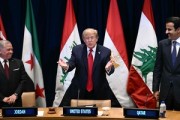
World leaders gathered in New York for the high-level segment of the 81st General Assembly, which runs from Sept. 22 through 29. Key agenda items include the Ukraine-Russia conflict, the Israel-Gaza situation, and Donald Trump's designs on Greenland. But for New Yorkers outside the UN headquarters on Manhattan's East Side, The New York Times reported, the more pressing concern is not grand geopolitics — it is the nightmarish gridlock that descends on the city every time the assembly convenes.
Black sedans and SUVs clog streets across the city, moving in convoys of two or three. Security personnel from various agencies are visible throughout the area, and traffic officers shout at drivers and pedestrians who stray out of line. First Avenue has been closed to traffic from 41st to 48th Street, and several side streets in the 40s have also been blocked off.
The flip side is that the neighborhood fills with celebrities and dignitaries rarely seen in these parts at any other time of year. The joke going around is that the person ahead of you in line for a bacon, egg and cheese sandwich might just be a head of state — or at least a senior aide.
New York City Mayor Zohran Mamdani said at a press conference last week: "When the world visits New York, it is unavoidable that our streets will be affected."
Pedestrians have not been spared either. Many were spotted standing on sidewalks looking bewildered, unsure how to reach a destination just a block or two away.
![A protester demands regime change in Iran at a "Free Iran" rally held outside the UN General Assembly in New York City on Tuesday (local time). [Getty Images]](https://wimg.heraldcorp.com/news/cms/2026/09/26/news-p.v1.20260923.67f1d85b394442158f89d5ef52a87169_P1.jpg)
Not everyone's frustration was directed at the traffic. On Tuesday, about 10 protesters staged a peaceful demonstration nearby. One carried a sign reading "Stop the genocide and ecocide in West Papua," while Dave Robinson, 65, held up a sign aimed at Trump that read: "World, we're sorry. We hate him too."
Reactions from local businesses were mixed. A shop owner on Second Avenue between 43rd and 44th streets, who asked not to be named, said road closures had driven customers away and complained about having to prove residency every time he wanted to enter his own apartment above the store. A dry cleaner on the same stretch took the opposite view, welcoming the surge in business from formally dressed assembly attendees — though delivery trucks, he noted, had to park several blocks away.
Conditions varied even within the same block depending on which side of the street you were on. The west sidewalk of Second Avenue was relatively passable, but crossing between 42nd and 43rd streets on the east side was nearly impossible. The New York Times quipped that telling a police officer you were heading to the bagel shop might get you through — "but don't say we told you." Cyclists faced similar obstacles, and the paper advised anyone thinking of approaching First Avenue to simply give up on the idea.
![Police close off nearby roads during the UN General Assembly in New York City on Monday (local time). [Getty Images]](https://wimg.heraldcorp.com/news/cms/2026/09/26/news-p.v1.20260923.35a41f5b58a648c5879fddc3801d7021_P1.jpg)
New York City has designated all five weekdays this week as gridlock alert days. Once the assembly wraps up, the city will get a brief reprieve — but three more gridlock alert periods around the Thanksgiving holiday in November and 12 alert days in December await.
"Everyday New York means streets clogged with traffic, subways packed to bursting, buses that never seem to come, and every other person you pass looking irritated," The New York Times wrote. "That's just New York."
mokiya@heraldcorp.com