
Assault suspect aided by yakuza boss; Kim Jung-woo attacks civilian, Kim Jae-hoon held in gold smuggling case
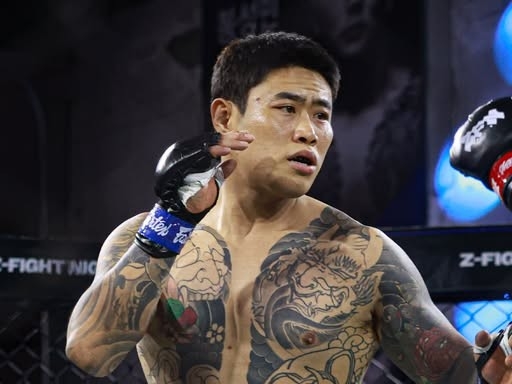
Combat sports organizations in South Korea and Japan are facing scrutiny over their recruitment and oversight practices after a string of criminal cases involving fighters with organized crime backgrounds. In Japan, a former RIZIN fighter was arrested on assault charges after allegedly beating a civilian into serious injury — a case that drew in the leader of a yakuza-affiliated gang. In South Korea, similar controversies have emerged, raising questions about the responsibility promotions bear when they sign fighters with criminal histories.
According to Japan's Kyodo News and Abema Times, Fukui Prefectural Police arrested former sumo wrestler and MMA fighter Taka Kenshin, 29, on Wednesday on assault charges. Taka is accused of attacking a man in his 40s whom he did not know on a road in Fukui City at around 10:30 p.m. on July 24, leaving the victim with serious injuries. A 45-year-old man who was with Taka at the time was also arrested on the same charges.
The victim suffered a skull fracture and acute subdural hematoma, injuries expected to require about three months of recovery. Reports indicated the victim briefly lost consciousness at the scene, underscoring the severity of the attack.
The case also implicated the leader of a gang affiliated with the Yamaguchi-gumi, one of Japan's largest organized crime syndicates. Police arrested a 60-year-old man on suspicion of helping another suspect in the assault flee from authorities.
Taka had risen to the top division of professional sumo, known as makuuchi, before being dismissed by the Japan Sumo Association in 2021 after testing positive for cannabis use. Taka subsequently transitioned to mixed martial arts and competed on the RIZIN card. Even in that fighting career, Taka was not without controversy, and the assault arrest marks the latest entanglement with the law.
A similar controversy has unfolded in South Korea. Kim Jung-woo, a fighter who has publicly acknowledged a past in organized crime, drew widespread condemnation in September after footage from a live internet broadcast showed him using a dangerous submission technique on a civilian.
Kim applied a standing guillotine choke — a technique that cuts off blood flow to the brain while the opponent remains upright — to a man in his 20s. Even after the victim tapped out multiple times to signal submission, Kim did not release the hold. The victim lost consciousness and fell, striking the back of his head hard against the floor.
After the victim collapsed, Kim was seen making jokes rather than rendering immediate first aid. The victim was transported to a hospital and was reported to have experienced partial paralysis. Police have booked Kim on assault charges without detention and are continuing their investigation.
ZFN, the promotion that had signed Kim despite his known gang background, moved quickly to terminate his contract after the incident became public.
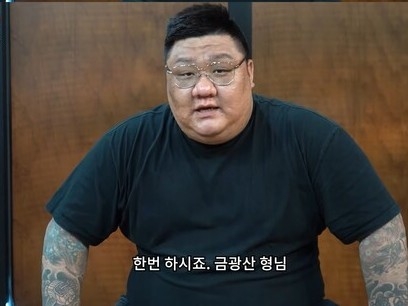
Kim Jae-hoon, who competed in South Korea under the nickname "Yakuza Fighter," also sparked controversy last year after being arrested in Japan on gold smuggling charges. In January 2025, Japanese police arrested Kim on suspicion of attempting to smuggle approximately 3.5 kilograms of pure gold through Kansai International Airport without declaring it to customs. The gold was valued at around 440 million won ($329,000) at the time.
According to Japanese police, Kim's group tried to disguise the gold as medals won at martial arts competitions. Couriers carried the gold — fashioned into the shape of medals — hanging around their necks or concealed beneath their clothing, and the items were detected during a customs inspection.
Investigators determined that Kim had played a role in recruiting couriers for the smuggling operation, and Japanese media reported that Kim acknowledged the charges. Kim was released after roughly two and a half months in custody and later appeared on a YouTube channel run by a figure in the Japanese combat sports world, where Kim expressed regret over the actions.
Kim had drawn attention for publicly disclosing a past membership in a Japanese yakuza organization and had competed in promotions including Road FC. The gold smuggling case prevented Kim from competing in a Road FC bout scheduled for September last year.
A fighter's past alone cannot bar participation in competition. But promotions that capitalize on a fighter's notoriety and provocative background to drive ticket sales, critics argue, have a corresponding obligation to establish rigorous vetting standards and management systems for the athletes they sign.
yjc@heraldcorp.com




