UNIST, Caltech jointly develop drug-delivery nanorobot 'BrainBot'
Device boosts anticancer drug delivery to brain tissue 5.2-fold, opening path to treating intractable brain diseases
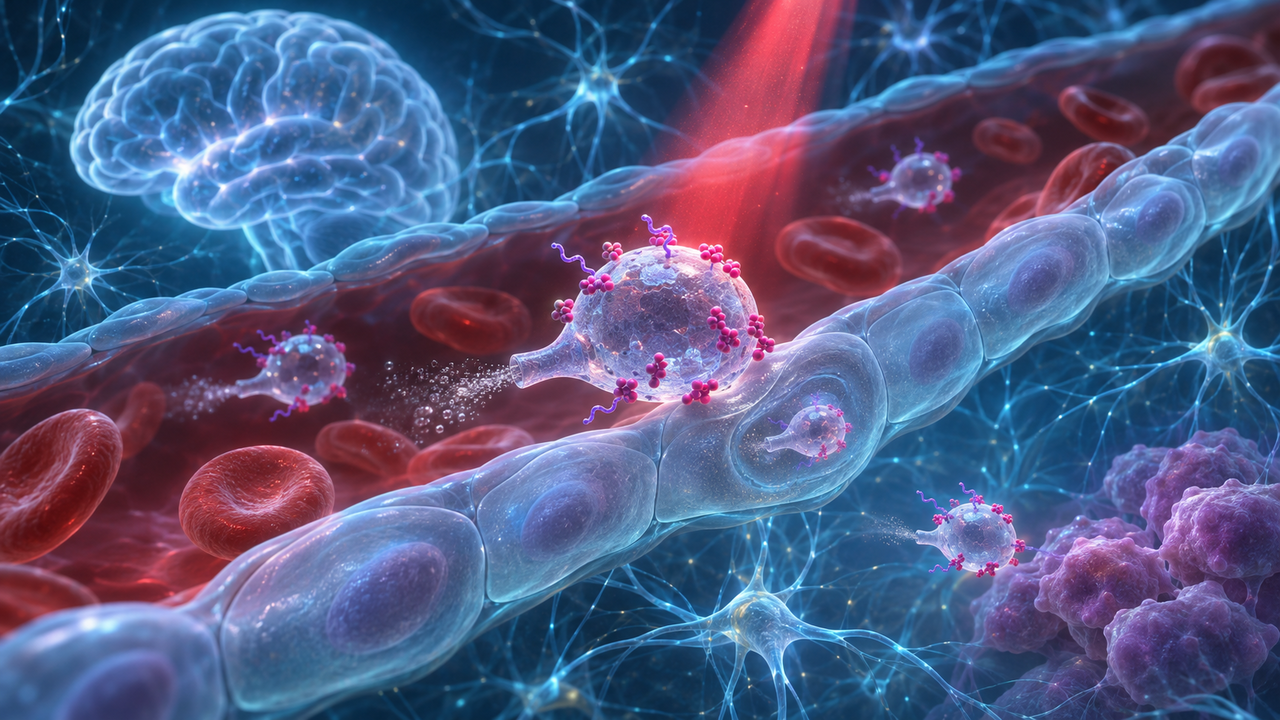
Scientists have developed a microscopic nanorobot that, when exposed to light, propels itself across the brain's protective barrier to deliver anticancer drugs. In animal experiments, the device increased the amount of anticancer drug reaching brain tissue by more than fivefold and improved survival rates in mice with brain tumors.
Ulsan National Institute of Science and Technology (UNIST) announced Sunday that a research team led by Professor Ju Jin-myung of the Department of Biomedical Engineering developed the nanorobot, called BrainBot, in collaboration with a team led by Professor Wei Gao of the California Institute of Technology (Caltech). The device uses near-infrared light to deliver drugs to brain tissue.
The brain is protected by the blood-brain barrier (BBB), a tightly sealed membrane formed by vascular endothelial cells that blocks harmful substances in the bloodstream from entering. While essential for brain health, the barrier also prevents therapeutic agents such as anticancer drugs from reaching their target, making it one of the greatest obstacles in treating brain diseases.
To overcome this limitation, the research team devised a method to give nanoparticles their own propulsion.
The tadpole-shaped BrainBot measures about 250 nanometers — one billionth of a meter — in diameter. Its interior holds fuel and a light-absorbing material, and its opening is sealed with a heat-sensitive cap. The surface is coated with anticancer drugs and aptamers, molecules that bind to vascular endothelial cells.
When near-infrared light is directed at the robot from outside the body, the light-absorbing material generates heat that melts the cap. The internal fuel then breaks down, releasing gas that acts like a rocket thruster to propel the nanorobot forward.
Conventional nanoparticles, even when they enter vascular endothelial cells, tend to be pushed back into the bloodstream rather than advancing into brain tissue. The team used the self-propulsion mechanism to reduce this backflow and improve drug delivery efficiency.
When BrainBot loaded with the anticancer drug doxorubicin was injected into the veins of mice and activated with near-infrared light, the concentration of the drug in brain tissue was 5.2 times higher than in mice that received BrainBot without light activation.
The team also confirmed a therapeutic effect against brain tumors. By day 50 of the experiment, all mice in the control group and those that received only the anticancer drug had died, while three of six mice treated with light-activated BrainBot survived.
Particularly notable is that, unlike ultrasound-based drug delivery technologies, BrainBot delivers drugs without artificially opening the blood-brain barrier. Animal experiments showed that the barrier's protective function remained intact, with no significant damage, bleeding or inflammation observed in brain tissue.
BrainBot is made from biodegradable materials, and three weeks after administration, residual carrier components in the brain had fallen to near pre-injection levels.

The research is significant for combining physical propulsion with existing chemical and biological drug-targeting technologies. Because light can control when and where the nanorobot activates, the technology holds potential for delivering drugs in concentrated doses to specific regions of the brain.
However, applying the technology to human patients will require improvements in transmitting light through the human skull, as well as long-term safety verification for repeated administration.
"If our earlier research gave us the key to enter the brain, this work shows that adding propulsion to that key allows us to deliver far more drugs to the brain," Professor Ju said. "We expect this can be extended beyond anticancer drugs to protein therapeutics and gene therapies, and applied to treating a wide range of brain diseases including Alzheimer's disease, Parkinson's disease and epilepsy."
The study, which also involved research teams led by UNIST professors Park Tae-eun and Cho Hyeong-jun and Professor Kim Jun-ki of Asan Medical Center, was published in the international journal Science Robotics on Nov. 25 (local time).
nbgkoo@heraldcorp.com