North Gyeongsang labor commission rules franchise HQ and branch constitute single workplace
Freelance stylists subject to real supervision qualify as employees regardless of tax status
Ruling expected to ripple across franchise industry over HR involvement at affiliated stores
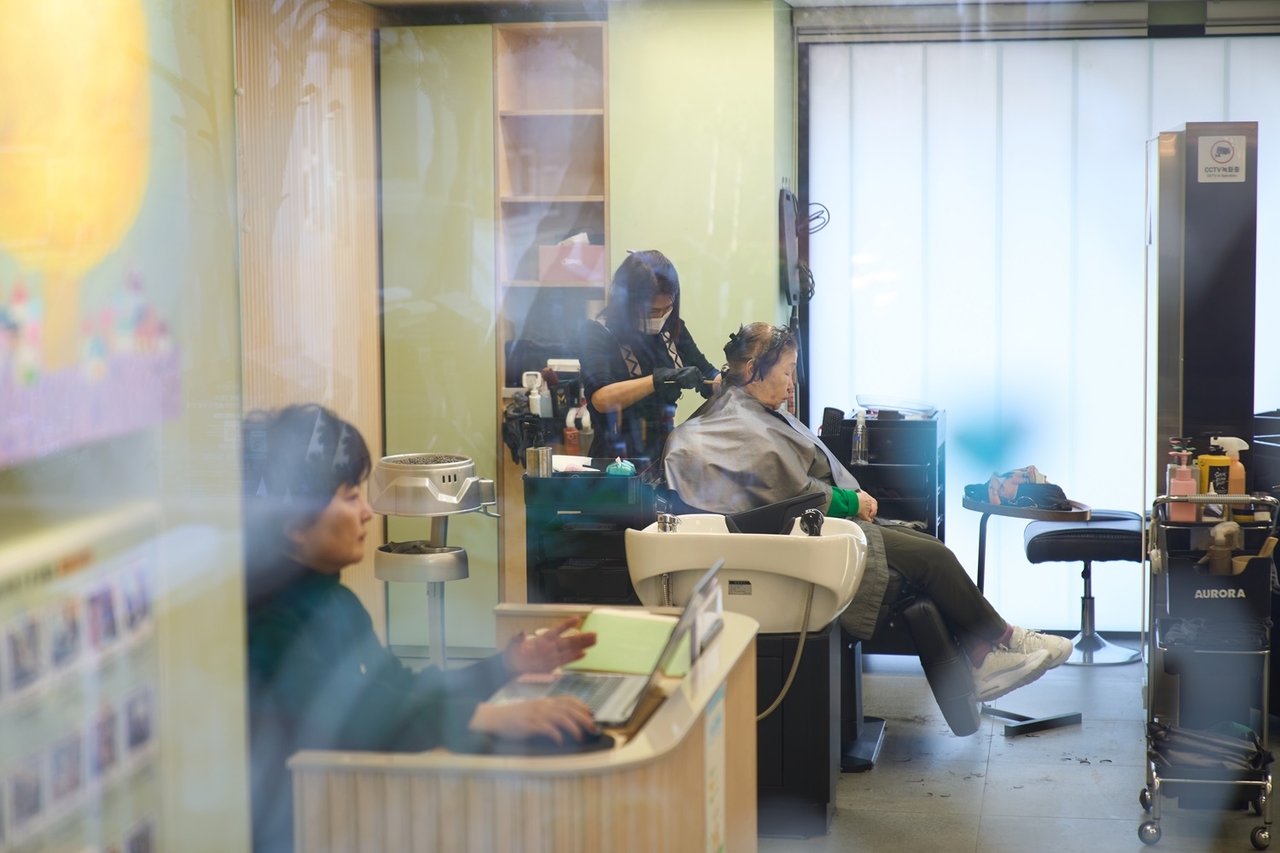
A labor commission has ruled for the first time that a franchise hair salon headquarters bears employer liability under the Labor Standards Act toward hair designers working at its affiliated stores.
The decision holds that even when a franchisee operates as an independent business under a franchise agreement, the franchisor can be deemed an employer if it effectively exercised personnel and labor management authority. The ruling is expected to reverberate across the broader franchise industry — particularly among companies deeply involved in the day-to-day operations of their franchisees — as well as the hair salon sector, where freelance contracts are the norm.
According to labor circles, the North Gyeongsang Provincial Labor Relations Commission granted on Oct. 20 a petition filed by hair designer A against both the owner of a franchise hair salon branch in Daegu and the franchise headquarters, seeking relief from unfair dismissal.
The ruling is significant not only because it recognized the employee status of a freelance stylist who paid the 3.3 percent business income tax, but also because it treated the franchise headquarters and the franchisee in effect as a single workplace — and found the headquarters qualified as an employer.
The franchise headquarters had been operating 20 branches in Busan and Daegu through individual franchise agreements with store owners.
A joined the branch through a job platform and worked at a Daegu franchisee from October last year before receiving a verbal dismissal notice in July, citing reasons including absence from meetings. A was never given written notice specifying the grounds and timing of the dismissal.
A said the branch was in fact managed not by the franchisee owner but by a team leader and regional director employed by the headquarters. Headquarters staff were either stationed at the store or issued detailed work instructions through a group messenger app — setting arrival and departure times, scheduling days off, assigning cleaning zones, managing customer reviews and overseeing tools.
A argued that the headquarters was the true employer and that, when its own employees were counted alongside those at the branch, the workplace had five or more regular workers — the threshold at which Labor Standards Act protections against unfair dismissal apply.
The franchisee and the headquarters rebuffed the claim, arguing that the two parties were bound only by a franchise agreement and that no employment or subordinate relationship existed between the headquarters and A. They maintained that the branch where A worked had fewer than five regular workers and that the contract had been terminated on grounds specified in the service agreement, meaning no unfair dismissal had occurred.
The North Gyeongsang commission sided with A, placing greater weight on who actually exercised supervisory authority during the work itself than on the form of the contract.
"Employees of the franchise headquarters posted work-related notices in a group chat that included the franchisee's hair designers and issued instructions on tasks such as submitting procedure photos and cleaning," the commission said. "A was subject to considerable direction and supervision from the employers in this case."
The fact that hair designers worked fixed three-shift schedules and had no independent say over service prices or commission rates also supported the finding of employee status. The commission determined that not only A but all hair designers working at the branch qualified as employees under the Labor Standards Act.
Because both the headquarters and the franchisee were recognized as employers and the hair designers were found to be employees, the commission concluded the workplace must be treated as one with five or more regular workers.
Accordingly, it ruled that A's dismissal was unlawful because it violated Article 27 of the Labor Standards Act, which requires written notice stating the reason for and timing of a dismissal.
The ruling is expected to bring into sharp legal focus the common practice of franchise headquarters involving themselves in the personnel and labor management of individual stores under the guise of business consulting or franchisee support. Even where a franchisee holds a separate business registration or maintains distinct contractual relationships, a headquarters may bear employer liability depending on how management and labor oversight are actually conducted.
However, the ruling was based on the specific supervisory relationship at this particular workplace and does not automatically impose employer liability on all franchise headquarters.
Ha Eun-seong, a labor attorney at Saetbyeol Labor Law Office who represented A, said that if headquarters staff exercised supervisory authority under the name of franchisee support and profited from the labor of hair designers, the headquarters qualifies as an employer under the Labor Standards Act. "As this ruling shows, the characteristics of the hair salon industry must be fully taken into account when determining employee status," Ha added.
fact0514@heraldcorp.com