Proposed law offers little recourse for unilateral contract terminations, harassment
81.9% of workers say platform laborers deserve labor law protection
78.8% back expanding coverage under the Labor Standards Act
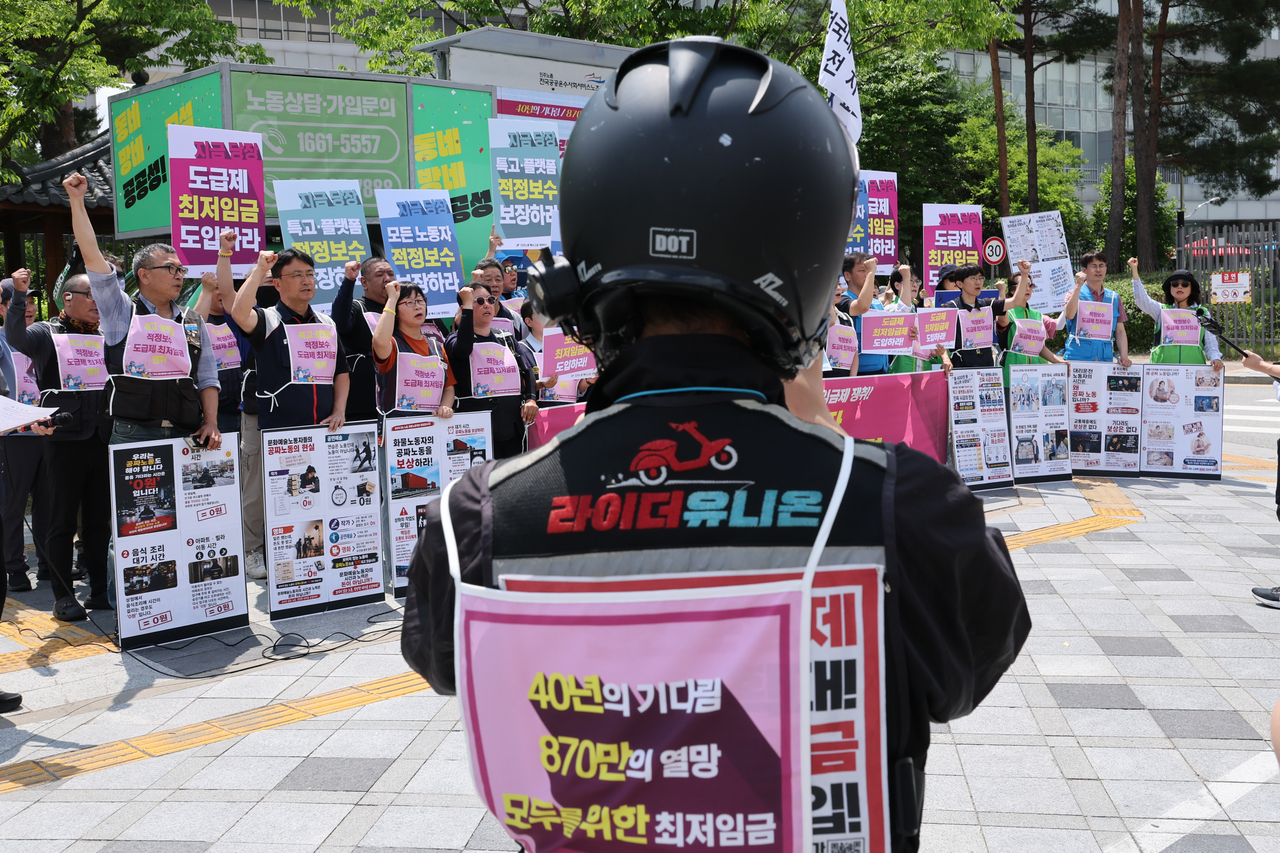
A proposed "Basic Act for Working People" — designed to protect workers in legal blind spots, including those in special employment, platform jobs and freelance work — falls short on effectiveness because it lacks specific employer obligations and penalty provisions, a civic group said. The group argued that rather than enacting a separate law, the government should expand the scope of existing labor legislation.
Workplace harassment advocacy group Jikjang Gapjil 119 published an issue paper Sunday titled "Limitations of the Basic Act for Working People as Seen Through Real Cases," laying out its concerns about the proposed legislation.
According to the group, workers outside the protection of the Labor Standards Act — including golf course caddies, freelance IT workers and Pilates instructors — have repeatedly lost their jobs through unilateral contract terminations by employers, or faced unfair treatment with the threat of termination used as leverage.
In one case, a golf course caddie said the company processed their departure as a recommended resignation, citing internal disciplinary rules. When the caddie contacted the Labor Relations Commission to inquire about an unfair dismissal remedy, they were told little could be done.
Cases in which employers passed on business losses or costs they should have absorbed to workers were also common. Some workers were exposed to workplace harassment, while others were forced to give up their jobs entirely to give birth or care for children.
Jikjang Gapjil 119 said the proposed law lacks sufficient employer discipline mechanisms and remedies to address these problems.
The contract termination clause is a prime example. The bill stipulates that a service contract may not be unilaterally changed or terminated without "reasonable cause." But the group said this standard is vaguer than the "justifiable cause" required for dismissal under the Labor Standards Act and could be interpreted as a more lenient threshold.
The group also said the dispute resolution process has its limits. Even if a worker files for mediation with a dispute mediation committee, both parties must accept the proposed settlement for it to take effect as a civil conciliation — meaning an employer's refusal effectively blocks any meaningful remedy.
Workers broadly agreed that the coverage of existing labor law should be widened.
In a survey of 1,000 workers aged 19 and older conducted nationwide from Sept. 1 to 7, 81.9 percent said all platform workers should be protected under labor law. Some 78.8 percent agreed with expanding the scope of the Labor Standards Act.
"The Basic Act for Working People is essentially the Labor Vulnerable Workers Support Act that the Ministry of Employment and Labor pushed through People Power Party lawmaker Im Yi-ja during the Yoon Suk Yeol administration, with a few ineffectual clauses tacked on and a new name slapped on it," said Yoon Ji-young, lead attorney at Jikjang Gapjil 119. "It does not fit within the framework of labor law, and it undermines the very foundation of labor law, which presupposes an imbalance of power between employers and workers."
fact0514@heraldcorp.com