A field visit to the Sejong 5-1 district smart city pilot zone
First pre-sale in 3 trillion won smart city project, buoyed by administrative capital plans
Lifestyle and patrol robots, smart wall pads among features in inaugural residential complex
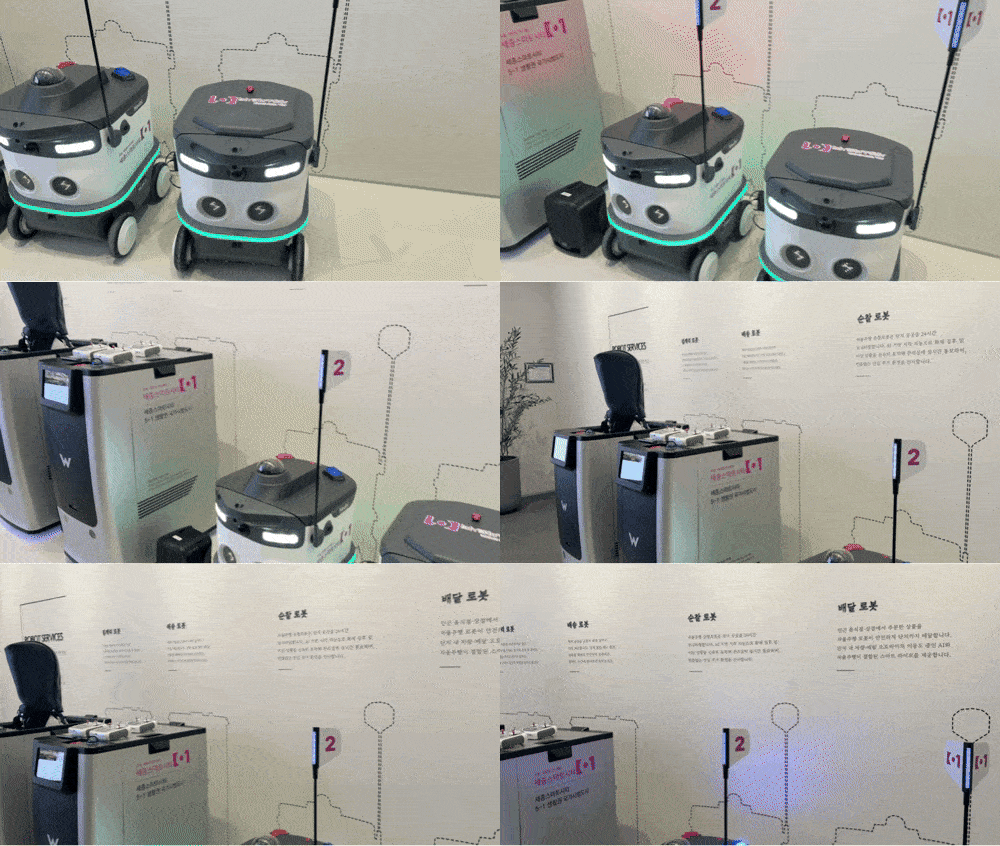
Construction of the Sejong 5-1 district smart city national pilot zone is picking up pace. With a large-scale project linking everyday services to post-completion city operations now entering its execution phase, the first residential complex in the pilot zone's leading district is going on sale — giving concrete shape to what planners call a "city of the future." The planned relocation of additional central government agencies and the construction of a presidential office in Sejong are adding to the buzz, drawing growing attention from prospective buyers in the area.
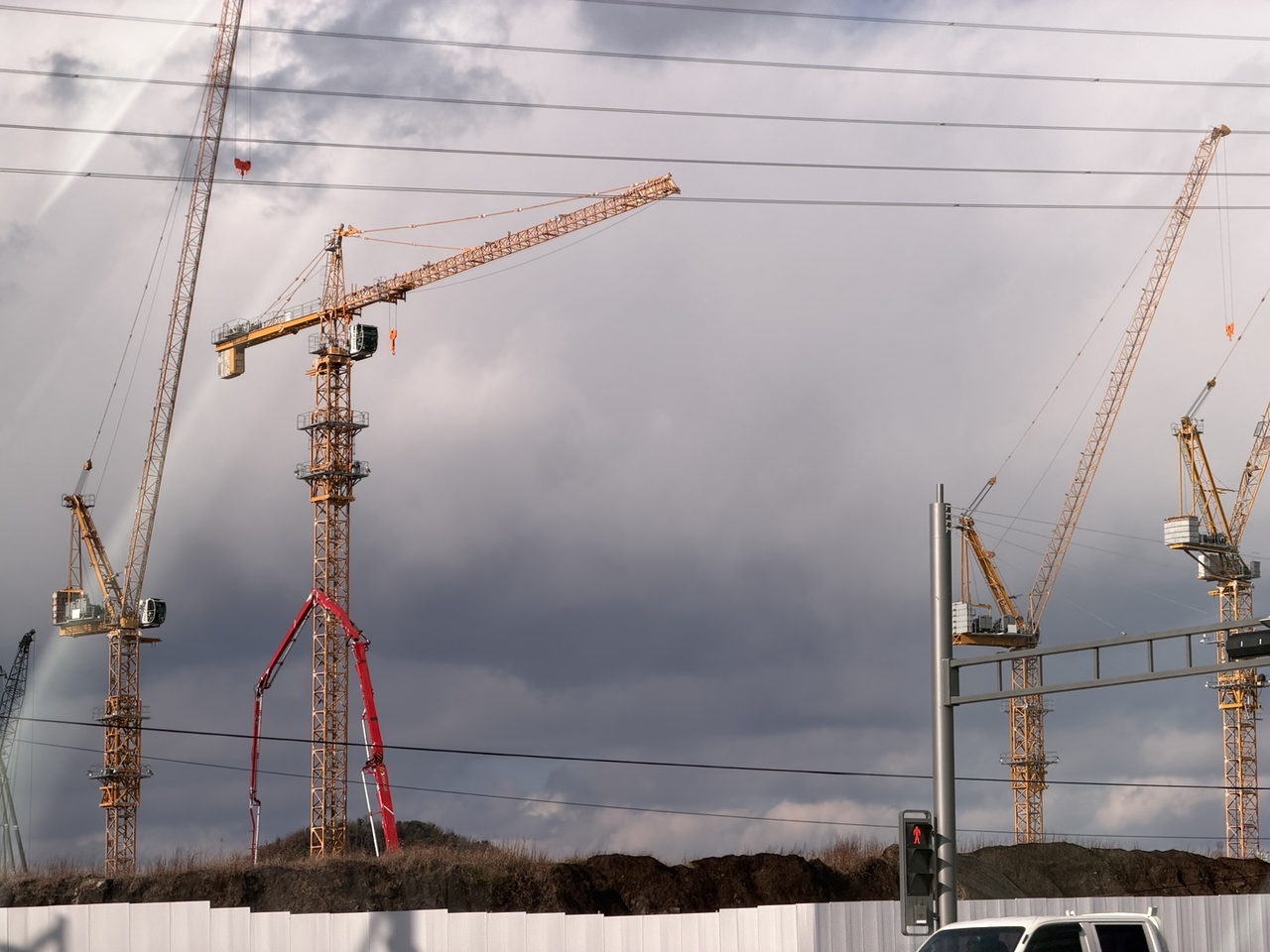
On Tuesday, groundwork at the 5-1 district pilot zone was in full swing. Dump trucks and excavators moved busily across the site, while cranes erected throughout the area stood ready for structural work.
A future city with robots and mobility — and a government relocation boost
The 5-1 district was designated a smart city national pilot zone in January 2018. Spanning roughly 2.74 million square meters in the Hapgang-dong area, the project carries a total budget of 3 trillion won ($2.23 billion). The pilot zone's leading district is divided into an innovation-venture-startup zone for offices and commercial facilities, and a smart living zone for residential development. The smart city concept goes beyond conventional urban development — which typically stops at building homes, offices and shops — by connecting residents' daily services to the ongoing operation of the city after completion. An integrated mobility platform, car-sharing, smart parking and luggage-carry robots are all planned at the city level.
Daily life for residents in the smart living zone will differ markedly from that in a conventional new town. Car-sharing, autonomous driving and demand-responsive transit will be introduced in stages inside and around the complex. Within the complex, delivery robots and luggage-carry robots will handle parcels and baggage, while patrol robots will make rounds to handle security. An elevator-linked system will allow robots to ride lifts and deliver items directly to residents' front doors. Smart-home services via wall pads and a dedicated app, smart parking, personalized health management, smart farming and smart resource recycling will all be accessible through a single integrated app. City operations will run on an AI data hub, digital twin technology, smart IoT infrastructure and a cybersecurity framework.
Another notable feature is the concept of an "updatable city" — one that continues to evolve after completion. The Sejong pilot zone is structured as a long-term project spanning five years of smart-service construction and 10 years of operation, meaning services are expected to be upgraded even after residents move in.
Alongside the smart city development, a string of administrative capital tailwinds is emerging. Some 44 central government agencies and affiliated bodies in the greater Seoul area, totaling more than 10,000 employees, are scheduled to relocate to Sejong in stages between 2027 and 2031. The presidential office in Sejong is targeted for completion in August 2029, and the National Assembly's Sejong chamber in the second half of 2033.
News of the agency relocations is feeding a market recovery. Local real estate agents say a shortage of rental listings has pushed up jeonse prices, prompting more existing tenants to switch to buying. Lee Su-jin, head of Sejong Nanum Real Estate Agency, said jeonse listings for units with an exclusive use area of 59 square meters are coming in at around 300 million won, while sale prices sit at roughly 400 million won. "A lot of people decided to top up and buy," Lee said. "Most of the existing listings have sold, and quite a few landlords who held out are now refusing to sell for anything under 500 million won."
The Korea Housing Institute's apartment pre-sale outlook index for Sejong stood at 115.4 this month, up 22.1 points from 93.3 the previous month — the only one among all 17 cities and provinces nationwide to exceed the baseline of 100.
Smart city's first pre-sale: El Sujaein's 2,316 units target both government workers and industrial complex demand
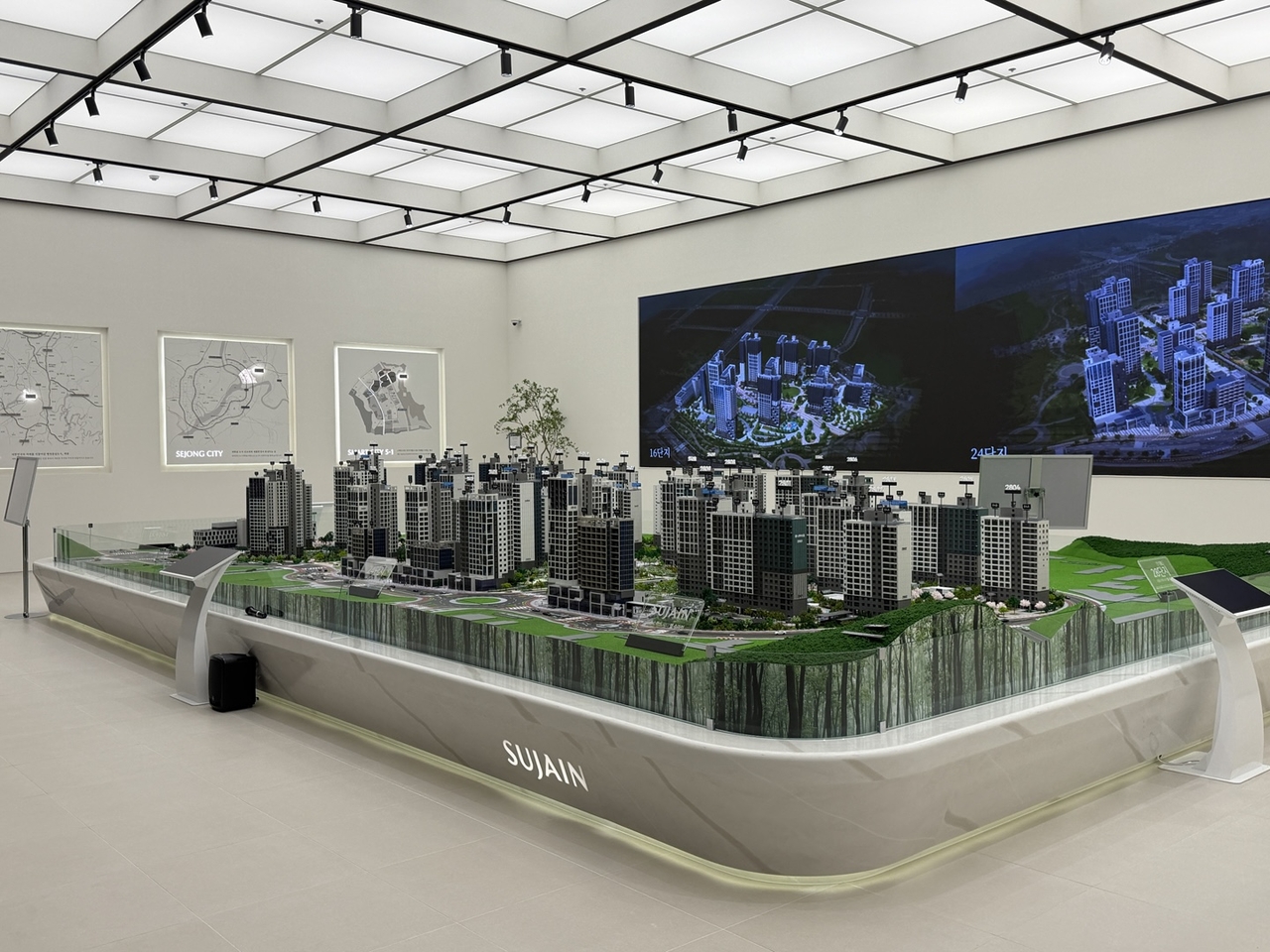
Against this backdrop, Sejong Smart City El Sujaein in the smart living zone is launching the smart city's first pre-sale. The development spans four blocks — L16, L24, L26 and L28 — comprising 2,191 apartments and 125 officetel units, for a total of 2,316 units. Construction is being handled by BS Hanyang. All apartment units are a single size of 84 square meters in exclusive use area. As the project sits outside a regulated zone, the resale restriction period is one year and there is no mandatory residency requirement. Because announcement dates differ across blocks, buyers may apply for multiple blocks simultaneously — up to three applications per person.
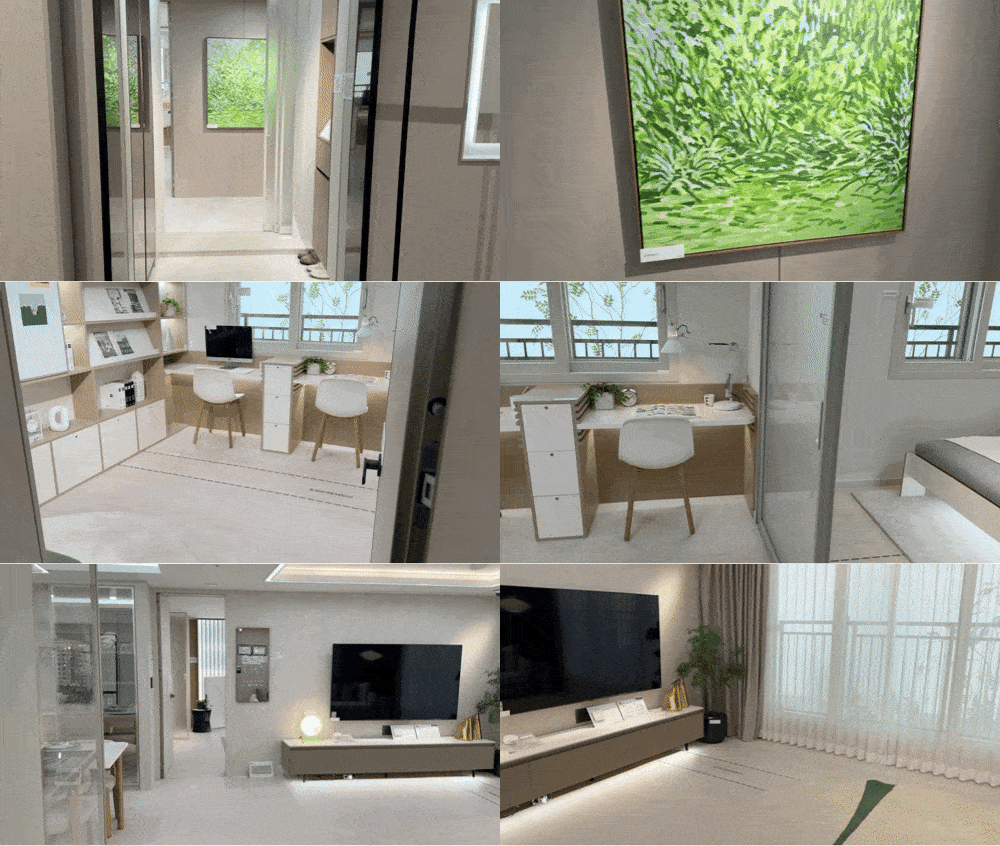
The El Sujaein model home, which opened Friday, displayed three unit types. Ceiling heights are set at 2.4 meters to create an open feel, and some units come with a terrace.
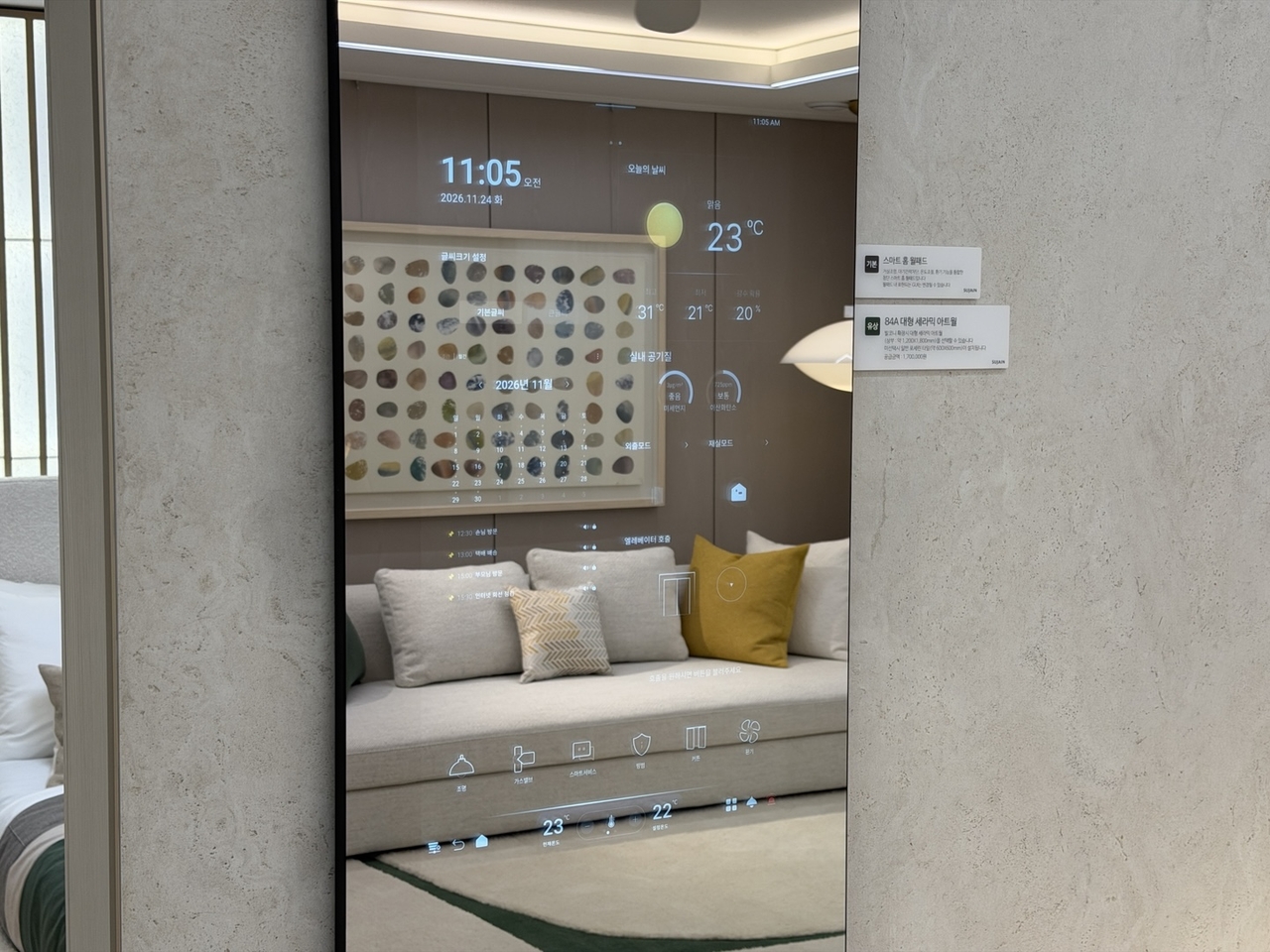
Each unit comes standard with a smart wall pad that allows residents to manage their home remotely and access the complex's smart services on a single screen. Lifestyle and patrol robots will operate throughout the complex, and personalized health management, smart farming and smart resource recycling services are also planned.
Location is another selling point. The complex is a 10-minute ride by bus rapid transit to KTX Osong Station, and about a 10-minute drive to Government Complex Sejong, easing the daily commute for civil servants. Kindergarten and elementary, middle and high school sites are planned around the complex, with the schools set to open in time for move-in.
Underlying demand is also solid. Samsung Electro-Mechanics' Sejong plant, located in the Myeonghak industrial complex to the north of the 5-1 district, is planning a 4.27 trillion won expansion of its FC-BGA semiconductor package substrate production facilities. A sales official said the complex can serve not only government workers but also employees at the industrial complex, noting that affiliates of major conglomerates including Samsung Electro-Mechanics are already based there.
Demand for newly built homes in Sejong remains steady. Saereum-dong and Dajeong-dong, considered the city's premier residential neighborhoods, are approaching their 10th year since residents moved in in 2017. Lee said people who have lived in a new apartment are reluctant to go back to an older one. "Renovating a 10-year-old unit runs at least 50 million won for an 84-square-meter apartment," Lee said. "A lot of people figure it makes more sense to put that money toward buying something new." Lee added that once pre-sales open, purchase inquiries will likely dry up for a while, as buyers focus on submitting subscription applications first.
The complex will accept special supply applications on Dec. 7, first-priority applications on Dec. 8 and second-priority applications on Dec. 9. Move-in is scheduled for roughly three years from now. Successful applicants will be announced in stages: blocks L16 and L24 on Dec. 15, block L28 on Dec. 16, and block L26 on Dec. 17. Formal contracts will be signed from Dec. 27 through Dec. 31, on a block-by-block basis.
hwshin@heraldcorp.com