Ministry plans 120 vehicles by year-end, 200 by January, scaling to 3,000 next year
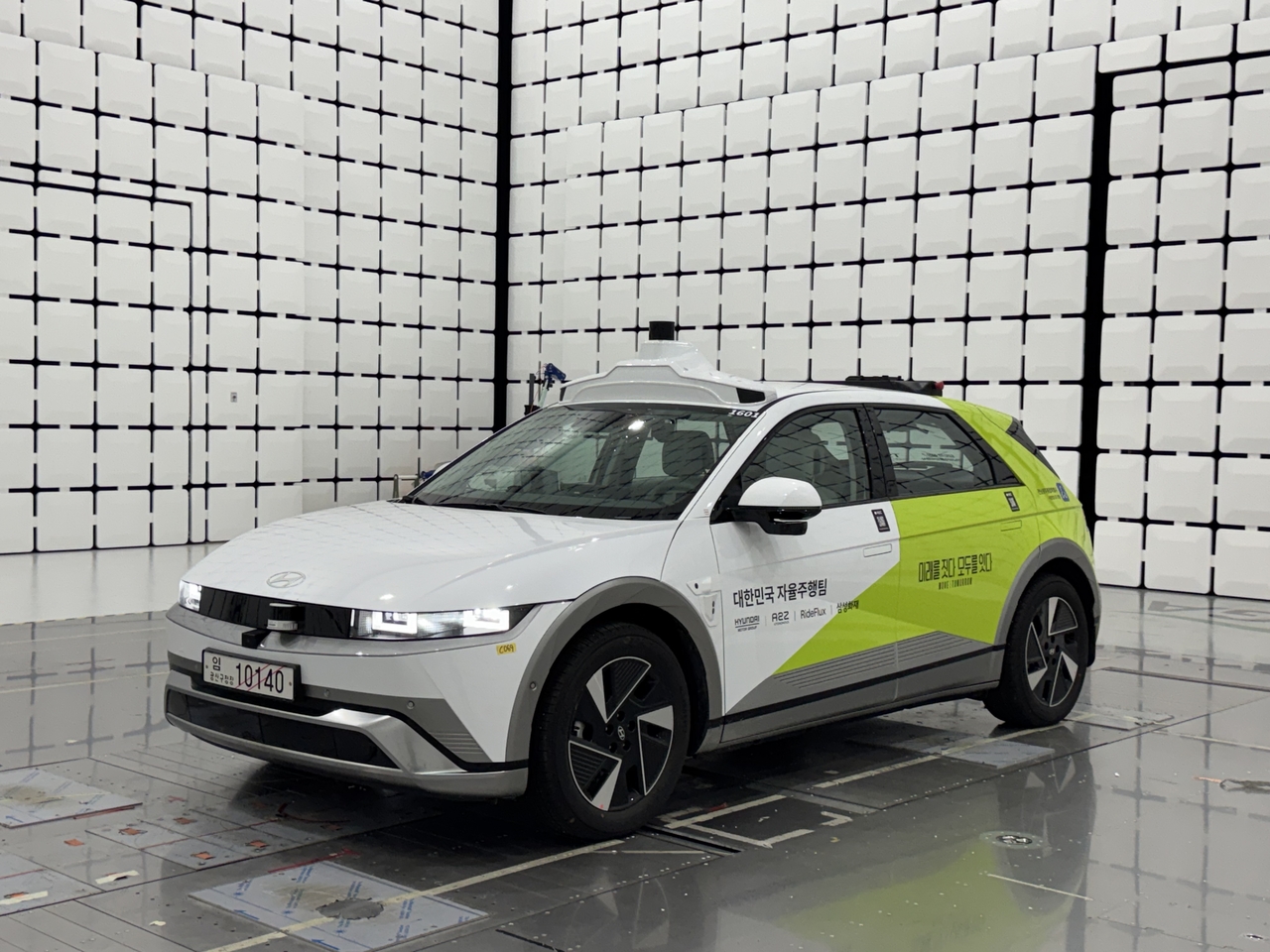
South Korea's first self-driving test vehicle will take to the arterial roads of Gwangju on Saturday, the Ministry of Land, Infrastructure and Transport announced Thursday.
The ministry said the deployment of the first vehicle — designated "Vehicle No. 1" — marks the transition from preparation to active on-road verification of autonomous driving technology, following the completion of vehicle manufacturing and modification, safety checks and the establishment of operational infrastructure.
The initial operating zones cover major arterial roads around Gwangju Songjeong Station, Pyeongdong Industrial Complex and the Cheomdan District. The ministry plans to expand the zones in stages, taking into account each vehicle's technology level and operating conditions.
Through the first half of next year, a test driver will remain in the driver's seat while the vehicle operates in autonomous driving system priority mode, with the driver able to intervene directly in emergencies or other safety situations. Outside the designated zones, separately operated data-collection vehicles driven by humans will also run to gather road and traffic data from across Gwangju.
Operating hours will run from 7:30 a.m. to 6 p.m. on both weekdays and weekends, with hours to be gradually extended as the demonstration system stabilizes. Transport platform companies will draw up weekly operating plans by company and purpose, dispatching vehicles only in accordance with approved schedules. During operation, a control system will monitor each vehicle's location, speed, remaining battery charge and autonomous driving system status in real time, with operations adjusted or suspended if anomalies are detected or road closures, construction or accidents occur.
Data collected inside and outside the demonstration zones will be processed in accordance with AI data standardization guidelines developed jointly by the Korea Transportation Safety Authority and autonomous driving developers, and used to improve autonomous driving AI performance.
Following Vehicle No. 1, additional vehicles will be deployed in sequence, with the program targeting 120 vehicles in operation by year-end and 200 by January. Of the dedicated software-defined vehicles, 105 have so far been delivered to companies including Hyundai Motor, A2Z and RideFlux for autonomous driving modification and inspection.
The Korea Transportation Safety Authority has been running a dedicated task force for temporary autonomous vehicle operating permit processing since Nov. 18 to ensure the 200-vehicle target is met without delays. The authority also increased its staff dedicated to verifying autonomous vehicle safety requirements from two to five. Each company's first demonstration vehicle undergoes a preliminary verification test so that any issues can be corrected in advance.
The ministry expects the scale of operations to grow to around 3,000 vehicles next year as the number of autonomous driving demonstration cities expands. In line with that growth, it plans to streamline the temporary operating permit process for autonomous vehicles with equivalent performance levels and pursue other regulatory improvements. The demonstration city program, which currently includes Gwangju, is set to expand to five or six cities nationwide next year, with autonomous driving demand-responsive transport also to be introduced at 50 routes and zones across the country. A new dedicated unit, the Autonomous Driving Demonstration Promotion Division, was established Thursday to oversee these efforts.
Park Jun-hyung, director general of the Ministry of Land, Infrastructure and Transport's mobility and automotive bureau, said the Gwangju demonstration city had entered full-scale operation with the launch of its first vehicle. "We will actively support the acceleration of autonomous driving technology development and the transition to commercialization by pushing forward the deployment of additional vehicles and the expansion of the demonstration program, centered on the newly launched promotion division," Park said.
smh@heraldcorp.com