Heritage committee rejects site preservation plan
All 9 attending members vote against approval
Plan fails to reflect Hanyang fortress spatial structure
Below-ground relocation of artifacts deemed unacceptable
All construction suspended under current law
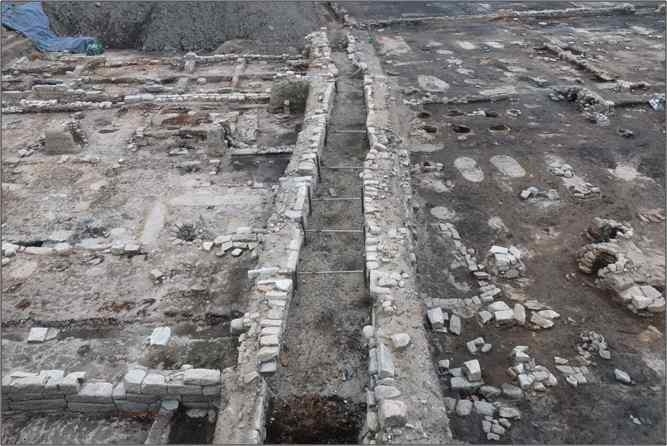
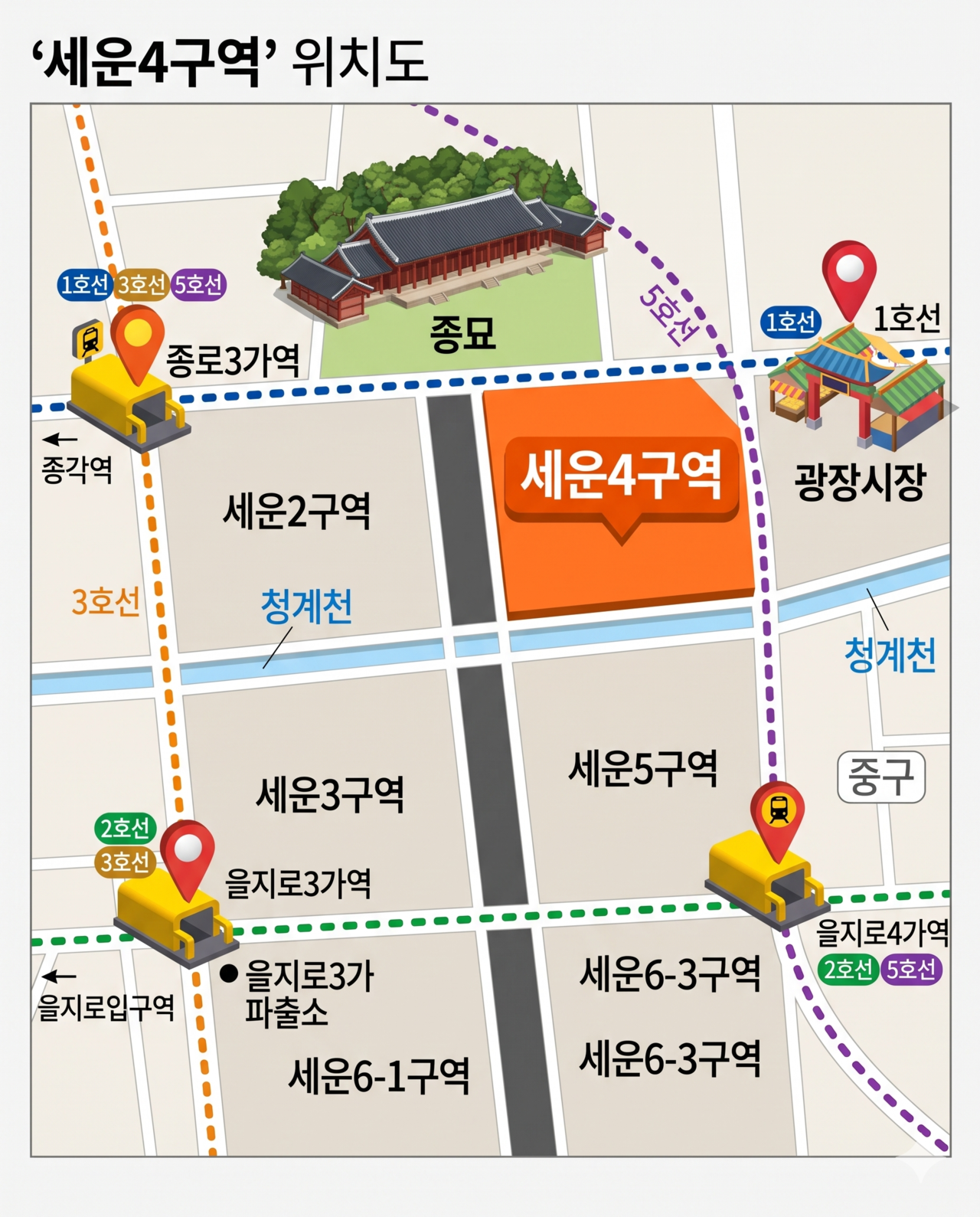
A redevelopment project in Sewoon District 4, directly across from the UNESCO World Heritage site of Jongmyo Shrine, has been brought to a halt after its plan for preserving relics found on the site failed to win approval. The decision came Wednesday — nearly two years and 10 months after the review process began in January 2024 — with all nine attending committee members voting against the plan. No construction may proceed on the site until a new preservation plan is drawn up and approved.
The Cultural Heritage Administration said its National Heritage Committee's buried heritage subcommittee held a meeting Wednesday and unanimously rejected the agenda item titled "Plan for the preservation of relics within the urban environment improvement project site in Seoul's Sewoon District 4." The committee determined that the submitted plan failed to incorporate the principle of in-situ preservation and the need to secure the historical and cultural identity of the surrounding area — conditions it had attached to earlier "deferred" rulings. It also said the plan fell short of reflecting the historical spatial structure of the Hanyang fortress, including the original location and orientation of the relics as excavated, the relationships among individual remains, and the surrounding road drainage system.
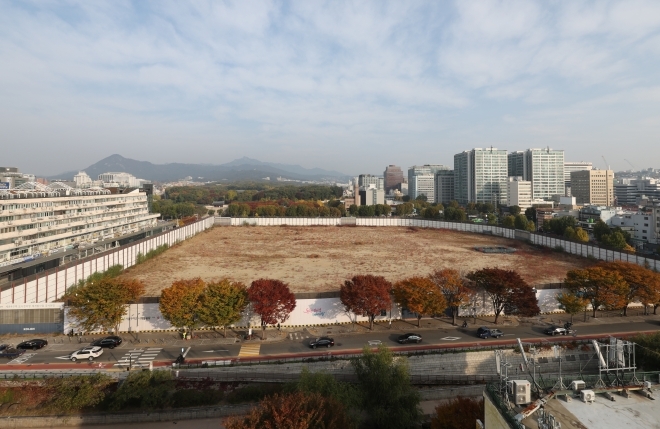
The project operator, Seoul Housing & Communities Corporation (SH), conducted excavations at the site around 81 Yeji-dong, Jongno-gu from 2022 to 2024, uncovering traces of a Joseon-era gate, building foundations and drainage channels. After receiving a "deferred" ruling at the first review in January 2024 over concerns about its specific preservation plan, SH applied for a re-review in August this year. SH proposed relocating the relics and creating a "cultural heritage plaza" on the first below-ground floor to display excavated materials, but the plan was deferred again before being ultimately rejected.
Under the current Act on the Protection and Investigation of Buried Cultural Heritage and related regulations, no construction may proceed on the site without a completed review by the National Heritage Committee and a formal closure of the excavation investigation by the head of the Cultural Heritage Administration. The decision is separate from the ongoing dispute between the Cultural Heritage Administration and the Seoul Metropolitan Government over whether a Heritage Impact Assessment should be conducted.
Seoul Mayor Oh Se-hoon appeared before the Seoul Metropolitan Council on Wednesday and criticized the Cultural Heritage Administration, saying it had "continuously delayed the project" by demanding a Heritage Impact Assessment and deferring the buried heritage review four times, even though Sewoon District 4 had received project authorization as recently as June. Oh characterized the repeated deferrals as "blocking the process through irregular means."
In response, the committee issued a statement explaining the intent of its review, saying it was "not trying to add new regulations, but asking that the location and surrounding spatial plan be thoroughly reviewed so that the historical significance of important relics already designated for preservation and restoration can be properly conveyed." The committee added that it "deeply regrets" the situation and said "the independent expert review and judgment of the National Heritage Committee must be respected."
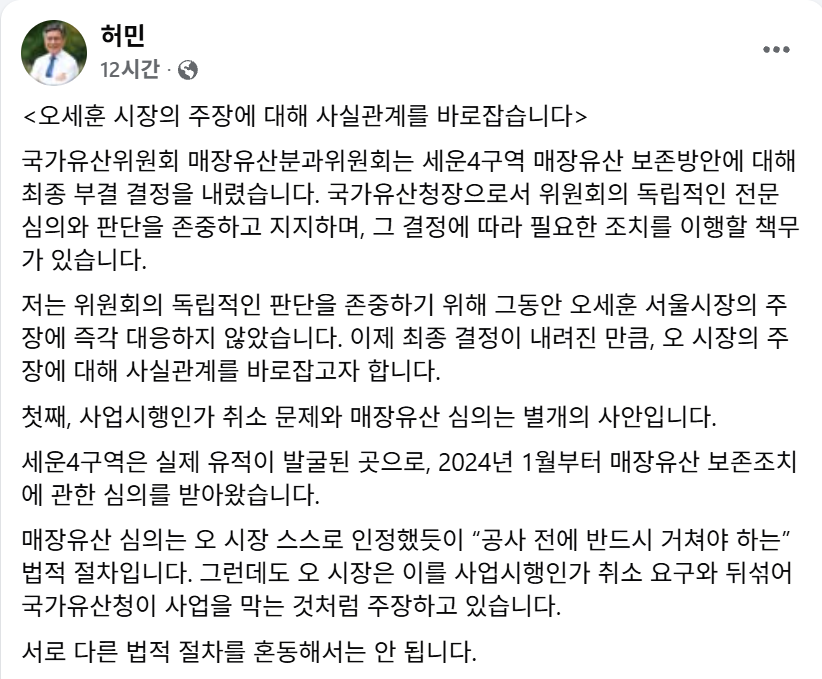
Cultural Heritage Administration Commissioner Heo Min also posted on SNS on Wednesday under the title "Correcting the facts regarding Mayor Oh Se-hoon's claims," personally announcing the outcome of the review.
Heo drew a line between the question of revoking the project authorization and the buried heritage review, which is a legally required step before any construction can begin, saying the two are separate matters. Heo also rebuffed claims that the committee's review standards had changed, saying the National Heritage Committee had consistently maintained the principle of restoring relics to their original excavation locations.
As a key reason for the rejection, Heo pointed to the fact that while the Seoul Metropolitan Government had revised its urban plan in October 2025 to more than double the maximum building height to 145 meters, the preservation measures submitted by SH had actually regressed rather than improved.
Heo also placed responsibility for the project delays on the Seoul Metropolitan Government and SH, noting that SH had waited two years and seven months after the first review in January 2024 before applying for a re-review in August this year. "Relics, once damaged, cannot be restored," Heo said. "Preparing an alternative that meets the principles is the path that moves this project forward."
terry@heraldcorp.com