Cultural Heritage Administration panel issues statement on Sewoon Zone 4
Directly rebuffs mayor's claims of deliberate project delays
Criticizes preservation plan for lacking spatial continuity
Calls arrangement of relics among commercial units 'wedged-in placement'
Urges respect for independent expert review process
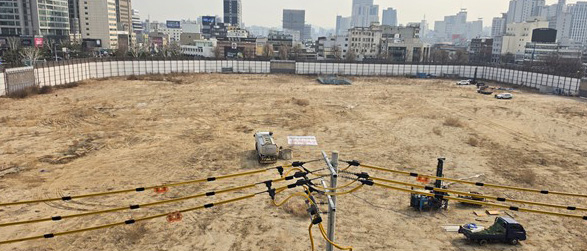
The National Heritage Committee has rebuffed claims by the Seoul Metropolitan Government and Seoul Mayor Oh Se-hoon that the review process has delayed a major redevelopment project, calling the assertions a distortion of the facts. The committee said "in-situ preservation" does not mean keeping all excavated remains in place, but rather restoring key structural remnants — including a drainage channel and a village gate foundation — to their original locations after development. It also drew a clear line between the buried heritage review and the World Heritage Impact Assessment, saying the two are separate procedures with different legal bases and purposes, and pledged to make its decisions independently, free from outside pressure.
All members of the committee's buried heritage subcommittee issued a formal statement Friday expressing regret that the Seoul Metropolitan Government and the mayor had "raised claims inconsistent with the facts" through social media posts and press releases regarding the review of heritage preservation plans at the Sewoon Zone 4 urban renewal project site.
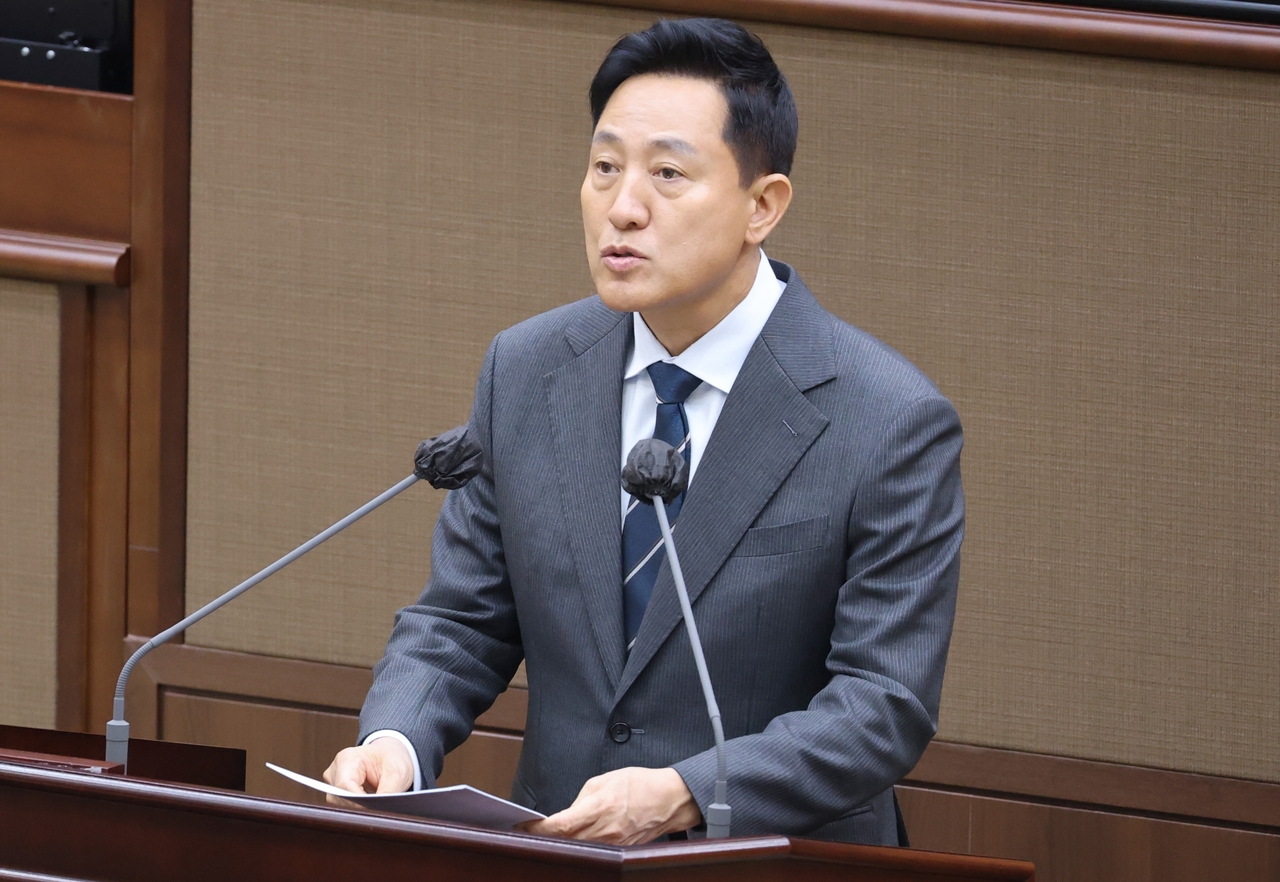
The statement is a direct response to remarks Oh made Wednesday during a policy question session at the Seoul Metropolitan Council. Oh said the Cultural Heritage Administration had "amended an enforcement decree in the middle of an ongoing administrative process in order to block development in Sewoon Zone 4," calling it "effectively retroactive legislation and administrative manipulation." Oh argued that although Sewoon Zone 4 received project authorization in June, the Cultural Heritage Administration has been stalling the project by demanding a World Heritage Impact Assessment and deferring the buried heritage review four times. He criticized the repeated deferrals, saying the committee had "blocked the process from moving forward by citing different reasons each time."
Oh also said residents are paying more than 1.4 billion won ($1.05 million) in interest every month and have filed a damages lawsuit against the state seeking around 25 billion won. He warned that if the same outcome occurs at a fifth review, it would serve as decisive evidence against the Cultural Heritage Administration in that litigation. Oh added that around 15 urban renewal projects within 100 meters of the Seoul City Wall — affecting roughly 14,000 households — could be directly impacted ahead of next year's World Heritage inscription review for the Hanyang City Wall, and said he would formally demand that the Cultural Heritage Administration revise the relevant enforcement decree.
'In-situ preservation means restoring key remnants to their original locations'
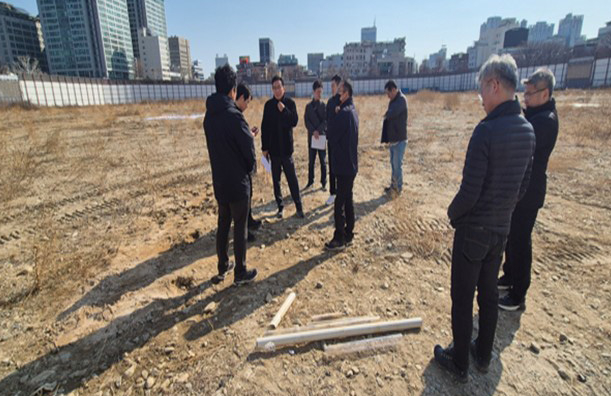
The remains unearthed at Sewoon Zone 4 — including a village gate (a gate erected at the entrance to a settlement), drainage channels, roads and building foundations — are historical heritage that illuminate the urban structure and daily life of Hanyang during the Joseon Dynasty.
The committee said it has been examining ways to allow the development project to proceed rationally while preserving the historical value of these remains. It said the decision during field investigations to temporarily relocate and store important structural remnants, including the village gate and drainage channels, was made with the same intent. The committee said it is focusing its review on ways to restore key remnants as close to their original form as possible, even where some damage from development is unavoidable, with the aim of securing the historical and cultural identity of the Hanyang City Wall area and allowing citizens to share in the cultural heritage.
The committee said the principle of in-situ preservation is not intended to mean that all excavated remains must be kept exactly where they were found. It said: "In-situ preservation means restoring the important structural remnants confirmed during excavation — the drainage channel and the village gate foundation — to their original locations after development, and connecting them to the historical urban spatial structure so that the public can understand the historical site."
The committee rebuffed Seoul's claim that it had reversed its earlier position or was demanding new on-site preservation measures to delay the project, calling that characterization a distortion that reflects a misunderstanding of the review's purpose and progress.
Panel criticizes 'wedged-in placement' of relics among commercial units
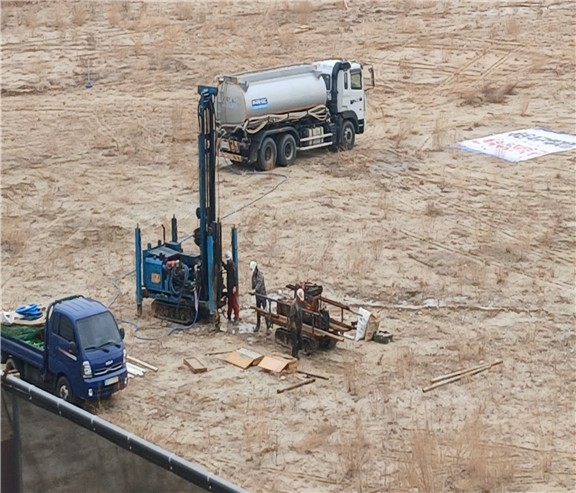
The committee said the preservation plan submitted by the project developer fails to adequately reflect the historical character of the remains or their spatial relationship with the surrounding area. Relocating the remains to a different location alone cannot fully preserve their historical value, it said. The review must also consider the historical spatial structure — including the location and orientation of the excavation site, the relationships among the structural remnants, and the road and drainage systems of the period.
The committee said the preservation plans the developer had presented "amounted to little more than adjusting the restoration location of key structural remnants in order to maintain the existing architectural plan." The developer is holding to a plan that would restore the northern drainage channel roughly 12 meters from its excavation site and in a different orientation, and has not put forward a spatial plan that reflects the historical significance of the village gate and drainage channel, the committee said. It said the plan for the first below-ground floor, where key remnants would be relocated, amounts to wedging the remains between commercial facilities without adequately considering the historical and cultural context or spatial continuity among the remnants.
The committee said the plan not only fails to adequately reflect the principle of in-situ preservation but also offers no alternative that conveys the historical value of the Hanyang City Wall. It added: "What the buried heritage subcommittee is asking for is not the addition of new regulations. It is asking that the location and surrounding spatial plan for the important remains already agreed to be preserved and restored be thoroughly reviewed so that their historical significance can be properly conveyed."
'Separate from World Heritage Impact Assessment — independent expert review must be respected'
The committee also expressed regret at what it called the framing of a professional review process as an obstacle to development, or its use as a subject of dispute through distorted claims. The buried heritage subcommittee is a body that reviews and decides, independently and on expert grounds, whether and how buried heritage should be preserved, in accordance with relevant laws. The committee said the review of the preservation plan for buried heritage at Sewoon Zone 4 is a separate procedure from the World Heritage Impact Assessment, with a different legal basis and purpose, and that it reviews only whether the proposed preservation plan is appropriate given the historical, academic and artistic value of the excavated remains.
The committee said its repeated reviews, field investigations and requests for supplementary submissions "were not intended to delay the project, but to carefully assess the preservation plan so that the historical value of the important Hanyang City Wall remains would not be damaged even after development."
The committee also said urban development and heritage preservation "are not conflicting values but a shared public interest that must be realized together through reasonable accommodation," and called on all parties to "respect the committee's professional review and independent judgment as it works to find a rational compromise between development and preservation."
terry@heraldcorp.com