Seoul apartment listings up from 62,000 to 82,000 in a year
Gangnam, Han River belt see rising supply; Geumcheon-gu, Jungnang-gu among districts where listings fall
Dongah Eco-Ville 84㎡ in Seongbuk-gu jumps nearly 40% in a year
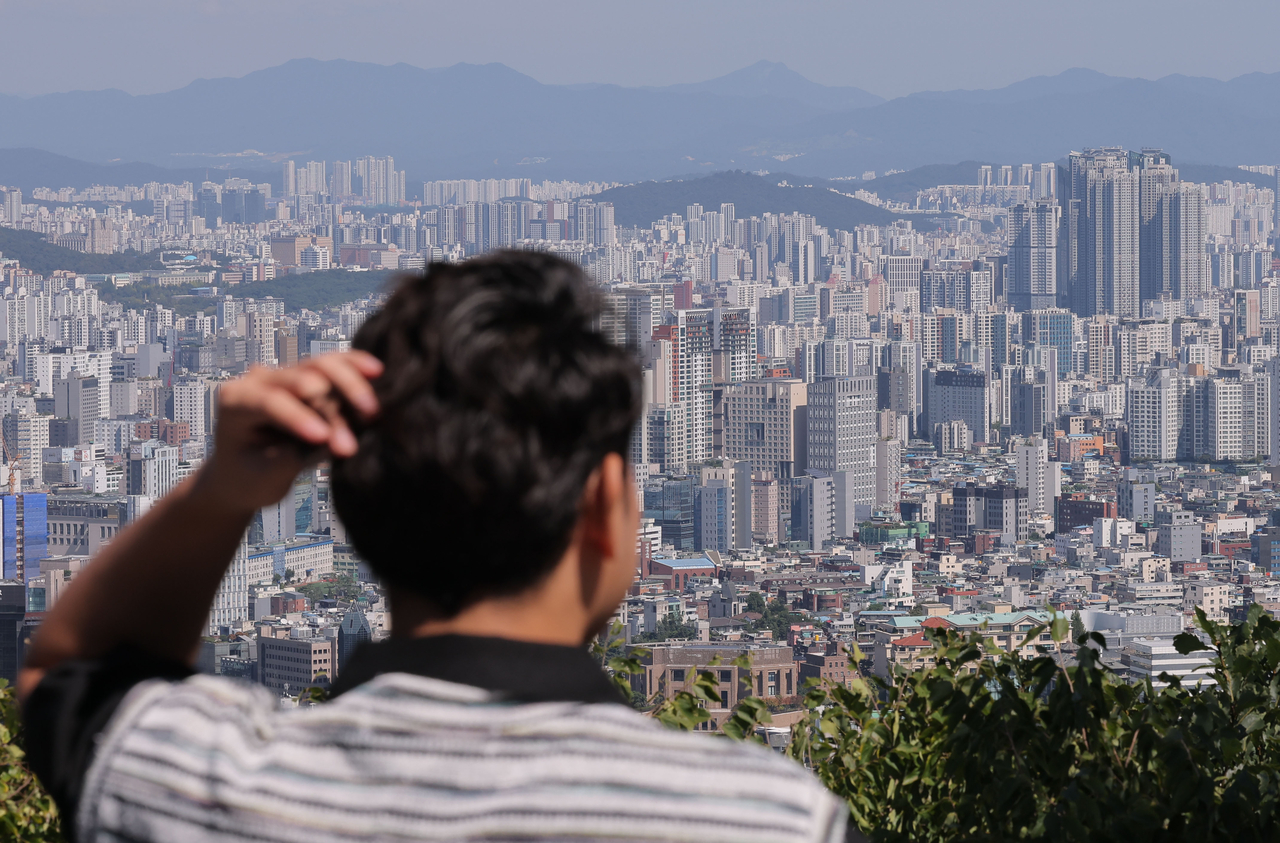
The number of apartments listed for sale in Seoul has surpassed 82,000, driven by a surge in supply concentrated in the three Gangnam districts and the Han River belt. While those areas are undergoing price corrections, the city's outer districts are moving in the opposite direction — listings are shrinking and record-high transactions keep emerging.
According to real estate data platform Asil, Seoul had 82,097 apartment units listed for sale as of Thursday, up 31.3 percent from 62,504 a year earlier. By district, Seongdong-gu posted the steepest increase at 146.7 percent, with listings rising from 1,257 to 3,102. Songpa-gu (110.7 percent), Yongsan-gu (90.5 percent), Gwangjin-gu (79 percent), Seocho-gu (77.2 percent), Gangnam-gu (74.7 percent), Dongjak-gu (65.1 percent), Yeongdeungpo-gu (58.9 percent), Gangdong-gu (57.7 percent) and Mapo-gu (54.5 percent) also saw listings grow by more than 50 percent. Market observers say the buildup reflects a combination of rising property-holding tax burdens and concerns over levies under the reconstruction excess profit recapture scheme.
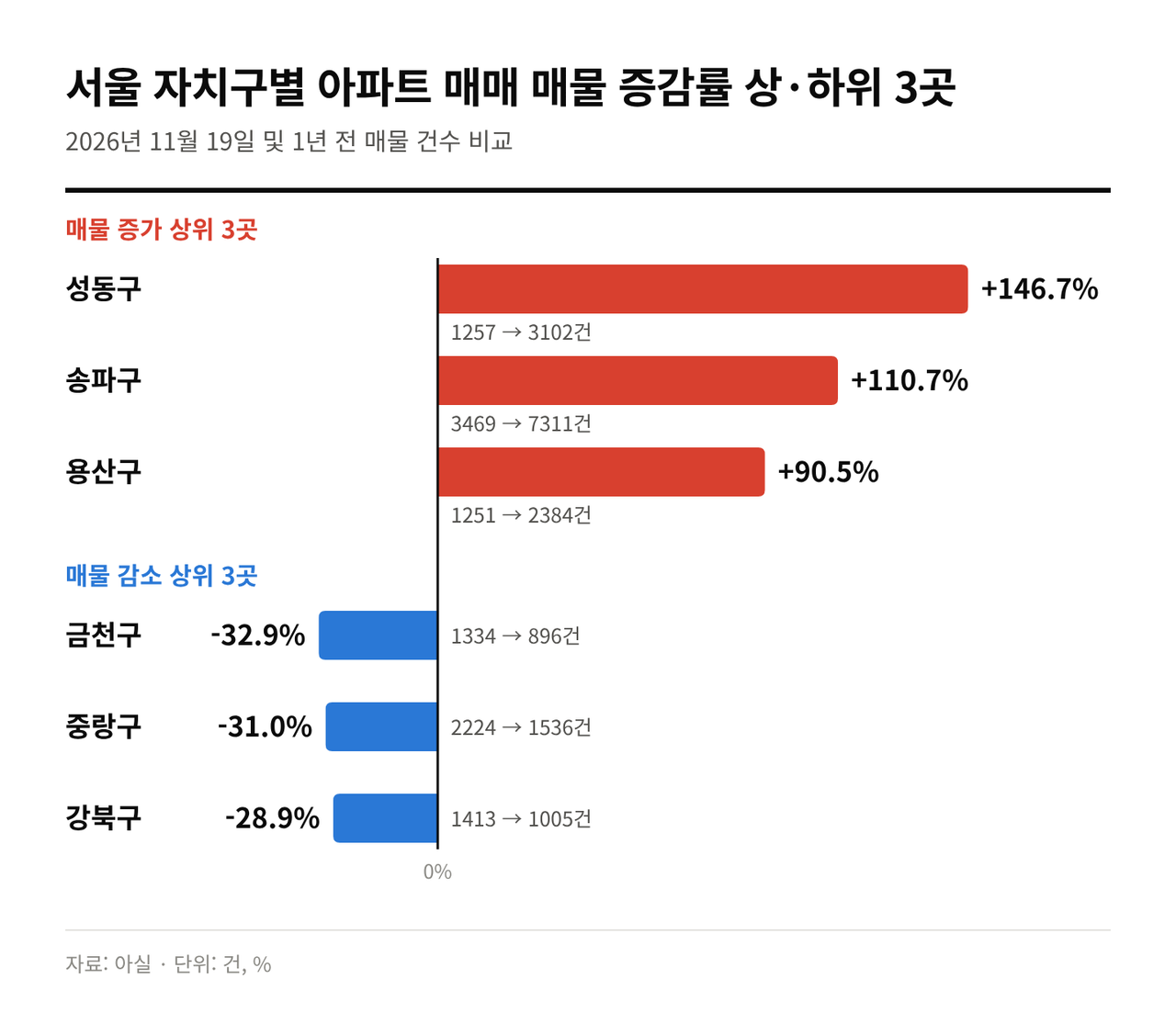
The mood in Seoul's outer districts is starkly different. Geumcheon-gu saw listings fall 32.9 percent over the same period, dropping below 1,000 units. Seven other outer districts also recorded year-on-year declines: Jungnang-gu (-31 percent), Gangbuk-gu (-28.9 percent), Dobong-gu (-27.4 percent), Guro-gu (-19.6 percent), Eunpyeong-gu (-18.5 percent), Nowon-gu (-11.5 percent) and Gwanak-gu (-7.5 percent).
The divergence is equally clear in actual transaction prices. In Gangnam, some units are trading at dual-price levels reflecting reconstruction levy burdens, and others are appearing on the market at discounts of more than 1 billion won ($751,000), while outer districts continue to set new price records.
A unit at Hyundai 14cha in Apgujeong-dong, Gangnam-gu — with an exclusive use area of 84 square meters — changed hands Friday at 5.26 billion won (fifth floor), a 20 percent drop from the complex's peak price of 6.6 billion won (seventh floor) recorded in May. At Eunma Apartments in Daechi-dong, Gangnam-gu, which also faces reconstruction excess profit recapture levies, an 84-square-meter unit on the 14th floor sold Friday for 3.1 billion won — down 17 percent from the previous record of 3.8 billion won (10th floor). Asking prices for lower-floor units at Eunma have since slipped below 3 billion won.
In contrast, an 84-square-meter unit at Dongah Eco-Ville in Sangwolgok-dong, Seongbuk-gu set a new record high Monday at 1.06 billion won (18th floor) — nearly 40 percent above the actual transaction price of 760 million won (19th floor) recorded a year earlier. In Wolgye-dong, Nowon-gu, a 59-square-meter unit at the large-scale Hyundai complex crossed the 1 billion won threshold for the first time in March, when a 10th-floor unit sold for 1.04 billion won.
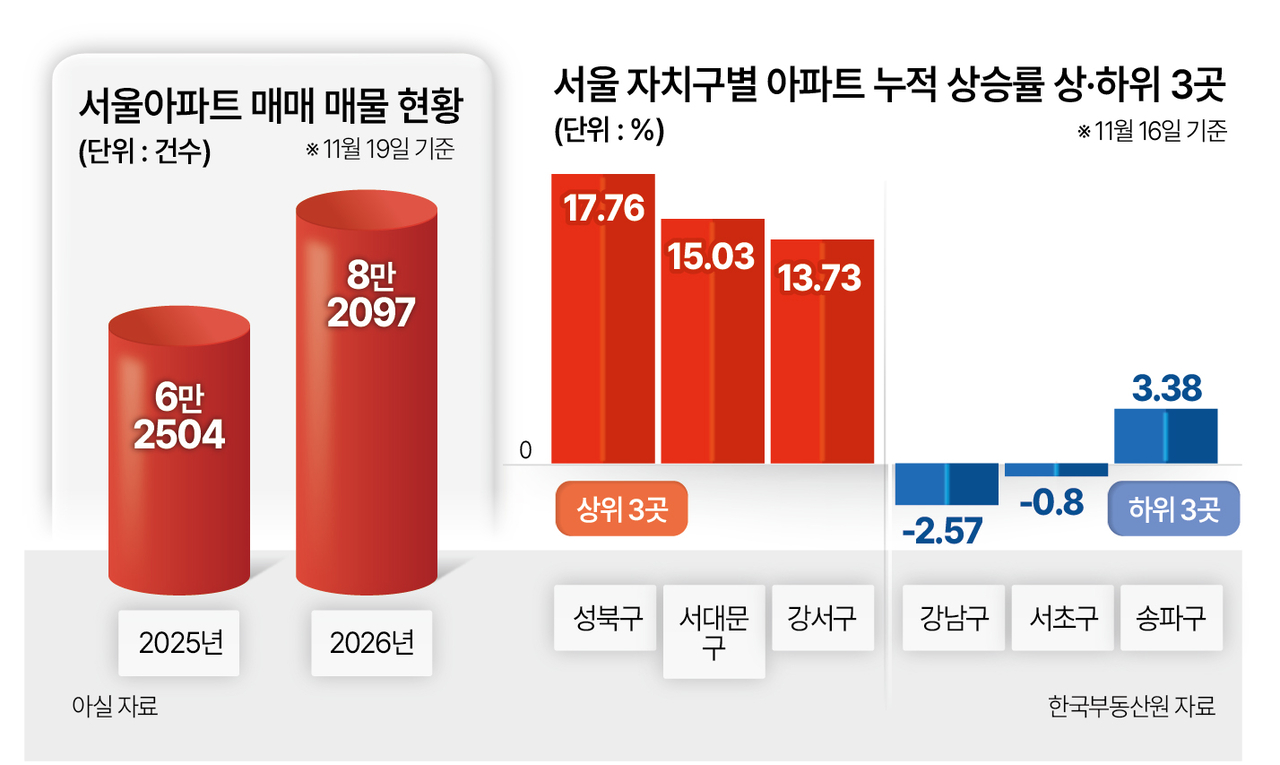
Cumulative price gains this year also reflect a sharp regional divide. According to the Korea Real Estate Board, as of Monday the districts with the largest cumulative price increases in Seoul were all in the outer areas: Seongbuk-gu (17.76 percent), Seodaemun-gu (15.03 percent) and Guro-gu (13.8 percent). Gangnam-gu and Seocho-gu were the only two districts to post declines, falling 2.57 percent and 0.8 percent, respectively.
Experts expect the divergence between the Gangnam and Han River belt areas and the outer districts to persist. Ham Young-jin, head of the real estate research lab at Woori Bank, said Gangnam homeowners would continue weighing when to sell to lock in gains amid growing tax concerns, while outer-district owners have little incentive to lower asking prices because steady demand from buyers priced out of the jeonse market keeps purchase demand firm.
Yun Su-min, a senior real estate specialist at NH NongHyup Bank, said the outer districts — where apartments priced at 1.5 billion won or less are concentrated — are driven by end-users who can still secure mortgage financing, which is why they move differently from the Gangnam correction. "Part of what is happening in the outer districts is a catch-up to the gains Gangnam recorded in earlier cycles," Yun added.
hope@heraldcorp.com